Between the popular 2700 and 3000 PSI ratings sits 2800 PSI, a figure that appears on many gas and electric machines. It is close enough to both neighbors that buyers often wonder whether the difference matters. In practice, 2800 PSI is a capable middle rating that handles a wide range of outdoor cleaning with room to spare.
This guide explains what 2800 PSI delivers, the jobs it suits, how it compares with 2700 and 3000 PSI machines, the role of flow and nozzles, and how to choose and maintain one so it performs at its best.
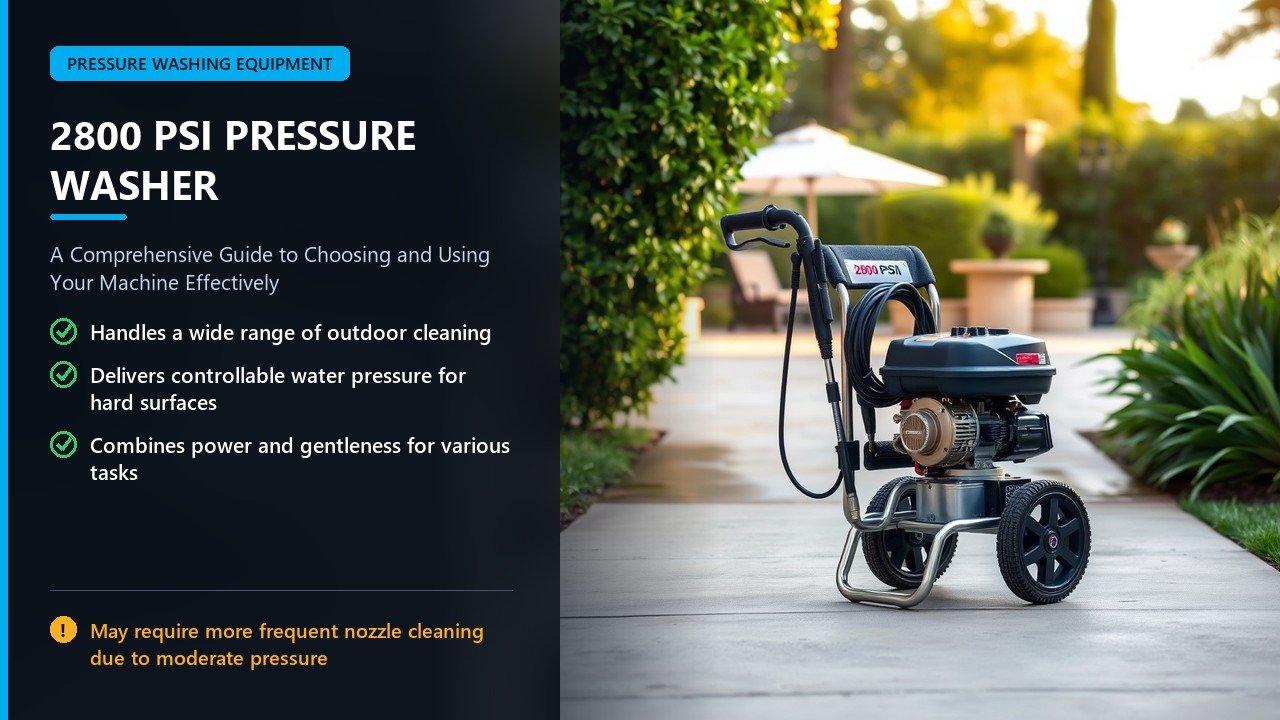
What 2800 PSI Means in Practice
PSI measures the water pressure at the nozzle, and 2800 PSI is enough to strip dirt, mold, and grime from hard surfaces while remaining controllable with the right nozzle. It is a small step above 2700 PSI and a small step below 3000 PSI, but in real use those gaps are often less important than flow, pump quality, and technique.
Flow, or gallons per minute, deserves equal attention. Because cleaning performance combines pressure and flow, a 2800 PSI machine with strong GPM can match or beat a higher-pressure unit with weak flow on large surfaces. When comparing machines in this class, weigh the flow rating as heavily as the pressure rating.
The practical takeaway is that 2800 PSI is a comfortable all-rounder. It has the power for driveways, patios, and siding, and, with a wider nozzle, the gentleness for vehicles and wooden decks. For most homes, it delivers more than enough capability.
Jobs a 2800 PSI Washer Handles
A 2800 PSI pressure washer cleans concrete and paved surfaces such as driveways, walkways, and patios, lifting dirt and light staining. It rinses siding, brick, and stucco, and removes mildew from shaded walls. It is safe for vehicles when used with a wider nozzle and extra distance, and it does well on outdoor furniture, grills, and garden equipment.
It also cleans wooden decks and fences, provided you use a gentle nozzle and keep moving to avoid etching the grain. With a surface cleaner, it covers large flat areas quickly and evenly. With a foam cannon, it applies detergent richly for vehicle cleaning.
Where it begins to fall short is heavy, set-in staining on concrete and large-scale paint stripping, which are faster with a 3000-plus PSI machine and higher flow. For routine residential cleaning, though, 2800 PSI covers nearly everything a homeowner is likely to face.
2800 vs 2700 vs 3000 PSI
The differences across these three ratings are modest. A 2700 PSI washer offers almost the same cleaning power as 2800 and is usually a touch lighter or cheaper. A 3000 PSI machine delivers noticeably more force for concrete and stripping, especially when paired with higher flow. The 2800 PSI rating sits between them, giving a little more punch than 2700 without the weight and cost that sometimes accompany 3000 PSI machines.
Because the ratings are so close, the deciding factors are usually not the PSI number itself but the machine behind it: the pump type, the flow rating, the build quality, and the included accessories. A well-made 2800 PSI unit with a triplex pump and good GPM will outperform a budget 3000 PSI machine in daily use.
For a buyer choosing among them, the honest answer is that any of the three handles typical household cleaning. The right pick depends on the full package and the price, not on a few hundred PSI of difference.
Flow and Nozzle Selection
Flow and nozzles turn the pressure rating into results. Higher GPM rinses faster and covers more area per minute, while the nozzle shapes how the pressure reaches the surface. A narrow nozzle concentrates the spray for tough spots on bare concrete; a wider nozzle spreads the water for gentler cleaning of cars, wood, and siding.
In the 2800 PSI class, the ideal setup is a machine that pairs this pressure with the highest flow your water supply can support, plus a good set of quick-connect nozzles. A rotary surface cleaner for flat areas, a soap tip for detergent, and a turbo nozzle for stubborn spots round out a versatile kit.
It is worth remembering that the nozzle is the cheapest way to change a machine’s behavior. Before upgrading a washer for more power, try matching the nozzle and distance to the job — it often solves the problem at no cost.
Gas or Electric at 2800 PSI
Both gas and electric machines reach 2800 PSI, and each suits a different user. Gas models generally provide higher flow, unrestricted portability, and better endurance for big jobs, but they bring noise, exhaust, fuel storage, and engine maintenance. They fit large properties and locations where a power cord will not reach.
Electric 2800 PSI machines are quiet, clean, and low-maintenance, with instant starts and no fuel to handle. They are well suited to garages, patios, and residential areas where noise matters. Their constraints are cord length and typically lower flow, which can slow cleaning of large surfaces.
For many homeowners, an electric 2800 PSI washer is the more convenient choice. For those with big driveways or a need to work far from power, a gas machine’s greater flow and freedom from cords often justify the extra upkeep. Both reach the same pressure; they differ mainly in convenience and speed.
Choosing a 2800 PSI Machine
Start with the pump, because it is the heart of the machine. A triplex pump with three plungers is more durable and rebuildable than an axial cam pump, and it is the better choice for frequent use. Then check the flow rating and confirm your water supply can exceed it, so the pump is never starved.
Look at the build: a sturdy frame, reliable wheels, a quality high-pressure hose, and quick-connect fittings throughout. A complete nozzle set is essential, and accessories such as a surface cleaner or foam cannon can be added as needed. Review the warranty and the availability of replacement seals, valves, and O-rings.
Finally, consider your conditions. If you face freezing winters, plan for winterizing. If storage space is limited, a compact design may suit you better than a large cart. Matching the machine to how you actually clean beats chasing a higher number on the label.
Using It Safely and Effectively
At 2800 PSI, technique and safety matter. Work from the top down and use overlapping passes so dirty water does not streak clean areas. Keep a consistent distance from the surface and let the flow do the work rather than pressing the nozzle closer. Pre-treat heavy grime with detergent and allow it to dwell before rinsing.
Match the nozzle to the surface: wider angles and soap tips for vehicles, wood, and siding, and narrower angles for tough spots on bare concrete. A surface cleaner speeds up flat work and improves evenness. Rinse with clean water using a wide pattern to avoid streaks.
For safety, never point the wand at people or pets, wear eye protection, and brace for recoil. Keep water away from electrical outlets and the machine, and use a ground-fault-protected outlet with electric models. The high-pressure spray can injure, so treat it with the respect of a power tool.
Maintenance for a Long Life
Good maintenance keeps a 2800 PSI machine reliable for years. Never run the pump without water, never deadhead it by holding the trigger closed for long periods, and always feed it clean water through an inlet filter. These three habits prevent most pump failures regardless of the rating.
If the pump has a crankcase, check the oil before use and change it on schedule, watching for milky oil that signals water intrusion. Inspect O-rings, quick-connects, and hoses for wear, and replace worn parts before they fail. Flush detergent from the system after each use so it does not dry and clog passages.
Before winter, drain the machine, draw pump protector fluid through the pump, and store everything dry and above freezing. On gas models, drain or stabilize the fuel and service the engine. A simple routine each season is all it takes to protect the investment.
Common Mistakes to Avoid
The most common mistakes are using too narrow a nozzle at close range, starving the pump with an undersized supply, and deadheading the machine. Each causes damage that is easy to prevent. Ignoring pump oil changes, leaving detergent in the system, and failing to winterize are the other frequent causes of early failure.
On the buying side, focusing only on PSI and ignoring flow, pump type, and build quality leads to disappointing results. A balanced machine with good flow and a rebuildable pump will serve you far better than a higher-pressure machine with weak components. Choose thoughtfully and maintain consistently, and a 2800 PSI washer will last.
What to Expect in Daily Use
In everyday use, a 2800 PSI washer feels powerful and controlled. It makes quick work of a dirty patio, strips mildew from a shaded wall, and cleans a car safely when the nozzle and distance are right. On a driveway with light to moderate grime, it performs well, especially with a surface cleaner to spread the work evenly.
The experience depends heavily on flow. A 2800 PSI machine with strong flow rinses debris away quickly and needs fewer passes, while one with low flow may clean thoroughly but slowly, leaving more dirty water behind. This is why flow is often the difference between a machine that feels effortless and one that feels underpowered.
Noise and setup also shape the experience. Electric machines start instantly and run quietly, making them pleasant for home use, while gas machines are noisier but free of cords. Whatever the type, quick-connect fittings and a good hose make the machine faster to set up and easier to move around the job.
Pressure Ratings Compared
The table below gives a general sense of where 2800 PSI sits relative to nearby ratings and what each class tends to handle. Flow and technique still make a large difference, so treat it as a guide rather than a rule.
| Rating | Strength | Typical Use |
|---|---|---|
| 2700 PSI | Lighter, economical | Cars, patios, siding, general home |
| 2800 PSI | Balanced all-rounder | Driveways, decks, vehicles, walls |
| 3000 PSI | More force, faster on concrete | Heavy grime, stripping, larger areas |
The gap between 2800 and its neighbors is small, which underlines a simple truth: at this level, the machine’s flow, pump, and build matter more than the exact PSI number. Buy the best-balanced machine you can, and let the nozzle and technique do the rest.
Accessories Worth Adding
A surface cleaner is the top upgrade for anyone with concrete to clean, cutting time and improving evenness. A foam cannon improves detergent coverage on vehicles, and an undercarriage cleaner reaches the underside of cars and equipment. Extension wands add reach for siding and high walls.
Extra nozzle sets are inexpensive and valuable, since the nozzle matches the spray to the surface. A longer, quality hose reduces repositioning, and a brush attachment helps with stubborn spots. Match fittings and pressure ratings to the machine, and prefer a few well-made accessories over a box of fragile ones.
Winterizing Your Machine
Freezing water is the biggest seasonal danger to a 2800 PSI washer. Water left in the pump, hose, or gun can freeze, expand, and crack components. Winterizing takes little time and prevents costly damage, so it should be part of every owner’s routine in cold climates.
Flush detergent from the system, drain the machine and hoses, and draw pump protector fluid or a non-toxic, pump-safe antifreeze through the pump to displace remaining water. Store the machine dry, covered, and above freezing, with hoses coiled loosely indoors and nozzles dried and stored.
When the season returns, flush the protector fluid out with clean water, check the oil, inspect the seals and fittings, and test the pressure before the first job. A careful restart catches small issues early, when they are easy and cheap to fix.
Is 2800 PSI Right for You
A 2800 PSI pressure washer suits most homeowners and many small businesses. It brings more than enough power for driveways, patios, siding, decks, fences, and vehicles, while remaining manageable and, with the right nozzle, gentle on delicate surfaces. It is a sensible middle choice that avoids both the limits of light machines and the cost and weight of heavy ones.
Choose it if you want a versatile machine for general outdoor cleaning. Step up to 3000 PSI or higher only if your work centers on heavy concrete, stripping, or commercial cleaning, where extra force and flow pay off. Either way, weigh flow and build alongside pressure, and keep up with maintenance.
Frequently Asked Questions
Is 2800 PSI good for a pressure washer? Yes. It is a well-balanced rating that handles most outdoor cleaning, from driveways and patios to siding and vehicles, with the right nozzle.
Is 2800 PSI better than 3000 PSI? Not necessarily. A 3000 PSI machine has more force for concrete and stripping, while 2800 PSI is often lighter and more affordable for general home use.
What is the difference between 2700 and 2800 PSI? Very little. They perform similarly in practice; flow, pump type, and build quality matter far more than the 100 PSI difference.
Can a 2800 PSI washer clean a car? Yes, with a wider nozzle and more distance. A narrow nozzle held close can damage paint, so match the spray to the surface.
Gas or electric at 2800 PSI? Gas offers more flow and portability; electric is quieter and lower maintenance. The better choice depends on where and how often you clean.
What GPM should I look for? The highest your water supply can support. Higher flow cleans faster and rinses better than pressure alone.
Why does my 2800 PSI washer lose pressure? Check the nozzle and inlet filter first, then look for worn valves or seals or air in the suction line before blaming the pump.
How do I store it for winter? Flush detergent, drain the water, draw pump protector fluid through the pump, and store it dry, covered, and above freezing.
Final Thoughts
A 2800 psi pressure washer is a smart middle choice. It offers enough power for serious outdoor cleaning and, with the proper nozzle, the gentleness required for vehicles and wood. Its main rivals at 2700 and 3000 PSI are close enough that flow, pump quality, and build should drive your decision.
Feed the pump plenty of water, never deadhead it, keep it maintained, and winterize it before the cold. Treated well, a 2800 PSI machine delivers dependable cleaning for years. For related reading, see our guides on the 2700 PSI pressure washer and the 3000 PSI power washer.