A driveway that once looked permanently stained can transform in a single afternoon when the right machine shows up. That is the promise of a 4000 PSI power washer — one of the most powerful categories of cleaning equipment a homeowner or contractor can reasonably own. But 4000 PSI is a serious number, and buying it without understanding what it can and cannot do is how people ruin decks, strip paint, and waste money.
This guide explains exactly what a 4000 PSI power washer is capable of, when it is the right choice, how it compares to lower-pressure machines, what water and power it demands, and how to use it safely. By the end, you will know whether 4000 PSI is genuine power you need — or more than you should handle.
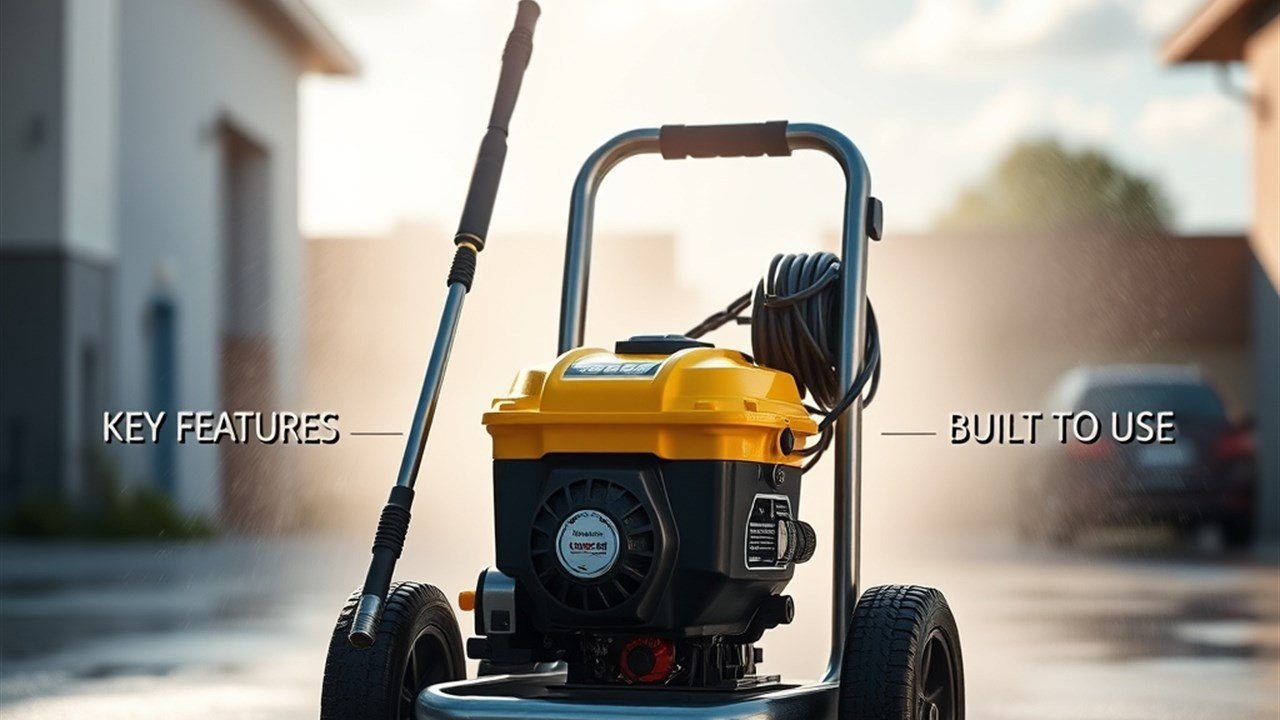
What 4000 PSI Really Delivers
PSI, or pounds per square inch, measures how forcefully water leaves the nozzle. At 4000 PSI, a power washer can strip stubborn grime, mold, paint, and even some coatings from hard surfaces. Combined with decent flow, it becomes a production-grade cleaning tool.
The true measure of cleaning power is the combination of pressure and flow:
Cleaning Units (CU) = PSI × GPM
- A 4000 PSI / 4.0 GPM machine scores 16,000 CU — professional territory.
- A 4000 PSI / 2.5 GPM machine scores 10,000 CU — strong but slower on coverage.
- A 2000 PSI / 1.4 GPM electric scores roughly 2,800 CU by comparison.
That gap is why a 4000 PSI machine feels dramatically more capable. It removes years of buildup with fewer passes and covers large areas quickly.
Quick Note: Pressure alone does not tell the whole story. Two 4000 PSI machines can perform very differently based on flow. Always compare PSI and GPM together before buying.
Where a 4000 PSI Power Washer Is the Right Tool
This level of pressure excels on hard, durable surfaces:
- Concrete driveways and sidewalks. Oil stains, tire marks, mildew, and embedded dirt lift away easily.
- Brick and stone patios. Deep cleaning of masonry and pavers, especially with a surface cleaner attachment.
- Commercial flatwork. Parking lots, dumpster pads, and sidewalks where speed and power matter.
- Stripping and prep work. Removing loose paint, failing coatings, and grime before repainting or sealing.
- Heavy equipment and farm machinery. Caked-on mud, grease, and debris on durable metal.
On these surfaces, 4000 PSI is a genuine advantage. It saves time and delivers a deeper clean than lower-pressure machines.
Where 4000 PSI Is Too Much
The same power that makes concrete sparkle can cause expensive damage when misapplied. Be extremely careful with:
| Surface | Risk at 4000 PSI | Safer Approach |
|---|---|---|
| Wood decks | Gouges and raised grain | Wide fan tip, distance, low pressure |
| Car paint | Stripped clear coat and scratches | Use a low-pressure nozzle or a smaller washer |
| Roofing shingles | Granule loss, leaks | Soft wash — never high pressure |
| Vinyl siding | Water forced behind panels | Wide nozzle, reduce pressure, work top-down |
| Concrete (new) | Etching and surface damage | Wait for cure, use moderate pressure |
Short Note: The area you should consider too much for 4000 PSI is longer than most buyers expect. If your work is mostly cars, decks, and siding, a lower-pressure machine is safer and just as effective.
Gas vs Electric at 4000 PSI
Almost every 4000 PSI power washer is gas-powered. Reaching and sustaining that pressure — especially with meaningful flow — requires more power than a standard electric motor and household circuit can deliver.
| Factor | 4000 PSI Gas | Electric Alternative |
|---|---|---|
| Pressure | Common and easy to source | Rare; usually lower PSI |
| Portability | Fully mobile — no outlet needed | Tethered to power |
| Maintenance | Oil, plugs, fuel, winterizing | Minimal |
| Noise / fumes | Loud, exhaust — outdoors only | Quiet, no fumes |
| Best for | Outdoor, large-area, professional work | Home, car, indoor, lighter tasks |
If you need 4000 PSI, plan for a gas machine. If you want convenience, low maintenance, and quiet operation, a lower-pressure electric unit will usually serve you better — 4000 PSI is simply the wrong tool for most home cleaning.
Water Supply and Specifications
A 4000 PSI machine needs more than pressure — it needs a reliable water supply to match its flow. Starve the pump and you risk cavitation, overheating, and failure.
- Supply more than the machine uses. If the unit draws 3.5–4.0 GPM, supply 5–6 GPM.
- Use a short, wide inlet hose. 5/8-inch or larger; long thin hoses restrict flow.
- Avoid dry running. Always connect water, purge air, then start.
- Consider a buffer tank. If your spigot cannot keep up, a feed tank and pump ensures steady supply.
Short Note: Many “4000 PSI” claims are marketing numbers. Ask whether the rating is the pump’s maximum or the nozzled operating pressure, and confirm the flow rate. Real-world performance depends on both.
How to Choose a 4000 PSI Power Washer
- Match the tool to the job. Concrete, flatwork, and stripping justify 4000 PSI; cars and siding do not.
- Demand a quality pump. A triplex ceramic-plunger pump outlasts axial pumps and can be rebuilt.
- Check the engine. A reliable engine brand and adequate horsepower keep pressure and flow steady.
- Look at the full package. Hose length and diameter, nozzle set, wand, and surface cleaner matter as much as the pump.
- Confirm cleaning units. Multiply PSI by GPM — the higher score cleans faster.
- Plan for maintenance. Budget for oil changes, filters, and seasonal preparation.
4000 PSI vs Neighboring Pressure Levels
Pressure is a spectrum, and the right number depends on the surface. Understanding how 4000 PSI compares to the levels around it prevents both under- and over-buying.
| Pressure | Typical Owner | Strongest For | Watch Out For |
|---|---|---|---|
| 2,000–2,500 PSI | Homeowners | Cars, decks, patio furniture | Stubborn concrete stains |
| 3,000–3,200 PSI | Serious DIY | Driveways, siding, gutters | Paint on soft wood |
| 4,000 PSI | Contractors, pros | Heavy concrete, stripping | Decks, cars, shingles |
| 5,000+ PSI | Industrial | Tough industrial surfaces | Nearly everything softer |
If you are unsure which level suits you, buy for your hardest common surface and control the softer ones with nozzle choice and distance. That way you get the power when you need it and the control when you do not.
Productivity: Why 4000 PSI Saves Time
The real-world value of 4000 PSI shows up in how much surface you can clean per hour. Higher pressure means fewer passes and less dwell time on stubborn stains, and higher flow means faster rinsing and coverage.
| Machine | Approx. Output | Relative Speed |
|---|---|---|
| Electric (2,000 PSI / 1.4 GPM) | ~2,800 CU | Baseline |
| Gas (3,000 PSI / 2.5 GPM) | ~7,500 CU | Much faster |
| Gas (4,000 PSI / 3.5 GPM) | ~14,000 CU | Very fast |
| Gas (4,000 PSI / 4.0 GPM) | ~16,000 CU | Maximum production |
For a contractor billing by the job, that speed translates directly into profit. For a homeowner, it means finishing a long driveway in an afternoon instead of a full weekend.
Water Usage and Environmental Care
A 4000 PSI machine can move a lot of water — three to four gallons every minute at full output. Over an hour, that is 180 to 240 gallons. On large jobs, plan for runoff and follow local rules.
- Manage runoff. Direct wash water away from storm drains where regulations require it; dirty water should not flow untreated into waterways.
- Use eco-friendly detergents. Choose biodegradable solutions and use the minimum needed.
- Avoid washing chemicals into plants. Rinse and dilute surrounding landscaping, or protect it first.
- Consider water reclamation on commercial jobs where runoff is regulated.
Many university environmental health programs and municipal stormwater agencies publish pressure-washing best practices. Following them protects waterways and keeps you compliant.
Maintenance Schedule That Extends Life
| Item | Interval | Why |
|---|---|---|
| Pump oil | Per manual (often every 50 hrs) | Prevents pump wear |
| Engine oil | After break-in, then regularly | Keeps engine reliable |
| Air filter | Clean often, replace as needed | Protects engine performance |
| Inlet water filter | Weekly when in use | Stops debris damaging the pump |
| Winterization | Before freezing weather | Prevents freeze damage |
Short Note: A few minutes of maintenance after each job — flushing, checking oil, cleaning filters — can double the working life of a 4000 PSI machine. Neglect is what kills pumps, not use.
Technique: Getting Results Without Damage
A 4000 PSI machine rewards good technique and punishes carelessness. Follow these habits for professional results:
- Start wide and far. Begin with the widest fan tip (typically 25 or 40 degrees) and stand back. Move closer only if needed.
- Keep the wand moving. Holding it still in one spot etches concrete and strips surfaces.
- Work top-down. Clean from the top of walls and surfaces downward so dirt rinses away.
- Use the 0-degree tip with extreme caution. The red tip concentrates a cutting stream. On concrete it etches; on other surfaces it destroys. Many professionals avoid it entirely.
- Overlap your passes. Consistent, overlapping strokes produce even results without streaks.
- Use a surface cleaner for flatwork. For concrete and pavers, a surface cleaner gives faster, more even results than a wand.
Short Note: Pressure is not the answer to every stain. Sometimes a cleaning solution, a little dwell time, and moderate pressure outperform maximum pressure — and protect the surface.
Common Mistakes to Avoid
- Buying based on PSI alone. Ignoring flow and cleaning units leads to disappointment.
- Using it on the wrong surface. The biggest cause of damage. When in doubt, pull back and reduce pressure.
- Starving the pump of water. Always exceed the machine’s flow demand.
- Neglecting winterization. Trapped water freezes and cracks pumps and lines.
- Skipping the inlet filter. Debris destroys seals and valves.
- Letting the engine idle too long. Heat degrades pump oil and shortens life.
Cost and Value
| Class | Typical Price | Who It Suits |
|---|---|---|
| Entry gas | $300–$600 | Occasional homeowner use |
| Mid-range gas | $600–$1,000 | Regular home and property cleaning |
| Commercial gas | $1,000–$2,500+ | Professional daily use |
For professional crews, a 4000 PSI machine pays for itself through speed and depth of clean. For a homeowner with a single driveway, a well-chosen mid-range machine — even at slightly lower pressure — often delivers everything needed at lower cost.
Frequently Asked Questions
Is 4000 PSI too powerful for home use? It can be. It is ideal for concrete but risky on wood, paint, and siding. If your surfaces are delicate, choose lower pressure.
Can I wash my car with 4000 PSI? Technically yes with a wide tip and distance, but it is far more than a car needs and increases the risk of paint damage. A smaller washer is safer.
Do I need 4000 PSI for a driveway? Not necessarily — many driveways clean well at 3,000–3,500 PSI. But 4000 PSI cleans faster and handles tougher stains with ease.
What GPM should I look for? Higher flow cleans faster. Aim for at least 3.5–4.0 GPM to pair well with 4000 PSI.
Is electric available at 4000 PSI? Rarely at reasonable cost. Most 4000 PSI machines are gas. For electric, expect lower pressure.
Final Thoughts
A 4000 PSI power washer is one of the most capable cleaning tools available outside of industrial equipment. On concrete, masonry, flatwork, and stripping jobs, it delivers speed and depth that lower-pressure machines simply cannot match. The trade-off is real, though: it requires a gas engine, careful technique, and respect for delicate surfaces.
If your work centers on hard outdoor surfaces and you value production, 4000 PSI is a worthy investment. If your tasks are cars, decks, and siding, choose lower pressure and keep your surfaces safe. For related guidance, see our 4000 PSI pressure washer guide and our 4.0 GPM pressure washer guide. For safety and environmental best practices, resources from OSHA, the U.S. Department of Energy, and university environmental health programs are excellent references. Whichever machine you choose, respect the pressure, match it to the surface, and it will reward you with years of powerful, dependable cleaning.