A pressure washer hose is one of those parts you do not think about until it fails, and a failure at pressure can be dangerous, which is why the hose’s pressure rating matters. A 4200 PSI pressure washer hose is rated to handle up to 4,200 pounds per square inch, making it suitable for high-pressure machines that would burst an underrated hose. Choosing a hose rated for your machine is a safety essential, since a hose that cannot handle the pressure can rupture and cause injury. This guide explains the 4200 PSI pressure washer hose, what the rating means, when you need one, the diameter and materials to consider, and how to choose and care for a high-pressure hose.
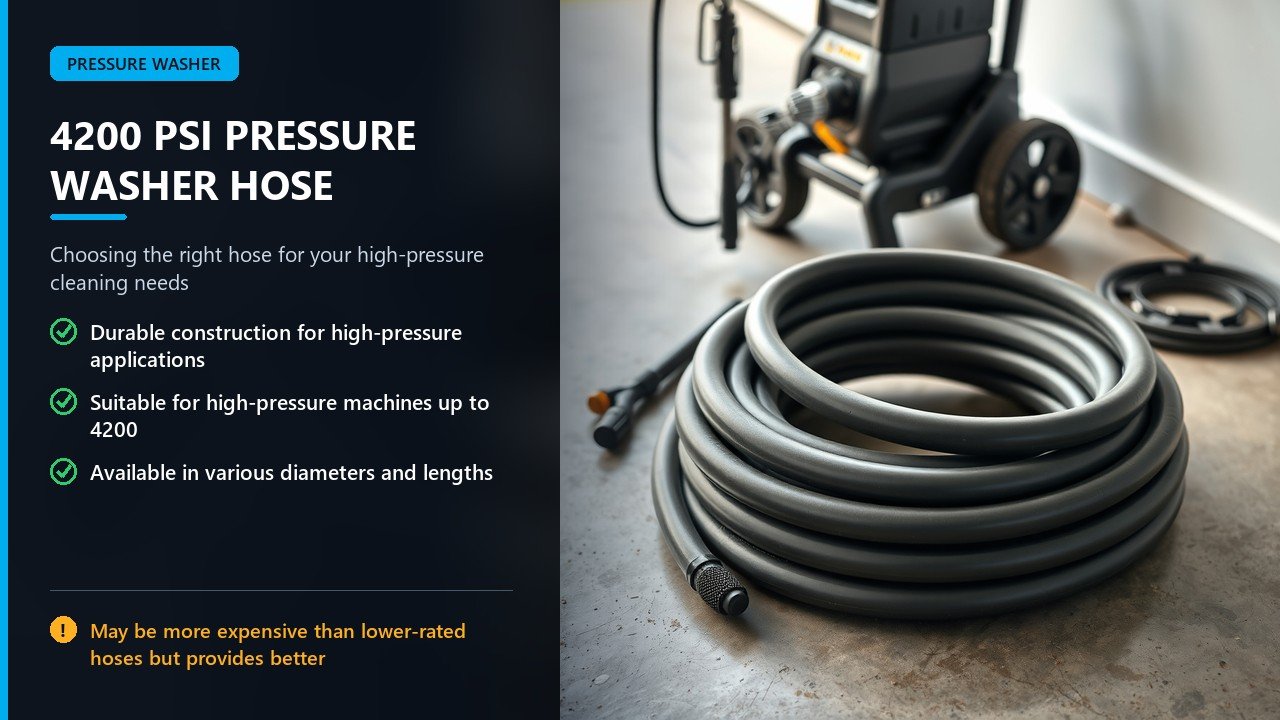
Why the Hose Rating Matters
The rating is about safety.
The pressure rating of a hose is the maximum pressure it is designed to withstand, and it must be at or above the pressure your machine produces, or the hose risks bursting. A pressure washer hose carries water under high pressure, and a failure can release a forceful stream or whip the hose, causing serious injury, so the rating is a safety specification, not just a number. Using a hose rated below the machine’s pressure is dangerous and can lead to a rupture, which is why matching the hose to the machine is essential for safety and reliability.
The rating also affects durability, since a hose consistently used near or beyond its limit wears faster and is more likely to fail, while a hose with a margin above the machine’s pressure lasts longer and is safer. Manufacturers often recommend a hose rated somewhat above the machine’s pressure to provide that margin. So the rating is both a safety requirement and a factor in the hose’s life, and it should guide your choice, ensuring the hose can handle the pressure your machine delivers.
Understanding why the rating matters emphasizes safety. Because a hose that cannot handle the machine’s pressure can burst and cause injury, and because a hose with a margin lasts longer, choosing a hose rated at or above the machine’s pressure is essential. This makes the rating a primary consideration when buying a hose, ahead of length or other features. With this awareness, what a 4,200 PSI rating means and when you need such a hose become clear. Our guide to pressure washer components places the hose in the machine.
What a 4200 PSI Rating Means
It is a high-pressure rating.
A 4200 PSI rating means the hose is designed to withstand pressures up to 4,200 PSI, which places it in the high-pressure category, above the common hoses rated around 3,000 to 4,000 PSI and well above the hoses on light homeowner machines. This makes it suitable for high-pressure machines, including commercial gas pressure washers that produce around 4,000 PSI or those with a safety margin, and for applications where the pressure is high. The rating indicates a robust hose built to handle demanding pressure.
It is worth noting that hoses also have a burst pressure, higher than the working pressure rating, and the working rating is the one to compare with the machine. A 4,200 PSI working rating provides a substantial margin for a 4,000 PSI machine, which is prudent, since using a hose at its maximum is not ideal. So a 4,200 PSI hose is a strong choice for high-pressure machines, offering safety and durability, and it exceeds what lower-pressure machines require, though it works fine on them if the fittings match.
Understanding what the rating means guides selection. Because 4,200 PSI is a high working rating, it suits high-pressure machines and provides margin for others, and because the working rating is what matters, comparing it to the machine’s pressure is the key. This makes a 4,200 PSI hose appropriate for demanding machines, and it clarifies when the rating is needed versus when a lower rating suffices. With this knowledge, you can judge whether a 4,200 PSI hose is right for your machine. Our guide to 100 ft pressure washer hose covers long hoses for extended reach.
When You Need a 4200 PSI Hose
High-pressure machines call for it.
You need a 4,200 PSI hose when your pressure washer produces pressure at or near 4,000 PSI, as commercial gas machines often do, or when you want a safety margin on a high-pressure machine so the hose is not stressed to its limit. Machines in the 3,000 to 4,000 PSI range benefit from a hose rated at or above their output, and a 4,200 PSI hose provides that margin. For lower-pressure homeowner machines, a hose with a lower rating is sufficient, though a higher-rated hose can still be used if the fittings match.
Beyond the machine, consider the application: high-pressure tasks like stripping and commercial cleaning, which use high-pressure machines, call for a hose rated accordingly, while light cleaning on a lower-pressure machine does not. So the need for a 4,200 PSI hose depends on the machine’s pressure and the work. Choosing a hose rated at or above the machine’s pressure is the rule, and for high-pressure machines, a 4,200 PSI hose is often the appropriate choice.
Knowing when you need a 4,200 PSI hose ensures safety and performance. Because high-pressure machines require a hose rated at or above their output, and because a margin is prudent, a 4,200 PSI hose suits machines around 4,000 PSI and provides margin for slightly lower ones, while lower-pressure machines can use lower-rated hoses. This helps you match the hose to the machine. With the right rating, the hose handles the pressure safely, and the machine performs reliably. Our guide to pressure washer hose connector covers the fittings that must match.
Diameter, Flow, and Length
These factors affect performance.
The hose’s inner diameter affects flow, with 1/4-inch being common for lighter machines and 3/8-inch providing higher flow for high-pressure, high-flow machines, since a larger diameter reduces friction and delivers more water to the nozzle. For a high-pressure machine producing around 4,000 PSI and good flow, a 3/8-inch hose is often appropriate to avoid restricting flow, while a 1/4-inch hose may suit lower-flow machines. Matching the diameter to the machine’s flow ensures performance and protects the pump from restriction.
Length also matters, since a longer hose reaches farther but increases friction and pressure loss, so choose the length you need without excessive extra, and use a hose rated for the pressure regardless of length. A 4,200 PSI hose comes in various lengths and diameters, so select the combination that fits your machine’s flow and your reach needs. Considering diameter, flow, and length along with the pressure rating ensures the hose performs well and safely.
Diameter, flow, and length combine with the rating to determine the right hose. Because the inner diameter affects flow and the length affects pressure loss, and because the hose must be rated for the pressure, choosing a hose that matches the machine’s flow and your reach needs ensures good performance. This makes the selection more than just the pressure rating, though the rating is the safety foundation. With the right diameter and length, the hose delivers the flow your machine needs. Our guide to pressure washer whip hose covers a short hose used at the gun.
| Factor | Consideration |
|---|---|
| Pressure rating | At or above machine pressure; 4,200 PSI for high-pressure machines |
| Inner diameter | 1/4-inch for lower flow, 3/8-inch for higher flow |
| Length | Longer reaches farther but loses some pressure |
| Fittings | Match machine and gun, often M22 or quick connect |
This table summarizes the factors in choosing a 4,200 PSI hose, from the pressure rating to diameter, length, and fittings. Weighing these ensures the hose is safe, performs well, and connects to the machine, making it the right choice. The pressure rating is the safety foundation, while diameter and length affect performance, and fittings determine compatibility. With all factors considered, the hose suits the machine and the job.
Hose Materials
Materials affect durability and handling.
Pressure washer hoses are made from materials like rubber, thermoplastic, and reinforced constructions, and some include steel braiding for strength, with each material offering different characteristics. Rubber hoses are durable, flexible, and resistant to kinking, which is common on quality hoses, though they can be heavier. Thermoplastic hoses are lighter and often more affordable, with good flexibility, though they may be less durable than quality rubber. Braided or reinforced hoses add strength and resistance to bursting, which suits high-pressure applications like a 4,200 PSI hose.
For a high-pressure hose, a durable construction that can handle the pressure and resist wear is important, and quality materials extend the hose’s life and improve handling, reducing kinking and tangling. A hose that kinks restricts flow and stresses the pump, so flexibility and kink resistance matter. Choosing a hose made from quality materials suited to high pressure, with good flexibility, ensures it performs and lasts, and it complements the pressure rating.
Materials matter for a high-pressure hose. Because the hose must withstand 4,200 PSI while remaining flexible and kink-resistant, and because quality materials improve durability and handling, choosing a well-made hose suited to high pressure is important. This complements the pressure rating and ensures the hose works well over time. With the right materials, a 4,200 PSI hose delivers reliable performance and lasts, and it handles the demands of high-pressure cleaning. Our guide to pressure washer components covers hoses and fittings.
Caring for a High-Pressure Hose
Care extends the hose’s life.
A 4,200 PSI hose endures high pressure and should be cared for to last. Avoid kinking the hose, since kinks restrict flow, stress the pump, and can damage the hose, and avoid running over it with vehicles or dragging it over sharp edges, which can damage the outer layer and weaken the hose. When coiling the hose, use large, even loops rather than tight coils that create kinks and stress, and store it in a protected place, out of the sun and away from extreme temperatures, since UV and freezing degrade hose materials.
Inspect the hose regularly for cracks, bulges, cuts, and worn fittings, since a damaged high-pressure hose is dangerous and should be replaced, and check the fittings for leaks and tightness. Drain the hose after use and store it clean and dry, and consider a hose reel to keep it organized and protected, reducing damage. Following these practices keeps the hose in good condition, and it ensures the hose handles the pressure safely for a long time.
Caring for a high-pressure hose is essential for safety and longevity. Because kinks, abrasion, UV, freezing, and damage weaken the hose and can lead to failure at pressure, avoiding these and inspecting the hose keep it safe and extend its life. This care is simple and protects both the hose and the user. With proper care, a 4,200 PSI hose remains reliable, and it continues to deliver high-pressure performance safely. Our guide to pressure washer wall mounted hose reel covers storage that protects the hose.
Common Hose Problems
Recognizing issues prevents failures.
Common pressure washer hose problems include leaks at the fittings, which usually stem from worn O-rings or loose connections and can be fixed by replacing the O-ring or tightening, and kinks, which restrict flow and stress the pump and should be avoided by proper handling and storage. Bulges or blisters in the hose indicate internal damage and a weakened hose, which should be replaced, since it is at risk of bursting. Cuts and abrasions in the outer layer expose the reinforcement and weaken the hose, so damaged hoses should be replaced rather than used.
A hose that is stiff or cracked, often from age, UV exposure, or cold, is also a sign to replace it, since it is more prone to failure. Using a hose with a pressure rating below the machine’s output is a serious problem that risks a burst, so always check the rating. Addressing these issues promptly, by replacing O-rings, correcting handling, and replacing damaged hoses, keeps the system safe, and it prevents the failures that a high-pressure hose can suffer if neglected.
Recognizing common hose problems helps you maintain safety. Because leaks, kinks, bulges, cuts, and aging indicate issues, and because an underrated or damaged hose is dangerous, identifying and addressing these problems keeps the hose reliable and the user safe. This makes regular inspection important, and it prevents the failures that could cause injury. With attention to the hose’s condition, you avoid problems and maintain safe, effective pressure washing. Our guide to pressure washer hose connector types covers the fittings where leaks often occur.
Hose Kits and Replacement Options
Replacement is easy when you know what to get.
When replacing a pressure washer hose, or buying one for a high-pressure machine, hoses are available on their own and in kits that include the hose, gun, wand, and nozzles, which is convenient if you are replacing several components. Replacement hoses come in various pressure ratings, diameters, lengths, and fittings, so match these to your machine: a rating at or above the machine’s pressure, the correct diameter for your flow, a length that meets your needs, and fittings that connect to your machine and gun.
If your machine uses M22 threads, choose a hose with M22 fittings, or use adapters to connect a hose with different fittings, such as quick connects, to the machine. Kits often include the standard fittings and may include adapters, making installation straightforward, and buying a hose with the right fittings from the start avoids needing adapters. Quality hoses with durable materials and a good rating are worth the investment for a high-pressure machine, since they last and perform better than cheap hoses.
Knowing the replacement options makes buying a hose easy. Because hoses come in various ratings, diameters, lengths, and fittings, and because kits bundle related components, selecting a hose that matches your machine, with a rating at or above its pressure, ensures a good fit and safe performance. This makes replacement straightforward and ensures you get the right part. With a quality replacement hose, high-pressure cleaning continues safely and reliably, and the machine performs as intended. Our guide to m22 pressure washer hose fittings covers the threaded fittings many hoses use.
Frequently Asked Questions About a 4200 PSI Pressure Washer Hose
What is a 4200 PSI pressure washer hose? A hose rated to withstand up to 4,200 PSI working pressure, suitable for high-pressure machines that produce around 4,000 PSI. It offers strength and a safety margin for demanding pressure washers.
Do I need a 4200 PSI hose? If your machine produces around 4,000 PSI, yes, or if you want a margin on a high-pressure machine. Lower-pressure machines can use a hose with a lower rating, but it must be at or above the machine’s pressure.
Can I use a higher-rated hose on a lower-pressure machine? Yes, a higher-rated hose works fine on a lower-pressure machine as long as the fittings match, since it is simply stronger. It provides a margin and durability, though it may be heavier or cost more.
What diameter hose should I get? Match the inner diameter to your machine’s flow: 1/4-inch for lower flow and 3/8-inch for higher flow, since a larger diameter reduces restriction and delivers more water to the nozzle.
How do I know my hose’s pressure rating? Check the hose’s labeling or specifications, which state the working pressure rating. Compare it to your machine’s pressure and choose a hose rated at or above it.
What happens if I use an underrated hose? It can burst under pressure and cause injury, since it is not built to contain the machine’s pressure. Always use a hose rated at or above your machine’s pressure for safety.
Final Verdict on a 4200 PSI Pressure Washer Hose
A 4200 PSI pressure washer hose is rated to withstand up to 4,200 PSI, making it suitable for high-pressure machines that produce around 4,000 PSI, and it provides a safety margin that protects against the risk of a burst. The rating is a safety essential, so always use a hose rated at or above your machine’s pressure.
Along with the rating, match the hose’s inner diameter to your machine’s flow, choose a length that meets your reach needs without excessive extra, select durable materials suited to high pressure, and ensure the fittings connect to your machine and gun. With the right hose, high-pressure cleaning is safe and effective, and the hose lasts. Choosing a 4,200 PSI hose for a high-pressure machine is a smart, safe decision that keeps your pressure washing reliable.