A pressure washer is an investment, and like any outdoor machine, it spends most of its life idle. Dust, rain, sun, and cold all take a toll during those idle months, quietly degrading hoses, fading plastics, and seizing parts. A simple cover for power washer storage is one of the cheapest ways to protect that investment. This guide explains why a cover matters, what types exist, and how to choose one that actually fits and protects.
The logic is straightforward: the enemy of stored equipment is exposure. Water causes rust and corrosion, sunlight breaks down plastic and rubber, dust clogs filters and orifices, and temperature swings stress seals. A good cover blocks those threats while letting the machine breathe, so it stays ready the next time you need it.
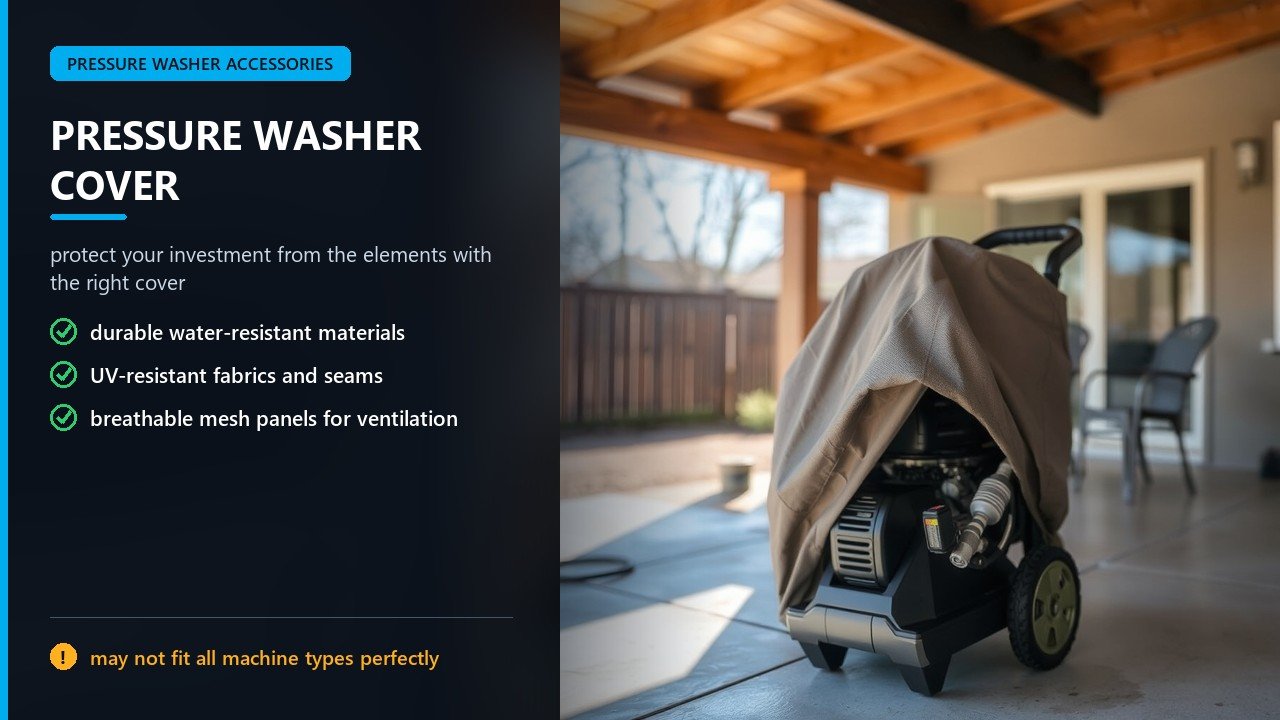
Why a Cover Matters
A cover protects against the main forces that damage stored equipment.
Water and moisture. Rain and snow lead to rust on metal parts and corrosion on connections and the pump.
UV and sunlight. Sunlight degrades plastic housings, rubber hoses, and seals, causing cracking and brittleness over time.
Dust and debris. Dirt settles into vents, filters, and fittings, and can clog the inlet filter and nozzles.
Temperature swings. Repeated freezing and thawing stress components, and standing water can crack pumps and fittings.
Physical protection. A cover shields the machine from incidental bumps, and from nesting animals seeking shelter.
Types of Pressure Washer Covers
Covers come in several styles, each suited to different machines and settings.
Full cover. Covers the entire machine, protecting the whole unit from water, dust, and sun. The most common choice for outdoor storage.
Dust cover. Lighter and often for indoor use, protecting against dust and debris without heavy weatherproofing.
Waterproof cover. Made from materials that repel water, designed for outdoor storage in rain and snow.
Universal vs fitted. Universal covers fit a range of machines but may be loose, while fitted covers match a specific model for a snug fit.
Electric vs gas covers. Electric machines, often smaller, use smaller covers, while gas machines, larger and heavier, need bigger covers with appropriate shape.
Wall-mounted covers. For machines mounted on a wall, a cover designed for that shape protects the unit while allowing access.
| Type | Best For |
|---|---|
| Full cover | Outdoor storage, all-around protection |
| Dust cover | Indoor storage |
| Waterproof cover | Rain and snow |
| Fitted cover | Specific models, snug fit |
| Wall-mount cover | Fixed wall-mounted units |
Materials Matter
The material determines how well a cover protects and how long it lasts.
Polyester. Common and affordable, often treated for water resistance. Good for general use, though thinner types wear faster.
600D oxford fabric. A denser, heavy-duty fabric common in quality covers, offering better durability and water resistance.
Canvas. Durable and breathable, but it can be heavy and requires treatment for full water resistance.
PVC and vinyl. Waterproof and easy to wipe clean, though less breathable, which can trap moisture if not vented.
Lined covers. Some include a soft inner lining to protect finishes from scratches.
Coated fabrics. Water-resistant coatings and UV treatments improve protection and extend the cover’s life.
The best covers use a durable fabric with water resistance, UV protection, and breathability, balancing protection with the need to avoid trapping moisture.
Features to Look For
Good covers include features that improve fit and function.
Waterproof or water-resistant coating. Keeps rain and snow out, with taped or sealed seams for better protection.
UV resistance. Prevents the cover itself from degrading and protects the machine from sunlight.
Breathable vents. Allow moisture and heat to escape, preventing rust and mildew.
Elastic hem or drawstring. Holds the cover tight against wind and keeps it from blowing off.
Zipper or access panel. Allows reaching the machine without full removal, convenient for connected hoses or cords.
Reinforced seams. Add strength at stress points, extending the cover’s life.
Storage bag. A bag keeps the cover tidy when not in use.
Sizing a Cover
Fit is critical for a cover to work.
Measure the machine. Note the length, width, and height of the pressure washer, including the handle and any attached accessories.
Check the cover’s dimensions. Compare them to the machine’s size, allowing a little room without excessive slack.
Avoid too small. An undersized cover strains at the seams and may not fit over the machine at all.
Avoid too large. An oversized cover flaps in the wind, pools water, and leaves gaps where dust and moisture enter.
Fitted vs universal. A fitted cover gives the best fit, while a universal cover is more flexible but looser.
Account for accessories. If a hose reel or accessory is attached, allow for its size or choose a cover designed to accommodate it.
Measuring carefully before buying prevents the common frustration of a cover that does not quite fit.
Indoor vs Outdoor Storage
Where the machine is stored shapes the cover choice.
Indoor storage. A lighter dust cover suffices, protecting against dust and debris without needing heavy weatherproofing.
Outdoor storage. A waterproof, UV-resistant cover is essential, with breathable vents to manage condensation.
Sheltered outdoor. Under a roof or in a shed, a water-resistant cover is usually enough, though full weatherproofing adds safety.
Winter storage. In freezing climates, combine a proper cover with winterizing, since a cover alone cannot prevent freezing damage.
Humidity. In humid areas, breathability matters more, to prevent trapped moisture from causing rust.
Covers and Winterizing
A cover is part of winter protection, not a replacement for it.
Drain the machine. Remove water from the pump, hose, and wand before storage to prevent freezing damage.
Use pump saver. Pump saver fluid protects internal parts from corrosion and freezing.
Store fuel properly. For gas machines, stabilize fuel or drain it as recommended to prevent gumming.
Then cover it. With the machine winterized, a cover protects it from the elements through the cold months.
Elevate if possible. Storing the machine off a cold concrete floor reduces moisture exposure.
Cover Maintenance
Covers need occasional care to keep protecting.
Clean periodically. Wipe or wash off dirt and debris, which can trap moisture and reduce effectiveness.
Dry before storing. Never store a wet cover on the machine, which invites rust and mildew.
Check for wear. Inspect seams, zippers, and coatings for damage, and repair or replace worn covers.
Reapply treatment. Some fabrics can be re-treated with water repellent to restore performance.
Store the cover properly. When not in use, keep it clean and dry in its bag.
A well-kept cover lasts longer and continues protecting the machine for years.
Protecting Hoses, Wands, and Accessories
The machine is not the only thing worth protecting.
Hoses. Rubber and synthetic hoses degrade with UV and crack in cold. Coil and store them out of the sun, ideally with the machine under a cover or in a cabinet.
Wands and guns. Metal wands and guns corrode, and seals harden. Keep them clean, dry, and stored with the machine.
Nozzles. Small and easily lost, nozzles should be stored in a case or bag, protected from dirt that clogs orifices.
Quick connects and fittings. These corrode and collect debris. Cap or bag them when stored.
Detergent bottles. Store chemicals safely, away from freezing, and check for leaks that could damage nearby parts.
A cover over the machine combined with organized storage for accessories keeps the whole kit in good shape. Loose hoses left in the sun and rain often fail before the machine does.
Storage Solutions Beyond Covers
A cover is the simplest option, but other storage can be even better.
Sheds and garages. Indoor storage with a light dust cover protects the machine from weather entirely.
Storage cabinets. A cabinet shields the machine from dust and moisture and keeps the area tidy, often with room for accessories.
Wall-mounted racks. Elevating the machine off the floor reduces moisture exposure and frees space, sometimes with a dedicated cover.
Storage boxes. Weatherproof boxes protect the machine outdoors, provided they allow some ventilation.
Covered carts. A cart with a cover keeps the machine mobile and protected.
The best storage combines a cover with an environment that avoids standing water, direct sun, and extreme temperature swings.
Caring for Different Machine Types
Different machines have different storage needs.
Electric pressure washers. Protect electrical connections and cords from moisture, and store the machine where the power cord will not be damaged. A breathable cover is important to prevent condensation on electrical parts.
Gas pressure washers. Larger and heavier, these need bigger covers, protection for the engine and fuel system, and proper fuel treatment before storage.
Wall-mounted units. A cover designed for wall-mount shapes protects the unit while allowing access, and the fixed location simplifies protection.
Hot water machines. The heating components and fuel systems need protection from moisture and cold, with careful winterizing.
Trailer-mounted units. Larger setups may use fitted covers or tarps designed for the trailer, protecting multiple components at once.
Matching the cover and storage approach to the machine type prevents the specific problems each one faces.
Real-World Examples
Practical scenarios show how covers help.
A homeowner storing a washer in a shed. A light dust cover keeps dust and cobwebs off the machine, which stays ready for spring cleaning.
A contractor storing machines outdoors. Waterproof, UV-resistant covers protect expensive machines between jobs, preventing rust and sun damage.
A farm storing a gas washer in a barn. A durable cover plus winterizing protects the machine from dust, moisture, and freezing over the off-season.
A detail shop with a wall-mounted unit. A wall-mount cover protects the unit from dust and splashes while keeping it accessible for daily use.
In each case, a suitable cover paired with good storage habits keeps the machine in working condition and avoids costly repairs.
Popular Cover Styles Compared
| Style | Protection | Best Environment |
|---|---|---|
| Light dust cover | Dust only | Indoor |
| Water-resistant cover | Dust, light rain | Sheltered outdoor |
| Waterproof cover | Rain, snow, UV, dust | Full outdoor |
| Fitted cover | Depends on fabric | Specific model |
| Wall-mount cover | Dust, splash | Fixed wall unit |
How to Measure and Fit a Cover
Getting the fit right takes a few minutes of measuring.
Measure length. From the front of the machine to the back, including the handle if it extends.
Measure width. Across the widest point, which may include wheels or side handles.
Measure height. From the floor or base to the top of the handle or any upright part.
Note attached accessories. If a hose reel, gun holder, or other accessory is attached, add its size or plan to remove it.
Compare to the cover. Match your measurements to the cover’s listed dimensions, allowing a small margin.
Test the fit. Once received, fit the cover and check that it sits snugly without tight strain or loose flapping.
Measuring carefully avoids the disappointment of a cover that is too tight to fit or so loose it flaps and pools water.
Benefits of a Quality Cover
A good cover pays off in several ways.
Longer machine life. Protecting against water, UV, and dust delays wear on the pump, hoses, and housing.
Fewer repairs. Preventing rust and corrosion avoids costly fixes down the line.
Reliability. A protected machine is more likely to start and perform well when needed.
Cleanliness. The machine stays free of dust and debris, reducing prep before use.
Resale value. A well-kept machine holds value better than one left in the weather.
Peace of mind. Knowing the machine is protected lets you leave it stored without worry.
Weighed against the low cost of a cover, these benefits make it an easy decision for anyone storing a pressure washer outdoors or in a dusty space.
Common Mistakes to Avoid
Buying the wrong size. Too small does not fit, and too large flaps and pools water. Measure the machine before buying.
Choosing a non-breathable cover. A cover that traps moisture can cause rust and mildew. Choose breathable materials with vents.
Skipping winterizing. A cover alone does not prevent freezing damage. Drain and protect the machine first.
Covering a wet machine. Storing a machine wet under a cover invites corrosion. Dry it before covering.
Ignoring UV resistance. A cover without UV protection degrades quickly and lets sunlight damage the machine.
Using an indoor dust cover outdoors. Light covers cannot withstand rain and sun. Match the cover to the storage environment.
Forgetting accessories. A cover that does not account for attached hoses or reels may not fit. Consider machine size with accessories.
Frequently Asked Questions
Do I really need a cover for my pressure washer? If the machine is stored outdoors or in a dusty area, yes. A cover protects against water, UV, dust, and temperature swings, extending its life.
What material is best for a pressure washer cover? A durable, water-resistant, UV-treated fabric that breathes, such as heavy oxford polyester with vents, offers the best balance of protection and longevity.
Should a pressure washer cover be waterproof or breathable? Ideally both. Waterproofing keeps rain out, while breathability lets moisture escape, preventing rust and mildew under the cover.
How do I choose the right cover size? Measure the machine’s length, width, and height, including handle and accessories, and match those dimensions to the cover, allowing slight room.
Can I cover a pressure washer while it is still wet? No. Dry the machine first. Covering it wet traps moisture, which leads to rust and mildew.
Will a cover protect my pressure washer from freezing? Not by itself. Winterize the machine by draining water and using pump saver fluid, then cover it for additional protection.
Are universal covers as good as fitted covers? Fitted covers provide a snugger fit, while universal covers are more flexible but looser. A fitted cover usually protects better when available for your model.
How much should I spend on a pressure washer cover? A quality cover is inexpensive relative to the machine. Prioritize durable, water-resistant, breathable fabric over the very cheapest option, which may fail quickly.
Can I leave my pressure washer covered outside all winter? Yes, with a waterproof, UV-resistant cover and proper winterizing. A cover alone will not prevent freezing damage, so drain and protect the machine first.
Do covers come with a warranty? Many quality covers include a limited warranty. Check the terms, as coverage varies by brand and material.
What if my cover is slightly too big? A slightly large cover can be secured with a drawstring or straps, but an oversized cover will flap and pool water, so choose the closest fit possible.
Should I cover the machine if I use it often? If it is stored outdoors or in a dusty area, yes. For frequent use, a cover with easy access, such as a zipper, balances protection with convenience.
Final Thoughts
A cover for power washer storage is a small purchase with an outsized effect. By blocking water, UV, dust, and temperature swings, it protects the pump, hoses, and housing from the slow damage of idle storage, keeping the machine ready for the next job.
Choose a durable, water-resistant, and breathable cover sized to your machine, match it to whether you store indoors or out, and pair it with proper winterizing. Cared for well, a quality cover will protect your pressure washer for years, and cost far less than the repairs it prevents.