The high-pressure hose is the pressure washer’s lifeline, and at 4000 PSI it is under serious strain. Every pulse of the pump, every trigger pull, and every foot of length puts stress on the hose’s walls, fittings, and reinforcement. A hose rated for 4000 PSI is built to survive that, but only if it is chosen and used correctly. This guide explains what a pressure washer hose 4000 psi rating means, how such hoses are made, and how to select and care for one that will not fail under pressure.
The number on a hose is not decoration. It reflects the pressure the hose is designed to handle, with a safety margin. Choosing a hose at or above your machine’s pressure, with the right size and fittings, is the difference between reliable performance and a dangerous burst.
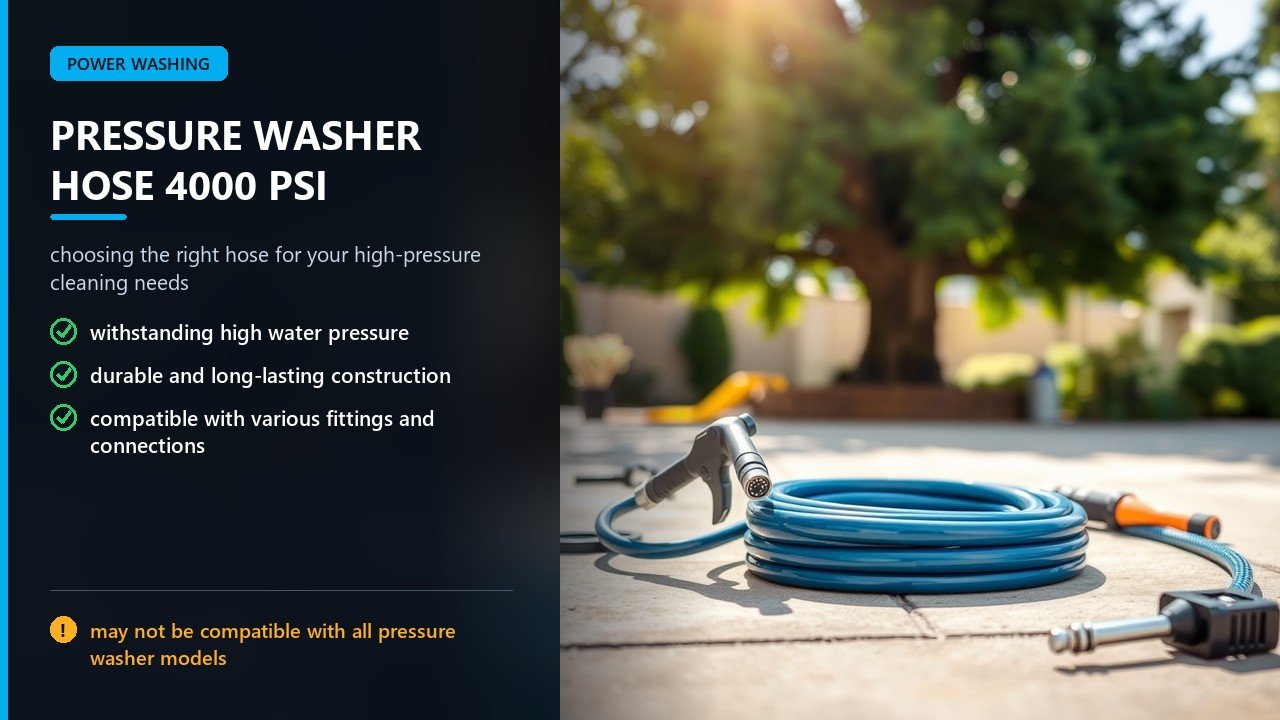
What the 4000 PSI Rating Means
A hose’s pressure rating tells you what it can safely handle.
Working pressure. The working pressure is the pressure the hose is designed to withstand in normal continuous use.
Burst pressure. The burst pressure is far higher, often several times the working pressure, providing a safety margin for spikes.
Safety factor. The gap between working and burst pressure is the safety factor, which protects against surges and wear.
Rating vs machine. A 4000 PSI hose suits machines up to 4000 PSI, with the margin covering normal pressure spikes.
Why it matters. Using a hose rated below the machine’s pressure is dangerous, as the hose can burst and cause injury.
How High-Pressure Hoses Are Built
The construction determines strength, flexibility, and durability.
Inner tube. A smooth inner tube carries the water without restricting flow and resists chemicals and temperature.
Reinforcement. Layers of braided or spiraled wire or fiber give the hose its strength to withstand pressure.
Single vs double braid. More reinforcement layers mean higher pressure ratings and durability. High-pressure hoses often use two or more braids.
Outer cover. A tough outer jacket protects the reinforcement from abrasion, UV, oil, and weather.
End fittings. The couplings at each end are crimped or pressed on and must be rated for the hose’s pressure.
Materials. Rubber and thermoplastic are common, each with trade-offs in flexibility, weight, and durability.
Hose Materials Compared
Material affects how a hose feels and lasts.
Rubber. Durable, flexible in cold, and resistant to abrasion and kinking, rubber hoses are the traditional choice for high pressure.
Thermoplastic. Lightweight, resistant to chemicals and UV, and often more flexible, thermoplastic hoses are popular for their easy handling.
PVC. Lighter and cheaper, PVC hoses suit lower pressures and lighter use, less suited to high-pressure demanding work.
Hybrid blends. Some hoses combine materials to balance weight, flexibility, and durability.
Cover treatments. Abrasion-resistant and UV-resistant outer covers extend hose life in harsh conditions.
| Material | Strength | Best For |
|---|---|---|
| Rubber | Very good | High pressure, cold weather |
| Thermoplastic | Good | Flexible, chemical resistance |
| PVC | Fair | Light-duty use |
| Hybrid | Good | Balanced weight and durability |
Hose Sizes and Flow
The inner diameter affects flow and performance.
1/4 inch. Common on standard and lighter machines, adequate for many home and light commercial uses.
3/8 inch. The standard for most high-pressure machines, offering good flow with manageable weight.
1/2 inch. Larger flow for high-GPM machines and long runs, but heavier and stiffer.
Flow and pressure. A larger diameter flows more water at less pressure loss, which matters for long hoses and high-flow machines.
Length and pressure loss. Longer hoses lose more pressure to friction, so choose the shortest hose that reaches, or a larger diameter for long runs.
Matching the machine. Match the hose size to the machine’s flow and the job’s reach needs.
| Diameter | Flow | Typical Use |
|---|---|---|
| 1/4 inch | Lower | Light and standard machines |
| 3/8 inch | High | Most pressure washers |
| 1/2 inch | Very high | High-flow, long runs |
Fittings and Connections
Fittings must match the machine and withstand the pressure.
M22 threads. Common at the pump and gun, in male and female versions and slight variants.
Quick connects. Many hoses use quick connects for fast changes, in sizes like 1/4-inch and 3/8-inch.
Crimp vs reusable. Factory-crimped fittings are sealed permanently, while reusable fittings allow field repair but must be installed correctly.
Rated fittings. End fittings must be rated for the hose’s pressure, or they become the weak point.
Adapters. Adapters bridge differences between thread types and quick connect sizes.
Swivels. Swivel ends reduce kinking and twisting at the gun, improving control and hose life.
Choosing a 4000 PSI Hose
Selecting the right hose starts with the machine and the job.
Match the pressure rating. Choose a hose rated at or above your machine’s pressure, never below.
Match the size. Pick the inner diameter that suits your machine’s flow and the length you need.
Match the fittings. Confirm the hose fits your pump, gun, and accessories, or plan for adapters.
Consider length. Use the shortest hose that reaches, since longer hoses lose pressure and are heavier.
Choose the material. Rubber for durability and cold, thermoplastic for flexibility and light weight.
Prioritize quality. A quality hose with rated fittings lasts longer and is safer than a cheap one.
Check temperature rating. If using hot water, ensure the hose is rated for the temperature.
Using a High-Pressure Hose Safely
A 4000 PSI hose demands respect.
Inspect before use. Check for cuts, bulges, abrasion, or worn fittings that signal weakness.
Never exceed the rating. Do not use a hose below your machine’s pressure, and avoid pressure spikes.
Keep it off sharp edges. Abrasion against concrete edges and metal cuts the outer cover and weakens the hose.
Avoid kinks. Kinks stress the hose and restrict flow. Prevent them with proper routing and a swivel.
Protect from heat. Keep the hose away from hot engine parts, exhausts, and open flame.
Handle pressure release. Release pressure before disconnecting, and never disconnect under load.
Care and Maintenance
Proper care extends a hose’s life and keeps it safe.
Coil properly. Coil the hose in large loops rather than tight, kinked circles.
Store out of the sun. UV degrades hoses, so store them indoors or covered.
Keep it clean. Wipe off oil, chemicals, and grit that degrade the cover.
Use a reel. A hose reel prevents kinks and abrasion and makes storage easy.
Winterize. Drain the hose before freezing weather to prevent cracks.
Replace when worn. A hose with cuts, bulges, or exposed reinforcement should be replaced before it fails.
Pressure Spikes and Water Hammer
The pressure a hose actually faces is not always steady.
Water hammer. When the trigger closes suddenly, the moving water stops abruptly, sending a pressure spike through the hose. This is water hammer, and it can momentarily exceed the working pressure.
Burst margin’s role. The gap between working and burst pressure is what absorbs these spikes safely.
Trigger cycling. Frequent trigger pulls cycle the pressure repeatedly, stressing the hose and fittings over time.
Unloader protection. The machine’s unloader redirects flow and limits spikes, but the hose still experiences them.
Why margin matters. Because of water hammer and other surges, running a hose near its limit is unwise. A higher-rated hose provides protection.
Understanding spikes explains why manufacturers include a large safety factor and why using an underrated hose is risky even if the machine’s steady pressure seems within range.
Hose Length and Pressure Loss
Length has a real effect on performance.
Friction loss. Water rubbing against the hose walls loses pressure, and the loss grows with length.
Diameter effect. A larger diameter loses less pressure over the same distance, so long runs benefit from a wider hose.
Practical limits. Very long hoses can drop pressure enough to noticeably weaken cleaning, requiring compensation with a larger size or a stronger machine.
Extending correctly. If you must extend, use a coupler rated for the pressure and matched fittings, and consider a larger diameter for the added length.
Balance. The goal is the shortest hose that comfortably reaches the work, since shorter means better flow and easier handling.
| Length | Pressure Loss | Note |
|---|---|---|
| Short (25 ft) | Minimal | Best flow and control |
| Medium (50 ft) | Slight | Common, manageable |
| Long (100 ft) | Noticeable | Consider larger diameter |
| Very long (150+ ft) | Significant | Use wider hose or accept loss |
Hot Water and Chemical Compatibility
The hose must suit not just pressure, but temperature and chemicals.
Temperature rating. Hot water machines need a hose rated for heat, as standard hoses may soften or fail at high temperatures.
Chemical resistance. Detergents and cleaning chemicals can degrade some hose materials, so choose a hose resistant to the chemicals you use.
Inner tube material. The inner tube is what contacts the water and chemicals, so its material matters for compatibility.
Cold-weather flexibility. Rubber hoses stay flexible in cold, while some plastics stiffen, which matters for cold-climate use.
UV resistance. Outdoor use exposes the hose to UV, so a UV-resistant cover extends its life.
Choosing a hose for the conditions it will face, not just the pressure rating, prevents premature failure.
Hose Reels and Storage
How you store a hose affects how long it lasts.
Hose reels. A reel keeps the hose coiled evenly, prevents kinks, and protects it from abrasion and tangles.
Mounting. Reels can be mounted on the machine, a wall, or a cart, keeping the hose organized and ready.
Avoid tight coils. Hand-coiling in tight circles creates kinks and stress points. Coil in large loops if not using a reel.
Protect from sun. Store the hose out of direct sunlight to prevent UV degradation.
Drain before storage. Empty water from the hose to prevent freezing cracks and corrosion.
Inspect while coiling. Coiling by hand is a chance to spot cuts, bulges, or worn spots.
Real-World Examples
Practical scenarios show how hose choice plays out.
A homeowner with a 3200 PSI machine. A 3/8-inch, 4000 PSI hose with a swivel gives smooth flow and easy handling, with margin to spare.
A contractor using a 4000 PSI machine. A heavy-duty double-braid hose rated for the machine’s pressure withstands daily use and trigger cycling, while a cheaper hose would fail.
A hot-water user. A heat-rated hose handles the elevated temperatures of a hot-water machine, where a standard hose would soften and burst.
A remote jobsite. A longer hose reaches the work, and the user accepts slight pressure loss or steps up to a wider diameter to compensate.
In each case, matching the hose to the pressure, temperature, size, and fittings is what keeps the setup safe and effective.
Common Mistakes to Avoid
Using an underrated hose. A hose below the machine’s pressure can burst dangerously. Match or exceed the rating.
Choosing the wrong size. A narrow hose restricts flow, while too large is heavy and awkward. Match size to the machine.
Ignoring fittings. Mismatched or underrated fittings leak or fail. Match them or use adapters.
Using a garden hose. A garden hose cannot handle high pressure and must never replace a high-pressure hose on the working side.
Letting the hose kink. Kinks restrict flow and damage the hose over time. Route it carefully.
Neglecting inspection. Worn hoses fail without warning. Check yours regularly for damage.
Storing poorly. Tight coils and sun exposure shorten hose life. Store it coiled and covered.
Extending with cheap couplers. A coupler rated below the hose’s pressure becomes a failure point. Use rated couplers and matched fittings.
Running near the limit. Because of pressure spikes, running a hose near its maximum is unwise. Allow margin.
Buying Guide Summary
Pulling the considerations together makes buying simple.
Pressure rating first. Choose a hose rated at or above your machine’s pressure, with margin for spikes.
Size second. Match the inner diameter to your machine’s flow and the length you need, favoring 3/8-inch for most machines.
Fittings third. Match the connections to your pump, gun, and accessories, or plan for adapters, and ensure fittings are pressure-rated.
Material and temperature. Choose rubber or thermoplastic based on durability, weight, and whether you use hot water.
Quality over price. A well-made hose with rated fittings costs a little more and lasts far longer, safely.
Consider a reel. A hose reel protects the hose and keeps the setup organized.
With these steps, choosing a pressure washer hose 4000 psi rated for your needs becomes straightforward, and the payoff is reliable, safe performance for years.
A Simple Care Routine
A few minutes of care after each use keeps a high-pressure hose in good shape.
After use. Release pressure, disconnect carefully, and drain the hose.
Wipe down. Remove oil, chemicals, and grit that degrade the cover.
Inspect. Check for cuts, bulges, abrasion, and worn fittings before coiling.
Coil and store. Coil in large loops or on a reel, and store out of the sun.
Before storage in winter. Drain fully and store where it will not freeze.
Periodically. Re-check fittings and the cover for wear, and replace the hose at the first sign of serious damage.
This routine takes little effort and dramatically extends the life of a hose that is doing hard work under high pressure.
Frequently Asked Questions
What does a 4000 PSI pressure washer hose rating mean? It means the hose is designed to withstand up to 4000 PSI in normal use, with a much higher burst pressure as a safety margin.
Can I use a 4000 PSI hose on a lower-pressure machine? Yes. A higher-rated hose is safe on a lower-pressure machine and provides extra margin, though it may be heavier than necessary.
What size pressure washer hose do I need? For most machines, 3/8-inch is standard. Smaller machines may use 1/4-inch, and high-flow machines favor 3/8-inch or 1/2-inch.
How long can a pressure washer hose be? Length increases pressure loss, so use the shortest hose that reaches. For long runs, choose a larger diameter to limit the loss.
Does hose length affect pressure? Yes. Longer hoses lose more pressure to friction, which can reduce cleaning performance, especially with narrow hoses.
How do I know if my pressure washer hose is bad? Look for cuts, bulges, exposed reinforcement, or leaking fittings. Any of these means the hose should be replaced.
Can a pressure washer hose be repaired? Some hoses accept reusable fittings for field repair, but a badly damaged hose should be replaced for safety.
How do I connect two hoses together? Use a coupler rated for the pressure with matching fittings, and inspect the joint for leaks. Keep the combined length reasonable to limit pressure loss.
Can a 4000 PSI hose be repaired if it bursts? Generally not safely. A burst hose has failed at its weakest point and should be replaced, though reusable fittings can repair damaged ends in some cases.
What is the best hose material for cold weather? Rubber stays flexible in cold, making it the best choice for cold-climate use, while some plastics stiffen and crack.
How often should I replace a pressure washer hose? Replace it at the first sign of cuts, bulges, exposed reinforcement, or leaking fittings, rather than waiting for failure.
Does a longer hose reduce pressure? Yes, longer hoses lose more pressure to friction. Use the shortest hose that reaches, or a larger diameter for long runs.
Troubleshooting Hose Problems
Matching the symptom to the cause speeds fixes.
Leaks at the fittings. A worn o-ring or loose connection is the usual cause. Replace the o-ring or reseat the fitting.
Water spraying through the cover. A bulge or worn spot means the reinforcement is failing. Replace the hose immediately, as it is unsafe.
Reduced pressure. A long or narrow hose, a kink, or a partially clogged line reduces flow. Check for kinks and consider a shorter or wider hose.
Hose stiffens in cold. Some materials harden at low temperatures. Rubber hoses stay flexible, so switch materials for cold weather.
Fittings corroded. Moisture and chemicals corrode fittings over time. Clean and protect them, and replace badly corroded ends.
Hose bursts. Usually the result of age, damage, or use above the rating. Replace it and confirm the new hose meets your machine’s pressure.
Most hose problems come down to wear, kinks, or a rating mismatch, all of which are preventable with care and correct selection.
Extending and Customizing Your Hose Setup
Sometimes the standard hose length or fitting does not fit the job.
Adding length. Use a coupler rated for the pressure to join hoses, and keep added length reasonable to avoid pressure loss.
Switching fittings. Adapters convert M22 threads to quick connects or change sizes, letting one hose fit different equipment.
Adding a swivel. A swivel at the gun prevents twisting and kinking, improving control and hose life.
Using a reel. A reel keeps a long hose manageable and protected, especially for fixed setups.
Matching accessories. Ensure couplers, adapters, and accessories are all rated for the machine’s pressure.
A thoughtfully customized hose setup flows smoothly, lasts longer, and makes daily use more pleasant, whether for a home machine or a commercial operation.
Final Thoughts
A pressure washer hose 4000 psi is more than a tube of rubber. It is an engineered component with reinforcement, rated fittings, and a safety margin that stands between you and the machine’s power. Choosing one rated at or above your machine’s pressure, with the right size and connections, keeps you safe and your cleaning effective.
Inspect it before use, route it to avoid kinks and sharp edges, and store it coiled and out of the sun. Cared for properly, a quality 4000 PSI hose delivers reliable flow and withstands years of demanding use, quietly doing one of the most important jobs in the entire pressure washing setup.