If you have been comparing machines and searching for the best heated pressure washer, the appeal is easy to understand. Hot water cuts grease, lifts oil, and dissolves grime in a way cold water simply cannot match, which is why professional cleaners reach for heat on the jobs that really matter. This guide explains how heated pressure washers work, what the heat actually does, the fuels and heating methods available, and how to choose a machine that earns its money.
What a Heated Pressure Washer Actually Is
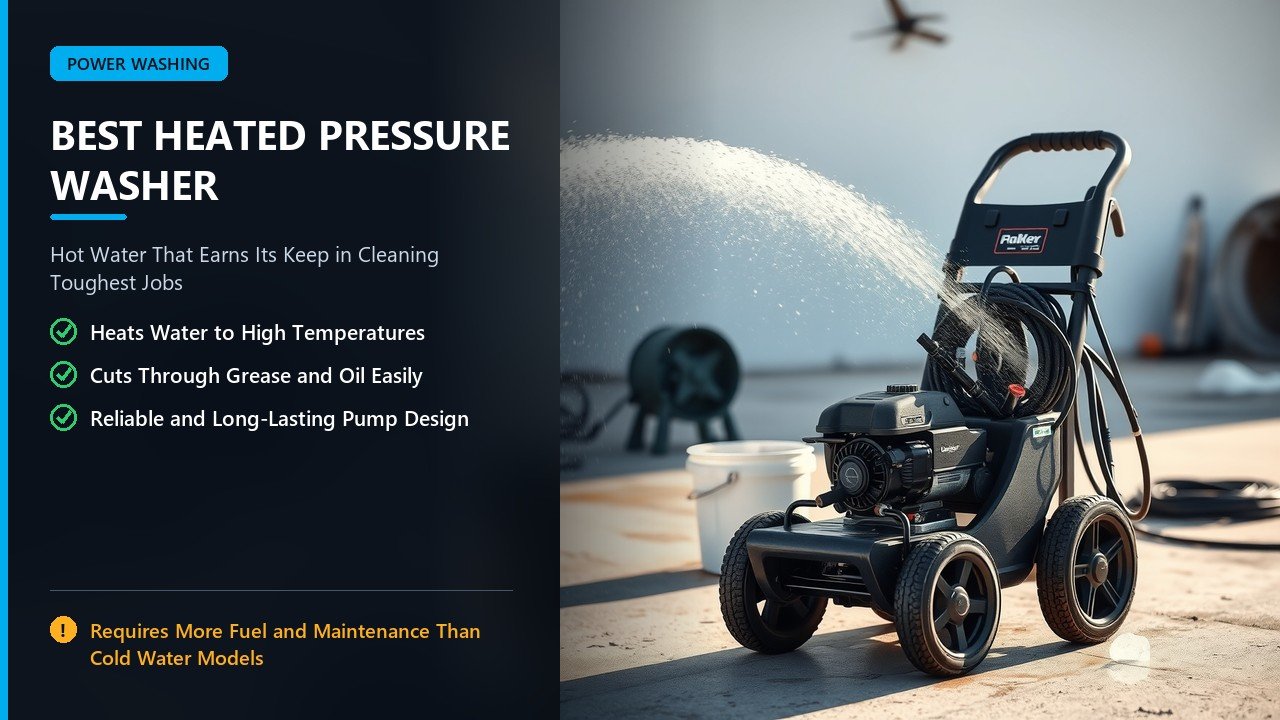
A heated pressure washer is best described as two machines in one: a normal high pressure pump, and a burner that heats the water before it reaches the nozzle. Understanding how those halves fit together explains both the price and the care the machine needs.
Heat is added after the pump, not before it. The heat in these machines is applied downstream of the pump, so cold water is pressurised first and only then heated as it passes through a coil. That order matters enormously, because pumps and seals are designed for cold water; pushing hot water through them would quickly destroy the seals and shorten the pump’s life. By heating on the discharge side, the machine keeps its pump cool and reliable while still delivering hot water at the wand. The heat source, usually a burner or heater, sits between the pump and the nozzle, warming the coil that the water flows through. This is why a heated pressure washer is larger and heavier than a cold one, and why the hot side needs its own maintenance. The design is deliberate, and it is what lets the machine deliver heat without sacrificing the pump.
Heat changes what water can do. Cold water cleans by force alone, so it removes loose dirt well but struggles with anything greasy or baked on. Heat changes that equation. Warm water thins fats and oils, softens grime, and helps detergent work faster, so a hot water pressure washer lifts soil that cold water would only smear. The result is a machine that cleans stubborn surfaces in fewer passes and with less chemical, which saves both time and money on tough jobs. It is not that hot water is stronger in a blind test of pure pressure; it is that heat attacks a different kind of dirt. Grease, oil, cooking film, and road grime respond to temperature in a way they never respond to pressure alone, and that is the real reason professionals pay for heat. Where grease is part of the job, that difference decides how long a task takes and how much chemical it costs. This is exactly why hot water pressure washing has become the standard in demanding trades.
What the Heat Actually Does on a Job
Understanding exactly what heat does to soil and surfaces helps you judge whether a heated machine is worth its cost for the work you do. The benefits fall into two clear effects.
Heat dissolves grease and oil. Grease thins and flows as it warms, so a hot water pressure washer carries oil and fat off a surface instead of pushing it around. On restaurant hoods, engine bays, and machinery, that difference is dramatic: the grease that cold water smears becomes a liquid the hot stream simply washes away. This is why food service and automotive cleaning rely on heat so heavily. The same applies to drive through lanes, bin stores, and workshop floors where oily soil builds up week after week. Cold water tends to drive grease deeper into porous surfaces, while hot water lifts it and lets the flow rinse it clear. For anyone whose regular work involves grease, heat is not a convenience; it is the tool that makes the job possible in a reasonable time. On oily surfaces, cold water is not just slower, it is often defeated entirely.
Heat lifts grime with less pressure. Because hot water loosens dirt more readily, a heated machine cleans effectively at lower pressure and with fewer passes. That is both faster on stubborn soil and gentler on delicate surfaces, since reducing pressure reduces the risk of etching concrete or stripping paint. Mud, mold, and weathered film release more easily when warm, so the same wand and nozzle accomplish more in less time. Across a long day of cleaning large areas such as paving, fleet vehicles, or building exteriors, that gain compounds, turning hours of work into something far shorter. Lower pressure also means less fatigue for the operator, because the wand is doing less fighting. Heat, in other words, buys both speed and safety at the same time, which is a rare and valuable combination in any cleaning tool. Speed without added risk is exactly what a busy operator needs, because it means more jobs finished without a call back for a damaged surface.
The Fuels and Heating Methods Available
Once the name makes sense, the biggest choice in the range is between gas and electric power. Both types are sold under the same names and both clean well, but they suit very different situations. The table below compares the common heating methods at a glance before we look at what those differences mean in daily use.
| Heat source | Best for | Watch out for |
|---|---|---|
| Diesel burner | Mobile, high heat, any location | Fuel storage and exhaust fumes |
| Propane burner | Cleaner burn, remote sites | Cylinder handling and storage |
| Natural gas | Fixed indoor or workshop setups | Needs a permanent gas line |
| Electric heater | Indoor, low emission areas | High power draw, lower heat output |
Diesel heated pressure washers are the workhorse. A diesel heated pressure washer burns fuel oil to heat a coil, reaching high temperatures quickly and running wherever the machine can go. There is no need for mains gas or a fixed power supply, which makes diesel the standard choice for mobile cleaning businesses, from fleet washing to driveway and building work. It delivers serious, sustained heat, so greasy commercial jobs that would take all day with cold water become manageable within hours. The trade off is that you must store fuel, service the burner now and then, and route exhaust away from the work area and any people nearby. For anyone searching for a capable heated pressure washer for sale, diesel models are usually the most flexible and the most powerful for the money, which is why so many professional operators build their service around them. Reach for diesel when you need strong, reliable heat anywhere and on demand, without a fixed line or socket in sight. For cold weather or tighter budgets, a kerosene pressure washer can still get the job done.
Propane, natural gas, and electric each suit specific settings. A propane heated pressure washer burns more cleanly than diesel and stores easily in cylinders, so it works well at remote sites where fuel handling is awkward, though it can cost more per unit of heat. Natural gas is cheap and convenient where a fixed line already exists, making it ideal for a workshop or an indoor wash bay, but it ties the machine to one location. An electric heated pressure washer is quiet and emission free, a good fit for indoor or noise sensitive areas, yet it draws a lot of power and generally produces less heat, so it suits lighter or indoor tasks rather than heavy outdoor cleaning. Matching the fuel to where and how you work matters more than any single number, because the wrong fuel makes an otherwise excellent machine awkward to live with. Think about refuelling, storage, and venting before you commit, because those practical details decide how pleasant the machine is to own. Where a gas line already runs, a natural gas pressure washer is the low fuss choice, and nothing beats it for staying put.
Hot Water vs Cold Water: What the Difference Is Worth
The case for heat is not that hot water feels nicer; it is that hot water does things cold water cannot, and the gap shows most clearly on the dirtiest jobs. Weighing the two honestly keeps you from overspending.
Heat wins on grease, oil, and protein soil. Cold water struggles with fats, oils, and the sticky films left by cooking, traffic, and machinery, because those soils repel water and cling to the surface. A hot water pressure washer thins and lifts them, often without aggressive chemicals, so the surface comes clean faster and stays clean longer. For a commercial kitchen, an auto shop, or a farm workshop, that is not a small convenience but a change in what work is practical and how quickly it can be done. Heat also reduces the chemical load, which matters for cost, for the environment, and for surfaces that strong cleaners might damage. Where grease is routine, hot water pays for itself through speed and reduced chemical use, and the machine quickly becomes the tool you reach for first rather than last. On greasy work, heat becomes the default rather than the exception, and the cold setting starts to feel like a step backwards. Put plainly, the cold water vs hot water pressure washer debate usually ends the moment real grease appears.
Cold water still has a place. Cold water handles plain dirt, mud, dust, and light grime perfectly well, and a cold machine costs less to buy, runs with less fuel, and needs less maintenance. For patios, garden furniture, siding, and cars that are only lightly soiled, cold water does the job and saves you the cost of a burner you would rarely use. The honest rule is simple: buy heat for grease, oil, and commercial soil, and stay cold for light, occasional cleaning. Spending on heat you do not need steals budget that could go to a better pump, more flow, or stronger build quality, all of which improve every job. Buy the machine that fits the work in front of you, and the question of hot versus cold answers itself. If most of your jobs are greasy, buy heat with confidence; if they are not, save the money and let cold water do the honest work. It really is that simple.
Heating Methods and the Coil
The heart of any heated machine is the coil, the coiled tube the burner warms to heat the water. Understanding the coil explains both the performance and the maintenance a heated pressure washer demands.
The coil is where the heat transfers. Inside a heated pressure washer, water flows through a long coil of tubing while a burner plays flame across its outside. The metal, often steel or a similar heat resistant material, absorbs the flame’s energy and passes it into the water, so the water leaves the coil hot and ready for the wand. The size and quality of the coil decide how quickly the machine reaches temperature and how well it holds heat during long, continuous work. A generous, well made coil heats faster and recovers quickly after each trigger squeeze, while a small or fouled coil struggles and wastes fuel. The coil is also the part most exposed to water chemistry, which is why the condition of your water, and how often you descale, decides how well the machine performs over its lifetime and how costly the fuel bill becomes. Treat the coil as the heart of the machine and give it clean water, and it will reward that care with steady heat for years. Some builders wrap the flame tightly around the burner coil, and at the top end a steam pressure washer runs even hotter.
Scale and soot are the enemy of heat. Hard water leaves mineral scale inside the coil, coating the metal and blocking the transfer of heat from flame to water, so a scaled coil heats slowly and burns extra fuel to do it. On the outside, incomplete combustion leaves soot, which insulates the coil and has the same effect from the other direction. Both problems creep up quietly, so the machine feels fine until one day the water is only warm and the fuel vanishes faster than before. Regular descaling with a suitable solution, plus a clean burner and correct combustion, keeps the heat flowing as it should. Ignoring these two maintenance tasks is the fastest way to turn a strong heated machine into a weak, thirsty one, and to shorten the life of the most expensive part of the unit. Descaling costs very little and takes an afternoon, while replacing a scaled out coil costs a great deal more than most owners expect. Regular coil descaling is the cheapest defence against that outcome, and it takes very little time.
Fuels, Costs, and What You Actually Need
Choosing a heated pressure washer is as much about running costs and fuel logistics as it is about heat output, so it pays to look past the sticker price before you buy.
Fuel choice drives daily cost. Diesel is widely available and energy dense, so it heats strongly, but it carries the cost of fuel and the need for safe storage. Propane burns cleanly and stores well in cylinders, often at a slightly higher price per unit of heat, while natural gas is cheap and convenient where a permanent line exists. Electricity avoids fuel handling entirely but draws heavy power and tends to produce less heat, which limits it to lighter or indoor work. These differences add up over a season of regular use, so the cheapest machine to buy is not always the cheapest to run. Think about the price of fuel in your area, how often you will run the burner, and whether refuelling is convenient, because daily operating cost often matters more than the purchase price over the life of the machine. Price the fuel in your area before you fall in love with a machine, because the daily running cost can surprise even careful buyers. Ignore this, and the true heated pressure washer cost will surprise you again by the end of the first busy season.
Match the machine to your work. Decide honestly how often you will use heat, what you will clean, and where the machine will operate. A mobile fleet or kitchen cleaning business needs a strong diesel heated pressure washer and will justify its fuel and maintenance every week. A workshop with an existing gas line may prefer natural gas for convenience. A homeowner who occasionally faces grease might do better with a cold machine and the right detergent than with a heated unit that mostly sits idle. Let the job set the size and the fuel, not the marketing, and choose a machine you will actually use enough to make its cost worthwhile. Matching the heated pressure washer to real work is the single most reliable way to get value from the purchase over its whole life. Fit the machine to the work you actually have, and every week of use quietly confirms it was the right call. Shop a hot water pressure washer for sale with the same discipline you would apply to any serious tool.
What Heated Pressure Washers Clean Best
A heated machine shines on particular kinds of work, and knowing which jobs benefit most keeps you from buying heat you will never use. Two categories stand out above the rest.
Commercial and industrial work. Restaurants, kitchens, and food service operations generate grease that only heat removes well: exhaust hoods, filters, floor drains, drive through lanes, and bin areas all clean far faster with hot water. Industrial settings add oil, coolant, and heavy grime that cold water merely spreads around. A diesel heated pressure washer makes these jobs quicker, more thorough, and less dependent on aggressive chemicals, which is safer for the surfaces and the operator alike. For anyone doing this work regularly, a heated machine is not an upgrade but a basic requirement of the trade, and its fuel bill is simply part of the cost of doing the job properly and profitably, week in and week out, without the frustration that cold water brings to greasy work. Where grease is routine, heat quickly becomes the faster and cheaper option overall, even after the fuel bill is counted and set beside every other running cost. That adds up fast. In these settings the hot water pressure washer benefits are clearest, and a heated pressure washer for cleaning grease pays back quickly.
Fleet, farm, and heavy equipment. Vehicles, tractors, trailers, and construction machinery collect oil, road film, and grime that cold water only pushes across the surface. Hot water cuts that layer and rinses it away cleanly, so vehicles and equipment come clean faster and return to service sooner, which matters when machines are earning money every hour they run. For farms and contractors, the time saved quickly outweighs the cost of fuel, and the finish is markedly better than a cold wash can achieve. Heat also lets you clean at lower pressure, which is gentler on paint, seals, and decals while still producing a deep clean. On fleets and equipment, that combination of speed, quality, and care is exactly what a heated machine is built to deliver. Speed, a clean finish, and a gentle touch, all delivered on the same job, keep a fleet or a farm running on schedule, on budget, and without costly delays. In the cold months, winter pressure washing of salt and grime keeps that fleet presentable and protected.
Using Heat Well: Water, Chemicals, and Distance
A heated pressure washer rewards good technique, and a few habits keep the machine efficient while protecting the surfaces you clean.
Clean water protects the coil. Because the coil is sensitive to scale, feeding the machine clean water and descaling on schedule keeps heat transfer strong and fuel use low. Fit a filter on the supply and check water hardness if you can, especially in hard water areas where deposits build quickly. Protecting the coil is really about protecting the most valuable, hardest working part of a heated machine, and it pays off in consistent heat and a longer service life. Owners who ignore the water supply are the ones who complain that their machine no longer gets hot, when the truth is usually a coil quietly clogged with mineral scale. A little attention to water quality and regular descaling prevents that decline and keeps the machine performing the way it did when it was new. Clean water and regular descaling are the cheapest insurance a heated machine owner can buy, and the easiest to forget.
Let heat work with the right nozzle and distance. Because hot water lifts grime more easily, you can often use a wider pattern and stand further back, letting the heat and the flow do what pressure alone once had to force. That approach is safer for paint, seals, and concrete, and it wastes less water and fuel. Pre soak heavy soil, let heat and detergent dwell to break the grime down, then rinse with a wide fan. Moving slowly and overlapping your passes gives an even finish, and resisting the urge to narrow the nozzle when a little patience would do the job better. Used this way, heat becomes a controlled advantage rather than extra force, and the machine delivers both a faster clean and a safer one on every surface it touches. Good technique, not brute force, gets the most from heat while keeping surfaces safe and fuel use low.
Maintenance for Heated Pressure Washers
A heated machine asks for more care than a cold one, and most of that care protects the burner and the coil, the two parts that make the heat possible.
Service the burner and clean the coil. A sooted coil or a fouled burner wastes fuel and cuts heat, so follow the service schedule for the fuel filter, the burner, and the coil itself. Regular descaling keeps the inside of the coil transferring heat efficiently, and cleaning soot keeps the outside doing the same. Together these two tasks are the core of heated machine maintenance, and neglecting either shows up quickly as weak heat and poor fuel economy. On a diesel machine, fuel and air filters deserve the same attention, because a starved or dirty burner runs badly and leaves more soot behind, which then harms the coil. Keeping to this routine protects the expensive hot side and keeps the machine efficient through years of steady work. A little routine now avoids a costly repair later, when weak heat and high fuel bills arrive together and both point to a neglected burner and a coil overdue for a clean. Kept on schedule, heated pressure washer maintenance stays manageable and prevents the worst surprises.
Protect the pump, seals, and hot side. Even though the heat sits downstream of the pump, high temperatures still stress hoses, seals, and fittings over time, so use parts rated for the heat and inspect them regularly. Change the pump oil on schedule, watch for leaks, and winterize carefully, because trapped water in the pump or coil can freeze and crack metal when the temperature drops. Treat the machine as two systems, a cold high pressure side and a hot burner side, and give each the care it needs rather than assuming one routine covers both. Done consistently, this attention keeps a heated pressure washer running strongly for years of hard work, and it prevents the small failures that otherwise grow into expensive repairs. Care is always cheaper than cure on a heated machine, especially on the hot side, where parts are costly, slow to source, and able to put the machine out of action for days. On a burner pressure washer, the pressure washer burner and the coil together decide whether the heat stays strong.
Choosing the Best Heated Pressure Washer for You
With the technology understood, choosing becomes a matter of matching heat output, fuel type, and build quality to the work you actually do and the place you will do it.
Start with the work and the water. Decide how often you will use heat, what you will clean, and where the machine will run before you look at models. A mobile fleet or kitchen cleaning business needs a strong diesel heated pressure washer, while an indoor workshop may do better with natural gas or propane for convenience and clean operation. Consider water hardness as well, since hard water demands more frequent descaling and pushes you toward a machine that is easy to service. Let the job, not the marketing, set the size and the fuel, and the right output follows naturally. Getting this first step right prevents the two classic mistakes of buying far more heat than the work needs or far less than it does, both of which cost money over time. Getting this first step right saves both budget and regret, and it keeps the machine working on the jobs it was really built for.
Weigh build quality and support. The best hot water pressure washer rests on a sound pump, a well made coil, and a burner that is straightforward to maintain. Look for accessible service points, a respected pump brand, and spares that are easy to find, because a heated machine lives or dies by its support network. A cheap unit with an impressive spec sheet and no parts availability is a trap that leaves you stranded when a seal or a burner part wears out. A sensible heated pressure washer for sale is one that will keep working and can be repaired quickly, and that almost always comes down to the quality of the components and the strength of the support behind them. Choose the machine you can keep running, not just the one that looks best on paper. A machine you can service with parts close at hand is worth far more than a spec sheet you cannot act on.
Frequently Asked Questions
Is a heated pressure washer worth the extra cost? It is worth it if you regularly clean grease, oil, or heavy soil, and far less so if your work is light and cold water already handles it. On commercial kitchen, fleet, and equipment jobs, heat saves time, reduces chemical use, and improves results enough to pay for itself through speed and quality. On casual cleaning of patios and cars, the extra cost, fuel, and maintenance rarely justify the heat. The fairest test is to look at your last few jobs and ask how many involved grease or oil; if the answer is most of them, heat will earn its keep, and if it is few, a cold machine and a good detergent will serve you just as well for far less money and upkeep. Be honest about how much grease really reaches your tools before you decide. The answer nearly always lies in your last few jobs.
What temperature does a hot water pressure washer reach? Many diesel heated pressure washers reach well over 200 degrees Fahrenheit at the nozzle, and some push hotter for short periods, which is hot enough to scald skin and damage certain surfaces. That makes respect and correct nozzle use as important as on any pressure washer, if not more so. Electric and some lighter units run cooler, which suits indoor and lighter work but cleans tough grease less aggressively. Choose the heat range your jobs actually need rather than chasing the highest number on a spec sheet, because more heat is not always more useful and always carries more risk. Matching temperature to the task keeps you safe and gets the best results without damaging paint, trim, or the operator. Choose the heat to match the task in front of you, not the highest number on the label. Match the number to the soil and the surface.
Can I use a hot water pressure washer on cars? Yes, and hot water is excellent for cleaning vehicles, but keep the nozzle back and use a wide pattern so heat and pressure together do not harm paint or clear coat. Hot water lifts road film and grease from wheels, arches, and engine bays especially well, which is why many detailers rely on it for those areas. For painted panels, wash with a gentle wide fan and a sensible distance, letting the heat and detergent do the work rather than brute force. The principle is the same as always: match the pattern and the distance to the surface, and never hold a narrow jet in one spot. Used with care, a hot water pressure washer can clean a car beautifully without risking the finish. Heat is a partner in a good car wash, never a substitute for care and distance. That is why a heated pressure washer for car detailing is such a popular choice.
How much maintenance does a heated pressure washer need? More than a cold machine, because there is a burner and a coil to look after as well as the pump. Expect to descale the coil, clean soot from the burner, and service fuel and air filters on a schedule, alongside the usual pump oil changes and winterizing. None of this is difficult, but it is regular, and skipping it shows up quickly as weak heat, higher fuel use, and a shorter machine life. Keeping to the schedule is the simplest way to protect the costly hot side and get years of dependable service. A small amount of routine care, done consistently, is what separates a heated machine that lasts from one that fails under the same workload. A short routine, kept faithfully, is the whole secret. Skip it, and the machine will soon let you know in weak heat and higher fuel use.
Final Thoughts
The best heated pressure washer is the one matched to your real work. Heat transforms how well a machine handles grease, oil, and heavy soil, but it adds cost, fuel, and maintenance, so it pays off most where those soils are routine rather than occasional.
Heat is a tool, not a trophy. Buy it for grease, oil, and commercial work, and let cold water handle the light jobs where heat adds nothing but expense and upkeep. A diesel hot water pressure washer is the flexible workhorse of mobile cleaning, while propane, natural gas, and electric each suit their own settings and limits. Choose by the work, weigh build quality and parts support as heavily as the spec sheet, and service the coil and burner on schedule. Do that and a heated pressure washer becomes one of the most capable and profitable tools a cleaning business can own, rather than an expensive machine that sits idle in the corner because the jobs did not justify it. Buy for the work you have in front of you, not the work you imagine, and the machine will more than justify what it cost to own. Let the work, not the badge on the side, decide, and it will earn its keep. Chosen well, it is simply the best pressure washer for the grease, oil, and heavy soil that cold water cannot shift.
Look after the hot side and it lasts. The coil and burner decide whether a heated machine stays strong, so clean water, regular descaling, and a little burner care matter more here than anywhere else on the machine. Give them that attention and a well chosen heated pressure washer rewards you with faster cleans, less chemical, and a finish cold water simply cannot match, season after season. Buy for the work, care for the parts that make the heat, and the machine will repay the investment with fast, thorough cleaning for many years of steady, professional use. In the end, the best heated pressure washer is simply the one that matches your work, that you can service with parts close at hand, and that keeps producing hot, thorough results on the grease and grime that cold water cannot touch. Choose it for the job, not for the largest badge on the side, and it will serve you well for many years.