If you clean for a living, a Diesel Engine Pressure Washer sits at the top of the tool chain for a simple reason. It pairs the durability and fuel economy of a diesel engine with the grease cutting power of hot water, so it keeps working hard, hour after hour, where a lighter machine would fade. This guide explains how diesel powered pressure washers work, where they earn their keep, what to check before you buy, and how to keep one running for years. Whether you are stepping up to your first diesel machine or replacing an ageing unit, it will help you spend wisely and clean faster.
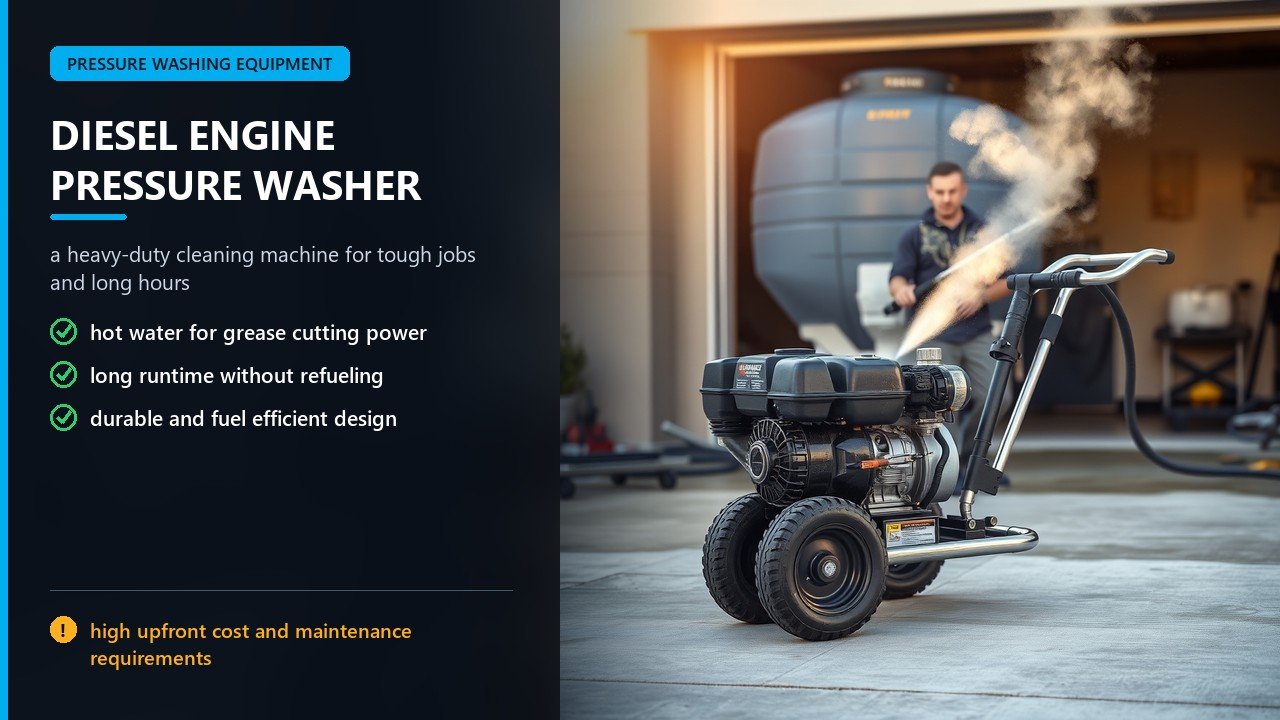
What a Diesel Engine Pressure Washer Actually Is
The name describes a pressure washer built around a diesel engine rather than an electric motor or a petrol engine, and that single choice changes almost everything about how the machine performs and how you use it.
A diesel engine drives the pump, and a burner adds heat. In the most common layout, a small industrial diesel engine turns the high pressure pump through a direct drive or belt drive coupling, replacing the electric motor you would find on a home unit. That engine gives the machine torque, fuel economy, and the ability to run all day without a power point in sight. Many professional models go a step further and fit a diesel burner as well, so the same fuel tank feeds both the engine and the burner that heats the water in a coil. The result is a self contained cleaning plant that carries its own power and its own heat. This is why a diesel engine pressure washer is heavier, and usually more expensive, but it is also why it handles large commercial work that would wear out lesser machines. The diesel pressure washer engine is the source of that endurance, and it is the first thing a serious buyer studies when comparing one machine against another.
It is hot water on wheels, ready anywhere. Because the diesel engine provides its own power, the machine only needs water and fuel to operate, which makes it genuinely mobile. Tow it to a construction site, a farmyard, a retail car park, or the middle of a driveway and it runs without hunting for a socket or dragging a heavy extension cord. The onboard fuel tank feeds both the engine and the burner, so a single refuel keeps the machine working through a long shift. That independence is the whole point of a mobile diesel pressure washer, and it is why fleet cleaners, roadside crews, and hire companies rely on them. An ordinary electric machine ties you to a socket and, on most models, to cold water. A diesel engine unit hands you both power and heat, wherever the job happens to be, which is a freedom that quickly becomes hard to give up once you have worked with it.
Why Diesel Power Suits Professional Cleaning
Electric motors and petrol engines both clean well, so it is fair to ask why so many serious operators choose diesel instead. The answer lies in how the three power sources behave over a long, demanding day.
Torque, endurance, and fuel economy working together. A diesel engine produces strong torque at low speed, so it drives a high flow pump steadily without straining, and it does so on remarkably little fuel. Compared with a petrol engine of similar output, diesel typically burns less per hour, and the fuel itself is often cheaper and widely available at the pump. That combination of low consumption and long service intervals makes diesel the cheapest way to run a powerful machine over a full season, even though the engine costs more up front. Diesel engines are also famously long lived when maintained, often outlasting several petrol engines doing the same work. For a business where the machine earns money by the hour, that durability is not a luxury but the whole point, because downtime costs far more than the difference in purchase price ever will. On the diesel pressure washer vs gas debate, the diesel wins on fuel use, torque, and engine life, while petrol only leads on purchase price and light weight.
Built to run all day without complaint. Electric machines overheat, trip breakers, and depend on a power supply that is often missing exactly where you need it most. Petrol engines clean well but drink more fuel and demand more frequent attention. A diesel engine pressure washer is designed for the opposite situation, long continuous operation on remote sites with no electrical supply in sight. It can run a full working day, refuelling once, and deliver hot water the entire time, which is what a commercial cleaner actually needs. This is why diesel dominates the equipment lists of fleet washers, kitchen and bin cleaning crews, farm contractors, and plant hire firms. When a machine must be both powerful and endlessly available, diesel stops being one option among several and becomes the obvious default for professional work. A commercial diesel pressure washer is built for exactly this long, uninterrupted duty, and it is why diesel dominates the kit of anyone who cleans for a living rather than for a weekend. The trade off is weight and noise, so it suits open, outdoor work far better than a quiet indoor setting.
Diesel Engine, Hot Water, and the Burner: How It All Works
Understanding the three parts of a diesel machine, engine, pump, and burner, makes it easier to buy the right one and to spot problems early before they become expensive.
The burner turns water into a grease cutting tool. On a hot water diesel pressure washer, water flows first through the pump and then through a coil, a coil of steel tube that the burner plays flame across. The flame, fed by diesel drawn from the same tank, heats the water to well over 200 degrees Fahrenheit at the nozzle on many models, hot enough to melt grease, lift oil, and soften baked on grime that cold water would only smear around. Because the water is heated after it leaves the pump, the pump and its seals stay cool and last longer. The burner is controlled by a thermostat or switch, so you can run hot for greasy work or cold when the job does not need heat. This is the feature that separates a true hot water diesel pressure washer for sale from a plain cold machine, and it is the single biggest reason diesel units outperform their cold rivals on the dirtiest jobs.
Engine, pump, and burner share the load and the fuel. In a well designed machine, the diesel engine delivers power to the pump through a direct or belt drive, and the same tank feeds both the engine and the burner, keeping refuelling simple. The pump, usually a triplex plunger design on serious machines, produces the high flow that makes cleaning fast, while the burner handles heat. Because each part has a clear job, maintenance becomes a matter of checking three systems rather than one: engine oil and filters, pump oil and seals, and burner fuel, nozzle, and coil. The diesel engine pressure washer pump is the part you protect most carefully, since it is expensive and easily damaged by running dry or by pushing it beyond its rated pressure. Treat the machine as three tools that happen to share a frame, and it becomes far easier to keep each one healthy.
Pressure, Flow, and What the Numbers Really Mean
The specifications on a diesel machine can look like a wall of numbers, but only two of them do the real cleaning work, and a third tells you how much water and fuel the machine will consume.
Flow cleans faster than pressure alone. Pressure, measured in psi, is the force of the jet, while flow, measured in gallons per minute, is the volume of water delivered. Cleaning speed depends heavily on flow, because more water carries more dirt away on every pass. A diesel pressure washer psi figure of 3000 to 4000 sounds impressive, but a machine with higher gpm at moderate pressure usually out cleans one with higher pressure and lower flow. This is why professionals often choose a diesel pressure washer gpm rating of four or five rather than chasing the highest pressure on the box. Pressure still matters for stubborn, bonded soil and for rinsing at distance, but flow is what covers ground quickly and keeps a large surface wet and moving. A machine that delivers both strong flow and steady pressure will finish a large area faster than one that leans on pressure alone, and that time saving compounds across a full day of work.
Horsepower and gpm should match the pump, not each other. A diesel pressure washer horsepower rating tells you how much power the engine can deliver, and it must be enough to drive the pump at its rated flow and pressure without bogging down. Overstating horsepower while using a small pump helps nobody, and a big pump driven by too little engine simply cannot reach its advertised output. The engine and pump should be paired so the machine holds pressure under load and does not surge or stall. Flow and pressure together also set fuel consumption: a larger machine moves more water and therefore burns more fuel per hour, so the correct spec depends on your work, not on the biggest numbers you can find. Match the machine to the surface area and soil you face, and check that the engine honestly supports the pump before you buy. Read the flow, the pressure, and the horsepower together and ask whether the three make sense as a set, because a spec sheet that looks impressive on one line often falls apart on another.
| Power Source | Best For | Fuel and Running Cost | Portability |
|---|---|---|---|
| Electric motor | Home use, light commercial, indoor work | Cheap per hour but tied to a socket and usually cold water | Light and easy to move, but needs mains power nearby |
| Petrol engine | Mobile cleaning where diesel is not available | Higher fuel use per hour than diesel and shorter engine life. | Fully mobile and portable, good for lighter professional tasks. |
| Diesel engine | Heavy commercial, fleet, farm, and hot water work | Lowest fuel cost per hour and the longest service life. | Mobile and self sufficient, capable of running all day on site. |
Fuel, Consumption, and Running Costs
A diesel machine costs more to buy than its rivals, so it is worth understanding exactly where the money goes and how quickly efficient running brings the balance back in your favour.
Diesel is cheap to run but not free to feed. Diesel pressure washer fuel consumption depends on the size of the engine and whether the burner is running, but even a powerful unit typically burns far less per hour than a comparable petrol machine. Because the same fuel serves both engine and burner, you refuel one tank and keep working. That said, a hot water machine left running on heat all day will use noticeably more fuel than one used on cold for light jobs, so matching heat use to the task saves money. Diesel is also widely available, which matters for mobile work, and it stores safely in the machine’s own tank for a normal working day. Build a realistic fuel estimate into your quotes rather than assuming the machine runs for nothing, and the efficiency of diesel will still make it the cheapest powerful option over a season of hard use.
Purchase price, service, and resale all count. The diesel pressure washer price reflects a durable engine, a heavy duty pump, and often a burner, so it sits well above budget electric models. But the cost of ownership is not just the sticker; it is fuel, oil, filters, and the occasional repair, spread across many years of service. A diesel machine that lasts a decade and holds its value will often cost less per job than several cheap machines replaced every couple of years. Service intervals are long and parts are widely available, which keeps downtime low, and a well maintained used machine can be a smart buy for someone stepping up. Look at the total cost across the machine’s life, not just the number on the invoice, and diesel usually wins on any serious workload. For many buyers, comparing lifetime cost is how they land on the best diesel pressure washer for their work, and a well kept machine also holds its resale value far better than a budget electric one, which quietly reduces the true cost of ownership.
Where Diesel Engine Pressure Washers Earn Their Money
The strengths of a diesel machine show up most clearly on the jobs that combine grease, distance, and long hours, and these are the settings where the investment pays itself back fastest.
Fleet, transport, and plant cleaning. Trucks, vans, buses, tractors, and construction plant collect oil, road film, and grime that only hot water removes properly, and they are usually parked far from any power socket. A mobile diesel pressure washer rolls up to the vehicle, fires up, and delivers hot water for cleaning wheels, chassis, engines, and bodies without a single extension lead. Operators who clean a fleet every week save hours, use less chemical, and finish with a better result than cold water can manage. Because the machine runs on its own fuel and needs no mains power, it works in a yard, on a roadside, or in a field just as easily. For anyone whose work is vehicles and heavy equipment, the diesel machine is not a luxury but the tool that makes the job practical, quick, and profitable. Add muddy site work and salt covered winter roads, and it earns its keep even faster, because no other tool clears that combination of oil and grime quite so quickly.
Commercial kitchens, bins, and public areas. Grease from kitchens, fat from bin stores, and grime from pavements and drive through lanes respond far better to heat than to pressure alone. A hot water diesel machine lifts the grease, lets it run off, and rinses clean, often without aggressive chemicals, which is safer for surfaces and staff alike. Businesses that handle this soil daily, from restaurants to property managers, find that heat turns an all day chore into a manageable task and keeps sites compliant with hygiene expectations. The same machine can then be used cold for lighter work between grease jobs, spreading its cost across a wider range of tasks. Diesel powered pressure washers shine brightest where the dirt is oily and the setting has no power, which is exactly the combination that defeats most other machines. Property managers in particular find that a commercial diesel pressure washer clears bin stores, loading bays, and walkways in a single pass, cutting both the time and the chemical a cold machine would need.
The Right Pump and Build Quality to Look For
Two diesel machines with similar engines can perform very differently, and the difference almost always comes down to the pump, the frame, and the quality of the parts around them.
A triplex pump is the heart of a serious machine. Most professional diesel engine pressure washers use a triplex plunger pump, which has three pistons driven by a crankshaft and produces smooth, high flow at pressure. Triplex pumps tolerate continuous commercial use far better than cheaper axial or wobble plate designs, and they can be rebuilt rather than replaced, which matters for long term running costs. Check the pump’s rated flow and pressure, its maximum water temperature if it is fed hot water, and whether spare seals and valves are easy to obtain. A well chosen diesel pressure washer pump should match the engine’s output so neither is strained. Because the pump is the most expensive wear item after the engine, buying a machine built around a respected, serviceable pump is one of the smartest decisions you can make. Diesel pressure washer parts, from seals and valves to unloader kits, should be easy to source for the pump you choose, because a pump you cannot service cheaply will eventually force you to replace the whole machine.
Frame, control, and service access decide daily life. A good diesel machine sits on a sturdy frame with pneumatic tyres, a handle that can be gripped with wet hands, and a layout that lets you reach the engine, pump, and burner for routine checks without dismantling half the unit. Look for a proper control panel with an hour meter, a pressure gauge, and an accessible trigger or unloader valve, because these tell you at a glance how the machine is behaving. Hose reels, filter protection, and a low oil shutdown add convenience and protect the engine from careless use. Weight and balance matter too, since a heavy machine that is awkward to move will be used less and resented more. Build quality is not just about looking rugged; it is about whether you can service the machine easily on a busy day, which in practice decides how long it stays reliable.
Buying a Diesel Pressure Washer: New, Used, and for Sale
Whether you are hunting a diesel engine pressure washer for sale at a dealer or weighing a used machine from a hire company, a little preparation keeps you from buying someone else’s problem.
Match the machine to the work before the price. Start by deciding the flow and pressure your jobs genuinely need, whether you need hot water, and how mobile the machine must be, then shop within that brief. A cleaner who mostly does driveways may need less than a fleet washer who cleans trucks daily, and buying more machine than the work requires wastes money on fuel, maintenance, and cramped storage. When you look at diesel pressure washers for sale, compare the engine make, the pump brand, the burner, and the frame rather than fixating on the headline pressure figure. Ask how easy parts are to source and whether a local dealer can service the machine. A slightly smaller machine that is easy to support and costs less to run will often earn more over its life than the biggest unit in the catalogue. It also pays to read independent diesel pressure washer reviews and owner feedback rather than trusting a single sales page, because real world notes on reliability and support reveal far more than any spec sheet.
Checking a used diesel machine before you pay. When you inspect a used diesel pressure washer, start it cold, listen for unusual knocking, and watch for smoke that hangs around rather than clearing once warm. Check the engine oil and the pump oil for water or metal, look for leaks around the pump and burner, and confirm that the burner actually lights and holds a steady heat on the gauge. Ask for service records, an hour meter reading, and the age of the pump seals, and test the machine under load with a nozzle fitted rather than just idling. A used diesel machine with good records and a solid pump can be excellent value, but one with a tired engine or a leaking burner is a money pit. If possible, buy from a dealer who offers a short warranty, or have a mechanic check the engine before you hand over your money.
Maintenance That Keeps a Diesel Machine Strong
Diesel machines reward routine care more than any other pressure washer, and the schedule is straightforward once you split it between the engine, the pump, and the burner.
Engine and pump service on schedule. The engine side of diesel pressure washer maintenance follows the maker’s intervals: change the oil and filters, replace the fuel filter, service the air filter, and check the cooling system, all of which keep the engine starting easily and running economically. The pump needs its own attention, with oil changes at the recommended hours and a check of the seals, valves, and inlet filter at the same time. Keep the water supply clean, never run the machine dry, and protect it from frost, because a cracked pump from trapped water is an expensive and entirely avoidable failure. Note your service dates in a small log kept with the machine, so nothing is forgotten during a busy season. These tasks take minutes and cost little, and together they are what keep a diesel pressure washer running at full strength for thousands of hours. A short note in the log of the hours run and the parts used turns routine care into a genuine service history, which helps at resale as well as in the workshop.
Burner and coil care protect the heat. If your machine heats water, the burner deserves its own attention. Clean or replace the fuel nozzle, check the electrodes and the air setting so combustion stays clean, and keep soot off the coil, because soot and scale both block heat transfer and waste fuel. Descale the coil regularly using a suitable solution, especially in hard water areas, and fit a water filter on the supply to slow scale build up. A dirty burner leaves soot that insulates the coil and forces the machine to burn more fuel for less heat, so a little attention here pays for itself quickly. Test the burner’s safety controls, watch for a steady flame, and keep the exhaust clear. Diesel pressure washer burner care is simple, but neglected burners are the most common reason a hot water machine suddenly stops getting hot. Because heat is the diesel machine’s greatest advantage, it is also the part worth guarding most carefully.
Troubleshooting When Heat or Pressure Fades
When a diesel machine misbehaves, the fault is usually in one of the three systems, and a little order in your checks saves both time and money.
Loss of pressure points to water and pump. If pressure drops, start at the supply: confirm the tap is fully open, the inlet filter is clean, and the hose is not kinked or undersized. Check the nozzle for a blockage and replace any worn O rings, since a leaking seal bleeds pressure. Air in the system, from starting before water flowed, will also rob pressure until it is bled. If the supply is fine, look at the pump for worn valves or seals, and at the unloader or pressure valve for sticking. On a diesel engine pressure washer troubleshooting list, these water side checks solve most complaints, and only after them should you suspect the pump itself. Running the machine dry remains the single most common cause of pump damage, so rule it out first when pressure fades. Nine times out of ten, restoring pressure is a matter of a clean filter, a fresh O ring, or a properly bled line rather than a new pump.
No heat or hard starting has its own causes. When a hot water machine runs but stays cold, the burner is usually the problem: a clogged fuel nozzle, a dirty fuel filter, air in the fuel line, or a failed ignition or flame sensor will all stop it lighting. Check the fuel supply and the burner’s safety controls in order, and clean the coil of soot if heat is weak but present. Hard starting on the engine side often comes down to a dirty fuel filter, air in the fuel system, a weak battery, or old fuel, so bleed the system and fit fresh filters before assuming the worst. Diesel pressure washer troubleshooting always follows the same logic: fuel, air, and ignition on the burner; fuel, air, compression, and battery on the engine; supply, filter, and seals on the water side. Work through them calmly and most problems are solved without a mechanic.
Frequently Asked Questions
Is a diesel engine pressure washer worth the higher price? For professional and heavy use, yes. The higher purchase price buys a durable engine, a serviceable pump, and often hot water, and it is repaid through lower fuel use, longer life, and far less downtime than petrol or electric machines. If you clean greasy surfaces regularly, work away from power sockets, or run the machine for hours at a time, a diesel machine quickly becomes the cheaper tool to own despite costing more up front. For occasional light jobs around a home, however, a smaller electric machine is more sensible and easier to store, so be honest about how much work the machine will actually do. In short, the diesel machine is worth the premium wherever grease and distance are routine, and hard to justify only when the work is light and occasional. Weigh your own jobs honestly, and the answer usually becomes obvious.
How much fuel does a diesel pressure washer use? Consumption depends on engine size and whether the burner is running, but even a powerful unit typically uses less per hour than a comparable petrol machine, and the same tank feeds both the engine and the burner on hot water models. Running on heat all day uses more fuel than using cold for lighter jobs, so matching heat to the task keeps costs down. Estimate your fuel use from the maker’s figures and build it into your job quotes rather than guessing. Over a full season, the efficiency of diesel almost always offsets the higher purchase price. Figures vary with the engine, the load, and how much the burner runs, so use the maker’s own numbers and your local fuel price to build a realistic hourly cost before you budget for a season of work. A diesel machine worked steadily often runs leaner than the headline figures suggest, which is one more reason professionals favour it.
Can a diesel engine pressure washer be used indoors? No. Like any engine powered machine, it produces carbon monoxide, an invisible and deadly gas, so it must only be run outdoors or in well ventilated spaces, never inside a building, garage, or enclosed area. The burner adds exhaust of its own, and the exhaust and muffler get hot enough to burn skin and ignite nearby material. Even in a partly enclosed space, move the machine outside and run hoses to the work instead. This rule is not negotiable, and it is the safety point that matters most on any engine powered pressure washer. Where indoor cleaning is essential, use an electric unit instead and keep the diesel machine strictly for outdoor work, because no job is worth the risk that carbon monoxide creates in a confined space, however briefly the engine would run. Working outdoors is the only safe option for any engine powered machine.
What maintenance does a diesel engine pressure washer need? Plan for three routines. Service the engine with regular oil, fuel, and air filter changes on the maker’s schedule. Look after the pump with regular oil changes and inspection of seals, valves, and the inlet filter. Maintain the burner by cleaning or replacing its fuel nozzle, checking ignition and flame controls, and descaling the coil, especially in hard water areas. Add daily checks of oil, fuel, and the water supply, and winterise the machine to prevent freezing. None of it is difficult, but kept up it is the difference between a machine that lasts many years and one that fails early. Set a simple reminder for each interval and keep a log with the machine, so nothing is missed when work is busy and the schedule stays honest. Consistency matters more than the size of any single task, so keep the routine simple and repeatable across every machine.
Final Thoughts
A diesel engine pressure washer is the tool serious cleaners reach for when the work is heavy, greasy, and far from a power socket. The diesel engine delivers the torque and endurance to run all day on little fuel, and the burner adds the hot water that melts the soil cold machines cannot touch. Together they make a machine that is powerful, efficient, and endlessly available, which is exactly what commercial cleaning demands. Weigh the three systems, the engine, the pump, and the burner, as one package, because the machine is only as strong as the weakest of them, and a bargain price on a tired pump or a neglected burner is no bargain at all. Read the specifications honestly, match them to the real work in front of you, and the choice becomes far simpler than the crowded catalogue first suggests.
Buy for the work and care for all three systems. Match the pump and flow to your jobs rather than chasing the biggest numbers, choose a machine with a serviceable pump and easy access to the engine and burner, and keep to the maintenance schedule on all three parts. Run it hot for grease and cold for light work, protect the pump from running dry and from frost, and service the burner so the heat stays strong. Do that, and a diesel machine repays its higher price with speed, reliability, and a working life that outlasts the machines it replaced. Chosen well and looked after, it becomes one of the most productive tools a cleaning business can own, turning the toughest, greasiest jobs into work finished in a fraction of the time a cold machine would take. Treat the engine, the pump, and the burner as the three things that matter, give each the care it needs, and the machine will reward you season after season with fast, hot, thorough cleaning wherever the work takes you. Buy it for the job, care for all three systems, and it will keep earning its place for years. Treat it as a business asset rather than a toy, and the numbers will look after themselves.