A landscaper named Tom learned an expensive lesson about pump oil the hard way. His pressure washer ran fine for two seasons, and because the engine oil was always changed on schedule, he assumed the machine was fully maintained. Then one spring the pump seized mid-job, and the repair shop told him the crankcase oil had turned to gray sludge, a sign that water had been creeping past worn seals for months. The replacement pump cost more than a year of oil changes would have. He had never once checked the small sight glass on the front of the pump.
Pump oil is the most neglected fluid on a pressure washer, yet it protects the component that actually does the work. The pump is a precision assembly of bearings, rods, and pistons running under enormous pressure, and it depends on clean, correct oil to survive. This guide explains what pump oil is, why it differs from engine oil, when and how to change it, and how to read the warning signs that save a pump from an early death.
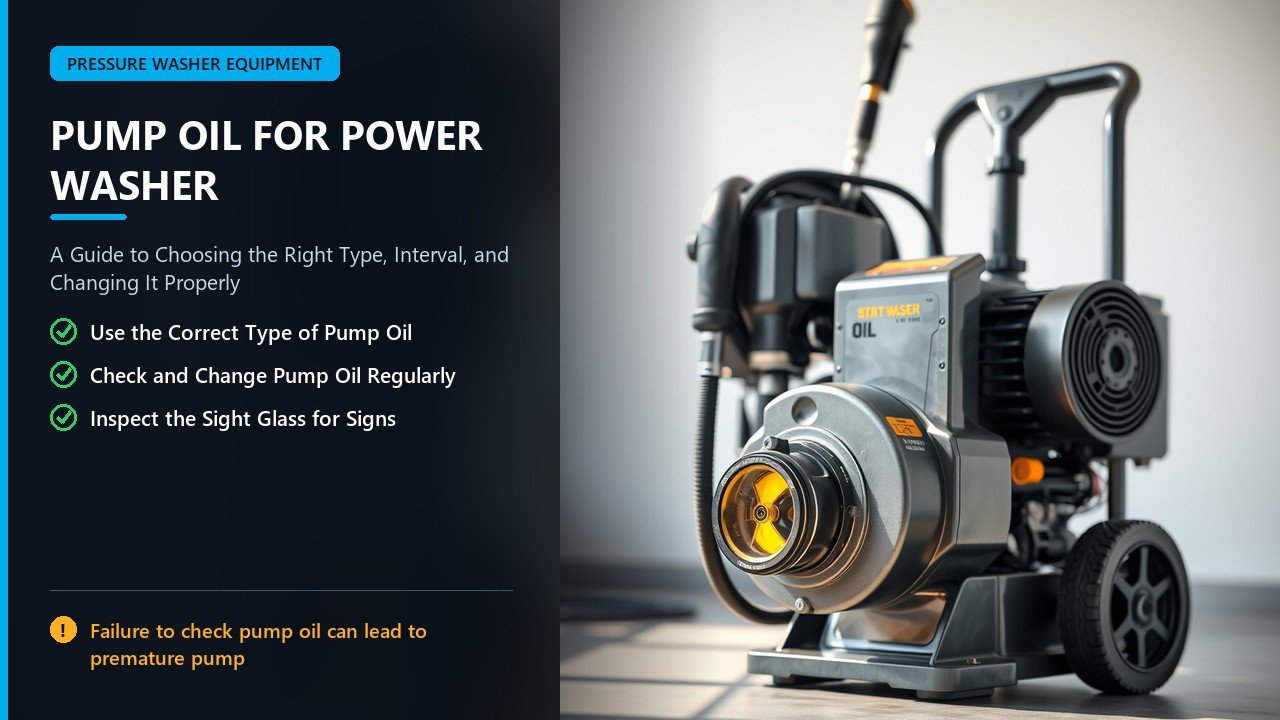
The Pump and the Engine Are Different Machines
The first thing to understand is that a pressure washer has two separate lubrication systems.
The engine. The gas engine spins the pump and uses ordinary detergent motor oil, just like a lawn mower or car. It has an oil filter or a design that tolerates detergent additives, which hold contaminants in suspension for removal.
The pump. The pump is the separate assembly bolted to the front of the engine that pressurizes the water. It has its own tiny oil reservoir and its own requirements, and those requirements are almost always different from the engine’s.
Why they must not be swapped. Detergent oil is designed to keep particles suspended so a filter can catch them. A pump has no filter, so detergent oil simply circulates grit against the seals, plungers, and bearings, accelerating wear. Pump oil, by contrast, is non-detergent, letting particles settle harmlessly to the bottom. Using engine oil in a pump is one of the fastest ways to destroy it.
Two fluids, two manuals. Check the engine and pump specifications independently. Our guide to what oil does a pressure washer use covers the engine side, while this article focuses on the pump.
What Type of Pump Oil to Use
The correct oil is the one your pump manufacturer specifies, but most fall into a few common categories.
| Pump / Situation | Common Oil |
|---|---|
| Standard gas triplex and axial pumps | SAE 30 non-detergent |
| Cold weather, below about 40 degrees F | SAE 10W-30 non-detergent |
| Industrial and some commercial pumps | ISO 68 hydraulic oil |
| Manufacturer-branded pumps | Brand-specific pump oil |
| Sealed residential pumps | No oil change, sealed for life |
SAE 30 non-detergent. This is the classic choice for warm-weather use on most triplex and axial pumps. The “non-detergent” label is the critical part, because ordinary automotive SAE 30 carries a detergent additive package that is unsuitable for a pump.
ISO 68 hydraulic oil. Many industrial and commercial pumps specify an ISO 68 hydraulic oil, which resists foaming and maintains viscosity under pressure. Note that ISO and SAE use different grading systems, so the numbers are not interchangeable.
Multigrade for cold weather. In cold conditions, a straight SAE 30 thickens and flows poorly. A 10W-30 non-detergent oil handles cold starts better while still protecting at operating temperature. Avoid 5W-30 unless the manual specifically approves it.
Brand-specific oil. Some manufacturers, including several major pump makers, sell their own formulated pump oil. Using it matches the viscosity and additive package the seals were designed around and keeps warranty coverage clean.
Gear oil for gear chambers. Some commercial electric pumps have a separate gear chamber that requires gear oil such as 85W-90 or 80W-90. Never mix gear oil with crankcase pump oil, as they serve different parts of the pump.
Is Your Pump Even Serviceable?
Before hunting for the drain plug, confirm that your pump actually takes oil.
Sealed pumps are common. Many residential and entry-level pressure washers use sealed axial cam pumps that are lubricated for life and have no drain plug, no fill port, and no sight glass. These are marked as maintenance-free, and opening them voids the warranty and usually ruins them.
How to tell. Look for a drain plug, a fill port, a dipstick, or a sight glass on the pump. If the pump is a smooth housing with none of these features and a “no maintenance” note, it is sealed and you leave it alone. A visible metal body alone does not prove serviceability.
Check the model plate. The pump model number is usually cast or stamped into the housing. Looking it up confirms whether it is serviceable and what oil it takes. When in doubt, the manual is authoritative.
Serviceable pumps reward attention. If your pump has a drain plug and a sight glass, it wants periodic oil changes, and those changes are what keep it alive for years. If it is sealed, your maintenance effort shifts to keeping the water clean and avoiding overheating.
When to Change Pump Oil
The schedule depends on the pump, but a few working ranges apply broadly.
| Interval | Guidance |
|---|---|
| Break-in | After the first 20 to 50 hours |
| Routine (hourly) | Every 100 to 500 hours, per manual |
| Routine (calendar) | At least once a year, even with light use |
| Heavy or dusty use | More frequently |
The break-in change. A new pump should get its first oil change after roughly 20 to 50 hours of operation. This early change removes manufacturing debris and break-in contaminants that would otherwise circulate against the seals and bearings.
The routine interval. After break-in, common ranges run from about 100 hours for consumer pumps to 500 hours for commercial units, often paired with a calendar limit such as every three months or annually. Some manufacturers specify a 100-hour or three-month service.
The calendar matters. If you only run the machine a few weekends a year, hours are low but moisture and condensation still degrade the oil over time. Change the pump oil at least once a year regardless of hours, ideally in spring before the first big job.
Heavy use shortens everything. Frequent commercial operation, dust, heat, and humidity all accelerate oil breakdown, so shorten the interval when conditions are demanding. Our notes on high-flow machines in the 4 GPM pressure washer class apply the same logic to demanding duty cycles.
How to Check the Pump Oil
Checking the oil takes seconds and prevents the worst failures.
Use the sight glass. Most serviceable pumps have a small clear window, called a sight glass, on the side of the crankcase. With the machine level and cold, the oil should sit near the center of the glass. If it is low, add the specified oil a little at a time.
Read the color. Fresh pump oil is light amber and clear. Dark, cloudy, or milky oil signals a problem. Milky, creamy, or gray oil almost always means water has mixed into the crankcase.
Watch the level trend. A rising oil level combined with a milky color is a strong sign that pressurized water is crossing a failed seal into the crankcase. This is a serious condition that calls for diagnosis, not just another oil change.
Check before long jobs. Get in the habit of glancing at the sight glass before a big job and at the end of the day. A quick check catches a slow leak before it becomes a seized pump.
What Milky Oil Tells You
Milky oil is the single most important warning sign a pump gives.
Two possible causes. Water in the crankcase comes from one of two places: humid air condensing inside the pump, or wash water leaking past worn seals. One oil change usually reveals which it is.
The one-change test. Drain the milky oil and refill to the middle of the sight glass with the correct oil. Run a normal job and check the glass at the end of the day. If the oil stays clear, condensation was the likely cause, and you should shorten your change intervals and store the machine in a drier spot.
If it turns milky again. Fresh oil that clouds within a few hours means water is getting past the seals. Plan for a seal kit service, and have the shop check the plungers and oil seals while they are in there. Persistent milky oil will corrode the bearings and connecting rods from the inside out.
Other clues. Oil leaking between the crankcase and the manifold, or water dripping under the pump, points to worn oil seals that need replacing. A burnt smell or visible metal flakes in the drained oil signals internal wear that should be addressed promptly.
How to Change Pump Oil
The job is simple if you follow the right order.
Prepare safely. Shut off the engine and the water supply, squeeze the spray gun trigger to release all pressure, and let the machine cool. Disconnect the spark plug lead so the engine cannot start, and wear gloves and eye protection, because hot oil and hot surfaces burn.
Warm the oil. Run the machine for about five minutes first. Warm oil drains faster and carries more suspended grit out with it, making for a cleaner change.
Clean the service points. Brush grit away from the fill cap, breather, sight glass, and drain plug so dirt does not fall into the crankcase when you open it.
Drain fully. Place a drain pan under the pump, remove the drain plug, and let all the old oil run out. Removing the vent or fill cap helps break the air lock so the last of the oil drains. Tilting the machine slightly can coax out more, but keep it level during normal operation.
Reinstall the drain plug. Use the specified seal or washer so it does not leak, and tighten it snugly without overtightening.
Refill slowly. Using a clean funnel, add the specified oil a little at a time until it reaches the mark, usually the center of the sight glass with the pump cold and level.
Run and recheck. Restore the water supply, purge air, run the machine for a minute, shut it down, let the oil settle, and recheck the level and for leaks. Top off if needed.
Dispose responsibly. Take used pump oil to an authorized recycling facility, exactly as you would engine oil.
Pump Oil Versus Engine Oil
Seeing the two side by side makes the difference clear.
| Feature | Pump Oil | Engine Oil |
|---|---|---|
| Detergent | Non-detergent | Detergent |
| Reservoir size | About 5 to 12 ounces | Usually larger |
| Filter | None | Often has a filter |
| Usual spec | SAE 30 ND or ISO 68 | 10W-30 or SAE 30 |
| Change interval | Annually plus break-in | Per engine schedule |
The detergent issue. The key difference is detergent. Engine oil suspends contaminants so a filter can remove them, while pump oil lets them settle because there is no filter in the pump. Swapping them defeats the purpose of each.
Capacity difference. The pump holds only a handful of ounces, so a tiny top-off is normal and a full bottle is wrong. The engine holds more and is filled to a dipstick. Treat the two reservoirs as completely separate systems.
Different failure modes. Wrong oil in an engine may cause sludge and wear over time, while wrong oil in a pump causes nearly immediate foaming, loss of lubrication, and seal damage. The pump is far less forgiving of the mistake.
Both need attention. Getting the pump oil right does not excuse skipping the engine oil, and vice versa. A well-maintained machine gets both changed on their own schedules, using their own correct fluids.
Symptoms of Bad Pump Oil
The pump usually warns you before it fails, if you know what to look for.
Milky or cloudy oil. The clearest warning. Water in the oil means condensation or a seal leak, and continued use corrodes the internal parts from the inside.
Rising oil level. If the sight glass shows the level climbing, water is entering the crankcase faster than oil is lost. This points to failed seals and calls for immediate attention.
Dark or black oil. Oil that has turned dark has oxidized and loaded with contaminants. It has lost much of its protective ability and should be replaced even if the interval has not arrived.
Metal flakes or a burnt smell. Visible metal particles or a burnt odor in the drained oil signal internal wear or overheating. The pump may need service beyond an oil change.
Whining or knocking. Unusual noise from the pump can indicate inadequate lubrication or worn bearings. Check the oil level and condition first, then investigate further if the noise persists.
Overheating. A pump that runs hot, or triggers its thermal relief valve often, may be low on oil or running the wrong viscosity. Excess bypass without adequate water flow also heats the oil and shortens its life.
Tips for Long Pump Life
Pump oil is only one part of a healthy pump.
Keep the water clean and the inlet unrestricted. Sediment, grit, and low inlet flow damage the pump regardless of oil quality. Use a clean water supply, keep the inlet strainer clear, and avoid running dry.
Never let the pump run without water. Running dry destroys seals and plungers in seconds. Always connect the water supply and purge air before starting the engine.
Avoid overheating from excessive bypass. Long periods with the trigger released and the machine running recirculate hot water and stress the pump. Release the trigger or shut the machine off when not spraying.
Store it properly. Damp storage encourages condensation inside the pump, which is a leading cause of milky oil. Store the machine somewhere dry, and consider an occasional spin if it sits for months.
Keep spare oil on hand. A small bottle of the correct pump oil makes a top-off quick and ensures you never reach for the wrong fluid in a pinch.
Follow the break-in schedule. The first change at 20 to 50 hours is not optional. It removes the debris that would otherwise shorten the pump’s life from day one.
Common Pump Oil Mistakes
A few errors account for most ruined pumps.
Using engine oil. The most common and most costly mistake. Engine oil foams and holds grit in a pump with no filter, leading to rapid wear. Always use the pump-specified oil.
Never changing it. Some owners assume the pump is sealed when it is not, and they never look at the sight glass. A serviceable pump that goes unserviced will eventually fail from contaminated, broken-down oil.
Overfilling. Pouring in the whole bottle instead of filling to the mark causes pressure buildup, leaks, and seal damage. The reservoir is tiny, and the sight glass mark is authoritative.
Ignoring milky oil. Repeatedly draining and refilling milky oil without finding the water source wastes time and money. Persistent milky oil means the seals need service.
Mixing oil types. Combining ISO 68, SAE 30, and gear oil in the same reservoir, or topping one part of the pump with oil meant for another, invites problems. Match the exact spec for each chamber.
Forgetting the break-in change. Skipping the first 20 to 50 hour change leaves manufacturing debris circulating against the seals, shortening the pump’s life from the start.
Pump Oil and Your Warranty
Using the right oil protects more than the pump.
Warranty terms. Many pump warranties require the specified lubricant and the recommended service interval. Using the wrong oil or skipping changes can void coverage, leaving you to pay for a pump that should have been covered.
Document your changes. Keep a simple log of the date, hours, and oil used for each change. If a warranty claim ever arises, a clear maintenance record is strong evidence that you followed the rules.
Branded oil is safe. Using the pump maker’s own oil removes all guesswork and matches the viscosity and additives the seals were designed around. When a compatible spec is unavailable, the branded product is the safest fallback.
Keep the receipt. Tucking the oil purchase receipt with your machine records makes it easy to prove the correct product was used during the warranty period.
Frequently Asked Questions
What oil goes in a pressure washer pump? Most serviceable pumps call for SAE 30 non-detergent oil or an ISO 68 hydraulic oil. Some manufacturers specify their own branded pump oil. Always confirm the exact spec in your pump manual, because pump oil is not the same as engine oil.
Can I use engine oil in my pressure washer pump? No, unless the pump manual specifically names it. Engine oil contains detergents that foam and hold grit in circulation inside a pump that has no filter, leading to wear, overheating, and early failure.
How often should I change pump oil? Change it after the first 20 to 50 hours on a new pump, then every 100 to 500 hours depending on the model, and at least once a year even with light use. Milky or dark oil calls for an immediate change regardless of schedule.
How do I check pressure washer pump oil? Look at the sight glass on the side of the crankcase. With the machine level and cold, the oil should sit near the center of the glass and should appear light amber and clear. Milky or cloudy oil signals water contamination.
Why is my pump oil milky? Milky or gray pump oil means water has mixed with the oil, either from humid air condensing inside the pump or from wash water leaking past worn seals. Change the oil, and if it clouds again quickly, have the seals serviced.
Does every pressure washer pump need oil changes? No. Many residential pumps are sealed and lubricated for life with no drain plug or sight glass. Only serviceable pumps with a drain plug and fill point need periodic oil changes.
How much oil does a pressure washer pump hold? Pump oil capacity is small, usually only about 5 to 12 ounces. Fill to the sight-glass or dipstick mark, not the whole bottle, because overfilling can cause leaks and seal damage.
What happens if I never change my pump oil? The oil breaks down, loses its protective film, and allows corrosion, heat, and sludge to build inside the pump. Over time this leads to worn seals, noisy operation, and, eventually, a seized pump that is expensive to replace.
Can I use 10W-30 in a pressure washer pump? Only if it is non-detergent and approved by the manual. A 10W-30 non-detergent oil is a common cold-weather choice because it flows better in low temperatures, but ordinary detergent motor oil should never go in the pump.
What is the difference between SAE 30 and ISO 68 pump oil? They use different grading systems. SAE 30 is an engine-style viscosity grade, while ISO 68 is an industrial viscosity grade common in hydraulic oil. They are not interchangeable, so use whichever your pump manual specifies.
Does pump oil go bad if the machine sits unused? Yes. Moisture and condensation can contaminate the oil even when the machine is idle, so a calendar-based change at least once a year is wise regardless of operating hours.
Final Thoughts on Pump Oil for a Power Washer
Pump oil is the cheapest insurance you can buy for the most expensive part of a pressure washer. It is a different fluid from engine oil, it matters just as much, and it takes only minutes to check through the sight glass and change a few times a season. Non-detergent oil, the right interval, and attention to the color of the oil are what keep a pump running smoothly for years.
Tom now checks the sight glass on the front of his replacement pump before every job and changes the oil each spring. He has not had a pump problem since, and he tells every new owner the same thing the shop told him: the engine gets the attention, but the pump oil is what keeps the machine alive. Watch your pump oil, and it will protect the heart of your power washer.