The wand is the part of a pressure washer that most people never think about, right up until the moment it lets them down. I remember cleaning a two-story house and trying to reach the upper siding with a short factory lance, balancing on a ladder with one hand and holding the gun with the other. It was slow, precarious, and completely unnecessary, because a proper extension wand would have kept my feet on the ground the whole time. That day taught me that pressure washing wands are not just accessories. They are the difference between an efficient job and a dangerous one.
Wands, also called lances, deliver the water from the gun to the surface, and they come in a dizzying range of lengths, materials, and connection types. Choosing the right one affects your reach, control, comfort, and safety. This guide explains what wands do, how they differ from guns, the main types available, how to match a wand to your work, and how to keep it performing for years.
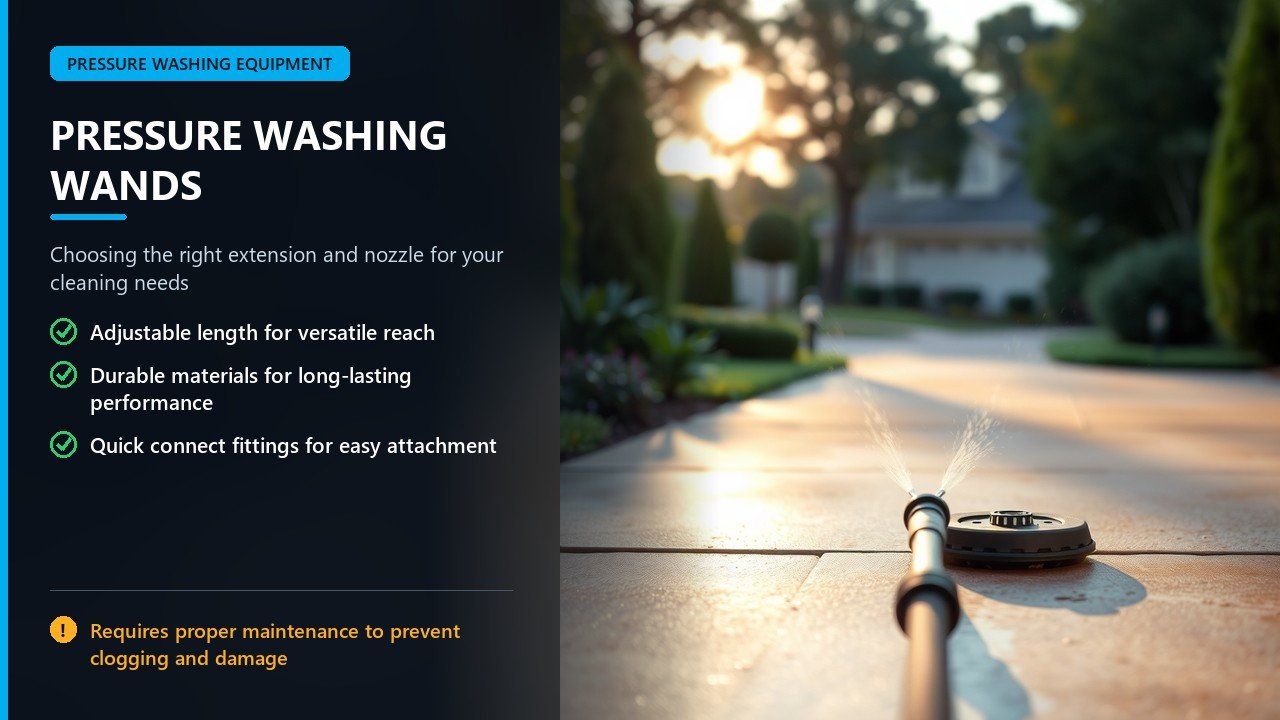
What Is a Pressure Washing Wand?
A wand, or lance, is the rigid tube that extends from the trigger gun and holds the nozzle at the end. Water travels from the pump, through the hose, into the gun, out through the wand, and finally through the nozzle, which shapes the spray. The wand is the bridge between your hand and the cleaning surface, and its length and design determine how you work.
Most wands use a quick connect fitting at the nozzle end so you can swap tips in seconds, and either a threaded or quick connect fitting at the gun end so you can attach it securely. Some are simple straight tubes, while others telescope, bend, or pivot.
Wand vs Gun: What Is the Difference?
People often use the terms interchangeably, but they are distinct parts.
| Component | Function | What It Determines |
|---|---|---|
| Gun (trigger gun) | Controls water flow with a trigger | Control, comfort, safety lock-out |
| Wand (lance) | Extends reach and holds the nozzle | Reach, angle, and spray position |
| Nozzle (tip) | Shapes the spray pattern | Pressure and coverage at the surface |
You hold the gun. The wand extends from it. The nozzle caps the wand. Understanding this chain helps you troubleshoot problems, because a weak spray could come from any of the three, or from the pump or hose behind them.
Types of Pressure Washing Wands
Wands come in several styles, each suited to different jobs.
| Wand Type | Description | Best For |
|---|---|---|
| Standard straight wand | Fixed rigid tube, typically 24 to 36 inches | General cleaning, most home tasks |
| Extension wand | Longer fixed wand for added reach | Siding, soffits, tall vehicles |
| Telescoping wand | Adjustable length, extends and locks | Second stories, roofs, gutters |
| Bent/angled wand | Curved design for undersides | Wheel wells, undercarriages, eaves |
| Rotary/turbo wand | Rotating spray for aggressive cleaning | Concrete, stubborn stains |
| Pivoting wand | Adjustable angle at the gun | Versatile cleaning at varied angles |
Most people start with a standard wand and add an extension or telescoping wand for reach. Specialized wands like bent or turbo styles solve specific problems and are worth adding as your work grows.
Length and Reach: Finding the Balance
Wand length is a trade-off between reach and control.
- Longer wands let you clean high siding, second stories, and gutters from the ground, reducing ladder use and improving safety.
- But longer wands are heavier, harder to control, and put more leverage on your arms and wrists, which can tire you quickly.
- Very long telescoping wands can also reduce pressure at the nozzle, because the extra length adds restriction and weight.
The right length depends on your typical jobs. A homeowner cleaning a single-story house does not need a telescoping wand. Someone maintaining a two-story property with tall gutters benefits enormously from one. Match the tool to the recurring task rather than buying the longest option on principle.
Materials and Construction
Wand quality comes down to materials and build.
- Stainless steel: The premium choice. Corrosion-resistant, strong, and durable, ideal for hot water and heavy use.
- Brass: Durable and corrosion-resistant, common in fittings and some wands.
- Aluminum: Lightweight and rust-resistant, popular for long extension and telescoping wands because weight matters at length.
- Plastic/composite: Light and inexpensive, found on budget wands, but not built for high pressure or hot water.
For serious work, stainless steel wands and brass fittings offer the best combination of durability and performance. For a light electric machine, a quality composite or aluminum wand is perfectly adequate.
Nozzles and Tips: The Other Half of the Equation
A wand is only as good as the nozzle on the end. Nozzles are color-coded by spray angle, and each angle suits different surfaces.
| Color | Angle | Typical Use |
|---|---|---|
| Red | 0 degrees | Concentrated, high impact, tough spots (use with care) |
| Yellow | 15 degrees | Stripping and heavy cleaning |
| Green | 25 degrees | General cleaning, most surfaces |
| White | 40 degrees | Delicate surfaces, siding, vehicles |
| Black | Low pressure | Applying detergent |
Using the wrong tip is one of the most common ways people damage surfaces or injure themselves. A red zero-degree nozzle can etch concrete and cut skin. Always start with a wider angle and narrow down only as needed.
Quick Connect vs Threaded Wands
Wands connect to the gun in one of two ways.
- Quick connect: Push-and-click connections that let you swap wands and nozzles instantly. This is the modern standard and by far the most convenient.
- Threaded (such as M22): Screw-on connections that require a wrench. Common on older or budget machines, and easy to cross-thread if you are careless.
If your machine is threaded, adding adapters to convert to quick connect is one of the best upgrades you can make. It turns nozzle changes from a chore into a one-second click and keeps you working instead of fiddling with fittings.
How to Choose the Right Wand
Work through these questions to narrow your options:
- What surfaces do you clean? General surfaces favor a standard wand; high areas favor extension or telescoping wands.
- How high do you need to reach? Match the wand length to your tallest recurring job.
- Cold or hot water? Hot water requires a wand rated for high temperatures.
- What connection does your gun use? Match quick connect or threaded, or buy adapters.
- How much weight can you handle? Longer wands get heavy fast. Consider aluminum for extended reach.
- What pressure do you run? Ensure the wand and fittings are rated for your machine’s PSI.
Using Long Wands Safely
Extension and telescoping wands are powerful tools, and they demand respect. The Occupational Safety and Health Administration treats high-pressure washing as a hazard requiring proper protective equipment, and long wands amplify the risks.
- Keep both hands on the wand when it is fully extended. Reaction force can surprise you.
- Beware of overhead electrical lines and never spray near live wiring.
- Watch for wind that pushes spray off-target, especially with chemicals.
- Avoid pointing long wands downward at your feet. The angle increases injury risk.
- Use eye and hand protection, and secure ladders when you must climb.
- Mind the recoil on high-pressure settings, which is stronger with a longer wand.
Maintenance and Care
- Rinse the wand after every use, especially after detergent applications.
- Check O-rings at the nozzle and gun connections and replace them when worn.
- Clear clogs from nozzles with a nozzle cleaning tool, never a wire that can scratch.
- Store indoors and drain the wand to prevent freezing and corrosion.
- Inspect for damage such as dents or cracks that could fail under pressure.
- Lubricate telescoping sections per the manufacturer’s guidance.
Frequently Asked Questions
What is the difference between a wand and a lance?
Nothing. They are two names for the same component, the rigid tube that extends from the gun and holds the nozzle.
Do I need an extension wand?
If you regularly clean high siding, soffits, gutters, or tall vehicles, an extension wand saves time and improves safety by reducing ladder use. For low, close work, a standard wand is fine.
Why is my wand losing pressure?
Check the nozzle for clogs, inspect O-rings and connections for leaks, and confirm the wand is not too long for your machine. Restrictions anywhere in the chain reduce pressure.
Can I use any wand on any pressure washer?
No. You must match the connection type, pressure rating, and, for hot water, the temperature rating. Using an unsuitable wand can leak, fail, or damage your machine.
What is the best wand for second-story cleaning?
A telescoping wand with adequate reach, rated for your pressure, is the safest and most efficient choice. Choose a lightweight material such as aluminum to manage fatigue.
Final Thoughts
Pressure washing wands are the connectors between your effort and your results. The right wand improves your reach, control, and safety, while the wrong one makes every job harder and more dangerous. Choose a length that fits your real work, favor durable stainless or aluminum construction, keep your nozzles clean and correct, and convert to quick connect if you can.
Add extension and telescoping wands as your jobs demand them, use them with both hands and proper protection, and maintain them with the same care you give the rest of your machine. Do that, and your wands will serve you safely and effectively for years of cleaning.