Search for pressure washer soap and you will find hundreds of bottles, all making similar promises. Some foam thick like shaving cream, some come as concentrates you dilute, some are marketed for cars, others for houses, decks, or concrete. The word “best” gets thrown around constantly, yet the truth is that the best soap depends entirely on what you are cleaning and how you apply it. There is no single bottle that wins every job. What there is, instead, is a reliable way to judge quality and match a cleaner to the task. Learning how to identify the best soap to use in power washer setups is really about learning what makes a soap good in the first place.
This guide takes that angle. Instead of crowning one product, we will walk through what separates a great soap from a mediocre one, the criteria that matter, the best cleaner type for each surface, the difference between concentrates and ready-to-use formulas, how pH and foam affect results, how to match soap to your application method, a shopping checklist, dilution and cost, and safety. By the end, you will be able to pick the right soap for any job with confidence.
What Makes a Soap the Best
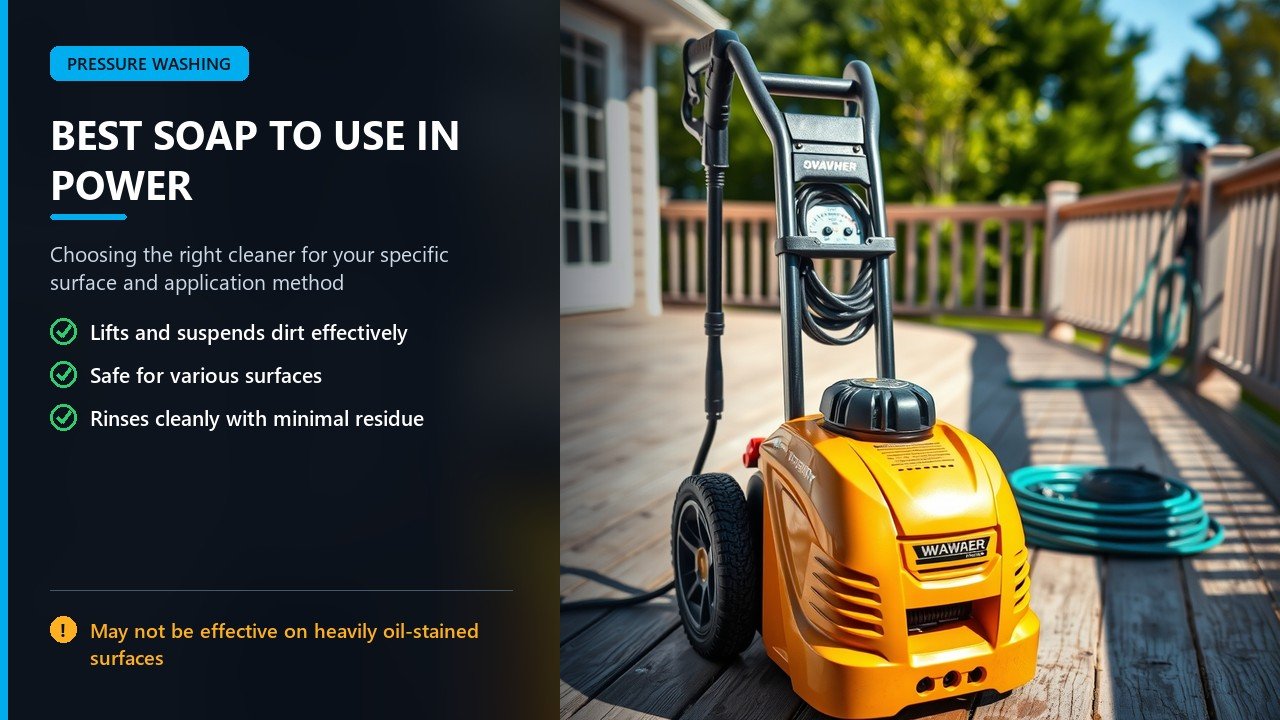
A great pressure washing soap does several things well at once. It lifts and suspends dirt, it is safe for the surface it is meant for, it rinses cleanly, and it works with your application method. Miss any of these and the product disappoints, no matter how good the label looks.
- Effective cleaning action that lifts grime and holds it in suspension for rinsing.
- Surface-appropriate chemistry that will not damage the material.
- Clean rinsing without leaving streaks or residue.
- Compatibility with your soap nozzle, foam cannon, or injector.
- Good value in terms of dilution and cost per use.
Criteria That Matter
| Criterion | Why It Matters |
|---|---|
| Surface compatibility | Prevents damage to paint, wood, vinyl, or concrete |
| Cleaning strength | Handles the soil type you face |
| pH level | Affects safety and effectiveness on different surfaces |
| Foaming | Improves dwell time and coverage when desired |
| Rinsability | Prevents streaks and residue |
| Concentration | Affects value and how you mix it |
| Application method fit | Works with your nozzle, cannon, or injector |
Judge any soap against these criteria for your specific job, and the “best” choice becomes obvious.
The Best Cleaner by Surface
Rather than one best soap, there is a best type for each surface.
| Surface | Best Cleaner Type | Key Quality |
|---|---|---|
| Vehicles | Car wash soap | Paint-safe, pH-balanced, good lubricity |
| Siding and exteriors | House wash / siding cleaner | Targets organic growth and grime |
| Concrete and driveways | Concrete cleaner / degreaser | Lifts oil and stains |
| Wood decks and fences | Deck cleaner | Wood-safe, no fiber damage |
| Greasy surfaces | Degreaser | Dissolves oil and grease |
| Roofs and organic growth | Specialty soft wash cleaner | Kills growth, appropriate for roofing |
Concentrate vs Ready-to-Use
| Type | Pros | Cons |
|---|---|---|
| Concentrate | Better value, adjustable strength, less packaging | Must be diluted correctly |
| Ready-to-use | Convenient, no mixing | Higher cost per use, fixed strength |
Concentrates usually win on value and flexibility, while ready-to-use formulas win on convenience. For frequent users, concentrates pay for themselves quickly.
pH and Surface Safety
pH determines how aggressive a cleaner is and which surfaces it suits.
- Neutral pH: Gentle, safe for paint and most surfaces. Common in car soaps.
- Alkaline: Strong on grease and organic grime. Common in degreasers and house washes.
- Acidic: Targets mineral stains, rust, and hard-water deposits. Requires care and is not for every surface.
Using the wrong pH can dull finishes, etch concrete, or damage wood. Match the pH to the surface, and always test first.
Foam: When It Helps
Thick foam is popular, and for good reason. Foam clings to surfaces, increasing dwell time so the chemistry works longer before it runs off.
- Great for vehicles and siding, where dwell time improves results.
- Not always necessary, since some cleaners work fine with simple spray application.
- Requires the right tool, such as a foam cannon or foamer.
Do not confuse more foam with better cleaning. The chemistry matters more than the foam, though good foam helps on vertical surfaces.
Match Soap to Application Method
- Soap nozzle (black tip): Works with most liquid soaps designed for pressure washers.
- Foam cannon: Needs a soap formulated to foam, often a concentrate.
- Downstream/upstream injector: Uses liquid cleaners that mix into the water stream.
- Manual sprayer: Works with concentrates diluted in a pump sprayer.
Shopping Checklist
- Identify your main surface and the soil you fight most.
- Choose the soap type matched to that surface.
- Check the pH for surface safety.
- Confirm the application method it is designed for.
- Compare dilution and cost per use, not just bottle price.
- Read reviews for real-world performance on your type of job.
- Buy a smaller size first to test before committing to a large container.
Dilution and Cost per Use
- Follow the label, then adjust slightly to your conditions.
- Start weaker, strengthening only if needed.
- A concentrate can cost far less per use than ready-to-use.
- Dilute in the recommended ratio, not by guesswork, to avoid waste or damage.
Safety
- Wear eye and skin protection when handling concentrates.
- Never mix chemicals, especially bleach with acids or ammonia, which can create dangerous fumes.
- Protect plants and landscaping from runoff.
- Work in ventilated areas, never in enclosed spaces with fumes.
- Rinse surfaces and equipment after use.
- Store safely out of reach of children and pets.
Frequently Asked Questions
What is the best soap to use in a power washer?
There is no single best soap. The best choice depends on the surface: car wash soap for vehicles, house wash for siding, concrete cleaner or degreaser for driveways, and deck cleaner for wood. Match the cleaner to the job.
Is concentrate or ready-to-use soap better?
Concentrates offer better value and adjustable strength, while ready-to-use formulas offer convenience. For frequent use, concentrates usually win on cost per use.
Does the pH of pressure washer soap matter?
Yes. Neutral soaps suit paint and most surfaces, alkaline cleaners handle grease and organic grime, and acidic cleaners target mineral stains. The wrong pH can damage surfaces.
Do I need special soap for a foam cannon?
Foam cannons work best with soaps formulated to foam, often concentrates. Some all-purpose soaps produce little foam without a dedicated foaming formula.
Can I use the same soap on everything?
An all-purpose pressure washer soap can handle light cleaning on many surfaces, but specialty jobs like cars, wood, and concrete benefit from purpose-made cleaners for better and safer results.
Final Thoughts
Finding the best soap to use in power washer work is less about chasing one perfect product and more about matching the right cleaner to the surface, soil, and application method. Car wash soap for paint, house wash for siding, concrete cleaner for driveways, deck cleaner for wood, and degreasers for grease each win their jobs.
Judge soap by effectiveness, surface safety, rinsability, compatibility, and value. Check the pH, confirm the intended application method, compare cost per use, and test a small size before committing. Buy with those criteria in mind and you will always end up with the best soap for the task at hand.