Clogged gutters are one of those home maintenance chores that everyone notices and almost nobody enjoys. Leaves, twigs, and shingle grit pile up, water backs up, and before long you have overflow, fascia rot, and a foundation that takes on water it should not. When people see the mess, their first thought is often to aim the pressure washer up there and blast it clean. It seems like the perfect tool for the job. The reality is more nuanced. Gutter cleaning with a pressure washer can work well, but only if you use the right attachments and approach. Do it carelessly and you will bend gutters, soak your walls, and put yourself at risk on a ladder.
This guide explains how to clean gutters with a pressure washer safely and effectively. We will cover why gutters clog, whether a pressure washer is the right tool, the real risks involved, the attachments that make it work, several cleaning methods, a step-by-step process, downspout cleaning, what not to do, safety, and alternatives. By the end, you will know how to clear your gutters without damaging them or yourself.
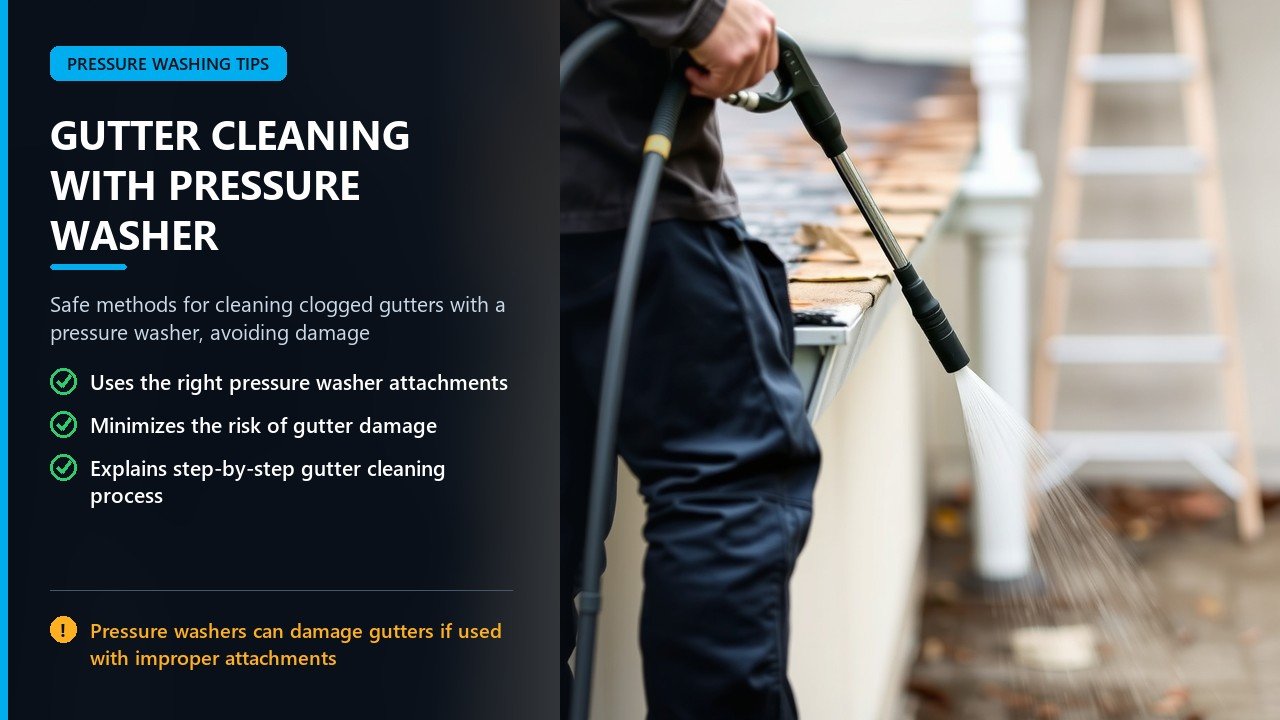
Why Gutters Clog
Gutters collect everything that falls or washes off a roof.
- Leaves and twigs from nearby trees.
- Shingle grit that wears off over time.
- Pine needles and seeds, which mat together and block flow.
- Moss and debris from the roof surface.
Once clogged, gutters overflow, sending water down siding and foundations where it causes damage. That is why regular cleaning matters.
Can You Use a Pressure Washer on Gutters?
Yes, but with two important rules: use low pressure, and use the right attachments. A pressure washer is excellent for rinsing gutters and clearing downspouts, but it can damage gutters and siding if used at full force or at the wrong angle.
The safest approach often combines manual removal of debris with a pressure washer rinse, rather than trying to blast everything out with water alone.
The Real Risks
| Risk | Cause |
|---|---|
| Bent or dented gutters | Too much pressure, especially on aluminum and thin metal |
| Water behind siding | Spraying upward or at the wrong angle |
| Ladder falls | Working at height, reaching, unstable footing |
| Damaged fascia and shingles | High pressure near roof edges |
| Soaked landscaping and foundations | Uncontrolled runoff |
The Right Tools
- Gutter cleaning attachment: A curved wand or nozzle designed to direct water along the gutter from the ground or a ladder.
- Telescoping wand: Extends reach so you can clean from the ground, reducing ladder use.
- Low-pressure settings: Use wide nozzles or reduce machine pressure.
- Gutter scoop or tongs: For manually removing heavy debris first.
- Sturdy ladder with stabilizer, for any climbing you must do.
- Protective gear: Gloves, eye protection, and non-slip footwear.
Cleaning Methods Compared
| Method | How It Works | Best For |
|---|---|---|
| Manual removal + rinse | Scoop debris, then rinse with low pressure | Most homes, safest and most thorough |
| Gutter attachment on wand | Curved nozzle sprays along gutter | Rinsing and light debris |
| Telescoping wand from ground | Extends reach, cleans from below | Reducing ladder time |
| Pressure washer alone | Blasts debris out | Not recommended alone; risks damage |
The most reliable method combines scooping out the heavy debris by hand and then rinsing with low pressure, using an attachment or telescoping wand where possible.
Step-by-Step
- Set up safely. Stabilize the ladder, wear protective gear, and never overreach.
- Remove heavy debris first, using a scoop or tongs. Do not rely on water alone.
- Work in sections, removing debris and bagging it as you go.
- Rinse with low pressure, using a gutter attachment or telescoping wand.
- Angle the spray along the gutter, not up under the shingles or siding.
- Check the flow, confirming water drains toward the downspout.
- Flush the downspouts and clear any blockages.
- Inspect the gutters for damage and loose hangers.
Cleaning Downspouts
- Check flow by running water into the top of the downspout.
- Clear blockages from the top down, or from a cleanout if present.
- Use low pressure from the top or a drain cleaning tool for stubborn clogs.
- Verify exit flow at the bottom of the downspout.
- Add downspout screens to prevent future clogging where appropriate.
What Not to Do
- Do not use high pressure on gutters. It bends metal and drives water behind siding.
- Do not spray upward under shingles or siding. Water intrusion causes hidden damage.
- Do not rely on water alone for mats of leaves and needles.
- Do not overreach on a ladder. Move the ladder instead.
- Do not work in unsafe weather, such as wind, rain, or ice.
- Do not point the spray at electrical fixtures or wiring.
- Use a sturdy, stabilized ladder on level ground.
- Wear gloves and eye protection, and consider hearing protection for gas machines.
- Keep three points of contact when climbing.
- Never clean gutters near power lines or standing water with electricity nearby.
- Have a spotter when working at height.
- Mind the pressure. High-pressure water can cause serious injury.
- Manual scooping: The most reliable for heavy debris.
- Gutter vacuum (gutter vac): Designed for ground-level gutter cleaning.
- Leaf blower: Good for dry, light debris from the ground or a ladder.
- Gutter guards: Reduce future clogging, though not a replacement for periodic cleaning.
Safety
Alternatives
Frequently Asked Questions
Can I clean my gutters with a pressure washer?
Yes, but only with low pressure and the right attachments, ideally after manually removing heavy debris. High pressure can bend gutters and force water behind siding.
Will a pressure washer damage my gutters?
It can if used at full force or the wrong angle, especially on aluminum and thin metal. Use low pressure, a gutter attachment, and spray along the gutter rather than upward.
What is the best way to clean gutters?
Remove heavy debris by hand first, then rinse with low pressure using a gutter attachment or telescoping wand. This combination is safe and thorough.
How do I clean downspouts?
Run water into the top to check flow, clear blockages from the top or a cleanout, use low pressure for stubborn clogs, and verify water exits at the bottom.
Do I need to clean gutters if I have gutter guards?
Yes, periodically. Guards reduce debris but do not eliminate it, so plan to check and clean a few times a year.
Final Thoughts
Gutter cleaning with a pressure washer can be safe and effective when done right, and it pairs best with manual debris removal and low-pressure rinsing. The pressure washer is a rinsing tool here, not a blasting tool, and treating it that way protects your gutters and your home.
Use the right attachments, angle the spray along the gutter, mind ladder safety above all, and clean downspouts too. Do it carefully and your gutters will flow freely, protecting your siding, fascia, and foundation through every storm.