Sometimes the job is not about power, it is about height. The siding on the second floor, the gutters along the roofline, the soffits above the porch, all of it sits just out of reach of a standard wand. The instinct is to grab a ladder, but climbing with a pressure washer wand in hand is exactly the kind of task that sends people to the emergency room. This is where the telescoping pressure washer wand earns its keep. It extends your reach from twelve feet to eighteen feet or more, letting you clean high surfaces while your feet stay firmly on the ground. When used correctly, a telescoping pressure washer wand is one of the safest and most useful accessories an owner can add.
This guide covers telescoping wands in depth. We will explain what they are, how they work, what they are good for, their limits, how to choose one, how to use it safely, maintenance, common mistakes, and the alternatives. By the end, you will know whether a telescoping wand belongs in your setup and how to get the most from it.
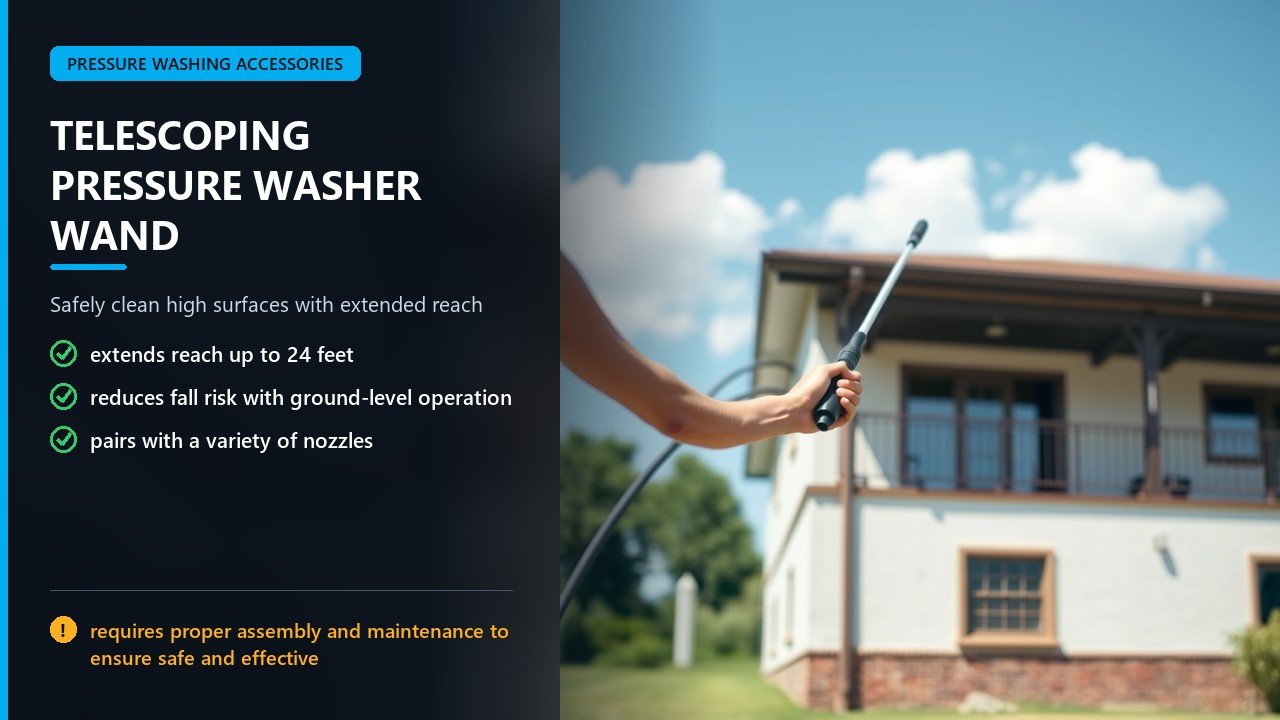
What Is a Telescoping Pressure Washer Wand?
It is an extension wand with two or more sections that slide out to extend your reach, connecting between your spray gun and the nozzle.
- Extends reach from about twelve to twenty-four feet depending on the model.
- Keeps you on the ground, dramatically reducing fall risk.
- Works with a nozzle at the tip to shape the spray.
- Often pairs with a padded handle and shoulder support for control.
It is, essentially, a long, adjustable arm for your pressure washer.
How It Works
- Connect the wand between your spray gun and the tip.
- Extend the sections and lock them at the length you need.
- Attach a nozzle suited to low-pressure cleaning, often a wider angle or soap tip.
- Support the wand and aim from the ground at the target above.
The nozzle choice matters here. Up high, you want lower pressure and a wider spray, not an aggressive pinpoint that risks damage.
What They Are Good For
| Task | How the Telescoping Wand Helps |
|---|---|
| Second-story siding | Reaches upper walls from the ground |
| Gutters and fascia | Cleans along the roofline |
| Soffits and eaves | Reaches under overhangs |
| Applying soap | Sprays cleaning solution up high |
| Rinsing tall surfaces | Reaches without a ladder |
For most homeowners, the telescoping wand shines on soft washing tasks, applying solution and rinsing at low pressure rather than blasting at high pressure.
The Limits
- Pressure loss: Longer reach generally means lower pressure at the tip.
- Control: A long wand is harder to aim and stabilize, especially in wind.
- Weight: Extended wands get heavy and tiring.
- Damage risk: High pressure at a distance is still high pressure, so choose nozzles carefully.
- Reach cap: Even long wands have a limit, so some areas still need other methods.
How to Choose One
- Match the connection to your spray gun (quick connect size).
- Pick a length that reaches your highest surfaces without being unwieldy.
- Check the pressure rating against your machine.
- Look for secure locking collars that will not slip.
- Choose lightweight materials to reduce fatigue.
- Confirm nozzle compatibility.
- Prefer robust construction (aluminum or composite) for durability.
Using It Safely
- Use low pressure and a wider spray angle up high.
- Stand with stable footing on level ground.
- Support the wand with a shoulder strap or padded grip where available.
- Keep the tip moving to avoid concentrated damage.
- Avoid spraying upward under siding or into vents and windows.
- Watch for wind that can blow the spray off target.
- Keep clear of power lines and electrical fixtures.
Maintenance
- Rinse and dry the wand after use.
- Clean the locking collars so they keep gripping.
- Check O-rings and seals for wear.
- Store fully retracted and dry.
- Winterize to prevent freeze damage.
Common Mistakes
- Using high pressure up high. It damages surfaces and is hard to control.
- Over-extending in wind. You lose control and accuracy.
- Ignoring the pressure rating. An under-rated wand can fail.
- Letting the tip dwell. Concentrated spray etches and strips.
- Spraying under seams and vents. Water intrusion causes hidden damage.
- Storing wet. Promotes corrosion and sticky collars.
Alternatives
- Standard extension wand: For moderate height without full telescoping.
- Soft wash system: Dedicated low-pressure cleaning solution application.
- Downstream injector: Applies soap through your existing gun and wand.
- Pressure washing service: For jobs beyond safe DIY reach.
Frequently Asked Questions
What is a telescoping pressure washer wand used for?
Reaching high surfaces like second-story siding, gutters, soffits, and eaves from the ground, which reduces ladder use and improves safety.
Does a telescoping wand reduce pressure?
Longer reach generally results in lower pressure at the tip. The wand adds reach, not pressure, so use low-pressure techniques up high.
Can a telescoping wand replace a ladder?
Often it can for cleaning tasks, which is the point. It helps you stay on the ground, though some areas may still need careful access.
What nozzle should I use with a telescoping wand?
Use wider angles and lower pressure, such as white 40 degree or soap tips, especially for siding. Avoid aggressive angles up high.
Are telescoping wands worth it?
For anyone cleaning two-story homes or tall surfaces, yes. They add reach and safety at modest cost and pair well with soft washing.
Final Thoughts
A telescoping pressure washer wand solves a specific problem beautifully: reaching high surfaces without the danger of a ladder. It adds reach, not power, and used with low pressure and the right nozzle, it makes short work of second-story siding, gutters, and soffits.
Choose one with a secure lock, a length that suits your home, and a pressure rating that matches your machine. Use it as a soft wash tool, keep your footing stable, and maintain it well. Reach higher, stay grounded, and clean your home’s upper levels safely.