Of all the hose lengths available, 50 feet is the one that quietly does the most work for the most people. It is long enough to wrap around the average car without dragging the machine, long enough to reach across a two-car driveway, long enough to circle a house without constantly repositioning the washer, and yet short enough to remain manageable, affordable, and light. A 50 power washer hose is the sweet spot for countless homeowners and light-commercial users. But 50 feet is also long enough to matter, because length affects pressure, weight, and storage, and hose length that is not managed well becomes a tangle of frustration. This guide covers everything you need to know about choosing and using a 50-foot pressure washer hose.
We will cover why 50 feet is such a popular length, the tradeoffs of hose length, diameter choices, pressure and temperature ratings, fittings and compatibility, how to choose, storage, maintenance, and common problems. By the end, you will know whether a 50-foot hose fits your machine and how to get the most from it.
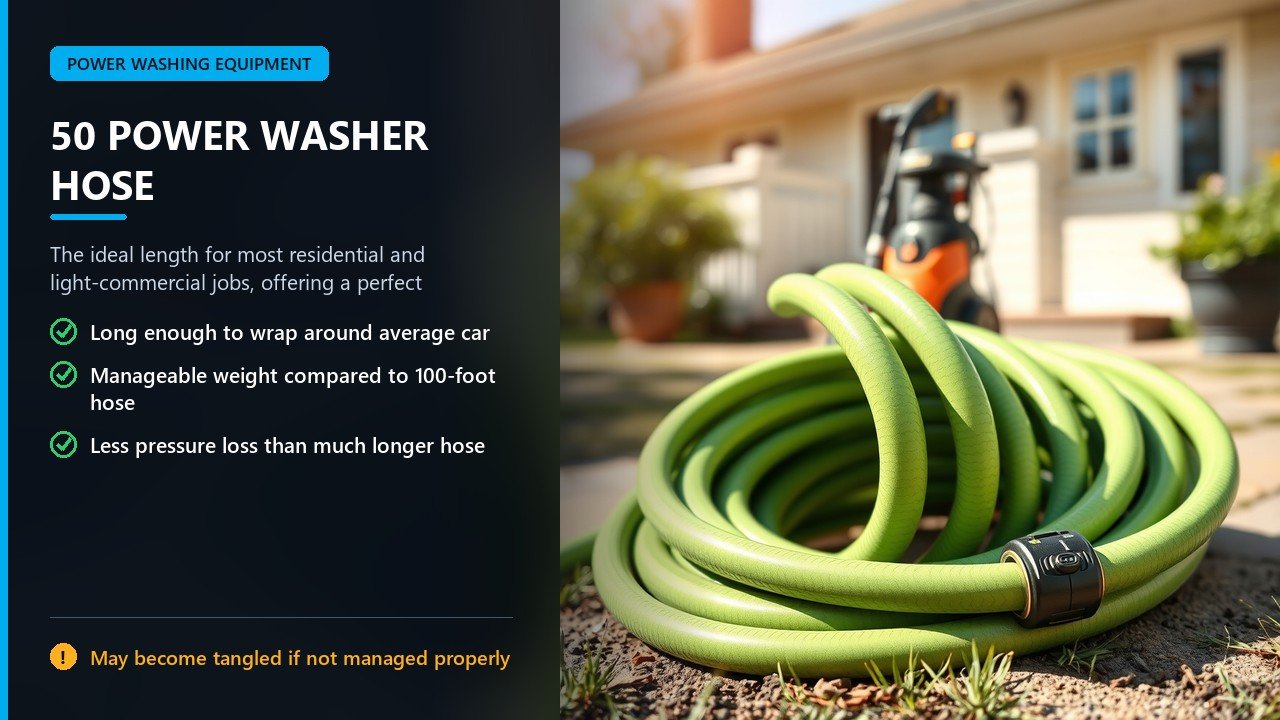
Why 50 Feet Is So Popular
- Enough reach for cars, driveways, patios, and most home exteriors.
- Manageable weight compared to 100-foot hose.
- Less pressure loss than much longer hose.
- A common stock length for both electric and gas machines.
- Good balance of convenience and cost.
For most residential jobs, 50 feet hits the practical balance between reach and control.
The Tradeoffs of Hose Length
| Length | Advantages | Drawbacks |
|---|---|---|
| 25 feet | Light, easy, low pressure loss | Limited reach |
| 50 feet | Good reach, still manageable | Some pressure loss, more weight |
| 100 feet | Very long reach | Heavier, more pressure loss, harder to store |
Diameter Choices
| Diameter | Flow | Best For |
|---|---|---|
| 1/4 inch | Lower | Compact and mid electric machines |
| 5/16 inch | Mid | Higher-flow electric, light gas |
| 3/8 inch | Higher | Gas and commercial machines |
Match the diameter to your machine’s flow. Over a 50-foot run, an undersized hose can restrict flow more noticeably than a shorter one.
Pressure and Temperature Ratings
- Pressure rating: At or above your machine’s PSI.
- Burst pressure: A safety margin above working pressure.
- Temperature rating: Critical for hot water use.
- Material: Rubber and hybrid hose handle pressure and wear well.
Fittings and Compatibility
- M22 threaded: Common on many machines and guns.
- Quick connect: Fast changes with the right plugs.
- 3/8 inch NPT: Used on some equipment.
- Adapters bridge mismatched connections.
Confirm the end fittings match your equipment, or plan for adapters.
How to Choose a 50-Foot Hose
- Match the diameter to your machine’s GPM.
- Check the pressure and temperature ratings.
- Confirm the fittings match your gun and machine.
- Choose a durable material, such as rubber or hybrid.
- Consider flexibility, especially in cold weather.
- Check the burst rating for a safety margin.
Storage and Handling
- Coil without sharp bends to prevent kinks and stress.
- Use a reel for easy winding and protection.
- Drain the hose after use.
- Store out of direct sun to slow material aging.
- Keep it off the ground to reduce abrasion and dirt.
- Winterize to prevent freeze damage.
Common Problems
- Pressure loss over the length, especially with undersized hose.
- Kinking from poor coiling or a weak hose.
- Leaks at fittings from worn O-rings.
- Blistering or bulging, a sign of internal failure and a replacement signal.
- Freeze damage when water is left inside.
Maintenance
- Rinse and dry after use.
- Check O-rings and replace as needed.
- Inspect for kinks, cuts, and bulges.
- Coil properly and store off the ground.
- Winterize before freezing weather.
- Replace at the first sign of damage.
Frequently Asked Questions
Is a 50-foot pressure washer hose good?
Yes. Fifty feet is a popular length that offers good reach while staying manageable and affordable. It suits most residential and light-commercial jobs.
Does a 50-foot hose reduce pressure?
Longer hose loses more pressure than shorter hose, but 50 feet is usually a reasonable balance. Match the diameter to your machine’s flow to minimize loss.
What diameter should a 50-foot hose be?
Match the diameter to your machine. Use 1/4 inch for lower-flow electric machines, and 3/8 inch for higher-flow gas and commercial machines.
How do I store a 50-foot pressure washer hose?
Coil it without sharp bends, ideally on a reel, drain it, and store it out of direct sun and off the ground. Winterize to prevent freeze damage.
Can I use a 50-foot hose on any pressure washer?
If the diameter, pressure rating, temperature rating, and fittings match your machine, yes. Confirm all four before buying to ensure performance and safety.
Final Thoughts
A 50 power washer hose is the practical sweet spot for most owners. It reaches cars, driveways, and home exteriors with room to spare, while staying light and manageable enough to use comfortably.
Match the diameter and ratings to your machine, confirm the fittings, and store it well on a reel. Choose a quality 50-foot hose, care for it properly, and it will handle nearly every job without the bulk or pressure loss of going longer.