A rotary pressure washer nozzle is a specialized spray tip that uses a spinning jet of water to deliver concentrated, rotating cleaning power. Also called a turbo nozzle or rotating nozzle, it combines the force of a narrow pinpoint spray with the coverage of a wider pattern, making it far more aggressive than standard fixed nozzles. Understanding how a rotary nozzle works, its benefits, and when to use it helps you clean tough surfaces faster and more effectively.
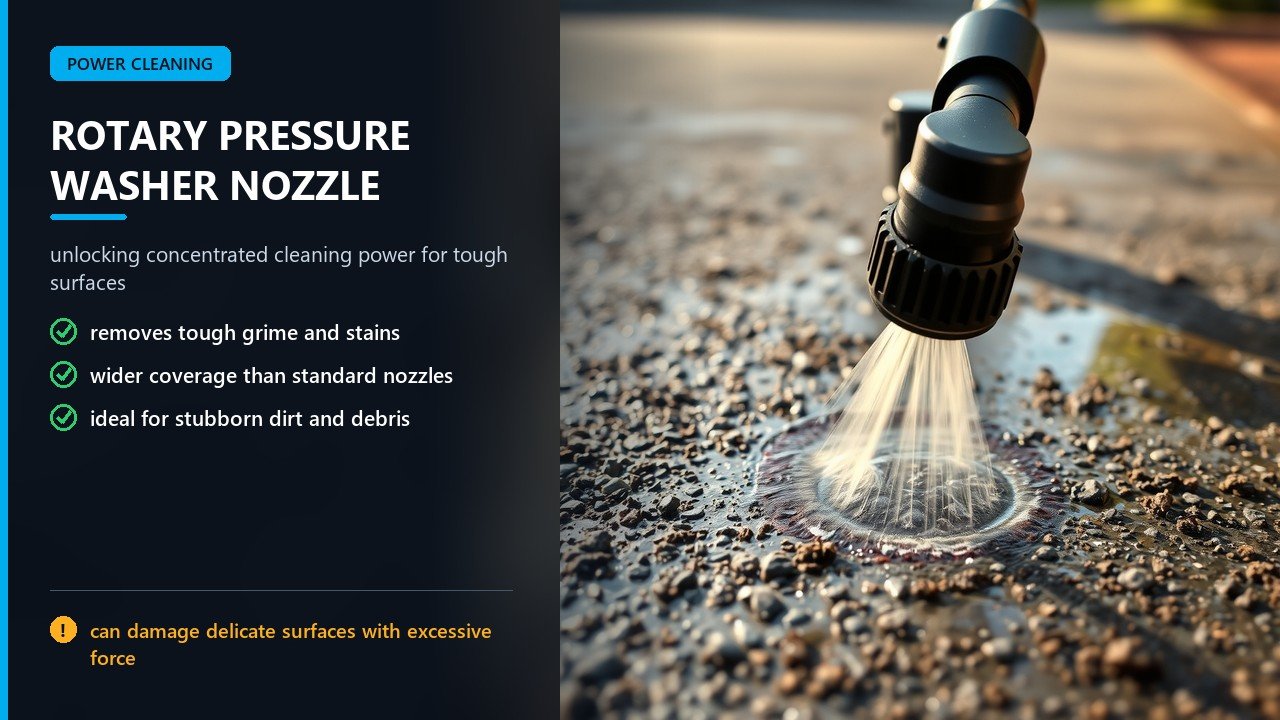
What Is a Rotary Pressure Washer Nozzle
A spinning jet for tough cleaning.
A rotary pressure washer nozzle, also called a turbo nozzle, contains a rotating mechanism that spins a narrow, high-pressure jet of water in a circular path. Instead of a fixed fan spray, the water traces a cone or circle, combining the concentrated force of a zero-degree tip with the wider coverage of a fan nozzle. This rotating action delivers strong cleaning power over a small area, making it ideal for stubborn dirt and grime.
The nozzle fits standard quick-connect fittings (commonly 1/4-inch) and is used like any other spray tip, but its internal spinning parts create a more aggressive cleaning effect. Because the jet spins rapidly, the nozzle can remove caked-on dirt, mud, and stains that standard nozzles struggle with, while covering more area than a fixed point. It’s a popular accessory for cleaning concrete, brick, and other hard surfaces.
Concentrated and fast. Because the spinning jet concentrates power while covering area, a rotary nozzle cleans tough surfaces quickly. This makes it a powerful tool for hard surfaces. With a turbo nozzle, grime comes off faster. Our guide to rotary tip for pressure washer covers related tips.
How a Rotary Nozzle Works
Rapid spinning creates the effect.
Inside a rotary pressure washer nozzle, water passes through a small orifice and a rotating mechanism that spins the stream at high speed, often thousands of revolutions per minute. The result is a jet that rapidly moves in a circular pattern, so any point on the surface receives short, repeated bursts of concentrated pressure. This rotating action effectively multiplies the cleaning power without requiring a wider spray.
The spinning is often powered by the water flow itself, using an internal rotor, while some designs use a turbine or ceramic component for durability. Because the jet is narrow, the pressure remains concentrated, but the rotation spreads it over a larger area, giving the best of both worlds: the force of a pinpoint spray and the coverage of a fan. This is why rotary nozzles are so effective on tough surfaces.
Rotation multiplies power. Because the jet spins and strikes repeatedly, cleaning is more effective than a single static spray. This makes the design powerful. With a rotary nozzle, you clean faster on hard surfaces. Our guide to high pressure washer nozzle covers standard nozzles for comparison.
Benefits of a Rotary Pressure Washer Nozzle
Faster cleaning on hard surfaces.
The main benefit of a rotary pressure washer nozzle is cleaning speed on tough surfaces. Its concentrated, rotating jet removes caked-on dirt, mud, mold, and stains faster than standard nozzles. For large hard surfaces like concrete driveways, patios, and sidewalks, this can significantly reduce cleaning time and effort, and often reduces or eliminates the need for chemicals.
Rotary nozzles also provide a good balance between power and coverage. Where a zero-degree nozzle cleans a tiny spot and a wide fan nozzle lacks force, the rotary nozzle delivers strong pressure over a manageable area. This makes it versatile for hard surfaces that need aggressive cleaning. The increased cleaning power can also mean fewer passes and less water use for the same result, improving efficiency.
Power and speed together. Because the rotary nozzle cleans aggressively and efficiently, it’s ideal for hard, durable surfaces. This makes it a valuable accessory. With a turbo nozzle, tough jobs get easier. Our guide to pressure washer color code helps compare nozzle types.
| Nozzle | Spray | Best For |
|---|---|---|
| Rotary/turbo nozzle | Spinning zero-degree jet | Concrete, brick, tough hard-surface grime |
| Red (0°) | Pinpoint | Very focused spots, stripping |
| Yellow (15°) | Narrow fan | Heavy stains, careful use |
| Green (25°) | Medium fan | General concrete and hard surfaces |
| White (40°) | Wide fan | Gentle cleaning, rinsing |
This table compares the rotary nozzle with standard color-coded nozzles, showing that the rotary nozzle provides spinning, concentrated cleaning power best for tough hard surfaces, while fixed nozzles offer varying fan widths for different tasks and sensitivities.
When to Use (and Avoid) a Rotary Nozzle
Great for concrete, risky for soft surfaces.
A rotary pressure washer nozzle is best used on hard, durable surfaces such as concrete driveways, sidewalks, patios, garage floors, brick, and some stone. It excels at removing caked mud, mold, algae, and stubborn stains from these surfaces. Because it’s more aggressive than standard nozzles, it can clean faster and more thoroughly when the surface can handle the pressure.
However, a rotary nozzle should be avoided on delicate or easily damaged surfaces. Do not use it on wood decks, painted surfaces, car paint, softer stone, asphalt shingles, or anything that can be etched, gouged, or stripped by concentrated pressure. On these surfaces, use gentler nozzles (wider angles) or lower pressure. Always test in a small, inconspicuous area first, since the rotary nozzle’s power can cause damage quickly if misused.
Match the nozzle to the surface. Because the rotary nozzle is aggressive, it’s safe on hard surfaces but risky on soft ones. This makes surface assessment essential. With the right choice, cleaning is effective without damage. Our guide to what color pressure washer tip for concrete covers safe concrete cleaning.
Choosing the Right Rotary Nozzle
Match fitting, pressure, and quality.
When choosing a rotary pressure washer nozzle, match the fitting to your pressure washer. Most use 1/4-inch quick-connect, but check your wand or gun’s connection. Verify the nozzle’s pressure rating meets or exceeds your pressure washer’s PSI, and choose a size that fits your machine’s flow. Using an underrated nozzle can cause failure, while a mismatched size may not seal.
Consider the quality and construction. Better rotary nozzles use durable materials like ceramic and stainless steel for the spinning components, lasting longer under high pressure. Cheaper nozzles may wear out or seize. Read reviews and choose a reputable brand. Some rotary nozzles are adjustable or come in sets. Selecting a quality, properly rated nozzle ensures reliable performance and good cleaning results.
Quality and rating matter. Because a rotary nozzle contains moving parts under high pressure, construction quality affects durability. This makes choosing a good one worthwhile. With the right nozzle, performance is reliable. Our guide to pressure washer quick connect 1/4 covers the common fitting.
Maintaining a Rotary Nozzle
Keep it spinning freely.
Maintain your rotary pressure washer nozzle by flushing it with clean water after use to remove debris that can clog the orifice or impede spinning. Inspect the nozzle for wear, and check that it spins freely; a nozzle that stops spinning or sprays unevenly may be worn or clogged. If debris is the issue, soaking or back-flushing may help, but a worn rotary mechanism usually needs replacement.
Store the nozzle in a clean, dry place, and avoid dropping it, as impact can damage the internal rotor or orifice. In freezing climates, drain the nozzle with the rest of your pressure washer to prevent freeze damage. Rotary nozzles wear faster than fixed nozzles because of their moving parts, so expect to replace them periodically based on use. With care, they last for many cleaning jobs.
Moving parts wear over time. Because the rotor and orifice can clog or wear, cleaning and timely replacement keep performance strong. This ensures consistent cleaning. With good care, the nozzle lasts longer. Our guide to pressure washer repair kit covers spare parts.
Frequently Asked Questions About Rotary Pressure Washer Nozzles
What is a rotary pressure washer nozzle? Also called a turbo nozzle, it’s a spray tip that spins a concentrated zero-degree jet in a circular pattern, combining power and coverage for aggressive cleaning of hard surfaces.
Is a rotary nozzle stronger than a regular nozzle? Yes, the spinning concentrated jet is more aggressive and removes tough grime faster than standard fixed nozzles, but it’s also more likely to damage delicate surfaces.
What surfaces can I use a rotary nozzle on? Use it on hard, durable surfaces like concrete, brick, and some stone. Avoid wood, paint, asphalt shingles, soft stone, and vehicle paint, which can be damaged.
Can a rotary nozzle damage concrete? Concrete can generally handle a rotary nozzle, but holding it too close in one spot can still etch or gouge concrete. Keep it moving, maintain a safe distance, and test first.
What size rotary nozzle do I need? Match the fitting (commonly 1/4-inch quick-connect) and the nozzle’s pressure rating to your pressure washer’s PSI. Choose a size suited to your machine’s flow.
How long do rotary nozzles last? Because they have moving parts, rotary nozzles wear faster than fixed nozzles. Lifespan depends on use, water quality, and construction quality. Replace them when they stop spinning well or spray unevenly.
Final Verdict on Rotary Pressure Washer Nozzles
A rotary pressure washer nozzle is a powerful accessory that spins a concentrated jet to clean tough, hard surfaces faster and more thoroughly than standard nozzles. Ideal for concrete driveways, patios, brick, and other durable surfaces, it reduces cleaning time and often the need for chemicals.
However, its aggressiveness means it should be avoided on delicate surfaces like wood, paint, and vehicles, and used carefully with a safe distance and constant motion. Choose a quality, properly rated rotary nozzle, match the fitting to your machine, and maintain it well. Used correctly, a rotary nozzle is a valuable addition to any pressure washer setup for tough cleaning jobs.