Washing a vehicle is not the same as blasting a driveway. Cars, trucks, and motorcycles have paint, clear coat, trim, rubber, and glass that punish careless cleaning, so automotive washers are designed with gentler pressures, careful accessories, and a workflow aimed at protecting finishes while removing dirt.
This guide explains what automotive washers are, how they differ from general-purpose pressure washers, the equipment and techniques used for safe vehicle cleaning, what to look for when buying, and how to care for the equipment.
What Are Automotive Washers
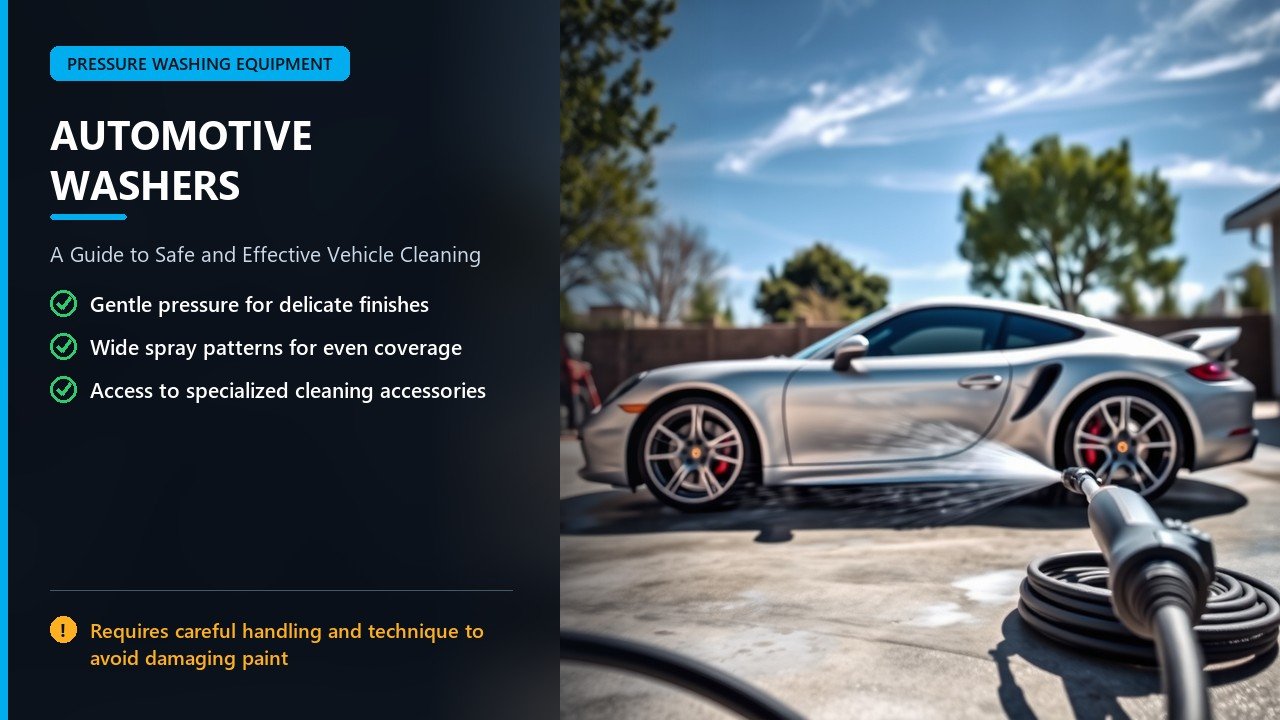
“Automotive washers” broadly describes the pressure washers and cleaning systems used on cars, trucks, boats, and other vehicles. These range from compact electric units sold specifically for car washing to higher-powered machines used in professional detailing and commercial car washes. They share a focus on cleaning vehicles safely rather than blasting hard surfaces.
The defining trait of an automotive washer is control. Vehicle finishes are delicate compared with concrete, so automotive cleaning favors moderate pressure, wide spray patterns, and chemistry over brute force. Detergent, dwell time, and technique do much of the work, with pressure used gently to rinse.
Automotive washers also come with accessories chosen for vehicles: foam cannons for even detergent coverage, soft-bristle brushes, wheel and undercarriage cleaners, and nozzles that spread the spray. These tools protect paint, trim, and glass while still getting cars clean.
Why Vehicles Need a Different Approach
Car paint is a thin, delicate finish over metal and plastic. Too much pressure, or a nozzle held too close, can strip wax, etch clear coat, chip paint near stone chips, and force water into trim, seals, and electrical connectors. The same pressure that cleans a driveway can damage a car, which is why automotive cleaning favors gentler settings.
Different parts of a vehicle need different treatment. Paint and glass tolerate gentle pressure and soft tools. Wheels and tires are tougher and can take more pressure and stronger cleaners, which is why detailers often use dedicated wheel cleaners and brushes. Engine bays and undercarriages need care around electrical components and grease.
The goal is to remove dirt with as little physical and hydraulic force as possible. Loosening soil with detergent and letting it dwell, then rinsing gently, protects the finish and does most of the cleaning before the spray even touches the paint.
Types of Automotive Washers
Automotive washers range from consumer electric machines to professional-grade units. Electric machines in the 1500 to 2000 PSI range are common for home car washing, offering enough pressure for a clean rinse without risking damage. Higher-flow machines rinse faster and are favored for larger vehicles and frequent use.
Gas machines can be used for automotive work as well, but their greater pressure and flow demand extra care with nozzle choice and distance. Many professional detailers use electric machines with strong flow and a foam cannon, prioritizing control over raw power.
Beyond pressure washers, “automotive washers” can refer to brushless automatic systems and to complete mobile detailing setups with water tanks and pumps. Whatever the form, the theme is the same: clean vehicles effectively without harming the finish.
How a Pressure Washer Fits In
A pressure washer is a central tool in automotive cleaning, but it is part of a process rather than a standalone solution. The typical workflow begins with a rinse to loosen loose dirt, then a pre-soak or foam to soften the remaining soil, then a safe hand wash or brushless clean, then a final rinse and dry.
The pressure washer’s role is in the rinsing and detergent application steps. Using a wide nozzle and moderate pressure, it removes loose dirt and, later, rinses away soap and loosened grime. The agitation and chemistry do the real cleaning, while the washer speeds rinsing and applies foam evenly.
Using the right accessories makes the process safer and more effective. A foam cannon lays down a thick layer of suds that clings and lifts dirt, reducing the need to scrub. A wide nozzle rinses with minimal force, and a wheel cleaner and undercarriage attachment reach the tough areas without risking paint.
Safe Cleaning Technique
Safe automotive cleaning follows a sequence that minimizes the risk of scratching or hydraulic damage. Start by rinsing the vehicle with a wide nozzle from a good distance to remove loose dirt, working top to bottom. Then apply a pre-soak or foam and let it dwell so the chemistry loosens the soil.
Wash from the top down using a soft wash mitt or brush, keeping the surface wet and cleaning the wheels last so you do not carry wheel dirt onto the paint. Rinse with a wide nozzle at a safe distance, again from the top down, and dry with a soft microfiber towel or a blower to avoid water spots. Never let detergent dry on the surface in direct sun.
Keep the nozzle at a consistent distance, never closer than the manufacturer recommends, and avoid directing the spray into seals, badges, panel gaps, or electrical parts. On vehicles with delicate trim or older paint, use the gentlest setting and let the detergent do more of the work.
Accessories for Automotive Washers
The right accessories make automotive cleaning safer and more effective. A foam cannon is the most popular, applying thick detergent foam that clings to the paint and lifts dirt before you touch the surface. A wide-angle nozzle or a dedicated automotive tip spreads the spray to reduce the risk of damage.
Soft wash mitts, detailing brushes, and wheel brushes handle the contact cleaning without scratching. A grit guard in the wash bucket keeps grit at the bottom and away from the mitt. Undercarriage cleaners spray the chassis, and wheel and tire cleaners handle the toughest grime with the right chemistry.
Also useful are a quality, flexible hose that will not scratch the vehicle, a quick-connect system for swapping nozzles and attachments, and a reliable method for drying, such as a soft towel or a filtered blower. Each tool supports the goal of gentle, thorough cleaning.
Choosing an Automotive Pressure Washer
For home car washing, an electric pressure washer in the 1500 to 2000 PSI range with good flow is a sensible choice. It delivers enough pressure to rinse effectively without risking paint damage, and it is quiet, light, and easy to store. Higher flow improves rinsing, especially on large vehicles.
Look at the pump type and build. A quality pump and a total-stop system, which shuts the pump down when the trigger is released, improve longevity. Check the included accessories, particularly the nozzle set, and plan to add a foam cannon if one is not included. Quick-connect fittings make changing attachments easy.
Consider your water and power supply. The machine needs a tap that exceeds its flow rating, and a GFCI outlet for safety. If you clean in a location without easy access to water or power, a setup with a water tank and a long hose may be necessary. Matching the machine to your setup matters as much as the rating.
Detergents and Chemistry
In automotive cleaning, detergent does the heavy lifting, and the pressure washer mainly applies and rinses it. Choose products made for automotive use: car wash soaps that are pH-neutral and safe for paint and wax, dedicated wheel cleaners, and bug and tar removers where needed. Never use harsh household cleaners that strip wax or damage finishes.
Foam cannon users often prefer a concentrated snow foam that produces thick, clinging lather, which maximizes dwell time and lift. For wheels, a dedicated wheel cleaner and soft brush remove brake dust without scratching. For waxed or coated vehicles, use a wash that preserves the protective layer rather than stripping it.
Always dilute and apply detergents according to the label, and never let them dry on the surface. Rinse thoroughly, and follow up with a drying method that prevents water spots. Good chemistry, applied with the right tools, lets a gentle pressure washer produce professional-looking results.
Common Mistakes to Avoid
The most common mistake is using too much pressure or a narrow nozzle too close to the paint, which strips wax, etches clear coat, and can chip paint. Equally damaging is spraying directly into seals, badges, and electrical parts, or cleaning wheels last and dragging their grit across the paint.
Other frequent errors include letting soap dry in the sun, washing with a dirty mitt or brush, using harsh or non-automotive cleaners, and skipping the pre-rinse. Each causes scratches, spots, or finish damage that is difficult and costly to correct.
On the machine side, starving the pump, deadheading it, and failing to winterize are common and preventable. And neglecting to keep the hose and nozzles clean means grit can be blown onto the paint. Careful technique and clean tools are the foundation of safe automotive cleaning.
Matching Pressure and Nozzle by Vehicle Area
Different parts of a vehicle tolerate different amounts of pressure. The table below offers a general guide to matching the nozzle and care level to each area. Always start gentler than you think you need and increase only if necessary.
| Area | Nozzle / Care |
|---|---|
| Paint and clear coat | Wide angle (40 degrees) at distance; low pressure |
| Glass and windows | Wide angle at distance; avoid seals |
| Wheels and tires | Narrower angle plus wheel cleaner and brush |
| Undercarriage | Dedicated undercarriage cleaner; moderate pressure |
| Engine bay | Low pressure; protect electrical parts; use care |
The guiding principle is to use the gentlest setting that does the job. Paint and glass deserve the widest spray and the greatest distance, while wheels, tires, and undersides can take more. When in doubt, back off the pressure and let detergent and dwell time do the work.
Wheel and Tire Cleaning
Wheels and tires collect the worst grime on a vehicle: brake dust, road film, and tar. They are also tougher than paint, so they can take more pressure and stronger cleaners — but they still need care, because brake dust is abrasive and aggressive cleaners can damage finishes and coatings.
Use a dedicated wheel cleaner, applied to a cool wheel out of direct sun, and let it dwell before agitating with a soft wheel brush. Rinse with a narrower nozzle than you would use on paint, keeping the spray off the vehicle body and away from brake calipers and sensitive components. Clean wheels after the body so their grit never touches the paint.
Tires respond well to a dedicated tire cleaner and a stiff brush, followed by rinsing. If you apply a tire dressing afterward, keep it off the tread and the wheel surface. A clean, protected wheel area finishes a vehicle’s appearance and protects expensive wheels from corrosion.
Undercarriage and Engine Bays
The undercarriage collects road salt, mud, and grime that promote rust, especially in winter. A dedicated undercarriage cleaner attaches to the pressure washer and sprays a fan of water at the chassis and wheel wells. This is a valuable maintenance step in salt-belt areas, and it is best done after the body is clean.
Engine bays are the most delicate area to clean. Modern engines are full of electrical connectors, sensors, and electronics that water can damage. If you clean an engine bay, use low pressure, cover sensitive components, avoid direct spray on electrical parts, and use a suitable cleaner. Many owners leave engine cleaning to professionals for this reason.
In all cases, work with the gentlest effective pressure and keep the spray moving. The goal is to remove grime without forcing water into places that cause damage or corrosion.
Drying and Finishing
How you dry a vehicle matters as much as how you wash it. Letting it air dry leaves water spots, especially with hard water. The safest approach is to dry promptly with a soft microfiber towel, using a drying aid or spray wax to lubricate the surface and prevent scratches, or to use a filtered blower that removes water without touching the paint.
Work top to bottom and from large panels to small details, keeping the drying towel clean and turning it as it loads with water. For coated or waxed vehicles, a drying aid helps maintain the protective layer. For wheels, dry separately so brake dust does not transfer to the paint.
A careful final step is to inspect for missed spots, especially around trim, badges, and wheels. A thorough rinse and prompt, gentle drying leave a clean, spot-free finish and protect the paint and trim between washes.
Maintaining the Washer Itself
Automotive cleaning puts a pressure washer through frequent, gentle use, but the machine still needs care. Feed it clean water through an inlet filter, never run it dry or deadhead it, and check the nozzle and filter if pressure drops. Keep the hose and nozzles clean so grit is not blown onto paint.
If the pump has a crankcase, check and change its oil on schedule. Inspect O-rings, quick-connects, and hoses for wear, and winterize the machine before freezing weather by draining water and drawing pump protector fluid through the pump. Store it dry and above freezing.
Because the wand, nozzle, and foam cannon are used with detergents, rinse them thoroughly after each wash so residue does not build up. Clean tools deliver a clean vehicle and last longer, and a well-maintained washer makes every wash safer and easier.
Frequently Asked Questions
What is an automotive washer? A pressure washer or cleaning system designed or used for cleaning vehicles, with the right pressure, nozzles, and accessories to protect paint, trim, and glass.
Can I use a regular pressure washer on my car? Yes, if you use a wide nozzle and keep the correct distance. A narrow nozzle held close can damage paint and force water into seals.
What PSI is safe for car paint? Around 1500 to 2000 PSI is common for home car washing. What matters most is a wide nozzle and adequate distance, not just the rating.
Do I need a foam cannon? It is not required, but a foam cannon applies thick detergent foam that lifts dirt before contact washing, which reduces the risk of scratches.
Should I pressure wash wheels and tires? Yes, with a narrower nozzle and dedicated wheel cleaner. Clean wheels after the body so their grit does not reach the paint.
Can I pressure wash an engine bay? With great care. Use low pressure, protect electrical components, and avoid direct spray on electronics. Many owners leave this to professionals.
Why does my car get water spots? They come from letting hard water air dry. Dry promptly with a soft microfiber towel or a filtered blower to prevent spots.
How do I maintain an automotive washer? Keep it fed with clean water, never run it dry or deadhead it, check pump oil if equipped, rinse detergent from tools, and winterize it.
Final Thoughts
Automotive washers are all about gentle, effective cleaning. Vehicles need less pressure and more chemistry and technique than hard outdoor surfaces, so the right nozzle, detergent, and method protect the finish while getting the vehicle clean. The pressure washer’s job is to apply foam and rinse with care, not to blast paint.
Choose a machine with enough flow, the right accessories, and a quality pump; wash from the top down; clean wheels last; and dry promptly. With sound technique and good care of the tools, professional-looking results are within reach of any careful owner. For related reading, see our guides on the electric cold water pressure washer and the pressure washer spray wand.