A pressure washer on its own is a powerful stream of water looking for something to do. What turns it into a versatile cleaning system is its attachments. The right accessories let one machine wash cars, scrub driveways, reach gutters, and clean under equipment, all without buying a second washer.
This guide covers the most useful pressure washing attachments, what each one does, how to match them to your machine, and how to care for them so your washer becomes far more capable.
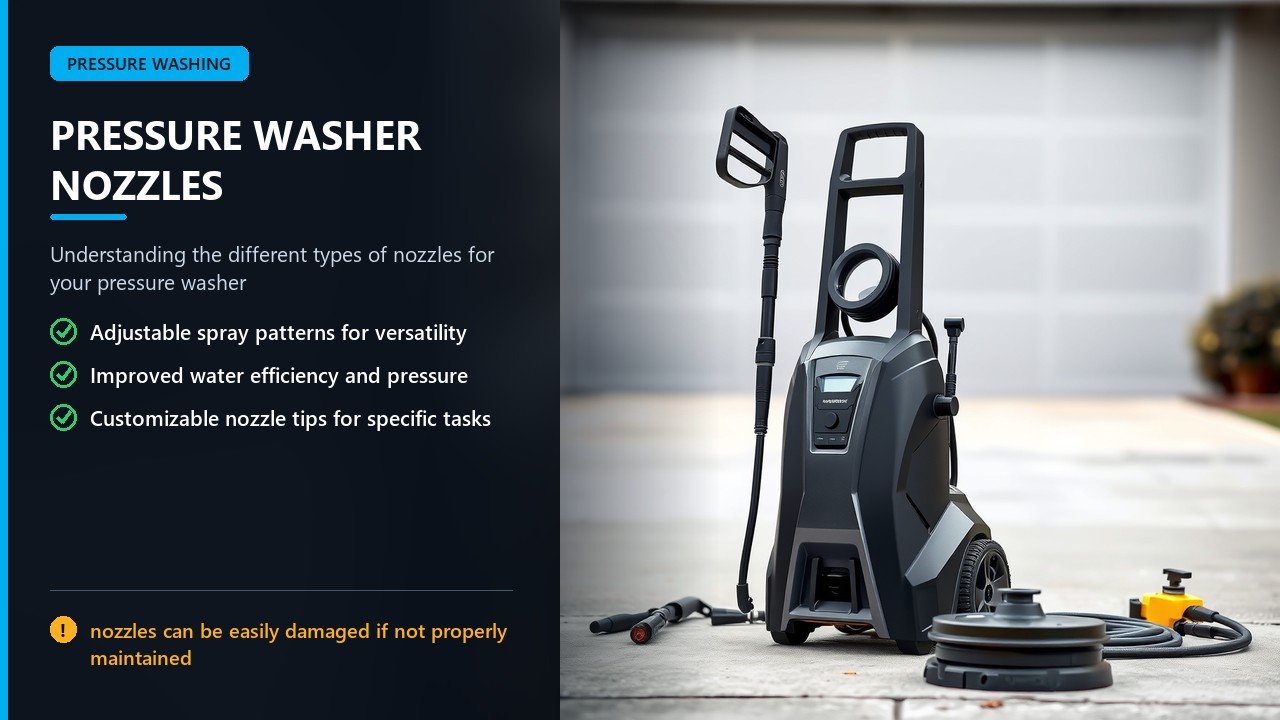
Why Attachments Matter
The basic pressure washer delivers a single, high-pressure jet through a nozzle. That jet is excellent for rinsing and stripping, but it is a crude tool for delicate surfaces, large areas, and hard-to-reach places. Attachments adapt the machine’s water to the task at hand, changing spray pattern, adding detergent, or extending reach.
Attachments also save money and space. Rather than owning several washers, you own one machine and a set of tools that covers many jobs. A surface cleaner for concrete, a foam cannon for cars, and a gutter wand for rooftops cost far less than a specialized machine for each.
The key is compatibility. Most consumer pressure washers share common connection standards, especially the quick-connect fitting and, on many machines, the M22 threaded inlet and outlet. Choosing attachments that match your machine’s fittings and pressure rating lets them work together without restrictive adapters.
Nozzles: The Essential Attachment
Nozzles are the most important attachment because they determine the spray pattern, and therefore the pressure that reaches the surface. Most machines ship with color-coded quick-connect tips: a red 0-degree for tough spots, a yellow 15-degree for stripping and concrete, a green 25-degree for general cleaning, a white 40-degree for delicate surfaces, and a soap tip for detergent.
Choosing the right nozzle is the single biggest factor in safe, effective cleaning. A narrow nozzle concentrates the jet and can damage paint, wood, and even concrete if held too close. A wide nozzle spreads the water for gentler cleaning. Matching the tip to the surface is the core skill of pressure washing.
Beyond the standard set, turbo or rotary nozzles spin a jet to clean faster and are popular for concrete and heavy grime. A soap nozzle drops pressure to draw and apply detergent. Keeping a full set of clean, undamaged nozzles is the foundation of a capable machine.
Surface Cleaners
A rotary surface cleaner is the most valuable attachment for anyone cleaning flat surfaces. It houses a spinning bar with two or more jets under a shroud, so it delivers an even, high-speed spray across a wide path while controlling splash and mess. On driveways, patios, and sidewalks, it cleans far faster and more evenly than a wand.
Surface cleaners are sized by their cleaning width and must match the machine’s flow and pressure. An undersized flow makes the cleaner stall or skip, while too much flow wastes water. Many surface cleaners have interchangeable nozzles and work with a range of machines, but checking the flow requirement is essential.
There are also dedicated surface cleaners for vertical surfaces and for smaller areas, and some attach directly to the machine. For anyone with concrete to clean, a surface cleaner is the accessory that delivers the biggest leap in productivity and results.
Foam Cannons and Detergent Tools
A foam cannon attaches between the wand and nozzle and mixes detergent with water to produce thick foam. The foam clings to a surface, giving the chemistry time to lift dirt, which makes it especially valuable for vehicle washing. A foam cannon turns a pressure washer into a practical wash station with far better detergent coverage than a soap nozzle alone.
Foam cannons vary in quality, and the foam thickness depends on the cannon, the detergent, and the machine’s pressure and flow. Dedicated foam formulations and high-flow machines produce the thickest lather. A foam gun, a lower-cost alternative that attaches to a garden hose, offers less foam but works without a pressure washer.
Downstream detergent injectors are another option, metering cleaning solution into the water stream without a separate bottle. They are convenient for applying cleaners over large areas, though the foam is thinner than a cannon’s. Choosing between a cannon and an injector comes down to the job and the desired effect.
Surface-Specific Brushes and Tools
Rotary brushes attach to the wand and spin with the water flow to scrub surfaces as they rinse. They help with stubborn grime on vehicles, siding, and patio furniture, though stiff brushes should be used with care on painted or delicate surfaces. Soft brushes are safer for automotive use.
Fixed brushes come in various shapes for specific tasks: flat brushes for siding and decks, corner brushes for tight spots, and wheel brushes for rims and tires. They combine agitation with the pressure washer’s rinse, speeding up cleaning where a jet alone is not enough.
Water brooms and undercarriage cleaners are other specialized tools. A water broom is a wide, low-spray attachment for sweeping large flat areas, useful for driveways and parking lots. An undercarriage cleaner sprays upward to rinse the underside of vehicles and equipment, reaching what a standard wand cannot.
Extension Wands and Gutter Tools
Extension wands add reach, letting you clean high walls, siding, and second-story surfaces from the ground. Telescoping versions extend further and collapse for storage, which makes them useful for gutters and tall areas. Longer wands are less rigid and harder to control, so use the extension you need and no more.
Gutter cleaning kits combine a telescoping wand with a hooked tip that drops into the gutter channel, letting you flush debris from the ground. Used with moderate pressure and good flow, they clear gutters and rinse the fascia without climbing a ladder, which makes a risky job far safer.
Underbody and telescoping tools follow the same principle: the attachment extends the machine’s reach to places the standard wand cannot go. When buying extensions, match the fittings and pressure rating so the extra length does not introduce leaks or weak points that fail under pressure.
Matching Attachments to Your Machine
Compatibility comes down to two things: connections and capacity. The connection is usually a quick-connect fitting for nozzle-type attachments and M22 or a similar threaded fitting for hose and inlet connections. Confirm your machine’s fittings and buy attachments that match, or use adapters sparingly, since each adapter adds a potential leak point and some pressure loss.
Capacity means matching the attachment to your machine’s pressure and flow. A surface cleaner or water broom needs enough flow to work properly; on a low-flow machine, it may sputter or clean unevenly. A foam cannon performs best with adequate pressure and flow. Check the attachment’s recommended range before buying.
Also confirm the pressure rating. An attachment rated below your machine’s maximum pressure can fail and cause injury. Matching ratings ensures the tool is safe and performs as intended, and it prevents the frustration of accessories that leak or underperform because they were never suited to your machine.
Using Attachments Safely
Every attachment changes how the pressure reaches the surface, so safety habits adapt with them. Nozzles and attachments that concentrate the jet demand the most caution: keep them pointed at the work, never at people, pets, or yourself, and wear eye protection. Treat the high-pressure stream as a tool that can cut and injure.
When using brushes and surface cleaners, keep hands, feet, and clothing clear of moving parts and the spray. Never reach under a surface cleaner while it is running, and keep the spray away from electrical outlets and fixtures. With electric washers, use a ground-fault-protected outlet and keep connections dry.
Attach and detach tools only when the machine is off and depressurized. A quick-connect can release a burst of pressurized water if it is disconnected under load, and a nozzle that is not fully seated can fly off. Bleed the pressure before changing anything, and check that each attachment is locked in place before restoring water flow.
Maintaining Attachments
Attachments last longer with basic care. Rinse nozzles, brushes, and cannons after use to remove detergent and debris, and clear any clogs with the supplied tool rather than a pin that can damage the orifice. Dry the tools before storing them, and keep O-rings and couplers clean so they seal properly.
Inspect O-rings and quick-connects for wear and replace them at the first sign of leaking, since a small drip wastes water and reduces performance. Store attachments in a dry place, away from freezing, and protect threaded fittings from damage. A cheap O-ring replaced in time prevents a bigger repair.
Check moving parts on rotary tools and surface cleaners, and lubricate them if the manufacturer allows. A surface cleaner’s swivel and wheels, and the bearings in brush attachments, benefit from occasional attention. Well-maintained attachments perform better and last for years.
Common Mistakes to Avoid
The most common mistake is using a nozzle that is too narrow for the surface, which damages paint, wood, and even concrete. Another is choosing attachments that do not match the machine’s fittings or flow, leading to leaks, poor performance, or unsafe pressure ratings.
Failing to depressurize before changing attachments, leaving O-rings worn, and storing tools with detergent residue are other frequent errors. Neglecting to check the pressure rating of an attachment and buying restrictive adapters that cut performance also undermine the whole system.
On the use side, rushing with high pressure instead of letting the right attachment and chemistry do the work leads to damage and wasted effort. Choosing the correct tool, using it at the right setting, and maintaining it carefully is what turns a basic pressure washer into a capable, safe cleaning system.
Attachment Guide at a Glance
The table below summarizes the most common pressure washing attachments, what they do, and where they excel. Use it as a quick reference when deciding which tools to add to your setup.
| Attachment | Purpose | Best For |
|---|---|---|
| Nozzle set | Sets spray pattern and pressure | All jobs |
| Surface cleaner | Even spinning spray for flat areas | Driveways, patios, sidewalks |
| Foam cannon | Applies thick detergent foam | Cars, large wash-downs |
| Rotary brush | Scrubs while rinsing | Siding, furniture, wheels |
| Extension wand | Adds reach | High walls, siding, roofs |
| Gutter kit | Reaches into gutters | Gutter cleaning from the ground |
| Undercarriage cleaner | Sprays upward under vehicles | Vehicle chassis, equipment |
You do not need every attachment, but a nozzle set, a surface cleaner, and a foam cannon cover the majority of common jobs. Add extension wands, gutter kits, and brushes as your tasks require. Building the set around the work you actually do is smarter than buying a large kit you rarely use.
Building a Practical Attachment Kit
For a homeowner, a sensible starter kit is a complete nozzle set, a surface cleaner for hard flat surfaces, and a foam cannon or soap bottle for washing vehicles. These three cover most cleaning around a house. Add an extension wand if you clean siding and high areas, and a rotary brush if you scrub a lot of textured surfaces.
For someone with more varied needs, add an undercarriage cleaner, a water broom, and a gutter kit. These expand the machine into vehicle maintenance, large flat areas, and roof-line work. Buy quality tools that match your machine’s fittings and rating rather than a cheap bundle that leaks and underperforms.
As your kit grows, keep it organized. A storage bag or a shelf for nozzles, O-rings, and couplers keeps small parts from getting lost and makes setup faster. Labeling attachments and keeping spare O-rings on hand prevents the frustration of a missing part in the middle of a job.
Upgrading Your Machine With Attachments
Attachments are the cheapest way to expand what a pressure washer can do. A basic machine with a good attachment set outperforms a more powerful machine used with the wrong nozzle. If you are deciding where to invest, attachments often deliver more practical value than a higher-pressure unit.
However, attachments cannot overcome a fundamental mismatch. A surface cleaner needs adequate flow, a foam cannon needs pressure and flow, and a gutter wand needs reach and a compatible fitting. An attachment that exceeds your machine’s capability will disappoint, so match tools to the machine you own.
If you find a particular job needs more power than your machine provides, the upgrade path is usually a higher-flow or higher-pressure washer, after which you can reuse most attachments. Building a collection of standard, quality attachments lets you move them to a future machine rather than starting over.
Storing and Winterizing Attachments
Store attachments dry and clean. Rinse off detergent and debris, dry them thoroughly, and keep them in a dry place above freezing. Water left in a nozzle, brush, or surface cleaner can freeze and crack it, so drain them before storage.
When winterizing the pressure washer, treat the attachments too. Drain the wand, gun, and any attachments that hold water, and store them indoors. Pump protector fluid belongs in the machine’s pump, not in the attachments, but any tool that could trap water should be emptied.
At the start of the season, inspect attachments for cracks, worn O-rings, and damaged fittings, and replace parts as needed. A quick check before the first job prevents mid-task failures and keeps the whole system working smoothly when you need it.
Frequently Asked Questions
What attachments should I get for my pressure washer? Start with a complete nozzle set, a surface cleaner for flat surfaces, and a foam cannon or soap bottle for vehicles. Add extension wands, gutter kits, and brushes as your work requires.
Are pressure washer attachments universal? Many consumer attachments share common quick-connect and M22 fittings, but not all. Check your machine’s fittings and pressure rating before buying.
What is a surface cleaner used for? It applies an even spinning spray to flat surfaces like driveways and patios, cleaning faster and more uniformly than a wand while reducing splashing.
Do I really need a foam cannon? Not required, but it applies thick detergent foam that lifts dirt before contact washing, which improves results and reduces scratch risk on vehicles.
Can attachments damage my pressure washer? Attachments themselves do not damage the machine, but ones that restrict flow or feed an undersized machine can cause poor performance and added strain.
How do I change nozzles and attachments? Turn the machine off, release the trigger to depressurize, then swap the attachment. Check that it is locked in place before restoring water flow.
Why is my attachment leaking? Usually a worn or missing O-ring at the connection. Replace the O-ring first, then the coupler if the leak continues.
How do I store pressure washer attachments? Rinse and dry them, check and replace O-rings, and store them dry and above freezing, drained of any water that could crack them.
Final Thoughts
Pressure washing attachments are what make one machine capable of many jobs. Nozzles set the pattern and pressure, a surface cleaner masters flat areas, a foam cannon handles vehicles, and extension wands, gutter kits, and brushes reach the rest. Together they turn a basic washer into a complete cleaning system.
Match every attachment to your machine’s fittings and ratings, use each with the right pressure and technique, and maintain them as you would the washer itself. A well-chosen, well-kept set of attachments is the most cost-effective upgrade you can make. For related reading, see our guides on the pressure washer gun attachments and the pressure washer spray wand.