The high-pressure hose is the part of a pressure washer that owners notice last and replace first. It is easy to think of it as a simple tube, but it is a pressure component that carries the machine’s full output, and its quality decides whether a job runs smoothly or ends in a burst and a soaked operator. Choosing a good hose is one of the most practical upgrades you can make.
This guide explains how a high-pressure hose is built, what the specifications mean, and how to choose one that fits the machine and lasts.
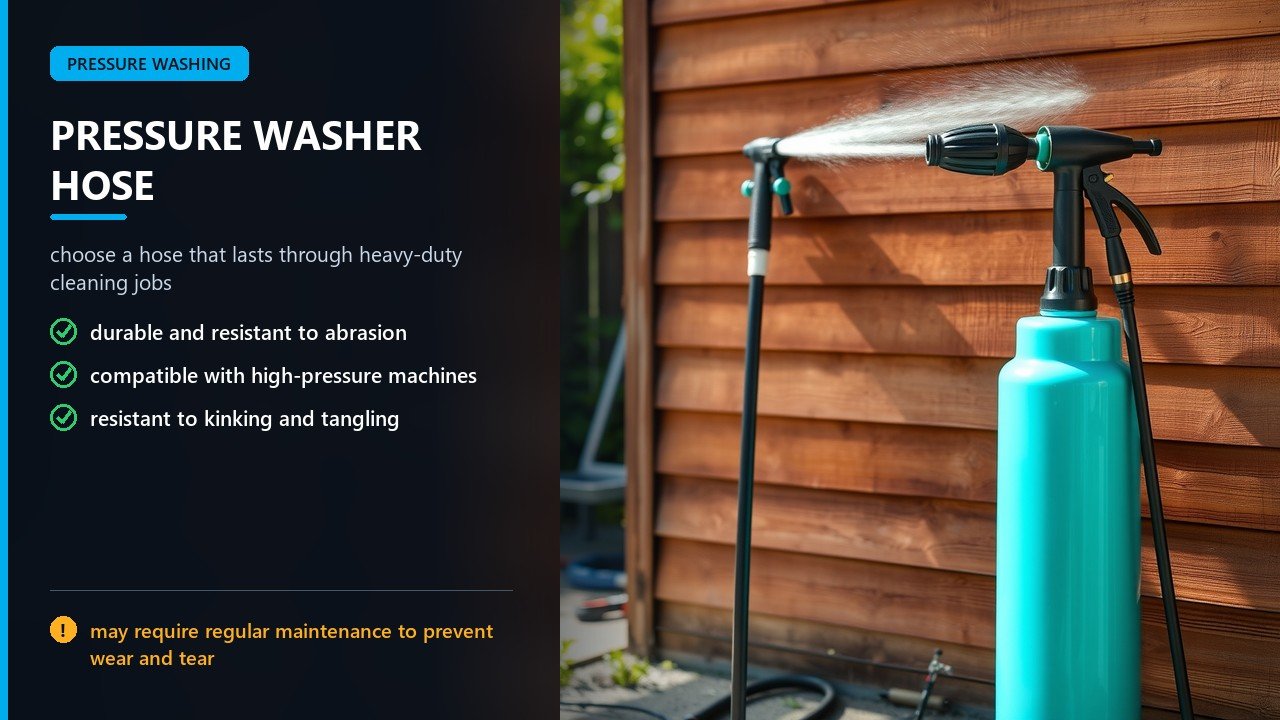
The Hose Is a Pressure Component
From the pump outlet to the gun, the hose holds the machine’s full working pressure continuously. That makes it as much a pressure part as the pump or the gun, and it must be rated accordingly. A hose rated below the machine’s output is the weakest link in the system, and one that fails under pressure can whip, spray, or strike — a genuine hazard, not just an inconvenience.
Hoses fail in predictable ways. They burst when worn or under-rated, kink when too stiff or too long, and leak at the fittings when the crimp or coupling weakens. Most failures trace back to using a hose that was too cheap, too old, or too small for the machine, or to physical damage from being run over, dragged over sharp edges, or stored kinked.
That is why the hose deserves the same respect as the gun and nozzles. A quality hose rated above the machine’s pressure, matched to its flow, and cared for properly will outlast several cheap ones — and it will not fail at the worst possible moment.
How a Hose Is Built
A high-pressure hose has three layers. The inner tube carries the water and resists chemicals and heat. Around it, one or more layers of high-tensile braided wire provide the strength to contain the pressure. An outer cover protects the braid from abrasion, UV, and the environment. The number of braid layers and their material largely determine the hose’s pressure rating and durability.
The two common hose materials are rubber and thermoplastic (often called PVC or hybrid). Rubber hoses are flexible, resist heat well, and coil and uncoil easily, but they are heavier and cost more. Thermoplastic hoses are lighter and cheaper but stiffer in cold weather and less tolerant of heat. Many general-purpose hoses are hybrids that balance flexibility, weight, and cost.
The table below outlines the main specifications to check.
| Spec | What to look for |
|---|---|
| Pressure rating | At or above the machine’s output; check burst rating too |
| Diameter | 1/4 inch for lower flow, 3/8 inch for high flow and less pressure loss |
| Length | Enough to reach the work without excess that adds pressure loss |
| Temperature | Rated above the water temperature, especially on hot water machines |
| Fittings | Correct ends for pump and gun, properly crimped |
Reading these specs together tells you whether a hose suits a machine. Pressure is the safety limit, diameter affects performance, length affects both reach and pressure loss, and the fittings must match the machine’s connections.
Diameter and Flow
The hose diameter affects how much pressure is lost between the pump and the nozzle. A narrow hose resists flow, so the machine works against its own hose and the pressure at the nozzle drops. A wider hose carries the same flow with less resistance, delivering more of the pump’s output to the surface.
For low-flow machines, a 1/4-inch hose is often adequate and is lighter and easier to handle. For high-flow machines, a 3/8-inch hose is the standard because it keeps pressure loss low and lets the machine perform as rated. Using a narrow hose on a high-flow machine is a common mistake that quietly robs performance.
Length matters for the same reason. Every extra foot adds resistance, so a hose much longer than needed reduces pressure at the nozzle. Choose a length that comfortably reaches the work — long enough to avoid dragging the machine around, but not so long that flow suffers. For very long runs, a larger diameter offsets the pressure loss of the added length.
Materials and Feel
Material choice affects how a hose behaves in daily use. Rubber hoses stay flexible in cold weather, resist heat, and coil without fighting back, which makes them comfortable to use and suited to hot water. They cost more and weigh more, but for regular use the flexibility is worth it. Non-marking rubber covers avoid leaving black scuffs on light surfaces.
Thermoplastic hoses are lighter and cheaper and are common on consumer machines. They tend to stiffen in the cold and tolerate less heat, so they suit mild conditions and lighter duty. A hybrid hose aims for a middle ground, offering reasonable flexibility at a moderate cost.
Flexibility is a practical consideration people underestimate. A stiff hose twists, kinks, and drags, and a kink not only cuts flow but stresses the hose at that point, which is where failures often begin. A flexible hose, helped by a swivel at the gun, keeps the line flat and extends its life.
Fittings and Connections
A hose is only as good as its end fittings. The ends must match the machine’s pump outlet and gun inlet, using the correct thread or quick-connect type and size. Crimped fittings that are properly made will not leak or pull off; poorly crimped or corroded ends are a frequent failure point, and they are usually the first part of a hose to give trouble.
Because connections vary, some hoses come with one end for the pump and one for the gun, while others are tailored to a specific machine. When replacing a hose, match the fittings exactly, or use adapters to bring them to standard. Converting the hose and machine to a common quick-connect size makes future changes easy.
Check the fittings when inspecting the hose. Look for corrosion, cracks, or a loose crimp, and replace the hose if the ends are damaged rather than trying to repair them. A failed crimp releases the full pressure of the machine, so fittings deserve careful attention and never improvisation.
Caring for a High-Pressure Hose
A few habits dramatically extend a hose’s life. Coil it loosely in large loops rather than tight, kinked coils, because tight coiling creates permanent kinks and stresses the braid. Store it out of direct sun, since UV degrades the outer cover, and keep it away from heat sources and sharp edges that can cut the cover and expose the braid.
Do not drag the hose over concrete, gravel, or broken glass, and do not run over it with a vehicle or shut it in a door. Damage to the cover exposes the braid to corrosion and abrasion, and once the braid is compromised the hose is on borrowed time. Move the hose deliberately rather than pulling the machine by it, which strains the fittings.
Before each use, run a quick inspection: look for bulges, cuts, abrasion, or scuffs in the cover, and check the fittings for corrosion or looseness. A bulge is a warning that the braid is failing and the hose is about to burst. Any of these signs means the hose should be replaced, not patched, because a hose is a pressure component and cannot be safely repaired.
Signs a Hose Needs Replacing
Hoses give clear warnings before they fail. A bulge or soft spot means a section of braid has failed, and the hose can burst there under pressure. Cuts or abrasion that reach the braid expose it to corrosion. Persistent leaking at the fittings usually means a damaged crimp. Kinks that no longer spring back indicate the inner structure is damaged.
Age matters too. Even a hose that looks fine degrades over time as the rubber hardens and the braid weakens, so a hose several years old that has been stored poorly is a candidate for replacement before it fails. Hoses are inexpensive relative to the damage and injury a burst can cause, so erring on the side of replacement is sensible.
When you replace a hose, choose one rated at or above the machine’s pressure, matched to its flow, and with the correct fittings. Buying a quality hose once costs less over the years than repeatedly replacing cheap ones, and it removes a genuine safety risk from the setup.
Safety and Selection Summary
The cardinal safety rule is to never repair a high-pressure hose. A hose cannot be patched safely, and any attempt at repair removes the margin that keeps the operator safe. Replace it instead, and always fit a hose rated for the machine’s full output and temperature.
Match the hose to the machine: correct pressure and temperature ratings, a diameter suited to the flow, a length that reaches the work without excess, and fittings that fit. For hot water machines, choose a hose rated for the temperature and a material that tolerates heat. For regular use, a flexible non-marking rubber hose is the comfortable, durable choice.
Finally, treat the hose as part of a matched system. Combined with a swivel at the gun and a reel for tidy storage, a good high-pressure hose makes the machine easier and safer to use and lasts far longer than the cheap hose it replaced.
Frequently Asked Questions
What is a pressure washer high pressure hose? The hose that carries water from the pump to the gun at full working pressure. It is a pressure component and must be rated at or above the machine’s output.
How do I choose a hose? Match the pressure and temperature ratings to the machine, the diameter to the flow, the length to the reach you need, and the fittings to the pump and gun.
What diameter do I need? Around 1/4 inch for low-flow machines, and 3/8 inch for high-flow machines to keep pressure loss low and let the machine perform as rated.
Rubber or thermoplastic hose? Rubber is flexible, heat-tolerant, and durable but heavier and costlier. Thermoplastic is lighter and cheaper but stiffer in cold and less heat-tolerant.
Can I repair a burst hose? No. A high-pressure hose cannot be safely repaired. Replace it with one rated at or above the machine’s pressure and temperature.
Why does my hose have a bulge? A bulge means the reinforcing braid has failed and the hose can burst there. Replace it immediately.
How long should a hose last? With good care — loose coiling, out of sun, away from sharp edges — a quality hose lasts years. Heat, UV, abrasion, and tight coiling shorten its life.
How do I store a hose? Coil it in large loose loops, keep it out of direct sun and away from heat and sharp edges, and avoid tight kinked coils that damage the braid.
Final Thoughts
The high-pressure hose is the quiet workhorse of a pressure washer, carrying the machine’s full output and quietly deciding how much of it reaches the surface. A hose rated properly, matched to the flow, and made of the right material performs better; a cheap, old, or under-rated hose robs performance and poses a real safety risk.
Choose by pressure, diameter, length, temperature, and fittings, then care for the hose by coiling it loosely, storing it out of the sun, and inspecting it before each job. Never repair a hose — replace it. Treated well, a good hose outlasts several cheap ones and keeps the whole system safe. For related reading, see our guides on a pressure washer reel and hose and a high pressure washer hose reel.