A pressure washer retractable hose reel is one of those upgrades that seems minor until you use one. Instead of coiling a stiff high-pressure hose by hand, you pull it out to the length you need and let the reel wind it back when you are done. The hose stays tidy, lasts longer, and the whole job becomes quicker.
This guide explains how a retractable hose reel works, the types available, how to choose the right one, and how to keep it rewinding smoothly.
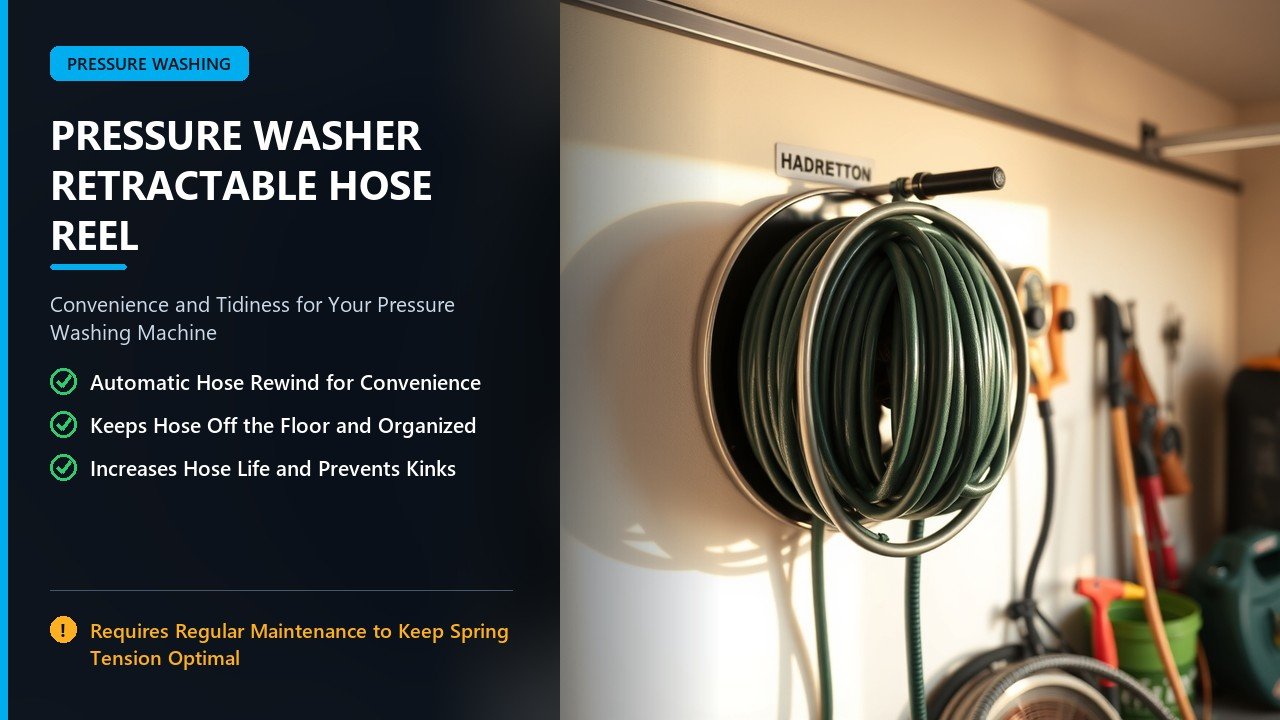
What Makes a Reel Retractable
The word “retractable” describes how the hose returns. A retractable reel winds the hose back automatically, usually with a spring, so you do not have to coil it manually. That is the difference between a retractable reel and a simple storage reel, where you hand-wind the hose around a drum.
Be careful not to confuse a retractable pressure washer hose reel with a coil or expanding garden hose. Those are different products for low-pressure garden use. A pressure washer reel works with a reinforced high-pressure hose and is built to withstand the machine’s pressure, so it belongs on the high-pressure side of the system.
People choose retractable reels for three reasons: convenience, tidiness, and hose life. They make setup and packing away fast, they keep the hose off the floor and out of the way, and they prevent the kinks and abrasion that shorten a hose’s life. For anyone using a pressure washer regularly, those benefits add up.
How a Rewind Reel Works
A spring-rewind reel contains a coil spring under tension. Pulling the hose out winds the spring; the reel’s lock holds the hose at the length you pull. A gentle tug releases the lock and the spring winds the hose back onto the drum. A guide arm across the front keeps the hose feeding evenly so it winds evenly.
At the centre of the reel is a rotary union, or swivel, which lets the rotating drum connect to the fixed supply hose while containing the pressure. This is the critical part of any high-pressure reel, because a pressure washer reel is effectively a small pressure vessel. A flexible leader hose usually links the swivel to the main hose, so the reel does not put a sharp bend on the high-pressure hose where it attaches.
The other main types are manual crank reels, where you wind the hose by turning a handle, and motorised or electric reels, where a small motor rewinds the hose at the press of a button. Spring reels are the most common for home use, while electric reels suit heavier or harder-to-reach installations.
Choosing the Right Reel
Choose a retractable reel around the hose it will carry and the machine it serves. The reel must be rated at least to the pressure and temperature of your washer — a 4,000 PSI machine needs a reel rated for it, and hot-water machines need a reel rated for heat. The hose diameter and length must also fit the reel, since reels are built for particular hose sizes and capacities.
Size the reel to the hose you use. A 3/8-inch hose is standard for higher-flow machines, while 1/4-inch hose suits lighter ones, and each demands a reel built for that diameter. Capacity matters too: a reel rated for 50 feet of 3/8-inch hose will not take 100 feet. Match capacity to the length you actually need, and remember that a longer hose also drops pressure slightly.
Consider the mounting and environment, because retractable reels are usually fixed in place. Wall, ceiling, or vehicle mounting all change the type of bracket you need. For outdoor use, a weather-resistant reel lasts longer, and for indoor wash bays a fixed commercial reel is ideal. Think about where the hose must reach and mount the reel accordingly.
The table below compares the main retractable reel types.
| Type | How it rewinds |
|---|---|
| Spring rewind | Internal spring winds the hose back automatically |
| Manual crank | Hand-turned handle winds the hose around the drum |
| Electric | A small motor rewinds and locks the hose on demand |
Whatever type you choose, the swivel, hose rating, and capacity are the details that decide whether the reel performs well and lasts.
Matching Reel to Hose and Machine
A retractable reel works best when the reel, hose, and machine are matched. The hose should be the right diameter for the machine’s flow and rated for its pressure and temperature. The reel should suit that hose’s diameter, length, and rating. The connections on each end should match the machine’s fittings, or be adapted with correctly rated parts.
Many reels come as a kit with a matched hose, which removes the guesswork and ensures the swivel and hose are compatible. If you buy a reel on its own, confirm the hose it is built for, because a reel sized for 50 feet of 1/4-inch hose is not suited to a long 3/8-inch hose, and forcing the wrong hose onto a reel causes binding and premature wear.
Consider a leader hose if the reel does not include one. A short flexible hose between the swivel and the main high-pressure hose relieves the bend at the connection and protects the swivel from side-loading, which is a common cause of early reel leaks. This small part keeps the reel and hose working together smoothly.
Retractable vs Storage Reels
It is worth knowing the difference between a retractable reel and a plain storage reel, because they suit different needs. A retractable reel winds the hose automatically and is designed to be used constantly, pulling the hose out and letting it back with little effort. A storage reel simply holds the hose when it is not in use and is wound by hand.
For a pressure washer that is used often, a retractable reel is the more convenient choice, since the automatic rewind is the whole point. A storage reel can be cheaper and simpler where the hose only needs somewhere tidy to live. Either way, both must be rated for the machine’s pressure and temperature, and both rely on a sound swivel, so the underlying requirements are the same.
Installing a Retractable Reel
Installation is straightforward but benefits from planning. Mount the reel on a solid surface at a height and angle that lets the hose pull out smoothly and rewind without snagging. Align the guide arm or hose guide so the hose feeds straight onto the drum, and leave room for the hose to swing freely as it retracts.
Connect the inlet side of the swivel to the supply with a leader hose, and the outlet to the high-pressure hose that runs to the gun. Start threaded connections by hand and tighten gently. Before relying on the reel, pressurise the system and check the swivel and connections for leaks, then wind and unwind the hose a few times to confirm smooth operation.
Think about how the hose will behave when fully extended. A retractable reel mounted in the wrong spot can drag the hose around obstacles or put strain on the swivel. Position it so the hose travels freely to the work area, and add a stop or guide if needed to protect the hose and reel.
Troubleshooting a Retractable Reel
The most common complaint is that the reel will not retract, wind back fully, or lock. Partial retraction usually points to the spring losing tension, an overlong or mismatched hose, or the hose being wound unevenly so it binds on the drum. Many spring reels are adjustable or serviceable, and re-tensioning the spring or rewinding the hose neatly often restores the automatic action.
A reel that leaks is usually a swivel problem. The swivel seals wear over time, and a constant drip at the centre indicates they need replacing. Side-loading from a missing leader hose accelerates this wear, so fitting a leader hose is both a fix and a preventive measure. Sealed consumer reels may not be serviceable, in which case replacement is the realistic option.
If the hose jams or the crank binds, look for debris, a kinked hose, or a worn bushing in the drum axle. Cleaning the mechanism and removing kinks usually helps. If a quick connect or fitting on the reel leaks, replace the O-ring rather than forcing the parts.
Maintenance and Care
Keep a retractable reel working by treating it kindly. Pull the hose out straight rather than jerking it, and let the reel wind it back slowly and evenly. Avoid letting the hose snap back at full speed, which strains the spring and can whip the end. Store the reel with the hose wound neatly rather than kinked.
Inspect the swivel, seals, and hose periodically, and replace worn O-rings promptly. Keep the reel clean and, if it is outdoors, protected from weather where possible. Lubricate moving parts only if the maker recommends it, since some reels are designed to run dry.
Choose a reel rated for your machine, fit a leader hose, and mount it where the hose travels freely. Do that, and a pressure washer retractable hose reel rewards you with faster setup, a tidier station, and a hose that lasts far longer.
Frequently Asked Questions
What is a pressure washer retractable hose reel? A reel that winds the high-pressure hose back automatically, usually with a spring, so you do not have to coil the hose by hand. It keeps the hose tidy and protected.
Is it the same as a retractable garden hose? No. A retractable pressure washer hose reel is built for reinforced, high-pressure hose and rated to the machine’s pressure. Garden hose reels are only for low-pressure water.
How does a retractable reel work? A spring is tensioned as you pull the hose out, a latch holds it, and releasing the latch lets the spring wind the hose back through a guide arm. A swivel lets the hose turn while staying pressurised.
What is the most important part of the reel? The swivel, which allows the drum to rotate while carrying pressurised water. It is the key wear point and the usual source of leaks.
How do I choose the right reel? Match it to the hose diameter and length, and to the machine’s pressure and temperature. Choose the mounting type for your space and, ideally, buy a matched kit.
Why will my reel not retract fully? Usually a slack spring, an overlong or mismatched hose, or an unevenly wound hose that binds. Re-tensioning the spring or rewinding neatly often fixes it.
Why does my reel leak? Most often worn swivel seals, often made worse by side-loading when a leader hose is missing. Replace the seals and fit a leader hose.
Do retractable reels need maintenance? Only light care: pull the hose out straight, let it wind back slowly, keep it clean, and replace worn O-rings and seals promptly.
Final Thoughts
A pressure washer retractable hose reel turns a tangle of stiff hose into a neat, quick, protected system. It winds the hose back automatically, keeps it tidy, and extends its life by preventing kinks and wear. For anyone who cleans regularly, it is a small upgrade with a large, everyday payoff.
Choose a reel rated for your machine’s pressure and temperature, matched to your hose’s diameter and length, and mount it where the hose travels freely. Fit a leader hose to protect the swivel, keep the mechanism clean, and replace worn seals promptly. Done well, a retractable reel makes every job easier. For related reading, see our guides on an auto retractable pressure washer hose reel and a pressure washer retractable hose.