The pressure washer handle gun is the part of the machine you actually hold, and it does more than trigger the water. It is your point of control over a high-pressure stream, and the handle shape, trigger, and grip determine how comfortable, accurate, and safe the machine feels. A good handle gun makes cleaning easier; a poor one wears you out.
This guide looks at the handle gun — the gun and its handle — covering the main designs, grip and trigger types, holding technique, and how to keep one working well.
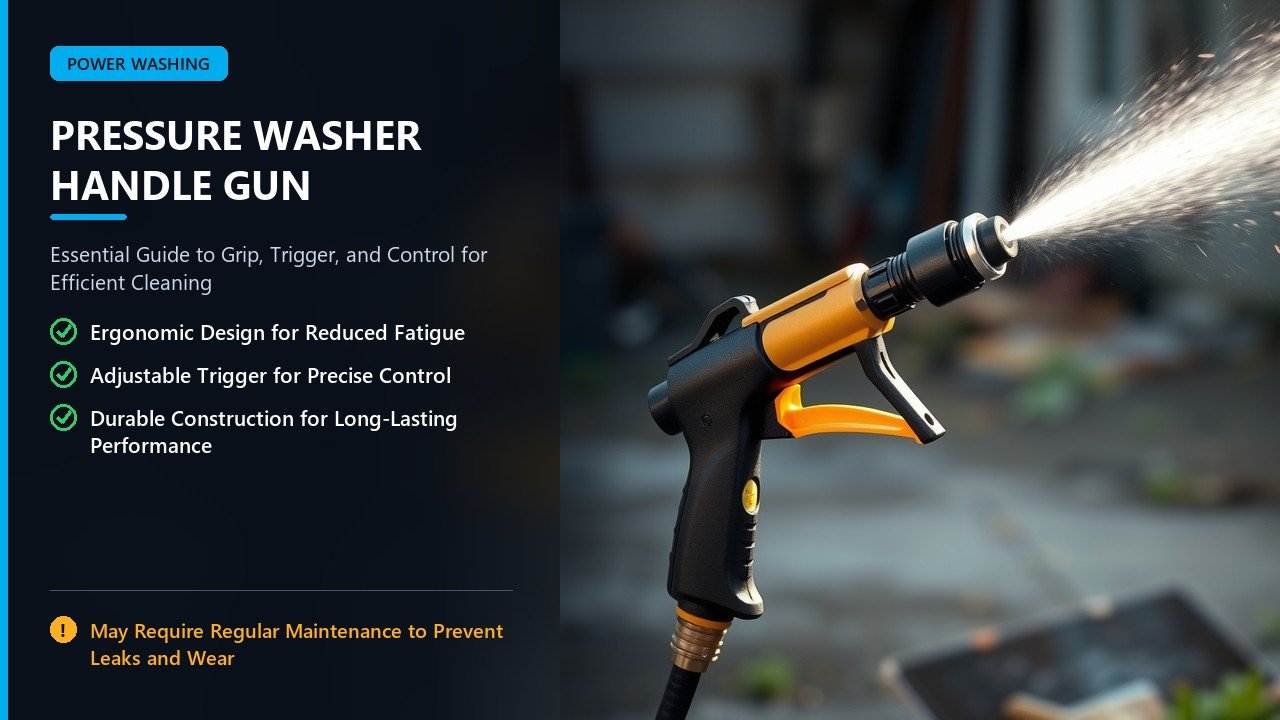
What a Handle Gun Is
The “handle gun” is the spray gun assembly you grip and trigger, complete with its handle. It sits at the end of the high-pressure hose and connects to the wand or lance. Inside, it is a valve: the trigger opens and closes it, letting the pressurised water flow through to the wand and nozzle. The handle is the housing you hold, designed so the trigger falls naturally under your fingers.
Because it is held in the hand, the handle gun is where fatigue, grip, and control all meet. Cleaning can involve holding the gun for long periods while directing a powerful jet, so the ergonomics of the handle matter as much as the pressure rating. A handle that fits your hand and a trigger that is easy to pull make a real difference over a long job.
The handle gun also connects the system together. On one side it takes the high-pressure hose, usually through a threaded or quick-connect inlet; on the other it holds the wand and nozzle. Its connections must match the machine’s fittings, and its internal seals must be rated for the pressure and temperature it will carry.
Handle and Grip Designs
The most common design is the pistol grip gun, held one-handed with the trigger under the index finger and the wand extending forward. It is familiar, intuitive, and easy to aim, and it suits most home and light-commercial cleaning. Many pistol guns can also be held two-handed for more control on tougher jobs.
Some guns use a rear or straight handle, where the grip is behind the trigger assembly, offering a different balance and sometimes better control for certain tasks or for users who prefer a more in-line hold. Professional guns often add a swivel inlet so the hose does not twist as you move, and some use stubby or short guns for close work and surface cleaners.
Grip quality varies. Better guns use textured, rubberised grips that stay secure when wet, and ergonomic shapes that reduce hand strain. Cheaper guns use smooth plastic handles that become slippery with soap and water. Because you hold the gun constantly, a comfortable, grippy handle is worth more than it might seem.
Triggers and Handles
The trigger is the other half of the handle gun, and its feel matters too. A stiff trigger is tiring to hold against the flow, especially during a long wash, while a light, responsive trigger is easier on the hand. Some triggers include a lock-off safety catch, which prevents accidental operation and is a useful feature to look for.
Guns also differ in how they connect and in whether they have extras. A swivel inlet lets the hose rotate freely, reducing twist and strain as you work. A replaceable trigger and valve parts mean the gun can be rebuilt rather than replaced. Insulated handles help on hot-water machines, and some guns accept different wand lengths and nozzles directly.
The table below compares common handle-gun features.
| Feature | Benefit |
|---|---|
| Pistol grip | Familiar, easy to aim and hold one- or two-handed |
| Textured / rubber grip | Secure hold even when wet or soapy |
| Light trigger | Less hand fatigue during long cleaning |
| Lock-off safety | Prevents accidental triggering |
| Swivel inlet | Reduces hose twist and strain |
These features turn a basic trigger valve into a handle gun that is comfortable, safe, and easy to control.
Matching the Gun to the Machine
Before buying a handle gun, match it to the machine’s pressure, flow, and connections. The gun must be rated at or above the washer’s pressure, and its inlet and outlet fittings must match the hose and wand you use. Most gas and professional machines use a 3/8-inch threaded or quick-connect inlet and a 1/4-inch outlet for the wand, while lighter electric machines often use M22 connections.
Temperature matters if you clean with hot water. A gun rated only for cold water may fail prematurely when used with heated water, so choose one rated for the temperature it will see. Seal materials follow the same logic: heat-resistant seals such as Viton handle hot water better than standard ones.
Also consider flow. A very high-flow machine needs a gun that can pass the flow without restriction, so a gun with a narrow internal passage can throttle the performance. When the pressure, flow, temperature, and fittings all match, the handle gun performs as intended and lasts.
Holding Technique and Comfort
How you hold the handle gun affects both comfort and results. Hold it firmly but not tightly, with a relaxed grip that lets the trigger rest under your finger. Use two hands on tougher jobs to steady the wand and share the load. Keep the nozzle at a consistent distance from the surface, and use your whole arm to move the spray rather than just your wrist.
Fatigue comes from tension and from fighting the machine, so a loose grip and steady stance help. Take breaks during long jobs, and stand so the hose is not pulling against you. If the gun has a swivel inlet, let it do its job so the hose does not fight your hand as you move.
A comfortable handle gun also improves safety, because a steady, controllable hold keeps the high-pressure stream where you intend it rather than letting it wander onto skin, plants, or fragile surfaces. Control begins with the grip.
Maintaining the Handle Gun
The handle gun has wearing parts, mainly the trigger valve and its seals. Common problems are a leak when the trigger is released, a trigger that sticks, or a drip from around the valve. The cause is usually worn or hardened seals, a worn valve seat, or debris in the valve. Many guns are rebuildable with a repair kit, so a leaky gun can be fixed rather than replaced.
Keep the handle and gun clean and flush detergent out of the system after use, since soap residue can leave the trigger valve sticky. Inspect the handle for cracks, especially after the gun has been dropped, and check the connections for tightness and leaks. Replace any damaged O-rings at the inlet, outlet, and trigger valve.
A gun that has been frozen with water inside can crack, so store the machine and gun in a frost-free place or winterise them properly. Treat the handle gun as a valve, not just a handle — keep its seals in good order and it will control the water reliably for a long time.
When to Repair or Replace
If the gun leaks, sticks, or loses pressure at the trigger, first confirm the cause is the gun and not elsewhere in the system. A quick check is to release the trigger; if water drips from the gun, the trigger valve seals are the likely culprit. If pressure is low overall, the problem may be the pump, unloader, nozzle, or supply rather than the gun.
For a serviceable gun, a repair kit with new seals and a valve is usually enough and costs far less than a new gun. For a sealed, inexpensive gun, replacement is often simpler and cheap. When replacing, upgrade to a comfortable, well-rated handle gun with a textured grip, a light trigger, and a swivel inlet if your machine supports it.
Because the handle gun is the part you hold, an upgrade here can improve every job. A comfortable, dry grip and an easy trigger reduce fatigue, and a well-rated gun with a swivel inlet handles better and lasts longer than a cheap replacement.
Getting the Best Grip
The handle gun is worth thinking about because it is your constant interface with a powerful tool. Choose one that fits your hand, seals well, and matches your machine’s pressure and connections. Favour a textured grip that stays secure when wet, a trigger that is easy to pull, and a lock-off safety for peace of mind.
Hold it steadily with two hands when control matters, keep the hose from fighting your grip, and let a swivel inlet take the twist. Flush and inspect the gun regularly, and rebuild or replace it when its seals wear. A good handle gun makes cleaning more comfortable, more accurate, and safer — which is exactly what the part you hold should do.
Frequently Asked Questions
What is a pressure washer handle gun? The spray gun you grip and trigger, complete with its handle. It sits at the end of the hose, connects to the wand, and contains the valve that controls the water.
What handle designs are there? Pistol grip guns are most common, with rear-handle and stubby or short guns used for certain tasks. Professional guns often add a swivel inlet.
Why does the grip matter? You hold the gun for long periods, so a textured, secure grip and a light trigger reduce fatigue and improve control, especially when the handle is wet or soapy.
What is a lock-off safety? A catch that prevents the trigger from being pressed accidentally. It is a useful safety feature, particularly when moving between cleaning spots.
How do I match a gun to my machine? Match the pressure rating, the inlet and outlet connections, and the flow. For hot water, choose a gun rated for the temperature with heat-resistant seals.
Why is my gun leaking when I release the trigger? Usually worn or hardened trigger valve seals, a worn valve seat, or debris. A repair kit often fixes it.
Can I repair a leaking handle gun? Yes, if it is serviceable, using a repair kit with new seals. Sealed inexpensive guns are usually replaced instead.
How do I reduce hand fatigue? Use a light trigger and textured grip, hold the gun with two hands when control matters, let a swivel inlet prevent hose twist, and take breaks during long jobs.
Final Thoughts
The pressure washer handle gun is the part you grip, aim, and trigger, so it deserves the same attention as the pump or nozzle. Its handle and trigger determine comfort and control, and its valve and seals determine whether it works without leaking.
Choose a gun rated for your machine’s pressure, temperature, and connections, and favour a textured grip, a light trigger, a lock-off safety, and a swivel inlet. Hold it steadily, keep the hose from fighting your hand, and flush and inspect it regularly. Look after the handle gun and it will make every cleaning job more comfortable, controlled, and safe. For related reading, see our guides on pressure washer guns and the 4000 PSI pressure washer gun.