A 3200 PSI gas pressure washer sits in the sweet spot of the portable gas class. It has enough pressure to tackle most household and light-commercial cleaning, yet it stays affordable and manageable, without the size and cost of a top-end machine. For many buyers, 3200 PSI is the point where a gas washer becomes genuinely capable without becoming overkill.
This guide explains what a 3200 PSI gas pressure washer can do, what to expect from its engine and pump, and how to get the most from it.
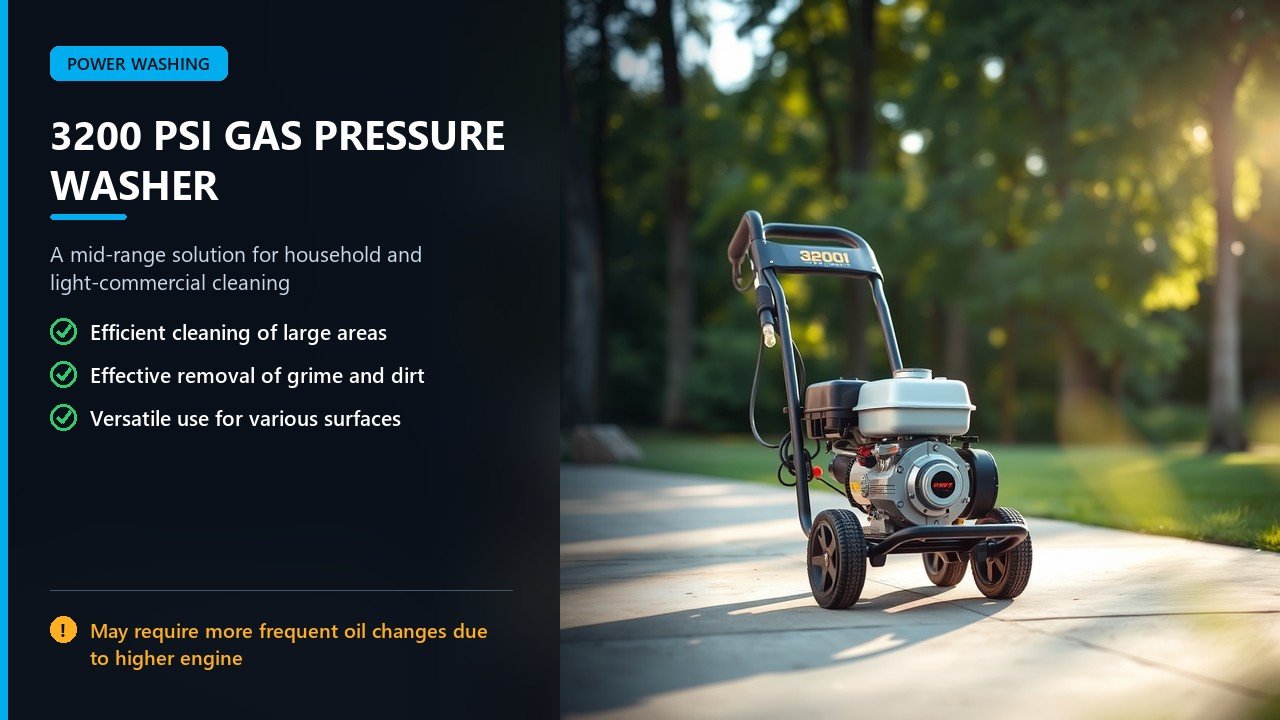
What 3200 PSI Means
PSI stands for pounds per square inch, and it measures how hard the water hits the surface. At 3200 PSI, a gas pressure washer delivers enough force to strip grime, clean concrete, wash siding and decks, and tackle vehicles and equipment. It is well above the light-duty range of small electric machines and comfortably into serious cleaning territory.
Pressure alone, however, does not tell the whole story. A pressure washer’s real cleaning power is a combination of pressure and flow, measured in gallons per minute, or GPM. A 3200 PSI machine with a good flow rate cleans large areas faster and rinses better than one with the same pressure and less flow. Always look at both numbers.
In the gas class, a 3200 PSI machine is a mid-range unit. It is more powerful than a basic 3000 PSI washer and less than a heavy 3500 PSI or higher model. That middle ground is why it appeals to homeowners and small businesses who want real capability without the weight, fuel use, and cost of a bigger machine.
Typical Engine and Pump
A 3200 PSI gas pressure washer is usually powered by a small engine in the range of about 200 to 224 cc, or roughly six to seven horsepower. This is enough to drive the pump to its rated pressure and flow without being oversized. Engines from well-known makers like Honda, Briggs and Stratton, Kohler, and others are common, and all need the usual fuel, oil, and air-filter care.
The pump is the other key component. A 3200 PSI machine may use an axial cam pump or a triplex pump. Axial cam pumps are simpler and cheaper and suit occasional use. Triplex pumps, with three plungers and an oil-bathed crankcase, run smoother and last longer, and are worth having if you clean often. The pump type strongly affects the machine’s lifespan.
Direct drive and belt drive are the two ways the engine connects to the pump. Direct drive is compact and simple, while belt drive runs cooler, reduces vibration, and often lasts longer, though it costs more. On a mid-range 3200 PSI machine, direct drive with a decent pump is the common setup.
3200 PSI vs Neighbours
Placing 3200 PSI between its neighbours helps the choice. A 3000 PSI machine is a touch less powerful but often cheaper, and for many home jobs the difference is small. A 3500 PSI machine adds pressure and often flow, cleaning faster and handling tougher surfaces, but costs more and is heavier. The 3200 PSI machine balances the two.
Step further up to 3800 or 4000 PSI and you enter the serious gas class, where triplex pumps and larger engines become standard and the machines suit professional and heavy use. Step down and you lose capability. The 3200 PSI point is where a gas washer is clearly more than a toy but not yet a heavy professional tool.
The right choice depends on your work. For a large home with concrete, decks, and vehicles, 3200 PSI is ample. For lighter, occasional needs, a 3000 PSI machine may suffice. For frequent heavy cleaning, spend the extra on 3500 PSI or higher with a quality pump.
Buying Tips
When buying a 3200 PSI gas pressure washer, look beyond the headline pressure. Check the flow rate, the pump type and brand, the engine make, and the drive arrangement. A machine with a triplex pump and a reputable engine will outlast a cheaper unit with a sealed pump, even if the pressure figure is the same.
Check the accessories included, such as nozzles, a detergent system, and hose length, and confirm they are rated for the machine. Consider the machine’s weight and wheel setup, since a gas washer is moved around and you want it manageable. A machine that is awkward to move gets used less.
The table below summarises what to weigh up.
| Spec | Why it matters |
|---|---|
| Flow (GPM) | Decides cleaning speed and rinsing, not just the pressure |
| Pump type | Axial cam for occasional use; triplex for durability |
| Engine | A reputable engine means easier starting and longer life |
| Drive | Belt drive runs cooler and lasts longer; direct is simpler |
| Accessories | Must be rated for the machine’s pressure and flow |
Maintaining a 3200 PSI Washer
A 3200 PSI gas washer needs the maintenance of any gas machine plus the usual pressure washer care. On the engine side, change the oil on schedule, keep the air filter clean, check the spark plug, and manage fuel carefully, using fresh gasoline and treating or draining fuel before storage. Old fuel causes most starting problems.
For the pump, keep the oil at the right level where the pump has a crankcase, and change it as recommended, including an early change during break-in. Keep the inlet filter clean so grit never reaches the pump, and never run the machine without water, since running dry destroys pumps. Protect the pump from freezing, which can crack it, and use an unloader that works correctly to avoid pressure stress.
Check the whole system regularly: the hose for bulges or damage, the gun and wand for leaks, the nozzles for wear, and the connectors for tightness. Replace worn seals, O-rings, and nozzles as routine maintenance. A 3200 PSI machine is a durable tool if its consumable parts are kept in order.
Getting the Most From It
Technique makes the most of the machine. Keep the nozzle moving and hold it at a sensible distance, because holding a concentrated jet too close concentrates pressure and can damage surfaces. Use the widest nozzle that does the job, and reserve narrow, aggressive nozzles for tough spots on hard surfaces only.
Let detergent and dwell time help. Applying a suitable cleaner, letting it work, and then rinsing uses less pressure and gives better results, especially on organic growth and greasy soil. Pre-treating also speeds up the work and reduces the chance of striping a surface with the jet.
Match the accessories to the machine and keep the water supply up to the flow. A 3200 PSI machine at 2.5 GPM or more needs a supply that can keep up, or the pump will cavitate. With proper technique, matched accessories, and a good water supply, a 3200 PSI gas washer cleans efficiently and safely.
Matching Accessories to 3200 PSI
The accessories must keep up with the machine, or they become the weak link. Any hose, gun, wand, or fitting used on a 3200 PSI washer should be rated at least to that pressure, and preferably a little higher for margin. A hose that is worn or under-rated can burst under pressure, which is dangerous as well as inconvenient.
Nozzles should suit the machine’s flow. A nozzle with too small an orifice raises pressure beyond the machine’s design and strains the pump, while one that is too large wastes flow and reduces cleaning power. Matching the nozzle to the flow rate keeps the machine working at its intended pressure and gets the best balance of force and coverage.
A surface cleaner is one of the best additions for a 3200 PSI machine, since it cleans large flat areas evenly and quickly using the machine’s flow. A foam cannon suits vehicle washing, and a hose reel keeps the hose tidy. Whatever you add, confirm it is rated for the pressure and flow so the whole system stays safe and effective.
Care and Safety
A gas pressure washer combines high pressure with a fuel engine, so safety deserves attention. Run it outdoors, away from windows and vents, because of exhaust fumes. Refuel only with the engine off and cool, and keep fuel away from ignition sources. Never point the jet at people, animals, or electrical equipment.
Wear eye protection and sensible clothing, and be careful of the recoil of the gun and the heat of the engine and exhaust. Keep the high-pressure hose and fittings in good condition, since a burst hose under pressure can whip dangerously. Replace damaged parts rather than repairing them.
Store the machine properly between uses: run the fuel out or treat it, protect the pump from freezing, and keep it clean and covered. Looked after this way, a 3200 PSI gas pressure washer delivers capable, reliable cleaning for years.
Frequently Asked Questions
What can a 3200 PSI gas pressure washer clean? Concrete driveways and walkways, siding, decks, patios, fences, cars, trucks, and equipment. It handles most exterior cleaning around a home or small business.
What flow does a 3200 PSI machine have? Usually around 2.4 to 2.8 GPM on consumer machines. Higher flow cleans and rinses faster, so weigh it as heavily as pressure.
What engine size does it use? Typically about 200 to 224 cc, or roughly six to seven horsepower, from a reputable engine maker.
Axial cam or triplex pump? 3200 PSI machines may use either. Axial cam suits occasional use; triplex with an oil-bathed crankcase runs smoother and lasts longer for frequent cleaning.
Is 3200 PSI enough for concrete? Yes, for routine concrete cleaning, especially with good flow and a surface cleaner. Very heavy or stubborn concrete may benefit from more pressure and flow.
How does it compare with 3000 and 3500 PSI? It is a touch stronger than 3000 and a touch weaker than 3500, sitting in the comfortable middle of the gas range for cost and capability.
What maintenance does it need? Engine oil, air filter, spark plug, and fuel care, plus pump oil where applicable, a clean inlet filter, matched accessories, and protection from freezing.
How do I store it? Run the fuel out or treat it, protect the pump from freezing, keep the machine clean, and store it covered in a dry place.
Final Thoughts
A 3200 PSI gas pressure washer hits the middle of the gas class where capability and cost meet. It has enough power for concrete, siding, decks, and vehicles, and it stays manageable and affordable, making it a strong choice for larger homes and small businesses.
Judge it by pressure and flow together, favour a good pump and engine, and match the accessories and water supply to its output. Maintain the engine and pump, use good technique, and protect it in storage. Chosen and cared for well, a 3200 PSI gas washer is a dependable, versatile tool. For related reading, see our guides on a 3000 PSI power washer and the 3500 PSI pressure washer pump.