Last spring, a neighbor named Dale dragged his pressure washer out of the garage for the first time in two years. It sputtered, coughed, and died after thirty seconds. A mechanic friend pulled the dipstick, sniffed the oil, and shook his head – the oil looked like dark coffee and smelled burnt. The pump had been run dry once, the engine had been stored with old fuel, and nobody had ever checked the oil because the box never mentioned it. A $40 oil change would have saved Dale a $260 pump replacement. That is the quiet reality behind every conversation about oil for a power washer: the fluid costs almost nothing, and skipping it costs a machine.
Pressure washers have two separate oiling systems that people routinely confuse – the engine and the pump. Gas engines need standard small-engine oil. Pumps need either a dedicated pump oil or a sealed, maintenance-free design. Electric models usually have neither, but they are not maintenance-free either. Knowing which system you have, what grade it takes, and when to change it is the difference between a washer that lasts a decade and one that seizes in its third season.
Why Oil Matters in a Pressure Washer
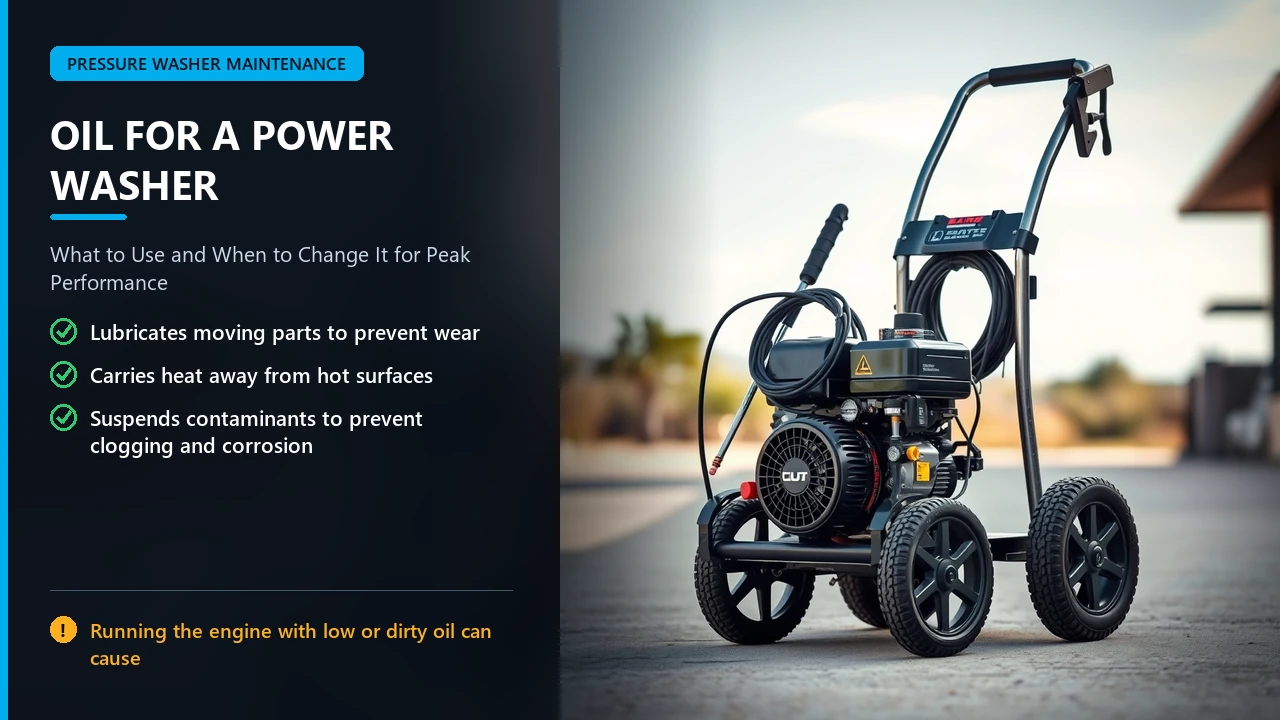
Oil does three jobs at once inside a pressure washer. It lubricates moving parts so metal does not grind on metal, it carries heat away from hot surfaces, and it suspends contaminants so they do not coat precision components. In an engine running at 3,600 rpm for an hour straight, oil temperatures climb quickly. In a pump, the plunger seals experience extreme pressure – often 3,000 psi or more – and the film of oil between those parts is the only thing preventing immediate wear.
When oil breaks down, three things happen in order. First, it loses viscosity, so the protective film gets thinner. Second, acids form as combustion byproducts and moisture mix with the oil, etching soft metal surfaces. Third, suspended dirt and metal particles thicken the oil into a grinding paste. Each stage accelerates the next. This is why an oil change interval is not a suggestion invented to sell service – it is a deadline after which damage begins.
The consequences of neglect are well documented. Small engine manufacturers like Honda and Briggs & Stratton publish failure analyses pointing directly to oil starvation and extended drain intervals as leading causes of warranty claims. In pumps, the story is the same: most field-replaceable pump failures trace back to contaminated or degraded lubricant rather than component defects.
Two Oil Systems, Confused Every Day
The single biggest source of confusion is that a gas pressure washer has two reservoirs requiring different fluids.
- The engine oil sits in the crankcase under the dipstick, exactly like a lawnmower or generator. This is standard four-stroke small-engine oil.
- The pump oil sits in the pump housing, often behind a clear or metal cap with a sight glass. This is either a dedicated pump oil or, in sealed pumps, nothing at all – the grease is packed for life.
People regularly pour engine oil into a pump, or assume that because they changed the engine oil they are finished. Some pumps ship dry and require the buyer to add oil before first use – a step that, if skipped, destroys the pump within hours. Always check both reservoirs separately.
Engine Oil: What to Use
For most gas pressure washers in the United States, the answer is simpler than the marketing suggests. Small engines operate in a fairly narrow temperature range compared to automotive engines, and they work under constant load rather than stop-and-go traffic.
| Situation | Recommended Oil | Notes |
|---|---|---|
| General warm-weather use | SAE 10W-30 or SAE 30 | The default for nearly every consumer pressure washer |
| Cold-weather starts (below 40°F) | SAE 5W-30 | Easier cranking, faster oil circulation at startup |
| High-temperature, heavy-duty use | SAE 10W-40 or SAE 40 | Maintains film strength when engines run hot for hours |
| Four-stroke certified only | API SL or higher, SN recommended | Look for the API donut on the container |
The key rule is four-stroke only. Never use two-stroke oil mixed with gas, and never use automobile synthetic oil formulated for engines with wet clutches or emissions equipment unless the manual specifically allows it. Most manufacturers accept conventional, synthetic blend, or full synthetic four-stroke oil of the correct viscosity – full synthetic simply holds up longer between changes.
Honda machines are a good example of why checking the manual pays off. Honda’s own power equipment guidance specifies their GN4 or HP4 oil for small engines, with 10W-30 as the all-season default. Using an off-brand oil is usually fine as long as it meets the API service classification, but matching the manufacturer’s specification removes all doubt.
Changing the Engine Oil: Step by Step
- Warm the engine. Run it for two to three minutes. Warm oil flows and carries out more contaminants than cold oil.
- Kill the spark plug wire. This prevents accidental starting while your hands are near the machine.
- Position a drain pan. Most washers have a drain plug on the side of the crankcase. Some budget models require tilting the entire machine to pour from the fill port.
- Remove the drain plug and let it run dry. Give it a full five minutes. Old oil hides behind baffles.
- Replace the plug and refill slowly. Add oil to the middle of the dipstick range, check, and top up. Overfilling causes seal pressure and blue smoke.
- Dispose of used oil responsibly. Auto parts stores accept used motor oil free of charge in most states.
For models without a drain plug, the tilt method works but is messier. Place the fill cap side up, remove the dipstick, and tilt the machine until oil flows from the fill hole into your pan. A funnel with a long neck makes this far less painful.
Pump Oil: The Other Reservoir
Pump oil is a different animal. It must resist foaming, resist being washed away by water that inevitably seeps past seals, and maintain viscosity under pressures that would crush ordinary lubricants. The most common specification for consumer pumps is SAE 15W-40 non-detergent oil, but many pumps – especially those from CAT Pumps, AR, and Annovi Reverberi – call for their own branded pump oil.
Detergent engine oil is a problem in pumps. Detergents keep contaminants suspended, which is exactly right inside a combustion engine where a filter and a drain remove them. In a pump with no filter and no drain, suspended grit simply recirculates over the plungers. That is why non-detergent pump oil matters.
How often to change pump oil depends entirely on duty cycle:
- Light residential use (a few hours per month): change once a year or after 200 hours.
- Regular use (weekly through the season): change every 50 hours or twice per season.
- Commercial use (daily): change every 25 to 50 hours, or monthly – whichever comes first.
Fresh pump oil should be clear amber. Oil that looks milky means water contamination, often from a failing seal or from leaving the pump connected to a pressurized hose. Oil that smells burnt or contains metal glitter means damage has already occurred and inspection is overdue.
Electric Pressure Washers: Do They Need Oil?
Most electric pressure washers use a universal induction motor driving an axial cam pump. These are sealed, maintenance-free units – no dipstick, no fill port, no scheduled oil change. The lubricant is packed in at the factory and rated for the lifetime of the unit.
"Maintenance-free" does not mean "care-free," though. Electric washers still benefit from:
- Running the pump before storage. Engage the trigger for a minute with the unit unplugged to move lubricant and break up stagnation.
- Pump saver before winter. Injecting antifreeze or pump protector fluid displaces water and protects seals.
- Cleaning the inlet screen. A clogged screen starves the pump of water, which causes the same dry-run damage that missing oil would.
- Checking the cord and GFCI. A damaged cord on a wet job site is a shock hazard, not just an inconvenience.
Some higher-end electric models and all commercial electric units do have serviceable pumps. If yours has an oil cap or a sight glass, treat it exactly like a gas pump – check it monthly and change it on schedule.
How to Tell When the Oil Needs Changing
Follow the manual’s schedule, but also learn to read the oil itself. Pour a little from the dipstick onto a white paper towel or use a cheap oil analysis strip:
| What You See | What It Means | Action |
|---|---|---|
| Clear amber, thin on the paper | Oil is healthy | Run to next scheduled change |
| Dark brown or black, still thin | Contaminated but circulating | Change at next opportunity |
| Thick, gritty, or sticky | Breakdown and abrasion present | Change immediately and inspect for wear |
| Milky or creamy color | Water contamination | Change now; check seals and storage conditions |
| Metal flakes or glitter | Internal wear in progress | Change oil, run a flush, monitor closely |
Common Oil Mistakes That Destroy Machines
- Using car oil with friction modifiers. Some automotive oils contain additives that interact badly with wet-clutch and small-engine components. Stick to oils labeled for small engines or four-stroke power equipment.
- Ignoring the pump entirely. Changing only engine oil and never touching the pump oil is the most frequent maintenance gap in residential use.
- Overfilling. Extra oil foams, aerates, and forces seals outward. Fill to the dipstick mark and stop.
- Storing for winter without an oil change. Oil sitting cold collects moisture and acids. Changing it before storage means a clean start in spring.
- Mixing oil types without reason. Switching between conventional and synthetic mid-life is not harmful, but there is no benefit either. Pick one and stay consistent for easier interval tracking.
Oil Change Interval Cheat Sheet
Most consumer pressure washers see 20 to 60 hours of use per year. At that duty cycle, an annual oil change is usually sufficient – but the first change should happen early.
| Component | First Change | Ongoing Interval | Severity of Skipping |
|---|---|---|---|
| Engine oil (gas) | After 5-20 hours (break-in) | Every 50 hours or annually | High – causes scoring and seizure |
| Pump oil (serviceable) | Check at 50 hours | Every 50-200 hours depending on duty | Very high – pump replacement |
| Sealed pump | None required | Pump protector annually | Sealed – protect from water instead |
| Electric washer pump | Usually none | Inspect and protect annually | Sealed design, water is the enemy |
Notice the break-in interval. New engines and new pumps shed metal particles during the first few hours of operation. That oil is full of microscopic filings, and leaving it in place is the fastest way to shorten the machine’s life. Change it early, then follow the regular schedule.
Choosing Between Conventional and Synthetic
Conventional oil is refined crude. Synthetic oil is engineered for consistent molecular structure, so it resists thermal breakdown longer and flows better when cold. For a pressure washer that sits idle for months and then runs flat-out for an afternoon, synthetic has a real advantage: it protects during that first cold start and holds up through the sustained heat of a long cleaning session.
The trade-off is cost, and for a machine used a handful of times per year it is modest. A full synthetic four-stroke oil might cost $8 to $12 per quart versus $4 to $6 for conventional – and a small engine takes less than a quart. The price difference is trivial compared to a $200+ pump.
For pumps, always use the manufacturer’s specified fluid. Pump oils are specialized, and substituting engine oil can cause seal swelling or inadequate protection under pressure.
Related Maintenance That Extends the Same Life
Oil is the foundation, but it works alongside a few other habits:
- Fresh fuel with stabilizer. Old gasoline gums the carburetor – the second most common cause of dead pressure washers after oil neglect.
- Clean or replace the air filter. A clogged filter starves the engine of air, which richens the fuel mixture and contaminates the oil faster.
- Inspect spark plugs annually. A fouled plug makes the engine work harder and run hotter.
- Check hoses and O-rings. A leaking fitting drops pressure and forces the pump to work against restriction.
- Flush with clean water after detergent use. Chemical residue attacks seals from the inside.
If your machine also needs seasonal storage care, our guide to how to winterize a pressure washer walks through the full end-of-season process, and our article on pump protectors for electric pressure washers covers the sealed-pump side of the same problem.
Frequently Asked Questions
What kind of oil does a power washer take?
Gas pressure washer engines typically take SAE 10W-30 four-stroke small-engine oil (API SL or higher), with 5W-30 for cold weather. Serviceable pumps take non-detergent pump oil, often SAE 15W-40 or the manufacturer’s own fluid. Sealed pumps and most electric units take no oil at all. Always confirm against your owner’s manual.
How often should I change the oil in my pressure washer?
Change the engine oil after the first 5 to 20 hours of break-in, then every 50 hours or once a year – whichever comes first. Serviceable pumps generally need changes every 50 to 200 hours depending on how hard and how often you work the machine. Commercial operators should shorten those intervals significantly.
Can I use car oil in a pressure washer?
Conventional four-stroke car oil of the right viscosity will usually work in the engine, but avoid oils with friction modifiers or those designed for diesel engines unless specified. Never use automotive oil in the pump – pump oil is non-detergent and formulated for pressure, not combustion.
Does my electric pressure washer need an oil change?
Almost certainly not. Most electric models use sealed pumps with no serviceable oil. What they do need is protection from water intrusion and dry running: clean the inlet screen, run pump protector before storage, and never let the pump run without water flowing.
What happens if I never change the oil?
The oil loses its ability to lubricate, acids etch bearing surfaces, and suspended metal particles accelerate wear. In engines this leads to loss of compression and eventual seizure. In pumps it leads to scored plungers, blown seals, and a repair that frequently costs half the price of a new machine. It is the cheapest maintenance task with the most expensive consequence for skipping it.
How do I know if my pump takes oil?
Look at the pump housing for an oil cap, dipstick, or sight glass. If you find one, it takes oil. If the pump is a smooth sealed casting with no fill points, it is maintenance-free. When in doubt, search your model number in the manual – guessing risks either a dry pump or a contaminated one.
The Bottom Line
Oil for a power washer is unglamorous, inexpensive, and decisive. Two separate systems – engine and pump – each need the right fluid, the right grade, and a schedule you actually follow. Check both reservoirs before every season, change engine oil on the break-in interval and then yearly, service the pump oil on its own shorter schedule, and skip none of it just because the machine still runs. Machines do not fail dramatically; they fade, one skipped oil change at a time, until the day they quit mid-job. The fluid costs a few dollars. The repair does not.
Do the change while the engine is warm, dispose of the old oil properly, write the date on the frame, and put the next reminder on your calendar. Five minutes of attention each season is what separates a pressure washer you hand down from one you tow to the curb.