A retractable pressure washer hose reel winds the high-pressure hose back onto its spool automatically, usually with a spring-powered rewind, so the hose is stored neatly at the push of a button or the tug of the hose. It is the most convenient way to manage a heavy pressure hose, and for a machine with a long hose used regularly, it is a genuine upgrade.
This guide focuses on what makes a reel retractable, how the rewind works, how to match one to your machine, and how to look after it so the spring and swivel stay reliable.
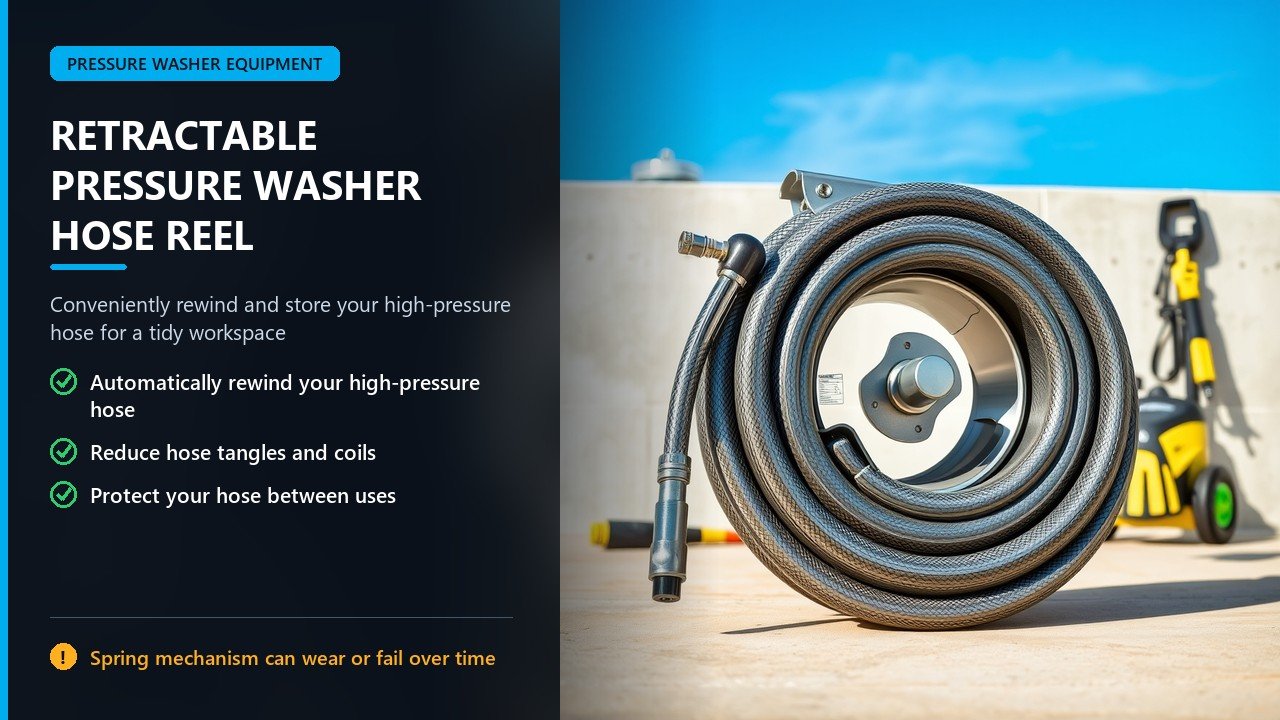
What “Retractable” Means
A retractable hose reel contains a spring-driven mechanism that rewinds the hose onto the spool automatically. Pull the hose out to work, and a latch holds it at the length you need; give it a gentle tug and the latch releases, and the spring winds the hose back in. It is the same principle as a retractable garden hose reel, but built to carry water at pressure-washer pressures.
This is different from a manual reel, where you crank the hose back by hand. The advantage is speed and tidiness: the hose retracts itself, so there is no coiling and no tangle, and the reel keeps the hose protected between uses. The trade-off is complexity, since the spring mechanism, the latch, and the high-pressure swivel are all parts that can wear or fail.
Because it carries pressurized water while spooling, a retractable pressure hose reel is more demanding to build than a garden hose reel. It needs a proper high-pressure swivel, heat- and pressure-rated seals, and a robust spring. That is why a quality retractable reel costs more, and why a cheap one tends to leak or fail.
How the Rewind Works
Inside a retractable reel, a coiled spring stores energy as the hose is pulled out. When you release the latch, the spring unwinds and rotates the spool, drawing the hose back in. The latch and a ratchet or roller system control where the hose stops, letting you pull out exactly the length you need and lock it there. A guide roller keeps the hose entering and leaving the spool smoothly.
The swivel sits at the center of the spool and stays stationary while the spool turns, so water can flow through under pressure as the hose winds. This swivel is the reel’s weak point: it carries high pressure across a rotating joint, so it must be well made and, ideally, serviceable with replaceable seals.
Understanding these parts explains why a retractable reel must be matched to the machine. The spring must be strong enough to rewind the hose, the swivel must handle the machine’s pressure, and the hose must be the right diameter and length for the reel. Match all three and the reel works smoothly for years.
Rewind Reels vs Storage Reels
The key distinction is between retractable (rewind) reels and storage reels. A retractable reel rewinds itself and is built for daily convenience, with a spring mechanism and a controlled latch. A storage reel simply holds the hose and is wound by hand; it is simpler, cheaper, and has fewer parts to fail, but it lacks the push-button convenience of a rewind reel.
For frequent use, the retractable reel wins on convenience. For occasional use, or where budget is tight, a manual or storage reel may be enough and will last well with less to go wrong. The choice comes down to how often you use the machine and how much you value the automatic rewind.
Either way, both types must be rated for pressure-washer use. A reel meant for a garden hose is not built for the pressure of a pressure washer hose and must not be used for one, since its swivel and materials cannot cope with the load.
Choosing a Retractable Reel
Match the reel to the machine first. It must be rated for the machine’s pressure and flow, and use the correct hose diameter. A reel built for a quarter-inch hose will not take a three-eighths one, and its swivel must handle the pressure your pump produces. Check the ratings before buying, because an under-rated reel is a leak waiting to happen.
Match the hose length to your needs. A retractable reel holds a fixed length of hose, so choose a reel whose capacity suits the reach you need without being so long that the hose is unwieldy or loses pressure. Consider the spring too: it must be strong enough to pull back the full length of hose, so a reel loaded with more hose than it was designed for may fail to retract fully.
Look at build quality, especially the swivel and spring. A durable frame, a smooth rewind, a controlled latch, and a serviceable swivel are the marks of a good reel. Where the swivel seals can be replaced, the reel stays useful for far longer than a sealed, throwaway one. Check the mounting method as well, so the reel fits your machine, wall, or cart.
Mounting and Setup
Mount the reel where it will be convenient and safe. On a wall, fix it at a comfortable height with solid fixings near where you work; on a machine or cart, position it so it does not obstruct controls or the water inlet and so the hose runs out smoothly. Keep the rewind path clear so the hose does not snag or chafe as it winds.
Connect the hose observing the reel’s flow direction, because pressure reels are usually directional, and use the correct fittings and high-pressure seals. Let the hose out fully once to check the reel and the entry path, and test under pressure to confirm the swivel does not leak. A retractable reel fitted with a sharp hose angle or the wrong direction will kink or leak.
Use the reel correctly once installed. Pull out only the length you need, let the latch hold the hose while you work, and release it to retract. Do not force the retraction if the hose sticks, and keep your hand clear of the spool as it winds to avoid injury. Used properly, a retractable reel is quick, safe, and tidy.
Care and Common Problems
Care for a retractable reel is mostly about the swivel and the spring. Keep the swivel clean and check it for leaks, and renew its seals when it starts to drip; a leaking swivel is the most common fault and often the easiest to fix. Protect the reel from frost, since freezing water can damage the swivel and the hose, and store it dry in cold weather.
If the reel will not retract fully, the spring may be tired, misadjusted, or strained by too much hose, or the hose may be kinking on the spool. If a tug does not release the latch, the latch mechanism may be worn or the hose may be under tension. Check the hose for kinks and the reel for debris, since a smooth, clean hose path solves many rewind problems.
A reel that leaks from the swivel loses pressure and drips during use. On a serviceable reel, replace the swivel seals or the swivel assembly; on a sealed reel, the unit may need replacing. Because the swivel carries the full pressure, always match the reel to the machine and treat the swivel as a wear part to be checked and renewed.
Is a Retractable Reel Worth It?
A retractable hose reel is worth it for frequent users, especially those with a long, heavy hose. It removes the chore of coiling, keeps the hose protected and tidy, and makes setup and storage near-instant. For a machine used regularly, the convenience is real and the hose lasts longer.
For occasional use with a short hose, a manual reel or simple storage may be sufficient and cheaper, with less to go wrong. The value of the retractable feature grows with the length of the hose and how often you use the machine, so weigh the convenience against the higher cost and the extra mechanism.
The table below sums up the key points of choosing and keeping a retractable reel.
| Point | Detail |
|---|---|
| Match the machine | Rated for your pressure and flow; correct hose size |
| Hose length | Suits your reach; spring must rewind the full length |
| Key parts | The high-pressure swivel and the rewind spring |
| Mounting | Solid, convenient, with a smooth, kink-free hose path |
| Care | Check and renew swivel seals; protect from frost |
Get these right and the reel retracts smoothly for years.
Frequently Asked Questions
What is a retractable pressure washer hose reel? A reel that winds the high-pressure hose back automatically, usually with a spring-powered rewind and a latch, so the hose stores neatly without hand-coiling.
How does it rewind? Pulling the hose out stores energy in a spring; releasing the latch lets the spring rotate the spool and draw the hose back in. A guide roller keeps the hose feeding smoothly.
Why do they cost more than manual reels? Because they carry pressurized water while spooling, they need a proper high-pressure swivel, rated seals, and a robust spring, all of which add cost and complexity.
What is the weakest part? The swivel, the rotating joint that carries water under pressure. It is the most stressed part and the most likely to leak, so choose a reel with a serviceable swivel.
Can I use a garden hose reel? No. A garden reel is not built for pressure-washer pressures. Using one for a high-pressure hose risks leaks and failure.
Why will my reel not retract fully? Often a tired or misadjusted spring, too much hose for the reel, or a kinking hose. Check the hose path and the spring adjustment.
How do I stop swivel leaks? Renew the swivel seals on a serviceable reel, or replace the swivel. Match the reel to your machine’s pressure and check the swivel regularly.
Is it worth buying? For frequent use with a long hose, yes. It saves time and protects the hose. For occasional use with a short hose, a manual reel may be enough.
Final Thoughts
A retractable pressure washer hose reel is the most convenient way to manage a heavy high-pressure hose. Its spring-powered rewind and controlled latch store the hose neatly at a tug, saving time on every job and protecting the hose from kinks and damage. For anyone using a pressure washer regularly, it is a worthwhile upgrade.
Choose one rated for your machine and flow, with a quality, serviceable swivel and a spring strong enough for the hose, mount it for a smooth hose path, and treat the swivel as a wear part to check and renew. Looked after this way, the reel retracts smoothly for years. For related reading, see our guides on a pressure washer retractable hose reel and on a high pressure hose for a pressure washer.