Anyone who has tried to clean baked-on grease with cold water knows the frustration. The water beads up, the grease smears, and no amount of pressure seems to help. Then someone hands you a hot water machine, and the same grease melts away in seconds. Heat is a cleaning superpower, and an electric heated pressure washer brings that power to places a gas machine cannot go: indoors, in shops, and near sensitive environments. But electric heating brings its own demands, especially on your electrical supply. This guide explains how these machines work, what they can do, and what you must know before buying one.
Electric heated pressure washers occupy a specialized niche. They combine the cleanliness and quiet operation of electric power with the grease-cutting power of hot water. That combination is invaluable for certain jobs, yet it comes with electrical requirements that many buyers underestimate. Understanding both the benefits and the constraints is how you decide whether one belongs in your operation.
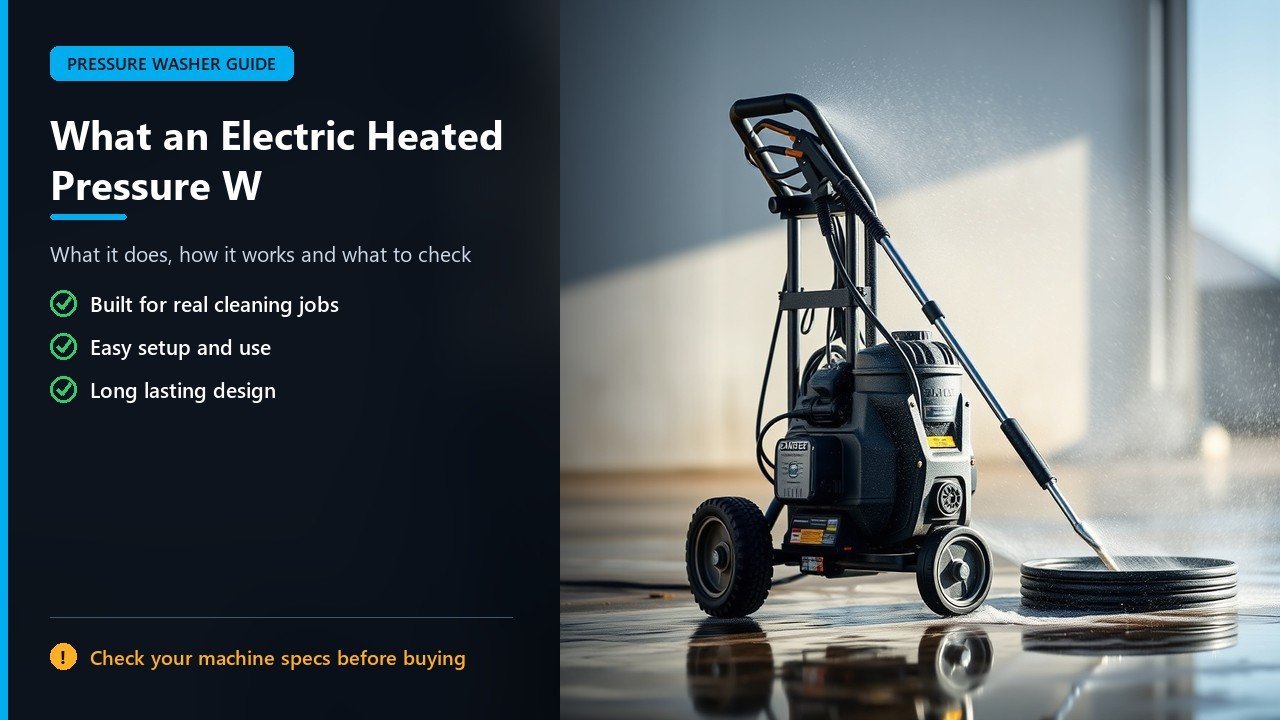
What an Electric Heated Pressure Washer Is
An electric heated pressure washer is a hot water pressure washer powered by electricity, with an electric heating element that warms the water rather than a fuel burner.
Ordinary pressure washers push cold water. A heated machine adds a heating stage, raising the water temperature to dissolve grease, oil, and grime that cold water only smears around. Some units heat water to a modest warm temperature; others, especially commercial models, produce genuinely hot water for heavy degreasing and sanitation.
The electric part means the machine plugs into a power supply rather than burning gasoline or diesel, and it can heat water electrically instead of with a burner. This makes it quieter and exhaust-free, which is a major advantage for indoor use. The trade-off is that electric heating requires substantial electrical power, and that requirement shapes everything about these machines.
How the Heating Works
Understanding the heating method explains both the machine’s capability and its limits.
Heating element. Like a large immersion heater or an electric water heater, the machine contains one or more high-wattage elements that warm the water as it passes or sits in a heating chamber.
Flow-through heating. Many units heat water as it flows through the heating chamber on its way to the pump or gun. The temperature reached depends on the element’s power and the flow rate, because faster flow gives less time to heat.
Tank or coil. Some machines use a coil or a small tank that holds and heats water, then feeds it to the pump. These can reach higher temperatures but add size and weight.
Temperature control. Better machines include thermostats or adjustable controls so you can set the water temperature, balancing grease-cutting heat against safety for delicate surfaces.
The key relationship is between power and flow: a fixed heating element can only raise the water temperature by a certain amount for a given flow. Higher flow means less temperature rise unless the element is powerful enough. This is why high-flow hot-water machines need very substantial heating power, and why many electric heated units are lower-flow than comparable gas machines.
Why Hot Water Cleans Better
Heat is not a gimmick; it genuinely cleans better for certain jobs, and knowing why helps you decide if you need it.
Grease and oil. Heat melts and thins fats, oils, and grease, letting water and detergent lift them away. Cold water tends to spread grease around rather than remove it. For kitchens, engines, and machinery, hot water is transformative.
Detergent performance. Many cleaning chemicals work far better in warm water, dissolving faster and reacting more effectively with soils. Heat activates the chemistry.
Faster cleaning. Hot water often cleans in a single pass what cold water needs repeated passes to manage, saving time on large or heavy jobs.
Sanitation. Hot water helps sanitize surfaces by killing some bacteria and other organisms, which matters in food service, medical, and similar environments.
Wax and residue removal. Heat softens stubborn residues like wax and heavy grime that resist cold water.
For light dirt and general washing, cold water is perfectly adequate and hot water does not add much. For heavy grease, oil, and sanitation, hot water is not just better; it is often the only practical answer.
| Job | Cold Water | Hot Water |
|---|---|---|
| Light dirt, dust | Good | Little added benefit |
| Grease and oil | Poor | Excellent |
| Detergent activation | Moderate | Improved |
| Sanitation | Limited | Good |
| Heavy grime | Slow | Faster |
Electric vs Gas Hot Water Machines
Both can produce hot water, but they differ in ways that matter for choosing.
Electric heated machines. Quieter, produce no exhaust, and can run indoors or in enclosed spaces, which gas machines cannot because of carbon monoxide. They are cleaner and require no fuel handling. Their limits are electrical demand and often lower flow and maximum temperature.
Gas or diesel heated machines. Use a burner to heat water, reaching higher temperatures and flow. They are frequently the choice for heavy commercial and industrial cleaning, but they produce exhaust, so they must run outdoors or with ventilation, and they need fuel and more maintenance.
The decision often comes down to location and power. If you must clean indoors, near food, or in a space without ventilation, an electric heated machine is the practical choice. If you need maximum temperature and flow outdoors, a fuel-heated machine may be better. Many buyers choose electric specifically because it lets them clean grease indoors, where hot water matters most.
| Attribute | Electric Heated | Gas/Diesel Heated |
|---|---|---|
| Exhaust | None | Yes, needs ventilation |
| Indoor use | Suitable | Not safe indoors |
| Noise | Lower | Higher |
| Max temperature/flow | Moderate | Higher |
| Fuel handling | None | Required |
The Electrical Requirement
This is the factor that most surprises buyers, and it deserves careful attention.
Heating water with electricity requires enormous power. Raising the temperature of flowing water takes kilowatts, and that translates into high current draw. An electric heated pressure washer often needs far more power than a standard household outlet can supply.
120-volt (standard outlet). A standard 15- or 20-amp household circuit delivers a limited amount of power, enough for modest heating at low flow. Many small electric heated units sold for home use operate on 120 volts but deliver only warm water, because the available power limits the temperature rise.
240-volt. Commercial electric heated machines commonly run on 240 volts with high amperage, sometimes requiring a dedicated circuit and a specific plug. This power allows genuinely hot water at useful flow.
Dedicated circuits. Because the draw is so high, these machines typically require a dedicated circuit that nothing else shares, and sometimes a professional electrician to install a suitable outlet.
The practical implication is that your electrical supply may determine whether you can run a given machine, and how hot the water will get. Check the machine’s amperage and voltage requirements against your available power before buying, and consult an electrician if a new circuit is needed.
| Supply | Typical Use | Notes |
|---|---|---|
| 120V, 15-20A | Small home units | Usually warm water only |
| 240V, high amperage | Commercial hot water | Often needs dedicated circuit |
| Dedicated circuit | Heavy heating | Nothing else can share it |
Matching Temperature and Flow to the Job
Because heating power is limited, think carefully about the temperature and flow you actually need.
Warm water jobs. Many cleaning tasks benefit from water that is merely warm. A modest electric heated machine can supply this at a reasonable flow, using less power.
Hot water jobs. Heavy degreasing and sanitation want genuinely hot water, which requires more heating power and often higher voltage. These jobs may need a commercial-grade electric machine or a fuel-heated alternative.
Flow and temperature trade-off. With a fixed element, higher flow lowers the temperature. If you need both high flow and high temperature, you need more heating power, which means more electrical demand.
Surface sensitivity. Hot water plus high pressure can be harsh on some surfaces. Match temperature and pressure to the surface, using lower settings for delicate materials.
The right machine delivers the temperature and flow your specific jobs require without forcing you into an electrical upgrade you did not anticipate. Be honest about whether you need warm water or genuinely hot water, and size accordingly.
Types of Electric Heated Machines
Electric heated pressure washers come in several forms, each suited to different settings.
Integrated portable units. A single machine combines an electric motor, pump, and heating element in one body. These are the most common home and light-commercial style, easy to move and plug in, though their heating power is limited by their electrical supply.
Stationary commercial units. Larger machines intended to stay in one place, often in a shop or wash bay, with high-voltage supplies and substantial heating capacity. They deliver hot water at useful flow but are not portable.
Inline heaters. A heater that sits between the water supply and the pressure washer, warming the water before it reaches a cold-water machine. This lets an existing pressure washer produce hot water without buying a whole new machine, though it demands the same electrical power and must be rated for the pressure and flow.
Steam-capable units. Some commercial machines can produce steam or very hot water for specialized cleaning, which requires even more power and specialized components.
The right type depends on your setting and power. A home garage might suit a portable 120V unit producing warm water. A commercial wash bay with a 240V supply might use a stationary unit for genuinely hot water. An existing cold-water machine can gain heat through an inline heater if the electrical supply supports it.
Hot Water, Detergents, and Chemicals
Hot water and chemistry work together, and pairing them well multiplies cleaning power.
Detergent activation. Most cleaning detergents dissolve and react faster in warm water. The combination of heat and detergent lifts grease that neither could remove alone.
Foaming and dwell. A foam cannon or downstream injector applies detergent, and heat helps it work during the dwell time before rinsing. Warm water keeps the detergent active longer.
Rinsing. Hot water rinses grease and detergent residue more completely than cold, leaving a cleaner surface.
Chemical compatibility. Some chemicals perform best at specific temperatures, and some degrade or become hazardous when heated. Always follow the detergent manufacturer’s guidance on temperature.
Delicate surfaces. Heat increases cleaning aggressiveness, which can be too much for some finishes. Reduce temperature and pressure for delicate materials, and test in an inconspicuous area first.
The lesson is that hot water is a force multiplier for detergent-based cleaning, but it must be matched to the chemistry and the surface. Heat alone does a lot; heat plus the right detergent does more; heat misused on a delicate surface does damage.
Safety With Hot Water and Electricity
Electric hot-water cleaning combines two hazards, electricity and very hot water, so safety deserves special attention.
Water and electricity. Never operate electrical components, plugs, or connections with wet hands or in standing water. Keep cords and plugs dry and off wet floors, and use grounded, properly rated outlets.
Burn risk. Hot water and steam can scald instantly. Keep the stream away from skin, and be careful when connecting or disconnecting hot components. Wear appropriate protective gear.
Pressure plus heat. The combination is more aggressive than either alone. Reduce pressure and temperature when cleaning surfaces that could be damaged or when working near people.
Ventilation for fuel units. Electric units produce no exhaust and are safe indoors, but if any fuel-fired heater is involved, it must be properly vented to avoid carbon monoxide.
Electrical safety outdoors. If used outdoors, ensure outlets are protected from water, ideally with a ground-fault circuit interrupter, and keep electrical connections off the wet ground.
Because these machines combine water, high pressure, heat, and electricity, safety discipline matters more than with a simple cold-water unit. Respect each hazard individually and the combination becomes manageable.
Real-World Applications
Electric heated pressure washers shine in specific settings where hot water matters and electricity is available.
Commercial kitchens and food service. Grease-covered hoods, floors, dumpsters, and equipment clean far more effectively with hot water, and electric units can operate indoors.
Automotive shops and garages. Engine degreasing, parts cleaning, and floor cleaning benefit from heat, and the exhaust-free operation suits indoor bays.
Janitorial and facility cleaning. Dumpster pads, loading docks, and grease-prone areas clean faster with hot water, and indoor use is often required.
Food processing and sanitation. Hot water supports sanitation in environments where cleanliness standards are strict, and indoor operation is essential.
Home and light commercial. Some homeowners and small businesses use electric heated units for heavy-duty cleaning where they have the electrical capacity and want hot water without fuel.
In each case, the deciding factors are the same: a hot-water job, an indoor or exhaust-sensitive location, and access to adequate electrical power. Where those three align, an electric heated machine is the right tool.
Cost and Value
Electric heated pressure washers cost more than cold-water electric machines, and the value depends on whether you truly need hot water.
Purchase price. The heating element, controls, and electrical components add cost. Small warm-water units are moderately priced, while commercial 240V hot-water machines are a significant investment.
Electrical infrastructure. Beyond the machine, you may need a dedicated circuit, a suitable outlet, or an electrician’s work. This hidden cost should be part of the budget.
Operating cost. Electricity for heating is not free, though for many indoor applications it replaces the cost, fuel, and ventilation of a fuel-fired machine. Running costs depend on usage and power rates.
Time and results. For grease and sanitation jobs, hot water can cut cleaning time dramatically, which translates to real value for professionals and heavy users. For light jobs, the added cost and infrastructure bring little benefit.
The value case is strongest where hot water is essential, indoor use is required, and electricity is available. If your cleaning is light and cold water suffices, a simpler cold-water machine is the better buy. If grease and sanitation dominate, the investment in electric heat pays off in faster, better results.
Common Mistakes to Avoid
Ignoring the electrical requirements. The most common and costly mistake. These machines draw heavy current and may need a dedicated high-voltage circuit. Check before buying.
Expecting hot water from a standard outlet. A 120V household circuit usually produces only warm water because available power limits the temperature rise.
Running indoors without considering ventilation for any fuel source. Electric units are safe indoors, but if you add a fuel heater, it must be vented. Keep the two distinct.
Oversizing the flow. A high flow with a modest element yields cooler water. Match flow to heating power.
Ignoring water hardness. Hard water causes scale buildup on heating elements, which reduces efficiency and eventually damages them. Consider water treatment and regular descaling.
Using hot water on delicate surfaces at full pressure. Heat plus pressure can damage some materials. Reduce pressure and temperature for delicate jobs.
Skipping maintenance. Elements, seals, and electrical components need attention. Neglect shortens life and risks failure.
Maintenance and Care
Electric heated pressure washers need specific maintenance beyond a cold-water machine.
Descale the heating element. Minerals in hard water form scale on elements, reducing heating efficiency and eventually causing failure. Periodic descaling with a suitable product protects the heating system.
Check electrical connections. High-amperage connections can loosen or corrode over time. Inspect plugs, cords, and terminals, and have a qualified person service electrical components.
Inspect seals and hoses. Hot water is harder on seals and hoses than cold. Check for hardening, cracks, and leaks, and replace components rated for the temperatures involved.
Protect from freezing. Even heated machines can freeze when off, cracking components. Drain them in cold weather.
Follow the manufacturer’s schedule. Heating elements, thermostats, and pumps each have service intervals. Keep the manual and follow it.
Frequently Asked Questions
What is an electric heated pressure washer? A pressure washer powered by electricity that heats water with an electric element instead of a fuel burner, producing warm or hot water for cleaning.
Can I run an electric heated pressure washer at home? Small 120V units can run on household power but usually produce only warm water. Commercial hot-water machines often need 240V and a dedicated circuit.
Is hot water better than cold for pressure washing? For grease, oil, detergent activation, and sanitation, yes. For light dirt, cold water is adequate.
Why do electric heated washers need so much power? Heating water takes kilowatts of power, which translates to high current. Raising temperature at useful flow requires substantial electrical capacity.
Can I use an electric heated washer indoors? Yes. Because it produces no exhaust, it is suitable for indoor and enclosed spaces, unlike gas-heated machines.
How hot can an electric heated pressure washer get? It depends on the element’s power and the flow. Small units run warm; commercial 240V machines reach genuinely hot temperatures at useful flow.
Do electric heated machines need special maintenance? Yes, particularly descaling the heating element to prevent scale buildup, plus checking high-amperage electrical connections and hot-water-rated seals.
Can I add a heater to my existing electric pressure washer? An inline heater can warm the water before it reaches your machine, but it demands the same electrical power and must be rated for your pressure and flow.
How much does it cost to run an electric heated pressure washer? Operating cost depends on usage and electricity rates, but for indoor jobs it can replace the fuel, cost, and ventilation needs of a fuel-fired machine.
Will hot water damage my pressure washer? The machine is built for hot water, but seals and hoses must be rated for the temperature. Hot water is harder on components, so use rated parts and inspect them.
How much does it cost to run an electric heated pressure washer? Running cost depends on usage and local power rates. For indoor jobs it can replace the fuel, cost, and ventilation needs of a fuel-fired machine, which often balances the electricity bill.
Final Thoughts
An electric heated pressure washer solves a specific problem: it delivers hot-water cleaning power in places where a fuel-burning machine cannot safely operate, indoors and in enclosed or sensitive spaces. For grease, oil, detergent activation, and sanitation, hot water is dramatically more effective than cold, and electric heating is the way to get it without exhaust.
The catch is electrical demand. Heating water takes serious power, so small units give warm water while truly hot commercial machines need high voltage and often a dedicated circuit. Before buying, check the machine’s voltage and amperage against your supply, decide whether you need warm or genuinely hot water, and plan for element maintenance and descaling. Do that, and an electric heated machine becomes a powerful, quiet tool for the jobs that cold water simply cannot handle, quietly earning its place wherever grease, oil, and sanitation rule the work.