There is a moment that converts every cold-water skeptic. A mechanic has been fighting a grease-caked engine for an hour with cold water and detergent, scrubbing and re-scrubbing with little progress. Then someone wheels over a hot water pressure washer, and the same grease melts off in a single pass, running away in dark ribbons. Nothing changed except the temperature of the water. Hot water pressure washing is one of the most underused advantages in cleaning, because heat attacks the exact substances that cold water struggles with most: grease, oil, and stubborn grime. This guide explains how hot water works, when it is worth it, and how to use it safely and effectively.
Most people clean with cold water simply because it is convenient, and for light dirt that is perfectly fine. But once you understand what heat does to the chemistry of cleaning, you start to see why professionals reach for hot water on the hard jobs. This guide covers the science, the equipment, the applications, and the practical decisions that surround hot water pressure washing.
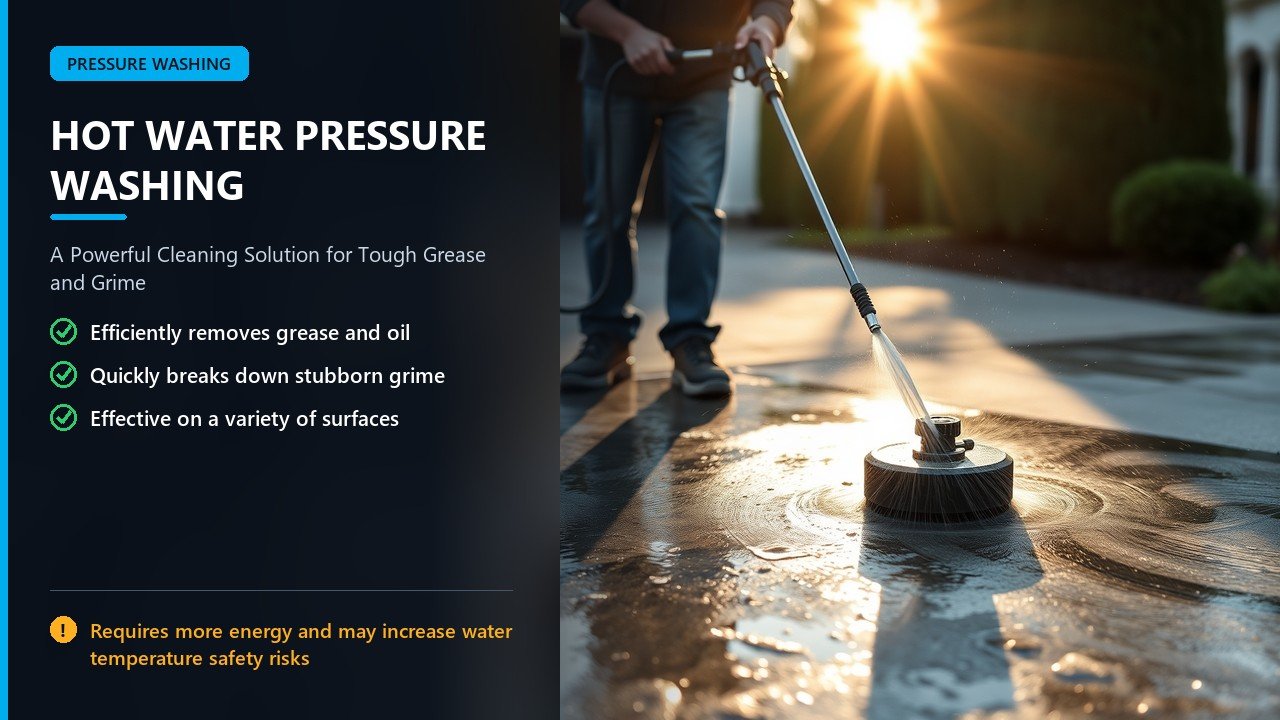
What Hot Water Pressure Washing Is
Hot water pressure washing is simply the use of heated water, delivered under pressure, to clean surfaces. The pressure provides the mechanical force; the heat provides a chemical and physical advantage that cold water cannot match.
The water can be heated in different ways. Some pressure washers have a built-in heater that warms the water as it flows through, using either an electric element or a fuel burner. Others use an inline heater placed between the water supply and the machine. Still others rely on a hot water supply from a building, feeding warm water into a standard pressure washer that is rated for it.
Whatever the source, the principle is the same: raise the temperature, and cleaning becomes dramatically more effective on the soils that heat can dissolve. The result is faster cleaning, less detergent, and better results on grease, oil, and sanitation jobs.
Why Hot Water Cleans Better
Heat improves cleaning through several distinct mechanisms, and understanding them explains exactly when hot water pays off.
Melting fats and oils. Grease, oil, and fat are solid or thick at room temperature. Heat melts and thins them, turning a stubborn coating into a liquid that water and detergent can lift away. This is the single biggest advantage of hot water.
Activating detergents. Cleaning chemicals work faster and more effectively in warm water. Heat speeds up the chemical reactions that break down and lift soil, so the detergent does more work in less time.
Improving solubility. Many soils dissolve more readily in warm water than cold, so they release from surfaces more easily and rinse away more completely.
Sanitizing. Hot water helps reduce bacteria and other organisms, which matters in food service, healthcare, and other settings where cleanliness standards are strict.
Reducing effort. Because heat does so much of the work, hot water cleaning often achieves in one pass what cold water needs several passes to accomplish, saving time and labor.
Hot Water vs Cold Water
Hot water is not always necessary, and knowing when to use each keeps your costs and effort sensible.
Use cold water for light dirt, dust, mud, and general washing, such as rinsing a patio or cleaning a lightly soiled car. Cold water is cheaper, simpler, and perfectly adequate for these jobs, and it avoids any heat-related risk to delicate surfaces.
Use hot water for grease, oil, heavy grime, and sanitation. Kitchens, engines, dumpsters, loading docks, and food-processing areas all reward heat enormously. Wherever fats and oils are the enemy, hot water wins.
The choice often comes down to the dominant soil. If the surface is greasy, hot water transforms the job. If it is merely dirty, cold water is enough and hot water adds cost without much benefit. Professionals often keep both options available, using cold for volume washing and hot for the tough spots.
| Soil Type | Cold Water | Hot Water |
|---|---|---|
| Dust and light dirt | Effective | Little benefit |
| Mud and soil | Effective | Little benefit |
| Grease and oil | Poor | Excellent |
| Heavy baked-on grime | Slow | Fast |
| Sanitation needs | Limited | Good |
How Hot Water Is Produced
The equipment that produces hot water varies widely, and each method has trade-offs in cost, capability, and location.
Fuel-fired heaters. Gasoline, diesel, or natural gas burners heat the water, often to high temperatures and at high flow. These are common on commercial and industrial machines. Their drawback is exhaust, which requires outdoor use or proper ventilation, plus fuel and burner maintenance.
Electric heaters. Electric elements heat the water, producing no exhaust and allowing indoor use, which is invaluable for kitchens and enclosed spaces. Their limitation is electrical demand; heating water takes serious power, so high temperature and flow require high voltage and often a dedicated circuit.
Inline heaters. A heater placed between the supply and the pressure washer warms water for an existing machine. This can add heat without replacing the machine, but requires matching the heater to the machine’s flow and pressure and supplying adequate power or fuel.
Building hot water supply. Some operations feed warm or hot water from the building into a pressure washer rated for it. This is simple when a hot water supply is available, though temperature and flow depend on the building system.
| Heating Method | Strength | Limitation |
|---|---|---|
| Fuel burner | High temperature and flow | Exhaust, needs ventilation |
| Electric element | Indoor-safe, no exhaust | High electrical demand |
| Inline heater | Adds heat to existing machine | Must match flow and power |
| Building supply | Simple if available | Depends on building system |
Temperature Ranges and What They Clean
The temperature of the water strongly influences what it can clean, so choosing the right heat level matters.
Cold to warm water handles general washing and light soils. Warm water begins to improve detergent performance without the risks of high heat.
Hot water, roughly 140 to 180 degrees Fahrenheit, is the workhorse range for grease and grime. It melts fats effectively and activates detergents, making it ideal for kitchens, engines, and heavy soils, while remaining manageable for many surfaces.
Very hot water and steam, above about 200 degrees, tackles the toughest soils and provides sanitation. This range is powerful but demands care, because it can damage some materials and poses a serious burn risk.
Matching temperature to the job protects both the surface and the operator. Delicate materials need lower heat and pressure, while greasy industrial surfaces can take the hottest water the machine produces. Always test on an inconspicuous area when unsure.
Detergents and Hot Water
Hot water and the right detergent are a powerful combination, and pairing them well multiplies results.
Most cleaning chemicals perform better in warm water, dissolving faster and lifting soil more completely. A downstream chemical injector draws detergent into the water after the pump, applying it to the surface; heat then helps it work during the dwell time before rinsing. A foam cannon applies a clinging foam that dwells on vertical surfaces, and warm water keeps that detergent active longer.
Two cautions apply. First, some chemicals perform best at specific temperatures and some degrade or become unsafe when heated, so always follow the detergent manufacturer’s guidance. Second, hot water plus strong chemicals can be harsher than intended on delicate surfaces, so reduce temperature, pressure, or chemical strength when cleaning materials that might be damaged.
Where Hot Water Pressure Washing Shines
Certain applications benefit so much from heat that hot water is effectively the standard.
Commercial kitchens and food service. Hoods, floors, dumpsters, and equipment are coated in grease that cold water cannot touch. Hot water, often with a degreaser, cleans them quickly and thoroughly.
Automotive and engine cleaning. Engines, transmissions, and chassis parts are covered in oil and grease. Hot water lifts them far faster than cold, and electric units can be used indoors.
Industrial and manufacturing. Machinery, floors, and production areas accumulate oils and residues that heat removes efficiently, often as part of scheduled sanitation.
Facility and janitorial cleaning. Loading docks, dumpster pads, and grease-prone areas clean faster and more completely with hot water.
Food processing and sanitation. Strict cleanliness standards and heavy organic soils make hot water essential in many processing environments.
Safety With Hot Water
Hot water pressure washing adds hazards beyond those of cold water, and safety deserves serious attention.
Burns. Water above roughly 120 degrees Fahrenheit can scald, and pressure washer streams concentrate heat and force. Never direct the stream at people or animals, and handle hot components carefully when disconnecting.
Surface damage. Heat plus pressure can damage materials that would survive either alone. Use lower temperature and pressure on plastics, painted surfaces, and delicate materials.
Electrical safety. For electric heaters, keep connections dry, use protected outlets such as GFCI outdoors, and keep cords off wet ground.
Fuel and exhaust. Fuel-fired heaters produce carbon monoxide, so they must run outdoors or with proper ventilation. Never operate them in enclosed spaces.
Pressure and heat together. The combination is more aggressive than either alone, so maintain safe distances and reduce settings near people and fragile surfaces.
These risks are manageable with discipline, but they are real. Respecting heat, pressure, electricity, and fuel individually keeps the combination safe.
Cost and Energy
Hot water costs more than cold, and weighing that cost against the benefit keeps decisions sensible.
The energy to heat water is the main added cost, whether from fuel or electricity. Fuel burners consume gas or diesel; electric heaters draw substantial electricity. There is also the cost of the heating equipment itself, which is more than a cold-water machine, and for electric units, the possible cost of a dedicated circuit.
The benefit side of the equation is cleaning speed and quality. On grease and sanitation jobs, hot water can cut cleaning time dramatically, reduce detergent use, and achieve results cold water cannot match. For a professional doing many such jobs, that translates directly into saved labor and better outcomes, which usually outweighs the energy cost.
For occasional light cleaning, the added cost and equipment are hard to justify, and cold water remains the sensible choice. The value of hot water comes from the nature of the work, not from using it indiscriminately.
Setting Up for Hot Water Cleaning
Good results with hot water depend as much on setup as on the machine itself. A thoughtful setup makes cleaning faster and protects both the equipment and the surface.
Start with the water supply. Hot water machines need an adequate, steady supply. A low supply causes the pump to cavitate, which damages it, so ensure a good flow of water to the machine before starting.
Use the right detergent. Choose a cleaner formulated for the soil and safe at your water temperature. A degreaser for grease, a general-purpose cleaner for lighter soils, and specialized products for food or industrial environments.
Apply, dwell, then rinse. Apply detergent, let it dwell long enough to work, then rinse thoroughly. Heat shortens the dwell time needed, but it still takes a moment for the chemistry to act.
Match the tip to the task. Use a wide fan tip for rinsing and gentle cleaning, and a narrower tip for stubborn spots on durable surfaces. Avoid narrow tips on delicate materials, especially with hot water.
Work in sections. Clean manageable areas so detergent does not dry before rinsing, and so you can adjust technique as you see how the surface responds.
Choosing the Right Hot Water Machine
Choosing a hot water setup starts with your setting, power, and jobs.
Home and light use. An electric heated machine or an inline heater suits a garage or home workshop, provided the electrical supply can support it. Expect warm to moderately hot water depending on power.
Commercial indoor use. Kitchens, auto bays, and indoor facilities need exhaust-free operation, so an electric heated machine with adequate voltage and a dedicated circuit is often the answer.
Heavy outdoor use. High-volume industrial and fleet cleaning typically uses a fuel-fired hot water machine that reaches high temperature and flow, operated outdoors or with ventilation.
Existing machine plus heater. If you already own a suitable pressure washer, an inline heater can add heat without replacing it, as long as the heater matches the machine and power or fuel is available.
| Setting | Recommended Setup | Key Consideration |
|---|---|---|
| Home garage | Electric heater or inline unit | Electrical capacity |
| Commercial indoor | Electric commercial machine | Exhaust-free, 240V, dedicated circuit |
| Heavy outdoor | Fuel-fired hot water machine | Ventilation, fuel, maintenance |
| Existing machine | Inline heater | Match flow, pressure, and power |
Water Supply, Flow, and Pressure
Hot water cleaning is still pressure washer cleaning, so the fundamentals of supply, flow, and pressure still apply, with a few added considerations.
Adequate inlet supply. The machine needs more water than it discharges, or the pump cavitates and wears out. A weak supply, a long thin hose, or a partially closed valve can starve the pump, and hot water systems often draw more attention to this because they are used on demanding jobs.
Flow and temperature balance. With a fixed heater, higher flow yields lower temperature. If a job needs both high flow and hot water, the machine must have enough heating power, which usually means more electrical demand or a fuel burner.
Pressure and heat together. The combination cleans aggressively, so dial back pressure and temperature for surfaces that are easily damaged. The goal is the least aggressive setting that removes the soil.
Consistent supply temperature. If using a building hot water supply, fluctuating temperatures affect results. A dedicated heater gives more consistent temperature control.
Maintaining a Hot Water System
Hot water equipment needs more care than a cold-water machine because heat accelerates wear on several components.
Descale heating elements. Hard water deposits scale on heating elements and heat exchangers, reducing efficiency and eventually causing failure. Periodic descaling with a suitable descaler protects the heating system and keeps temperatures consistent.
Inspect seals and hoses. High temperatures harden and crack seals and hoses over time. Use components rated for hot water, check them regularly, and replace at the first sign of wear.
Service burners and fuel systems. Fuel-fired machines need burner cleaning, fuel filter checks, and combustion maintenance to run efficiently and safely.
Check electrical components. For electric heaters, inspect high-amperage connections and cords for wear, and have electrical repairs done by a qualified person.
Protect from freezing. Hot water systems still freeze when off, cracking components. Drain them thoroughly in cold weather.
Cost and Energy
Hot water costs more to produce than cold, so it makes sense to weigh the benefit against the expense.
Energy cost. Heating water takes fuel or electricity. Fuel-fired machines consume gasoline, diesel, or gas, while electric heaters draw heavy power. This energy is the main ongoing cost, and it rises with temperature and volume.
Equipment cost. Hot water machines cost more than cold-water units because of the heater, controls, and related components. Electric commercial machines may also require a dedicated circuit, a hidden but real expense.
Consumables and maintenance. Burners need fuel and service; electric elements need descaling; hot-water-rated seals and hoses wear faster than cold-water ones. These add to the total cost of ownership.
Where it pays off. For grease, oil, and sanitation jobs, hot water cleans faster, uses less detergent, and delivers results cold water cannot achieve. For professionals and heavy users, that translates directly into saved time and labor, easily justifying the energy cost. For occasional light cleaning, cold water is the economical choice.
The sensible approach is to use hot water where it earns its keep, especially on grease and sanitation, and cold water everywhere else. That balance keeps costs down without sacrificing results where heat truly matters.
Myths About Hot Water Cleaning
A few common beliefs about hot water are worth correcting, because they lead people either to waste money or to miss real benefits.
“Hot water replaces pressure.” Heat and pressure do different jobs. Pressure provides mechanical force; heat improves chemistry and melts grease. You often need both, not one instead of the other. Hot water reduces the need for excessive pressure on grease, but it does not replace pressure entirely.
“Hot water is always better.” Not for light dirt, where the extra cost and heat risk bring little benefit. Cold water handles dust, mud, and general washing perfectly well.
“Any pressure washer can use hot water.” No. The machine and its components must be rated for the temperature. Feeding hot water into a cold-water machine can damage the pump and seals.
“Hot water damages everything.” Used appropriately, hot water is safe for most durable surfaces. It is the combination of high heat and high pressure on delicate materials that causes damage, which is easy to manage by adjusting both.
Cutting through these misconceptions helps you use hot water where it genuinely helps and avoid it where it does not, which is the essence of good practice.
Common Mistakes to Avoid
Using hot water on everything. It adds cost and risk where cold water suffices. Reserve it for grease, heavy grime, and sanitation.
Ignoring surface sensitivity. Heat plus pressure damages delicate materials. Reduce both for surfaces that could be harmed.
Using the wrong equipment indoors. Fuel-fired heaters produce carbon monoxide and must run outdoors. Use electric heaters for indoor work.
Underestimating electrical demand. Electric heating draws heavy current and may need a dedicated high-voltage circuit. Check before buying.
Skipping detergent compatibility checks. Some chemicals degrade or become hazardous when heated. Follow the detergent maker’s guidance.
Neglecting maintenance. Heat is hard on seals, hoses, and heating elements. Descaling and inspection keep hot water machines reliable.
Ignoring burn risk. Hot water under pressure is dangerous. Keep the stream away from people and handle hot parts with care.
Frequently Asked Questions
Is hot water pressure washing worth it? Yes for grease, oil, heavy grime, and sanitation jobs, where it cleans far better and faster than cold water. For light dirt, cold water is sufficient.
What temperature should hot water pressure washing use? Around 140 to 180 degrees Fahrenheit handles most grease and grime. Higher temperatures are for heavy soils and sanitation, with more care needed.
Can I use hot water in any pressure washer? No. The machine and its seals, hoses, and pump must be rated for the temperature. Feeding hot water into a cold-water machine can damage it.
Does hot water remove grease better than cold? Yes, dramatically. Heat melts and thins grease so it can be lifted away, while cold water tends to spread it around.
Can I use hot water pressure washing indoors? Yes, if the heater is electric and exhaust-free. Fuel-fired heaters produce carbon monoxide and must be used outdoors or with ventilation.
Does hot water need less detergent? Often, yes. Heat does much of the cleaning work, so you may need less chemical and less scrubbing to achieve the same result.
Is hot water pressure washing safe for all surfaces? No. Heat and pressure can damage delicate materials. Reduce temperature and pressure for sensitive surfaces and test first.
Can I use a standard pressure washer with hot water? Only if the machine, pump, seals, and hoses are rated for the temperature. Most cold-water machines are not, and feeding them hot water can cause damage.
How much detergent do I need with hot water? Often less than with cold water, because heat does much of the cleaning. Start with the recommended dose and adjust based on results.
Does hot water pressure washing sanitize surfaces? Hot water helps reduce bacteria and supports sanitation, especially at higher temperatures. For strict sanitation, follow the standards and temperatures your industry requires.
Final Thoughts
Hot water pressure washing is the difference between fighting grease and dissolving it. Heat attacks the fats and oils that cold water merely smears, activates detergents, and supports sanitation, making it the right tool whenever heavy soils and strict cleanliness are involved. For light dirt, cold water remains the sensible, economical choice.
The equipment to produce hot water ranges from fuel burners and electric heaters to inline units and building supplies, each with its own electrical, exhaust, and cost implications. Match the method to your location and power, match the temperature to the soil, and respect the safety hazards that come with heat, pressure, and electricity combined. Use hot water where it belongs, and it will save you time, detergent, and frustration on exactly the jobs that cold water could never win.