Some cleaning jobs surrender to cold water, and some simply do not. Grease, oil, and heavy industrial grime cling stubbornly to surfaces until heat breaks them down. That is where a gas hot water pressure washer comes in. Powered by a gas engine and equipped with a burner that heats the water, these machines combine the freedom of gas power with the grease-cutting power of heat. This guide explains how they work, who needs one, and how to choose and use one safely.
Cold water under pressure blasts away loose dirt, but heat changes the chemistry of cleaning. Warm and hot water dissolve oils and grease far more effectively, softening the bond between grime and surface so the pressure can carry it away. For fleet washing, industrial cleaning, and any job involving oil or heavy soil, hot water is not a luxury, it is the tool that finishes the job.
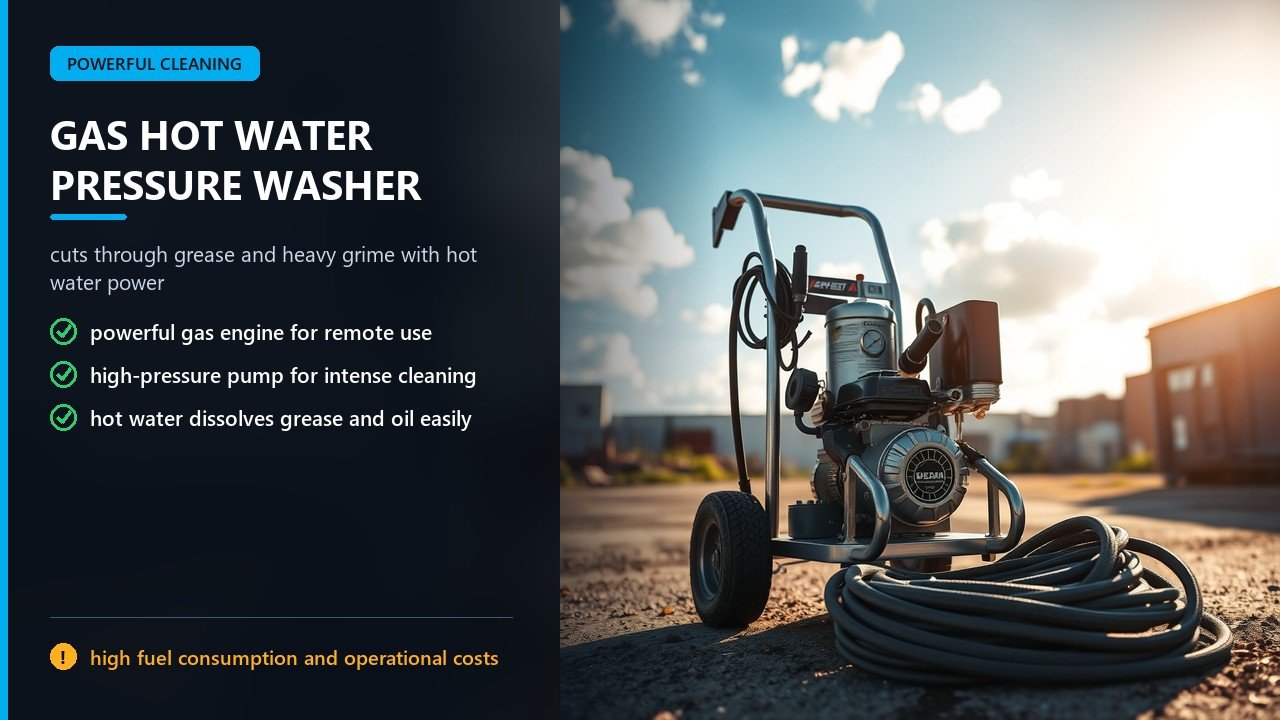
What a Gas Hot Water Pressure Washer Is
A gas hot water pressure washer is a pressure washer powered by a gasoline engine that also heats the water it sprays.
It combines three systems: a gas engine that drives the pump, a high-pressure pump that pressurizes the water, and a burner and heating coil that raise the water temperature, often to around 200 degrees Fahrenheit or higher. The result is a portable, powerful machine that delivers hot water wherever it can be fueled and supplied with water.
Because it runs on gas, it does not need an electrical outlet, which makes it suitable for remote sites, outdoor yards, farms, and mobile operations. The burner usually runs on diesel or kerosene, and sometimes on natural gas or propane, depending on the model.
How It Works
Understanding the components helps you use and maintain the machine.
Gas engine. A gasoline engine drives the pump through a direct or belt drive. Gas power means high performance and continuous runtime without cords or amperage limits.
High-pressure pump. The pump pressurizes the water to the machine’s rated PSI and flow. Quality pumps, often triplex, withstand the demands of heavy commercial use.
Burner and coil. Water passes through a heating coil inside a burner housing, where a fuel-fired flame raises its temperature. The burner ignites only when the trigger is pulled, saving fuel.
Unloader and safety controls. An unloader diverts water when the trigger is released, and safety controls, including a high-temperature limit and flow switch, protect the machine and the operator.
Gun, wand, and nozzles. The high-pressure hose carries hot water to the gun, where nozzles shape the spray for the job.
Why Hot Water Matters
The difference between cold and hot water cleaning is dramatic on many surfaces.
Grease and oil. Heat thins and lifts grease, so hot water removes oil films and engine grime that cold water spreads around instead of removing.
Speed. Because heat pre-softens soil, hot water cleans faster, reducing labor time on large jobs.
Less chemical. Hot water often cleans with less detergent, which is gentler on surfaces and saves money.
Sanitation. High temperatures help sanitize surfaces, which matters in food service and agricultural settings.
Heavy soil. Baked-on grime, road film, and industrial deposits release far more readily under heat.
In short, hot water turns a difficult job into a straightforward one. That is why industries that battle grease every day rely on gas hot water machines.
Where They Are Used
Gas hot water pressure washers shine in demanding, often mobile, cleaning work.
Fleet and truck washing. Road grime, diesel residue, and engine grease come off far faster with hot water, and gas power suits remote yards.
Construction and heavy equipment. Mud, oil, and hydraulic film are common, and a portable hot water machine cleans equipment on site.
Industrial maintenance. Factories and plants clean machinery and floors that collect oil and process residue.
Agriculture. Tractors, implements, and barns need cleaning of grease, manure, and chemicals, often far from power sources.
Food and beverage facilities. Sanitation and grease removal benefit from hot water, though indoor use requires careful exhaust management.
Oil and gas, and mining. Heavy grease and remote locations make gas hot water machines a natural fit.
| Industry | Typical Job |
|---|---|
| Fleet/trucking | Road grime, engine grease |
| Construction | Mud, oil on equipment |
| Industrial | Machinery, floors |
| Agriculture | Tractors, barns |
| Food service | Sanitation, grease |
Heating Methods
The heater is central to a hot water machine, and the fuel choice matters.
Diesel/kerosene burner. The most common heating method, diesel-fueled burners reach high temperatures with good efficiency. Diesel is widely available and stores safely, making it the standard for portable hot water washers.
Natural gas. Some stationary or semi-stationary units use piped natural gas, which is convenient where a supply exists but limits mobility.
Propane/LP. Propane burners offer clean combustion and are used where propane is available, though fuel cost and storage may be considerations.
Waste oil. Some industrial machines burn waste oil, turning a disposal problem into fuel, though they require careful handling and maintenance.
Temperature control. Better machines allow temperature adjustment, so water can be tuned to the surface, from warm for delicate work to hot for grease.
Pressure and Flow Ratings
As with any pressure washer, matching PSI and GPM to the job is essential.
PSI for force. Higher pressure removes stubborn soil and suits hard surfaces, but it can damage soft materials at close range.
GPM for speed. Higher flow cleans faster and rinses better, and it drives accessories like surface cleaners. For commercial work, flow is often as important as pressure.
Balancing the two. A machine with high PSI and low GPM cleans differently from one with moderate PSI and high GPM. Grease and large surfaces benefit from flow; tough stains favor pressure.
Matching the pump. Gas hot water machines typically use heavy-duty pumps built for continuous commercial use, which supports higher flow and pressure than most home machines.
| Consideration | Why It Matters |
|---|---|
| PSI | Force for tough soil and hard surfaces |
| GPM | Speed and rinsing, drives accessories |
| Temperature | Grease cutting and sanitation |
| Duty cycle | Continuous commercial use |
Key Features to Look For
Commercial gas hot water machines offer features that improve convenience and reliability.
Auto start/stop with burner control. The engine idles and the burner shuts off when the trigger is released, saving fuel and reducing wear during a busy day.
Adjustable temperature. Allows matching heat to the surface, from warm washes to hot degreasing.
Chemical injection. Built-in detergent systems apply soap at low pressure for faster cleaning.
Durable pump and drive. A triplex pump with belt or direct drive, plus heavy-duty components, supports continuous commercial work.
Hose reels and storage. Mounted reels keep high-pressure hoses ready and protect them, and storage holds nozzles and accessories.
Protective frame and wheels. A sturdy frame and pneumatic wheels make a heavy machine maneuverable on job sites.
Water Supply and Setup
Even the best machine fails without an adequate water supply and proper setup.
Adequate flow. The machine draws water faster than many expect, so the supply must exceed its GPM. A weak supply starves the pump and reduces performance.
Short, wide supply hose. Use a reinforced hose of ample diameter, kept short, to maintain flow to the inlet.
Inlet filter. A filter traps debris that would damage the pump. Clean it regularly.
Fuel and oil. Fill the gas tank for the engine and the burner fuel tank for heating, and check pump and engine oil before use.
Ventilation. The engine and burner produce exhaust, so run the machine outdoors or with proper ventilation, never in an enclosed space.
Drainage. Plan where hot, soapy wastewater will go, and comply with local rules, which may require containment or treatment.
Safety Considerations
Gas engines, burners, and hot water demand respect.
Carbon monoxide. Engine and burner exhaust contains carbon monoxide, an invisible, deadly gas. Always operate outdoors or with forced ventilation.
Hot surfaces and water. The coil, burner housing, and heated water reach dangerous temperatures. Avoid contact and be careful of splash.
Fuel handling. Store and handle gasoline and burner fuel safely, away from heat and ignition sources, and refuel only when the engine is off and cool.
High-pressure spray. Never aim the spray at people or animals, and protect eyes and skin.
Electrical safety. Some machines have electric start or controls. Keep water away from electrical parts.
Chemical safety. Use appropriate detergents and follow their safety instructions.
Maintenance
Regular maintenance keeps a gas hot water machine running reliably.
Engine service. Follow the engine manual for oil changes, air filter, and spark plug service.
Pump oil. Check and change pump oil on schedule, since heavy use stresses the pump.
Burner and coil. Clean the burner, check the fuel nozzle and filter, and descale the coil, which accumulates mineral deposits, especially with hard water.
Fuel system. Replace fuel filters and check lines for leaks or wear.
Seals and hoses. Hot water accelerates seal wear, so inspect and replace seals and hoses as needed.
Unloader and safety controls. Verify the unloader and safety devices work, since they protect the pump from pressure spikes and overheating.
Winterizing. Drain the machine and coil before freezing weather to prevent costly damage.
Choosing the Right Machine
Selecting a gas hot water pressure washer starts with the workload.
Match duty cycle. For occasional use, a lighter machine may suffice; for daily commercial work, choose heavy-duty components.
Match pressure and flow. Balance PSI and GPM to your tasks, favoring flow for grease and large areas.
Choose the burner fuel. Diesel is the common, flexible choice; natural gas suits fixed sites; propane where available.
Consider mobility. If you clean on site, prioritize a sturdy frame and wheels; for a fixed location, a stationary configuration may fit better.
Plan accessories. Surface cleaners, foamers, and reels add value and speed work.
Budget for operation. Fuel for the engine and burner, plus oil and maintenance, are ongoing costs to consider.
Gas Hot Water vs Other Options
Comparing alternatives clarifies the role of a gas hot water machine.
vs cold water gas. Cold water machines are cheaper and simpler but struggle with grease. Hot water costs more but cleans far better on oily soils.
vs electric hot water. Electric hot water units avoid exhaust and suit indoor fixed use but need substantial electrical power and lack the mobility of gas.
vs portable car-wash units. Lightweight hot water machines suit detail work; gas hot water units suit heavy, mobile, commercial cleaning.
For mobile grease and industrial cleaning, a gas hot water pressure washer is often the most practical tool, balancing power, heat, and portability.
Operational Tips for Best Results
Getting the best from a hot water machine means using heat and technique together.
Pre-soak heavy soil. Applying detergent and letting it dwell, with heat, softens grime so less pressure is needed.
Use the right temperature. Warm water suits delicate surfaces, while hot water tackles grease and heavy soil. Match the heat to the job.
Work with the flow. Move steadily, overlap passes, and let the flow carry dirt away rather than dwelling in one spot.
Choose the nozzle deliberately. A wider nozzle suits vehicles and siding, while tighter tips handle tough spots. Reserve aggressive tips for hard surfaces.
Rinse with clean water. After detergent, switch to clean water for the final rinse to avoid residue.
Rinse the machine. After a job, run clean water through the system to flush detergent from the pump and coil.
Accessories for Hot Water Cleaning
Accessories extend what a gas hot water machine can do.
Surface cleaners. Rotating surface cleaners speed flatwork and improve evenness, matched to the machine’s flow.
Foam cannons and injectors. Apply detergent evenly for faster, more thorough cleaning.
Hose reels. Keep high-pressure hoses organized and protected, and speed setup and use.
Extension wands. Extend reach for equipment, walls, and high areas without a ladder.
Rotating and turbo nozzles. Add cleaning power on hard surfaces, used with care to avoid damage.
Water treatment. Softeners and filters reduce scale in the coil and pump, extending life and maintaining performance.
Wastewater and Environmental Care
Hot water cleaning often involves detergents and grease, so wastewater handling matters.
Contain runoff. Many areas prohibit wash water from entering storm drains. Use berms, mats, or sumps to contain it.
Separate oil and solids. Oil-water separators and settling capture grease and debris for proper disposal.
Choose appropriate chemicals. Biodegradable detergents reduce impact and often meet local requirements.
Follow local rules. Requirements vary, and commercial washing may need permits or designated wash areas.
Because hot water cleaning is often commercial, compliance is part of doing the job properly, and planning for it from the start avoids problems later.
Operational Costs
Running a gas hot water machine involves ongoing costs worth planning for.
Gasoline. The engine consumes fuel during operation, and a larger engine uses more.
Burner fuel. Diesel or kerosene for the heater is a significant ongoing cost, though the burner runs only when heating.
Pump and engine oil. Regular oil changes are inexpensive but essential.
Maintenance parts. Fuel nozzles, filters, seals, and coils wear and need replacement over time.
Detergent. Cleaning chemicals are a recurring cost, though hot water reduces how much is needed.
Weighing these costs against the labor saved by faster, better cleaning usually favors hot water for greasy, heavy-duty work, while cold water remains adequate for lighter jobs.
Gas Hot Water vs Electric Hot Water
| Factor | Gas Hot Water | Electric Hot Water |
|---|---|---|
| Power | Gas engine, no outlet | High-voltage electric |
| Mobility | Highly portable | Often fixed |
| Exhaust | Produces CO, needs ventilation | No exhaust |
| Heat potential | High temperature and flow | Good, power limited |
| Best for | Mobile, commercial, heavy grease | Indoor, fixed, lighter |
The choice often comes down to mobility and power. Gas hot water machines go anywhere and deliver strong heat and flow, while electric hot water suits fixed indoor locations without exhaust.
Common Mistakes to Avoid
Running indoors. Carbon monoxide from the engine and burner is deadly. Always operate with proper ventilation.
Undersizing the water supply. Poor flow starves the pump and ruins performance. Size the supply to exceed the machine’s GPM.
Ignoring the coil. Mineral scale reduces heating and efficiency. Descale the coil regularly, especially with hard water.
Skipping engine and pump service. Neglecting oil changes and filters shortens engine and pump life.
Refueling hot. Refuel only when the engine is off and cool, and never near ignition sources.
Running with a clogged filter. A blocked inlet filter starves the pump. Keep it clean.
Using the wrong nozzle at close range. Even with hot water, close-range high pressure can damage surfaces and injure.
Ignoring wastewater rules. Hot, soapy runoff is regulated in many areas. Plan containment and disposal.
Real-World Examples
Practical scenarios show where a gas hot water machine earns its keep.
A mobile fleet washer. A contractor drives to client yards and washes trucks on site. With no outlet needed, the gas engine and burner deliver hot water that cuts diesel film and grease, and the machine is ready anywhere.
A construction site. Heavy equipment caked in mud, oil, and hydraulic film gets cleaned before transport, with hot water breaking down the oil and the gas engine powering through a long day.
A farm. Tractors and implements are washed on a concrete pad between jobs. Hot water handles grease and manure far better than cold, and portability suits the barnyard.
A food plant yard. Equipment and outdoor areas are cleaned with hot water for sanitation and grease control, using outdoor operation to manage exhaust safely.
In each case, the machine’s independence from an outlet and its heat make a hard job faster and more effective, which is exactly why these machines dominate commercial cleaning.
Frequently Asked Questions
What is a gas hot water pressure washer? A pressure washer powered by a gasoline engine that also heats the water with a fuel-fired burner and coil, delivering hot water without an electrical outlet.
What is the difference between hot and cold water pressure washing? Hot water dissolves and lifts grease and oil far more effectively, cleans faster, and can sanitize, while cold water struggles with oily soils.
What temperature does a gas hot water washer reach? Many reach around 200 degrees Fahrenheit or higher, and some allow adjustment for different surfaces.
What fuel does the burner use? Most use diesel or kerosene, while some use natural gas, propane, or waste oil, depending on the model and application.
Can I use a gas hot water washer indoors? Only with proper ventilation. The engine and burner produce carbon monoxide, so indoor use requires forced ventilation and safe exhaust routing.
How much water does it need? The supply must exceed the machine’s GPM. A weak supply starves the pump, so ensure adequate flow and a short, wide supply hose.
How often should I descale the heating coil? It depends on water hardness and use, but with hard water, descaling may be needed frequently. Follow the manufacturer’s guidance.
What temperature should I use for cleaning? Match temperature to the surface: warm water for delicate finishes and vehicles, and hot water for grease, oil, and sanitation. Many machines allow adjustment.
Do gas hot water washers use more water than cold machines? Not inherently. Water use depends on the machine’s GPM and runtime, though hot water often cleans faster, which can reduce total time and water used.
Can a gas hot water washer run on a trailer? Yes, many are mounted on skids or trailers for mobile service, using onboard fuel and water tanks where a supply is not available.
Is hot water safe for all surfaces? No. Very hot water and high pressure can damage some materials, including certain paints, plastics, and seals. Test carefully and adjust temperature and pressure to the surface.
Final Thoughts
A gas hot water pressure washer is the machine of choice when cold water cannot win. By combining a gasoline engine with a fuel-fired burner, it delivers hot water independently of any outlet, making it perfect for fleet, industrial, construction, and agricultural cleaning where grease and heavy soil are the norm.
Choose a machine that matches your pressure, flow, and duty needs, keep the water supply strong, and maintain the engine, pump, and burner carefully. Use it only with proper ventilation, and respect the fuel and heat. Do that, and a gas hot water pressure washer becomes an indispensable tool that turns the toughest cleaning jobs into routine work.