Pressure washing equipment works hard in wet, dirty conditions, so it rewards a little regular attention. Power washing preventative maintenance is the practice of checking, cleaning, and servicing a machine before small problems turn into costly breakdowns. This guide explains what to check, how often to check it, and why a simple routine keeps any pressure washer running reliably for years.
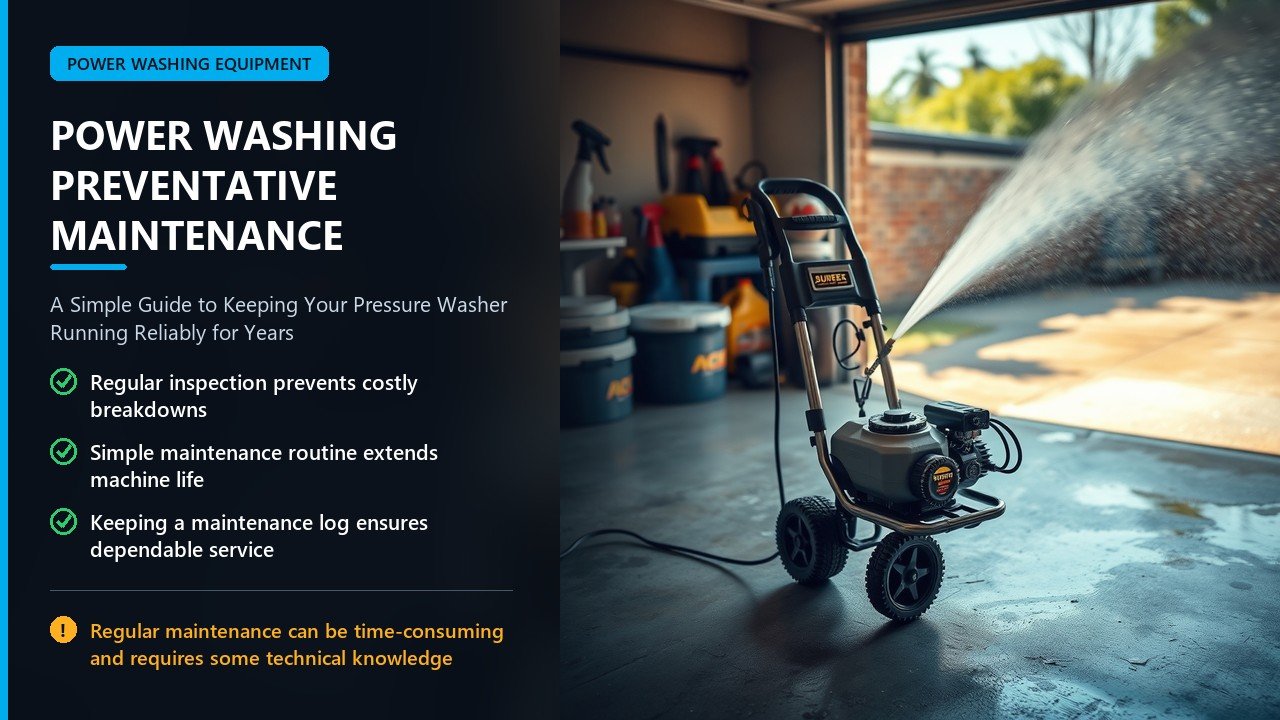
What Power Washing Preventative Maintenance Means
Before building a schedule, it helps to understand exactly what preventative maintenance covers and what it is meant to achieve. It is less about repairs and more about the small habits that stop repairs from being needed in the first place.
What it covers. Power washing preventative maintenance covers every part of the machine that touches water, fuel, air, or electricity. That means the inlet filter, the nozzles, the pump and its oil, the hoses and fittings, the gun and wand, and, on engine driven units, the fuel and air systems as well. It also covers the ways the equipment is stored and protected between jobs, including how it is drained in cold weather. On a good maintenance routine, none of these components are ignored for long, because each one can bring the whole machine to a stop if it fails. The routine is mostly simple inspection: looking for leaks, wear, cracks, and blockages, then fixing or replacing anything suspect before the next job begins. Most of the tasks take only a few minutes, and together they add up to a machine that is always ready to work. Over time, these small checks blend into the rhythm of the job and cost almost nothing in time, while the savings in repairs and lost work add up year after year.
Why it pays off. The reason to bother with power washing preventative maintenance is simple economics. Repairs cost far more than checks, and downtime costs more still when a customer is waiting or a job has to be postponed. A pump that runs out of oil seizes, and a seized pump is far more expensive than the litre of oil it would have taken to protect it. A blocked nozzle can force water back through the system and stress seals that were never meant to take that pressure. Dirty fuel can clog a carburetor and leave a machine that refuses to start on the busiest morning of the week. Every one of those failures is cheap and easy to prevent with routine inspection. Beyond money, maintenance protects safety as well, because a leaking electrical lead or a cracked fitting is a genuine hazard. In short, an hour spent on upkeep each month saves both money and trouble, and it keeps the equipment dependable whenever it is needed.
Building a Simple Maintenance Schedule
A schedule turns good intentions into steady habits, and it does not have to be complicated. Breaking the work into daily, weekly, and seasonal tasks keeps everything manageable and nothing gets forgotten.
| Frequency | Main tasks |
|---|---|
| Every use | Check the inlet filter, water supply, nozzles, hoses, and gun; rinse after detergent. |
| Weekly | Check oil, air and fuel filters, O rings, trigger, and safety lock. |
| Monthly | Inspect pump oil, seals, and fittings; look for leaks and unusual noise. |
| Seasonal | Change oil and filters, replace worn parts, winterize, and store. |
Daily checks. A few quick checks before and after every job prevent the most common problems. Before starting, look over the machine for obvious damage, check that the inlet filter is clean, and make sure the water supply is turned fully on before the machine is switched on. Running a pump dry, even for a few seconds, causes rapid wear, so the order of operations matters. After the job, flush clean water through the system if detergent was used, wipe down the machine, and check the nozzles for blockages. These routines take only minutes yet they catch the majority of issues early. A daily check also gives the operator a chance to notice small leaks, loose fittings, or unusual noises while they are still minor. Over a week, that habit alone will prevent most avoidable breakdowns, and it keeps the machine in a condition that is pleasant to use rather than something to fight with at the start of every shift.
Weekly tasks. Once a week, take a closer look at the parts that wear over time. Inspect the hoses for cuts, bulges, and worn ends, and check the O rings and seals for cracks or flattening. Clean the water strainer, inspect the gun and wand for leaks, and test the trigger and safety lock to be sure they work as they should. On engine driven machines, check the oil level and top it up if needed, and look at the air filter. A weekly routine like this takes perhaps twenty minutes and catches the slow wear that daily checks might miss. It is also the right time to clean and inspect the nozzles in detail, because a partially blocked nozzle changes the spray pattern and can damage a surface. Written down or set as a reminder, a weekly routine quickly becomes second nature, and it keeps every part of the system working as designed rather than quietly degrading between jobs.
Monthly and seasonal. Some jobs belong on a longer cycle. Once a month, inspect the pump oil and change it if it looks milky or dark, check belts and couplings for wear, and test every safety feature. As each season turns, prepare the machine for the conditions ahead, such as checking the machine is fully drained before the first frost or servicing the engine before a busy summer. Seasonal maintenance is also the right moment to replace worn nozzles, filters, and seals as a set, so nothing is left to fail mid job. A simple calendar note for each season keeps this on track. Combined with the daily and weekly checks, these larger tasks keep the machine reliable year after year and turn maintenance into a predictable routine rather than a series of emergencies. A written checklist pinned in a shed or stored on a phone keeps the schedule honest and means nothing important is left to memory alone.
Checking Water Supply and Inlet
Water is the lifeblood of any pressure washer, and problems at the inlet cause more pump damage than almost anything else. A little attention here protects the most expensive part of the machine.
The inlet filter. This strainer is a small part with a large job, trapping grit, sand, and debris before they reach the pump. A clogged filter starves the pump of water, causing it to cavitate and run hot, which quickly damages internal seals and valves. Check the filter before every job and rinse it clean whenever it looks dirty. If a machine draws water from a tank, pond, or barrel rather than a tap, a finer filter is essential, because those sources carry far more debris. Replace damaged or torn filters rather than trying to repair them, since a filter that lets grit through offers no protection at all. Keeping a spare filter on hand is cheap insurance, and it means a dirty filter never becomes a reason to skip a job or risk running the pump dry. A spare filter kept on the shelf is cheap insurance against grit reaching the pump on a busy day.
Supply pressure and flow. A pressure washer needs both enough pressure and enough flow, and the two are not the same thing. Most machines specify a minimum flow rate, and if the supply cannot deliver it, the pump will run short of water and cavitate. A long or narrow hose from the tap can also restrict flow more than owners expect. Check that the tap is fully open, use a hose of adequate diameter, and avoid long runs where possible. If the machine surges or pulses, the supply is usually the culprit. Once the flow is right, the pump runs smoothly and quietly, and the machine delivers the pressure it was designed to produce. Getting the supply right costs nothing and prevents a great deal of pump wear. A pump that runs smoothly at its rated flow will outlast one that constantly gasps for water and runs hot. A pump that runs at its rated flow lasts far longer than one that gags and overheats, so checking the supply is time well spent.
Freezing and storage. Water left inside a pump or hose during freezing weather will expand and crack the casing, a repair that often costs more than the machine is worth. After the final job before a cold spell, drain the pump, hoses, gun, and wand completely, and store the machine somewhere frost free if possible. Running a little pump protector or antifreeze through the system adds further protection, as does removing the inlet and outlet fittings so any trapped water can escape. Even a single hard freeze can ruin a pump that was left charged with water. Making winter draining a fixed part of the seasonal routine is one of the simplest and most valuable maintenance habits any pressure washer owner can adopt, and it protects the pump, the seals, and the valves in a single simple step. Draining takes only minutes, yet it prevents the cracked pump housing that ends many machines each winter.
Nozzle Care and Replacement
Looking after nozzles takes only a few minutes and it is one of the cheapest forms of protection there is. A clean nozzle sprays evenly, keeps the pump within its design limits, and cleans a surface without gouging it.
Nozzles are small, inexpensive parts that have a big influence on performance and safety. Looking after them is quick, and it protects both the surface being cleaned and the pump driving the water.
Clearing blockages. Dirt, mineral deposits, and debris collect in nozzle openings over time, reducing flow and distorting the spray pattern. A distorted spray can gouge a surface or leave streaks, so a blocked nozzle should never be ignored. Clear blockages with the small cleaning tool supplied with most machines, working carefully so the opening is not scratched or enlarged. Never poke a nozzle with a hard metal pin, because this damages the precision hole and permanently changes the spray. Rinse and inspect nozzles after every job, especially when working around sand, mud, or hard water. A quick rinse and a look inside the opening take seconds, and they keep every nozzle delivering the clean, even fan that makes a pressure washer effective, and it is worth checking before every job rather than only when performance drops. A clear nozzle delivers the even fan that makes a power washer effective, and it protects the surface as well as the machine.
Spotting wear. Over time, even a well cared for nozzle wears, and a worn nozzle delivers a weaker, less controlled spray. Look for an uneven fan, a visible notch in the opening, or a drop in cleaning power at the usual distance. If the spray no longer forms a clean shape, the nozzle is worn and should be replaced. Worn nozzles waste water and put extra strain on the pump, because they force it to work against an inefficient restriction. Because nozzles are cheap, replacing a worn one is far more sensible than pushing it to its limit. Keeping a spare set on hand means a worn nozzle never slows a job, and it keeps the machine performing at the level its design allows, and it protects the pump from working against the wrong restriction. Replacing a worn nozzle is cheap, and it restores the cleaning power and control the machine was designed to provide.
Pump Oil and Lubrication
The pump is the heart of a pressure washer, and the oil that lubricates it is what keeps that heart beating. Pump care is one of the most important parts of any preventative maintenance routine.
Checking the oil. Many pumps have a sight glass or dipstick that shows the oil level and condition. Check it regularly, and top up with the grade the manufacturer recommends if the level is low. Clean, golden oil means the pump is healthy; milky, grey, or dark oil suggests water or metal contamination and should be changed promptly. Milky oil usually means water has entered the pump, often through a failed seal or a machine that was run dry or froze. Catching this early prevents the internal damage that follows. Checking the oil takes less than a minute and it tells a careful owner a great deal about the health of the machine. Making it part of the weekly routine means problems are spotted long before they become expensive, so make the check a habit rather than an afterthought. Clean, golden oil is the sign of a healthy pump, and checking it takes less than a minute each week.
Changing the oil. Even healthy oil has a service life, and manufacturers specify how often it should be changed, often after the first few hours of use and then at regular intervals. Changing pump oil is a simple job: drain the old oil, dispose of it responsibly, and refill with the correct grade and quantity. Using the wrong oil, or the wrong amount, can do more harm than good, so follow the manual precisely. Some pumps are sealed units that need no oil changes, so check the specification before assuming. Keeping a note of the last oil change helps an owner stay on schedule. Fresh, correct oil is inexpensive, and it is the single best protection a pump can be given against the wear that eventually retires a machine, often outlasting several machines whose owners never checked the oil at all. A pump given fresh oil at the right intervals will often outlast several machines that were simply neglected.
When to call a professional. Some pump problems are best left to a specialist. If the pump leaks oil, runs unusually hot, makes grinding noises, or loses pressure despite clean filters and good oil, the fault is likely internal. Attempting a repair without the right tools or knowledge can turn a small issue into a ruined pump. A professional can diagnose worn valves, damaged seals, or a failing bearing and advise whether repair is worthwhile. Knowing when to stop and hand over is a sign of good maintenance rather than a failure of it, and it often saves money in the end by preventing a small fault from becoming a ruined pump. Knowing when to hand a machine to a specialist is good maintenance rather than a failure of it. A technician can often say whether a repair is worthwhile or whether replacement makes more sense, which is knowledge worth paying for.
Detergent and Chemical Systems
Chemicals can be a pressure washer’s greatest ally or its quiet enemy, depending on how carefully they are handled. Rinsing well and using only suitable products keeps every rubber seal and plastic line in good order.
Many pressure washers draw detergent through a chemical injector or a tank system, and these parts need attention of their own. Chemicals left sitting in a machine can quietly corrode whatever they touch.
Rinsing the system. After any job that used detergent, soap, or a cleaning chemical, flush the system thoroughly with clean water. Run the machine with the detergent intake in a bucket of clean water until the output runs clear, so nothing is left to dry inside the injector, lines, or pump. Dried detergent can block small passages and stiffen seals, and some chemicals are corrosive if left in contact with metal. Rinsing takes only a few minutes at the end of a job, and it prevents a surprising number of avoidable faults. It also keeps the detergent flow accurate on the next job, because a partly blocked injector delivers an uneven mix that can leave streaks or weak results. Good rinsing is one of the easiest habits in pressure washing to adopt, and it keeps the machine ready for the next task without a struggle. A thorough rinse at the end of every job protects the injector, the lines, and the pump.
Protecting seals and lines. Not every chemical is safe for every machine. Strong acids, caustics, and solvents can attack the seals, hoses, and internal parts of a pressure washer not designed for them. Always check that a product is suitable for the machine and dilute it as directed. When drawing chemicals from a separate container, keep the intake clean and free of grit, and never leave a concentrated product sitting in the lines. Using the right chemical at the right strength protects the machine, and it also produces better cleaning results. A machine that is treated kindly lasts far longer, and its seals and lines stay flexible and leak free for many more seasons of work, and they keep cleaning results consistent from one job to the next. Using the right chemical at the right strength keeps seals and lines flexible for far longer, so the chemical system keeps working accurately job after job.
Hoses, Fittings, and Connections
A burst hose or a leaking fitting can end a working day in seconds, so the water path deserves regular attention. Checking hoses and seals is quick, and it keeps pressure where it belongs.
Hoses and fittings carry the pressurized water and take a lot of punishment in daily use. Inspecting them regularly prevents leaks, bursts, and the downtime that follows.
Inspecting hoses. Look over the high pressure hose for cuts, abrasions, bulges, and kinks, especially near the fittings where stress concentrates. A bulging hose is weakened and can burst under pressure, spraying water and possibly causing injury, so replace any hose showing damage. Coil hoses loosely for storage rather than forcing them into tight loops, which fatigue the inner lining. Keep hoses away from sharp edges, hot surfaces, and vehicle tyres during use. A hose is not expensive compared with the cost of a burst during a paid job, so replacing a suspect hose promptly is sensible. Regular inspection takes seconds and it keeps the whole water path sound. A spare hose coiled in the shed is cheap insurance against a burst on a day that cannot wait for a replacement. Checking hoses after every job costs seconds and prevents the sudden failure that ends a working day early. A quick look after each use is all it takes.
O rings and seals. The small O rings and seals inside the fittings are what stop water escaping at every connection. Over time they harden, crack, or flatten, and leaks appear even though the fittings themselves are fine. Check the O rings whenever a connection drips or weeps, and replace worn ones at once. Keeping a small assortment of spare O rings and seals allows a repair on the spot. A little silicone grease on a new O ring helps it seat and last. Because these parts are tiny and cheap, there is no reason to tolerate a leaky connection, and every drip stopped is pressure and water saved, and a dry operator is a happy one. A connection that no longer weeps keeps the machine working at full efficiency, and every drip stopped saves both pressure and water, and it keeps the operator dry as well on every single job.
Gun, Wand, and Trigger Maintenance
The gun and wand take constant handling, so they wear faster than most other parts. Keeping the trigger light and the connections sealed keeps the tool safe and comfortable to use.
The gun and wand are the parts the operator touches most, and they are subjected to constant trigger action and movement. Their condition affects both safety and comfort.
Trigger and safety lock. The trigger should operate smoothly and the safety lock should engage firmly, because a stuck trigger or a failed lock is a genuine hazard. Check that the trigger returns fully when released and that the lock holds the gun safely when the machine is not in use. If the trigger feels stiff, sticks, or fails to return, repair or replace the gun before continuing. Never disable a safety lock to make a job easier, because the lock exists to prevent accidental spraying. A few seconds of checking before each job confirms that the most safety critical part of the machine is working as it should, and it protects the operator and anyone nearby, and it makes long jobs far more comfortable. A trigger that returns crisply and a lock that holds firmly keep the operator safe and the work flowing, and comfort on a long job is worth far more than most owners realise.
Leaks and repairs. Leaks around the gun, swivel, or wand fittings are common and easy to fix with new seals or a tightened connection. Inspect these joints as part of the routine and address any weeping promptly, because a small leak under pressure worsens quickly. Check the wand for dents or bends that affect the spray, and replace a damaged wand rather than trying to straighten it, which weakens the metal. Insulated wands should be checked for cracks in the sleeve. Keeping the gun and wand in good order makes the machine comfortable and safe to use, and it prevents the small annoyances that slow a job and frustrate the operator. Sorting out a weep or a stiff trigger early keeps the work flowing. Fixing a small leak promptly keeps the gun working well and the operator comfortable on every job. Leaving a leak to worsen only makes the eventual repair more expensive.
Filters, Screens, and Strainers
Filters are the machine’s first line of defence, catching the dirt that would otherwise reach the pump and engine. Keeping them clean is one of the highest value tasks in the whole routine.
Filters protect the machine from the dirt it is designed to wash away, and each one has a specific job. Keeping them clean is a core part of preventative maintenance.
Air and fuel filters. On engine driven machines, the air filter keeps dust out of the engine and the fuel filter keeps dirt out of the fuel system. A clogged air filter causes rough running and wasted fuel, while a dirty fuel filter can starve the engine and cause it to stall. Check the air filter regularly and clean or replace it as the manufacturer directs, and replace the fuel filter at the specified intervals. In dusty conditions, both need attention more often. These are inexpensive parts with a direct effect on reliability and fuel economy, and servicing them on schedule keeps the engine running cleanly when the job is waiting, and it keeps the engine starting easily when time matters most. Checking and replacing filters on schedule is a small cost that pays for itself in reliability. A filter changed on time is one of the cheapest reliability measures available.
Water strainer. The water strainer protects the pump, and it is the filter most often forgotten. It sits at the inlet and catches debris before it can reach the pump valves and seals. Check and rinse it often, more often if the water source is dirty. A blocked strainer starves the pump and causes the exact cavitation damage the filter exists to prevent. Replace torn or stretched strainers rather than reusing them. Because the inlet area is easy to overlook, some owners fit a large, clear inline filter so the state of the filter is visible at a glance. Either way, keeping this small component clean protects the most valuable part of the machine, whether the filter is a small screen or a larger inline unit that shows its condition at a glance. Keeping this filter clean is the simplest way to protect the pump from the grit that destroys it.
Engine and Fuel Care for Gas Machines
A gas pressure washer lives or dies by the health of its engine, and the engine asks for very little in return for reliable service. Clean oil, a fresh plug, and good fuel keep it starting on the first pull.
Gas pressure washers add an engine to the maintenance list, and the engine has its own simple needs. Overlooking them shortens the machine’s life and spoils its reliability.
Engine oil and spark plug. Check the engine oil level before each use and change it at the intervals the manual specifies, because oil is what keeps the engine’s moving parts alive. A low oil sensor on many engines will shut the machine down to protect it, but relying on that instead of checking is a poor habit. Inspect and replace the spark plug as needed, and check the gap if performance drops. A fresh plug and clean oil help the engine start easily and run smoothly. These are quick, inexpensive tasks, and they keep a gas pressure washer dependable season after season, and they cost very little compared with the value of reliable starting. Fresh oil and a clean plug keep the engine pulling on the first try through the busiest months. Those two small tasks do more for dependable starting than any expensive accessory ever could, and they cost almost nothing.
Fuel and stabiliser. Stale fuel is one of the most common reasons a gas pressure washer will not start, especially after a long storage period. Fuel left in a carburettor can gum up the small passages and cause real trouble. Use fresh fuel, add a stabiliser when the machine will be stored, and run the engine dry or drain the fuel before long periods of inactivity. Store fuel in a suitable container away from the machine. Treating fuel with respect saves a great deal of frustration, and it keeps the engine ready to start on the first pull when the next job arrives, without the gummed carburettor that so often follows a season of neglect. A little stabiliser and fresh fuel are a small price to avoid a gummed carburettor. Treating fuel with respect keeps the engine ready to start on the first pull of the season, without a struggle.
Electrical Safety for Electric Machines
These units are simple and clean to run, but they demand care around water and power. A few regular checks keep an electric pressure washer safe, quiet, and dependable.
Electric pressure washers are simple and clean to run, but electricity and water demand respect. A few checks keep an electric machine safe as well as reliable.
Cords and plugs. Inspect the power cord and plug for cuts, cracks, and damage before every use, and never use a damaged cord. Check that the plug fits firmly and that the socket is suitable and protected. Use an RCD or GFCI device, because it will cut the power if there is a fault and greatly reduce the risk of a shock. Keep the cord away from water and from the cutting action of the machine itself, and never run over a cord with the wheels. A damaged cord is a serious hazard and should be replaced, not taped up. These checks take moments and they protect the operator from the most serious risk an electric pressure washer presents, so never omit the RCD no matter how careful the operator believes they are. A damaged cord is a serious hazard and should be replaced, never taped up and reused. Replace any suspect cord at once rather than risking a shock.
Motor and ventilation. Keep the motor and its ventilation openings clean and clear so the machine does not overheat. Dust and dirt drawn through the cooling vents can clog the motor over time, especially in dusty working conditions. Wipe the machine down and clear the vents as part of the routine, and never block them during use. If the motor runs unusually hot, smells, or trips the power, stop and investigate rather than continuing. A cool, clean motor lasts longer and runs more efficiently. Looking after the electrical side of an electric machine is straightforward, and it keeps the unit safe, quiet, and dependable for many years of regular work, and a cool, clean motor is far less likely to trip a breaker on a long job. Keeping the vents clear lets the motor breathe, so it runs cooler and lasts far longer in dusty conditions. Dust is the enemy of an electric motor, so keep the vents clear at all times.
Winterizing and Storage
How a machine is treated between jobs decides how long it lasts. Winterizing and careful storage protect it through the weeks and months when it sits idle.
How a machine is treated between jobs decides how long it lasts. Winterizing and careful storage protect it through the periods when it is not being used.
Draining water. Before any period of storage, and always before freezing weather, drain all water from the pump, hose, gun, wand, and any detergent lines. Trapped water expands when it freezes and can crack the pump housing, fittings, and valves. Remove the inlet and outlet connections to let water escape, and tilt the machine to help it drain. Run the machine briefly if the manual allows, but never let it run dry for long. Draining is quick and it is the single most important step in winterizing, because freeze damage is common, expensive, and entirely preventable with a few minutes of care at the end of the season, which is why draining is such a valuable habit. A machine drained properly before the frost avoids the cracked pump that surprises so many owners each winter. The minutes spent draining are repaid many times over by a pump that survives the cold.
Antifreeze and off season storage. For extra protection, draw a little pump protector or suitable antifreeze through the machine so any remaining water is displaced. Store the machine somewhere dry and frost free where possible, and cover it to keep out dust. Keep the fuel system and battery in mind on gas models, and charge or disconnect the battery as appropriate. Store hoses coiled and away from sunlight, and keep nozzles and small parts together so nothing is lost. A machine put away properly comes out ready to work, and it lasts far longer than one left dirty, wet, and forgotten until the next season begins, free of the rust and dust that quietly shorten a machine’s life. Stored dry and covered, a pressure washer comes out of the off season ready to work, free of the repairs that neglect so often brings, right when the next job needs it.
Frequently Asked Questions
Owners often have the same few questions about keeping pressure washing equipment in good order. These answers cover the most common ones clearly and briefly.
Owners often have the same questions about keeping pressure washing equipment in good order. These answers cover the most common ones.
How often should I do maintenance? The right frequency depends on how much the machine is used. A daily visual check before and after every job and a weekly set of checks suit most owners, with oil changes and larger tasks following the manufacturer’s schedule. Machines in heavy commercial use need more frequent attention than one used around the home, and the manual usually sets out the right intervals for each level of use. A lightly used home machine needs far less attention than a commercial unit, so match the schedule to the workload. A small machine used occasionally may need little more than a seasonal service, while a hard working commercial unit benefits from weekly attention, and the manual is always the best guide to follow for your own machine, and it removes all the guesswork from the schedule. And it makes the whole routine far easier to remember and to follow, so the work stays simple and consistent.
Can I skip maintenance if the machine is running fine? It is tempting, but running well today does not mean a problem is not developing. Most failures begin as small issues that are invisible until they cause a breakdown. A regular routine catches them early, when the fix is cheap and simple rather than a major repair, and it usually arrives at the worst possible moment. Skipping the routine only moves the cost and the inconvenience to a later date, and usually a worse one. Running well today does not mean a problem is not developing quietly inside the pump or the engine. A routine catches those issues while they are still cheap and simple to fix, long before they stop the machine. Catching a fault early is almost always cheaper and quicker than fixing it once it has grown, so the routine pays for itself many times over in practice.
What are the signs maintenance is overdue? Loss of pressure, unusual noises, leaks, overheating, a rough running engine, or a surging pump all suggest something needs attention. A machine that is harder to start or leaves streaks may also be telling you its filters, nozzles, or oil need checking, so stop and investigate before the next job rather than pressing on regardless. A small fault ignored today is often a major one tomorrow, so investigate before the next job. Loss of pressure, odd noises, leaks, overheating, and a rough running engine all point to work that is overdue. Stopping to investigate early is almost always cheaper than waiting for a failure in the middle of a job that matters. Loss of pressure, odd noises, leaks, and a rough running engine all point to work that is overdue, so treat any of them as a prompt to act before the next job.
Final Thoughts on Preventative Maintenance
Power washing preventative maintenance is not complicated, and it does not demand special tools or expertise. It comes down to a handful of regular checks, a little cleaning, and the discipline to replace small worn parts before they fail. In return, a pressure washer starts easily, holds its pressure, cleans evenly, and keeps working through the busiest season without unexpected breakdowns.
For a full range of machines and the parts that keep them running, see this trusted supplier of pressure washer trailers and equipment.
In the end, the machine that lasts is rarely the most expensive one. It is the one whose owner checked the filter, looked at the oil, rinsed the system, and drained the water before the frost arrived. None of these tasks takes long, and together they turn an unreliable tool into a dependable one.
Make preventative maintenance a habit rather than a reaction, keep a few spare parts on hand, and note what you do and when. Do that, and your pressure washer will start on the first pull, hold its pressure, and deliver clean results for many seasons to come, while the machines around it are sent away for repairs they never had to need.
In the end, the machine that lasts is rarely the most expensive one. It is the one whose owner checked the filter, looked at the oil, rinsed the system, and drained the water before the frost arrived. None of these tasks takes long, and together they turn an unreliable tool into a dependable one that earns its keep season after season.
A pressure washer gives back exactly what it is given. Treat it with a little routine care, and it will start easily, hold its pressure, and clean well for years. Neglect it, and it will fail at the least convenient moment, often in the middle of a job that matters.
Keep a few spare parts on hand, write down what you do and when, and the routine soon becomes second nature rather than a chore. A little attention today repays itself many times over the life of the machine.