Every pressure washer, no matter how powerful, has the same weak point, an appetite for water. A machine flowing four gallons a minute turns a rain barrel into a memory in a quarter hour, and the moment the feed runs dry the pump cavitates, the seals wail, and pressure collapses to a pathetic trickle. The fix that professionals quietly rely on is a tank for pressure washer use, a simple box of stored water that turns an intermittent spigot into a dependable supply line and a driveway machine into a field tool.
The story of the tank is the story of the water. A homeowner watches a 3,000 PSI machine stall against a low-flow garden faucet and blames the pump, when the real culprit is starvation. The countertop approach changes overnight when that same machine draws from a tank, whether a 50 gallon buffer at the house or a 200 gallon tank on a trailer behind a commercial rig. Understanding what a tank does, what it does not do, and how to feed the pump from it turns the weakest link in the system into its strongest support.
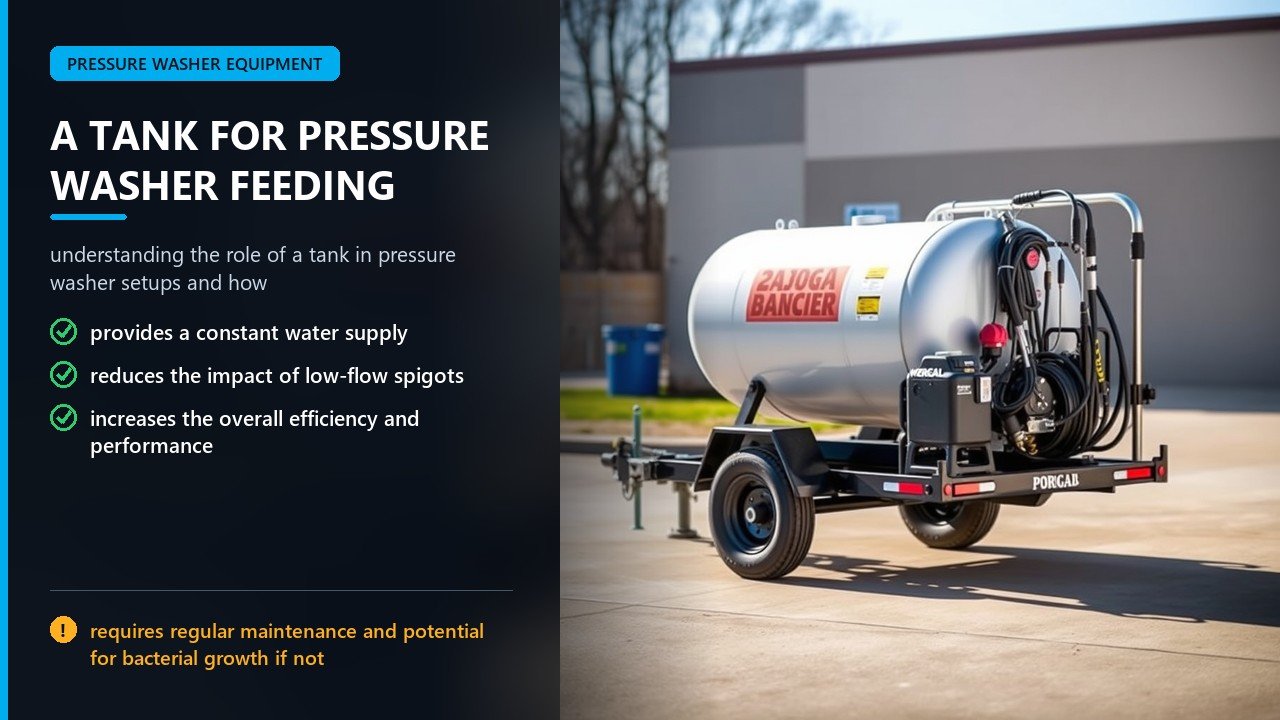
What a Tank Actually Does for the Machine
A pressure washer tank is a reservoir, nothing more and nothing less, and that honesty keeps the expectations straight. It holds water the pump can draw on demand, so the machine never starves even when the supply line behind it is slow or absent. It smooths the difference between a trickling fill valve and a pump that gulps four gallons a minute, which is the exact mismatch that makes residential spigots feel limiting on higher flow units.
The tank does not add pressure. PSI comes from the pump pushing against the nozzle, no reservoir can raise that, and a bigger tank never equals a stronger blast. What it does add is flow security: with a full tank the machine runs at its rated output for as long as the water lasts, and the operator controls when to refill instead of being interrupted at a boundary of the plumbing. This distinction explains why a tank transforms the experience of a high-flow machine without changing a single spec at the trigger.
The role of the tank also depends on the setup. A stationary buffer tank sits near the house, fed by a hose, and lets even a small spigot fill a reservoir overnight for a morning of washing. A portable tank rides on a trailer or truck and carries water to sites with no faucet at all, covered in depth in the existing portable water tank guide. Both kinds serve the same hand, and the purchase decision is about where the work happens more than what the tank itself is made of.
Buffer Tanks and the Municipal Water Catch
The buffer tank solves one of the most common complaints owners have about their own homes. Residential supply lines, especially through long garden hoses and aging fittings, cannot always match the pump’s draw at full output, so the machine gulps air and pulses, or the unloader cycles hard. A buffer tank transforms the interaction: the fill valve quietly tops up the reservoir at whatever the spigot provides, while the pump draws whatever it needs at full rate from the tank, and both sides run in their comfort zone.
Buffer tanks also protect the machine from pressure-side surprises. Some homes feed washing machines pulses or spikes from their supply, and a tank acts as a damper, presenting a steady, calm volume to the pump inlet regardless of what the street decides to do. On flat surfaces where gravity offers little help, a low-horsepower transfer pump or the tank’s own mounting height handles the lift, and the buffer concept stays the same.
Sizing a buffer is straightforward. Estimate the working draw at full flow, say 2.5 to 5 gallons a minute depending on the unit, multiply by the longest spray run, and add a reserve. A 50 or 100 gallon buffer covers a typical homeowner’s morning wash, and the tank refills at leisure between jobs. Buffer tanks are a small addition that transforms the relationship between the house supply and the machine, often at a bargain price compared with the pump repairs starvation causes.
Types of Tanks and How They Are Built
Pressure washer tanks come in a few material- and shape-driven families, each fit for a place. Rotomolded polyethylene is the standard, light, tough, and UV-resistant, and it is what most portable and buffer tanks are made from. Aluminum costs more, weighs less, and looks professional on trailers. Steel is the budget choice but rusts and adds heft, so serious rigs avoid it for the water side and carry it only where looks and scrap value matter.
Shape follows the mount. Cube and rectangular tanks pack efficiently onto trailer beds and truck floors, with flat tops that double as work surfaces. Vertical cylinders hold more per footprint, but slosh harder unless baffled, and an unbaffled tall tank on a trailer shifts the load in corners. Baffles, internal dividers that slow the water’s movement, are the quiet upgrade that stops tanks from flexing and cracking and trailers from swaying, and any tank that rides on the road should have them.
The outlet is where the tank earns its keep. A bottom outlet with a ball valve, a screened pickup that floats or sits above the floor, and a vent that lets air in as water leaves are the non-negotiables. The plumbing that connects tank to pump is described in the suction hose guide, and the same rule dominates here, short, air-tight, and above the water’s level when possible, because gravity beats suction on every farm and jobsite in the country.
Sizing the Tank to the Jobs You Run
Tank size is a simple product of flow and time, plus judgment. A homeowner washing a car at 2 GPM for fifteen minutes of actual spraying uses around 30 gallons, so a 40 to 50 gallon tank covers a weekend with margin. A house wash at 3.5 GPM over two hours pulls close to 120 gallons, and the commercial crew clearing a fence line at 4 GPM all morning will empty 200 gallons before lunch. The pattern is consistent enough to plan around.
| Use | Flow | Practical Tank Size |
| Single car and small patio | 2.0 to 2.5 GPM | 40 to 55 gallons |
| Driveway and fence washes | 2.5 to 3.5 GPM | 75 to 100 gallons |
| House and flatwork wash day | 3.5 to 5 GPM | 100 to 200 gallons |
| Commercial and trailer rigs | 4 to 8+ GPM | 200 to 500+ gallons |
Reserve is the part beginners drop. Tanks never drain to the last drop, since the pickup floats above the sediment line, and stopping a commercial job mid-pass to refill costs more than a few gallons of extra capacity ever will. Add the fill time to the plan: a tank filled overnight at a slow spigot is a full morning’s supply, while a hard-working rig on a remote site may need a tender or a hydrant permit to keep the flow coming. The tank size is really a supply plan in physical form.
Feeding the Pump From a Tank
Getting water out reliably is the tank’s whole game. The pump draws by suction, and suction is generous downhill and stingy uphill, so mount the tank with its outlet above the pump’s inlet whenever the layout allows. Run a short, stiff suction hose that cannot collapse, seat every joint squarely with no air leaks, and let a floating strainer ride just below the surface so the water drawn is cleanest and the layer of grit stays at the bottom.
Prime the line before the first start. Fill the suction hose and the inlet side so the pump picks up immediately instead of churning air bubbles, and consider a small foot valve or check valve that holds the water in the line between stops, so the next trigger pull goes straight to work. The first lesson in every high pressure water primer repeats the trouble sign: a machine that sputters and drops pressure is almost always drinking air, not short on water pressure at all.
Air is defeated by plumbing discipline. Every coupler seated, every hose below the water line, every float clear of the bottom, and the tank behaves exactly like a faucet at full strength. On rigs where the tank must sit low, a small 12-volt transfer pump or a proper inline feed pump restores the lift, and the added cost pays for itself the first jobsite without a spigot in sight. The goal is one unbroken column of water from the tank to the trigger.
Detergent and Rinse Tank Setups
Many professional rigs run two tanks, clean rinse water and a separate solution tank for chemicals, and the division is a hard safety rule. Soap, degreaser, and bleach in the supply tank foam, starve the pump, and corrode seals, while downstream injectors draw chemical from their own container on the low-pressure side. Keeping the rinse tank dedicated to clean water means the machine always rinses with pure water and never worries about a chemical hangover in the seals.
A solution tank feeds the injector through its own pickup and valve, letting the operator control chemical strength at the machine. The same sizing logic applies: the solution tank carries what a job actually injects, usually a fraction of the rinse volume since chemical percentage stays low. Cleaners are drawn from the tank only while the low-pressure soap setting is live, and the tank is flushed when the job changes from degrease to bleach-based work so nothing mixes.
Some setups add a third tank or a combined wash-and-rinse arrangement for detailing or flatwork. The principle never changes, clean water flows to the pump, chemical flows to the injector, and the tanks are labeled and flushed so the wrong liquid never reaches the wrong side. The physical layout, tank above, plumbing short, valves accessible, is what makes the difference between a tidy rig and a tangle that spends its afternoons being untied.
Mounting, Winterizing, and Care
Where the tank lives decides everything else. On a trailer it sits low and broad, strapped to a flat bed with baffles calming the load, and the plumbing runs short to the machine. In a truck bed it bolts or straps to the floor, and a skid unit carries tank, machine, and reels together so the whole setup slides in and out as one piece. The common rule across all mounts is a solid, level platform, because water weighs eight pounds a gallon and a 100 gallon tank presses hard enough to distress a weak frame.
Winter is the tank’s only true enemy. Water freezing into ice expands against plastic, cracking a tank that a summer of abuse could never harm, so before hard cold the tank drains completely, the ball valve opens, and the pickup dries. The machine side gets the same treatment, and the full ritual is covered in the winterizing guide. An old gym sock in the tank’s inner seams helps a winterization shift keep the last traces of water from pooling, and the lid stays open so the interior dries without smell.
Care is simple when it is regular. Check the vent each spring so the tank breathes, inspect the inlet strainer, and flush the interior whenever the water shows signs of growth. Algae follow sunlight, so store the tank covered or use a UV-protective lid, and never let a partially full tank sit warm in the sun for months. A tank that is respected lasts as long as the machine it feeds, and it is far easier to replace a hundred-dollar tank than the pump it saved.
Accessories That Complete a Tank Rig
No tank does its work alone, and a short list of fittings turns a box of water into a dependable supply station. A locking fill cap with a screened vent keeps dust and pests out while letting the tank breathe, and the fill fitting that takes a standard garden hose plus a bulk adapter for a larger line covers every refill route. A clear sight gauge shows the level at a glance, so nobody opens the lid to guess, and a ball valve on the outlet isolates the supply for service and travel.
On the plumbing side, a floating pickup strainer rides beneath the surface where the water is cleanest, a short stiff suction hose holds its shape, and a check or foot valve holds the prime between stops. Double straps or a ratchet bar secure the tank so a full load cannot shift in transit, and a UV cover or shaded mount protects the plastic from the sun that breeds algae. The hose sizing guides help match the lines to the machine’s flow.
Where the tank serves a trailer or skid, add a low-tank shutoff or a simple alarm so the pump never draws air when the supply runs out, and a fill-line extension that reaches higher sources without a ladder. Most of these parts are small and cheap, and together they remove every reason a full tank lets the machine down. A complete rig is not the biggest tank; it is the one fitted with the details that make it impossible to misuse.
Buying Versus Building the Tank Setup
Ready-made tank packages save time and match the machine on delivery. Retailers sell pressure washer water tank kits that bundle the reservoir, the pickup, the strainer, the fill cap, and the hose in one box, sized to the GPM of common machines, and a homeowner can bolt one together in an afternoon with a basic toolbox. These kits are the fastest route from garage to proper supply, and they carry the peace of mind of a matched design.
Building a custom rig wins when the layout is unusual, the space is tight, or the flow is high. A professional mounts the tank, machine, reels, and solution tank onto a skid or trailer bed, sizing the plumbing for the flow and keeping every run short. The custom route also lets an owner choose a tank with exactly the height, baffles, and fitting positions the site demands, and the result is a rig that fits the work like clothing rather than an off-the-shelf compromise.
Whichever path is chosen, the budget breaks into the same three buckets: the tank, the plumbing, and the mounting. The tank is often the cheapest part, the suction plumbing deserves the most attention, and the mount protects everything, so spend accordingly. Compare the kit price against the value of the own repairs it prevents and even a modest buffer tank pays for itself the first season it keeps a pump from running dry.
Common Tank Mistakes Worth Avoiding
The first mistake is expecting the tank to add pressure, which it cannot, and then blaming the machine for a setup that was never going to raise the PSI. The second is placing the tank below the pump and letting a long, sagging suction run fight gravity, when a raised mount and a short, straight line would have solved the same problem in minutes. Fix the plumbing before suspecting the pump, every time.
The third is skipping the vent, sealing the tank so air cannot enter, and watching the pump slowly starve while the tank still looks full. The fourth is skipping the strainer and letting silt and leaves work their way into the pump’s ceramic internals, which makes short work of seals that should have lasted years. The fifth is winterizing the machine but not the tank, and coming back to a spiderwebbed plastic shell and a pool of cold lessons in the spring.
The last mistake is a systems error: using the tank for chemicals and then rinse water without a flush, or pairing a tiny tank with a huge machine and calling it a day. Each of these is fixed by thinking of the tank as part of the whole supply train rather than an accessory, which is exactly the attitude that keeps the water clean, the pump happy, and the pressure steady season after season.
Frequently Asked Questions
Do I need a tank for my pressure washer? Only if the supply line cannot keep up or no faucet exists at the job. A 2.5 to 5 GPM machine outstrips many residential spigots at full output, and a buffer tank removes the starvation that causes pulsing and pump wear.
What size tank do I need for a pressure washer? Size by flow times true spray time plus reserve. A car wash needs about 40 gallons, a house wash 100 or more, and a commercial rig 200 up. The pickup floats above the bottom, so plan for the last few gallons to stay reserved.
Does a bigger tank give more pressure? No. Tank size adds water capacity, and PSI comes from the pump pressing against the nozzle. A bigger tank only means a longer run before refill and steadier flow at a given GPM.
Can I leave soap in the pressure washer tank? No. Chemicals belong in a solution tank or an injector container, never in the rinse supply. Soap in the main tank foams, starves the pump, and corrodes seals, so flush it thoroughly if it ever happens.
Why does my pressure washer lose pressure when feeding from a tank? Almost every time it is air, a leaking suction joint, a clogged strainer, or a sealed vent. Leak-check the suction line, clean the filter, open the vent, and the pump returns to its full stable output.
Final Thoughts on the Tank for Pressure Washer Setups
A tank for pressure washer use is the quiet backbone of every reliable rig, buffering the supply, carrying water to the work, and letting the pump run at its rated flow without apology. It adds no power and needs no maintenance beyond the basics, yet it fixes the most common cause of weak pressure and premature pump failure the hobby ever sees. Sized honestly, plumbed short and air-tight, and mounted above the pump, it turns the weakest link in the system into a steady foundation.
Whether the tank is a 50 gallon buffer beside the house or a 300 gallon trailer tank behind a commercial rig, the rules are the same: keep the water clean, the vent open, the suction short, and the interior drained for winter. Feed the pump what it needs, keep chemicals in their own tank, and refill on a plan instead of in a panic. With that habit, the machine reaches every corner of every site with full pressure, and the tank becomes the invisible hero of every clean it delivers.