If you have shopped for a pressure washer, you have probably seen the letters “AR” — on a consumer machine, on a pump, or in a listing for a replacement part. AR pressure washers come from a company with deep roots in pumps, and that heritage is what sets them apart from brands that simply assemble machines from bought-in parts.
This guide explains who AR is, what the AR Blue Clean range offers, why AR pumps appear on so many other pressure washers, and what to consider when buying or maintaining one.
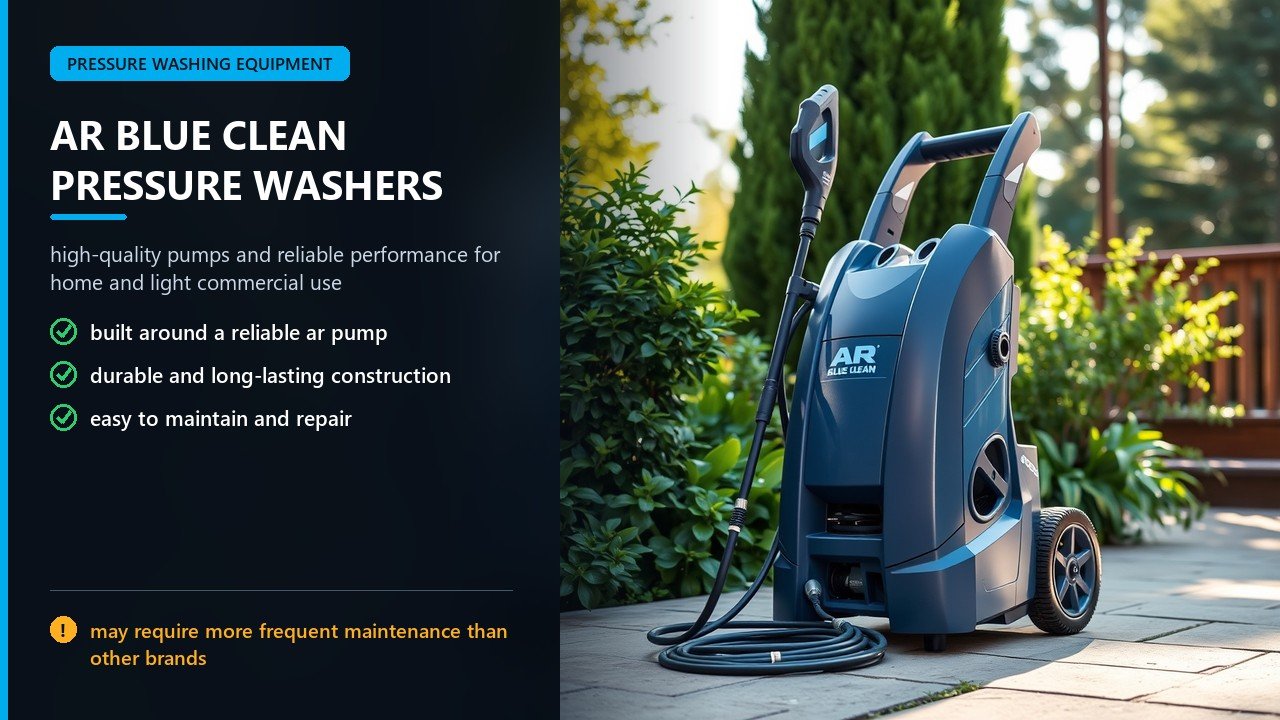
Where AR Comes From
AR stands for Annovi Reverberi, an Italian manufacturer known for making pumps. That is the key to understanding the brand: AR began as a pump maker, and its reputation rests on the precision parts inside a pressure washer rather than on plastic housings or marketing. Pumps are the hardest component to build well, and a company that specialises in them carries that expertise into the machines it sells.
In North America, the brand operates as AR North America, and its consumer pressure washer line is marketed as AR Blue Clean. The name is a nod to the clean water the machines deliver, and the range is aimed at homeowners and light commercial users who want a machine built around a quality pump.
That background matters to buyers because it shapes the machines. An AR pressure washer is generally built around a pump designed and made by the same company, rather than a generic pump of unknown origin. For a tool whose life is often limited by its pump, that is a meaningful difference.
AR Pumps and AR Blue Clean Machines
AR’s professional pumps are used by many other pressure washer brands, which is why the AR name appears on replacement pumps and on machines that are not branded AR. A maker that sells pumps to rivals is judged by its pumping technology, and that is exactly the reputation AR built. When a pressure washer advertises an AR pump, it is pointing to a recognised component.
The AR Blue Clean consumer range covers electric pressure washers for home tasks — cars, driveways, patios, siding, and garden furniture — with features like onboard detergent tanks, adjustable pressure, and integrated hose and accessory storage. The machines are positioned for quiet, convenient electric use rather than heavy professional work.
The table below outlines how the two sides of the brand differ.
| Side of the brand | What it means |
|---|---|
| AR pumps | Professional pump technology, also used by other washer brands |
| AR Blue Clean | Consumer electric pressure washers built around an AR pump |
The takeaway is that AR is a pump company first and a washer brand second. That is why its machines and components are often recommended by people who care more about durability than about the label on the housing.
What AR Blue Clean Offers
AR Blue Clean machines focus on the electric homeowner market, where a quality pump paired with a quiet motor is the main selling point. Typical features include a built-in detergent tank or bottle so soap can be applied without a separate attachment, an adjustable pressure or nozzle system for switching between gentle and aggressive cleaning, and storage for the wand, nozzles, and hose so the machine stays tidy.
Because they run on electricity, these machines suit indoor and residential use where a gas engine would be noisy and produce fumes. They are quiet enough for a neighbourhood, start with a switch rather than a pull cord, and need only a power outlet and a garden hose to work. The trade-off is lower maximum pressure and flow than a serious gas machine, which is why the range is aimed at home and light-duty work rather than commercial cleaning.
The build quality behind the Blue Clean line is the reason the brand stands out in a crowded electric market. Many budget electric washers use cheap axial pumps that are sealed and disposable. AR’s own pumps are the kind that can be serviced, which extends the machine’s useful life and separates a tool you keep from one you replace.
Why the Pump Matters Most
On any pressure washer, the pump is the part that determines long-term value. Motors can be replaced and housings are durable, but a pump that fails or cannot be rebuilt often ends the machine’s life. Brands that make their own pumps, as AR does, tend to build machines that survive because the central component is made to professional standards.
The pump is also where pressure and flow are actually produced. A motor turns the pump, and the pump’s design — the number of plungers, the quality of the seals and valves, the materials used — decides how much pressure the machine can sustain and how long it holds up. This is why an AR pump on an otherwise modest machine is a strong point, and why pump specs deserve as much attention as PSI.
For owners, this means two practical things. First, buying a machine with a quality pump is the best way to get a long service life. Second, keeping the pump fed with clean water, never letting it run dry, and servicing it on schedule will preserve the part that matters most.
Choosing an AR Machine
Start with the job. For light tasks — one car, a small patio, garden furniture — a compact electric AR Blue Clean machine is more than enough and is easy to store and use. For larger home work such as driveways, siding, and fencing, choose the most capable electric model in the range so the work does not stall, and check that its flow suits the accessories and surface cleaner you plan to use.
Look at the pump and the specifications, not just the PSI sticker. A machine with a reputable pump and a realistic, sustained pressure and flow rating will outperform one with inflated peak numbers. Confirm the machine’s water and power needs — a standard outlet and a good garden hose supply — and check the duty cycle, since electric machines often need to rest between long sessions.
Then consider the support. A brand with a professional pump lineage usually has parts and service available, which matters if the machine needs a seal kit, a replacement wand, or a new pump down the road. Cheap machines that cannot be serviced often cannot be repaired when they fail, and AR’s pump heritage is a hedge against that fate. For related reading, see our guide on an electric cold water pressure washer.
Maintaining an AR Pressure Washer
Maintenance follows the same rules as any quality pressure washer, with the pump getting most of the attention. Check the pump oil if the model has an oil-filled crankcase, change it on schedule, and never run the machine without water. Keep the inlet filter clean so grit never reaches the closely fitted pump parts, since debris is one of the main causes of pump failure.
Avoid dead-heading — running the pump with the gun closed for long periods — because that builds heat and pressure that wear the pump and seals. Release the trigger during pauses, and let the machine rest according to its duty cycle. When you finish a job, flush detergent out of the system and run clean water through it so residue does not harden in the pump, gun, or nozzles.
Protect the machine from freezing. Water left in the pump, hose, or any accessory can freeze and crack parts, so winterize by draining the pump, hose, and gun and storing the machine in a dry, frost-free place. A few minutes of care at the end of the season prevents the most common cold-weather damage.
Parts and Serviceability
One of the practical advantages of a pump-focused brand is that parts are more likely to be available. Seals, valves, nozzles, wands, and hoses wear out on any machine, and being able to replace them keeps a good washer working instead of sending it to the tip. When buying, confirm that the model you choose has accessible spare parts and that its pump can be serviced.
Keep a small stock of wear items on hand — O-rings, a filter washer, a nozzle or two, and any seal kit the pump uses. These are inexpensive and are the parts most likely to fail, so having them saves time and avoids a stalled job. Because they are simple, replacing them is within reach of most owners.
Diagnosing problems early also protects the machine. A drop in pressure, a leak at the pump, or a noisy pump are warnings worth investigating before they become failures. In many cases the cause is a clogged filter, a worn seal, or a nozzle problem rather than a failed pump, and fixing the small fault preserves the expensive component. For related reading on pumps, see our guide on a pressure washer pump 3000 psi.
Who AR Pressure Washers Suit
AR machines suit buyers who value the engineering inside a pressure washer more than the badge on the outside. Homeowners who want a quiet, convenient electric washer built around a reputable pump are the natural audience for the Blue Clean range. Light commercial users who need a durable electric machine for regular work also benefit from the pump quality.
They are less suited to buyers who need maximum pressure and flow for heavy or continuous commercial cleaning, where a gas or more powerful machine is the better tool. As with any pressure washer, matching the machine to the task is what determines satisfaction.
The brand’s real appeal is durability and serviceability. A pressure washer is only as good as its pump, and AR’s roots as a pump maker mean its machines are built around that strength. For the home and light-duty user who wants a tool that lasts, that focus is exactly the point.
Frequently Asked Questions
What does AR stand for in pressure washers? AR stands for Annovi Reverberi, an Italian company known for manufacturing pressure washer pumps. In North America it operates as AR North America.
What is AR Blue Clean? It is AR’s consumer line of electric pressure washers for homeowners and light-duty use, built around AR’s own pump technology.
Are AR pumps good? Yes. AR is a specialist pump manufacturer, and its pumps are used by many other pressure washer brands, which is a sign of their reputation.
Do AR Blue Clean washers use electricity? Yes. The Blue Clean range is electric, which makes it quiet, fume-free, and convenient for home use, with lower maximum pressure than gas machines.
Can AR pressure washers be serviced? Many are designed to be serviceable, which is one of the advantages of a pump-focused brand — parts and seal kits are often available to keep the machine running.
Are AR pressure washers good for commercial use? They suit light commercial use, but heavy or continuous commercial cleaning generally calls for a gas or more powerful machine.
How do I maintain an AR pressure washer? Keep the inlet filter clean, never run it dry, avoid dead-heading, respect the duty cycle, flush after detergent, and winterize fully.
Why does the pump matter so much? The pump produces the pressure and flow and is the hardest part to replace. A quality, serviceable pump is the main factor in how long a pressure washer lasts.
Final Thoughts
AR pressure washers are built on a simple strength: the company behind them is a pump specialist. That background gives the AR Blue Clean range a genuine engineering advantage in a market full of disposable machines, and it explains why AR pumps are found on so many other brands’ washers.
For homeowners and light-duty users who want a quiet electric machine that lasts and can be serviced, an AR washer is a sound choice. Look past the PSI sticker to the pump, keep the machine well maintained, and match it to the work at hand. For related reading, see our guide on an electric cold water pressure washer.