The “best hot pressure washer” is not a single machine. It is the one that fits your work — the right balance of temperature, pressure, flow, and build for the greasy, heavy cleaning you actually do. Because hot-water machines vary a lot in size, fuel, and capability, the best choice for a car detailer is different from the best choice for a fleet yard or a food plant.
This guide explains what separates good hot pressure washers from poor ones, and how to choose the best for your needs.
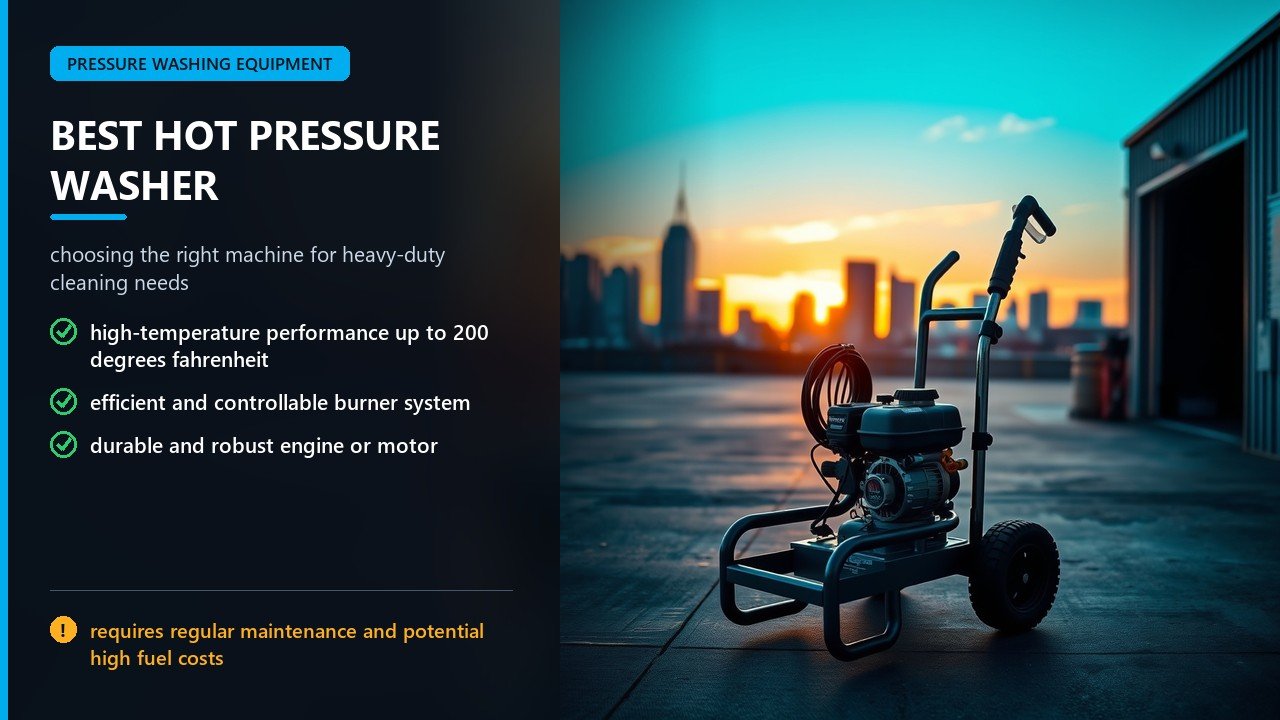
What Makes a Hot Washer “Best”
A hot pressure washer cleans with heat as well as pressure, using a burner and a heating coil to raise the water temperature. Heat softens grease, oil, and waxy soil, so a hot machine cleans greasy surfaces far better than a cold one. The best machines do this reliably, day after day, without fuss.
What sets them apart is not one feature but a set of them: a strong, well-built pump; an efficient, controllable burner; a durable heating coil; and a robust engine or motor to drive it all. The best hot washers are also easy to maintain, because a hot-water machine has more to look after than a cold one, and a machine that is hard to service will not stay at its best.
Most importantly, the best hot washer is the right size for the job. A machine that is too small wears out under heavy use, while one that is too large wastes money and fuel. Matching capacity to workload is the real key to picking a winner.
What to Look For
Start with temperature and recovery. The best hot washers reach around 200 degrees Fahrenheit or a little more, and, just as importantly, recover quickly between trigger pulls so the water stays hot as you work. A machine that loses temperature during use is frustrating, no matter how high its peak rating.
Then look at pressure and flow, weighing flow as heavily as pressure, since cleaning power depends on both. For professional use, higher flow means faster cleaning and better rinsing on big surfaces. Check the pump type — a triplex pump is the standard for durable, serviceable hot-water machines — and the burner’s fuel system, including the fuel filter and water separator.
Consider the build and format. Reputable hot washers are built on sturdy frames with good components and sensible service access. They come as portable, skid-mounted, or trailer-mounted machines, and some are designed for vehicle mounting. The right format depends on whether you move the machine or the work comes to it.
Brands and What They Stand For
Several names dominate the hot-water pressure washer market, and each has strengths. Hotsy and Landa are long-established commercial and industrial brands known for heavy-duty hot-water machines. Mi-T-M builds a broad range from smaller hot units to large industrial machines. Kärcher offers hot-water models in its professional range with strong support networks.
Other names appear in different segments: Pressure-Pro and NorthStar offer capable machines at various price points, and some brands specialise in trailer and skid setups for cleaning businesses. Beyond brands, many machines are built around pumps from makers like General Pump, CAT, AR, and others, and a recognised pump is a good sign of quality.
The lesson is that the “best” brand depends on the segment and your needs. For a small operation, a mid-range machine from a well-supported brand may be ideal. For industrial duty, a heavy commercial unit with a triplex pump and a robust burner is worth the investment. Judge the machine, not just the badge.
Best by Use Case
For auto detailing and light commercial work, the best hot pressure washer is a compact, manageable machine with good temperature, moderate pressure and flow, and easy access to water and power or fuel. It should heat reliably and be simple to move around, since detailing work involves many small, close-up tasks.
For fleet and commercial cleaning, the best machine combines higher flow with strong heating and durable components, often skid- or trailer-mounted so it can travel with the work. Flow matters here, because washing many vehicles or large areas demands speed and rinsing power as much as heat.
For industrial and food-plant cleaning, the best hot washer is a heavy-duty machine built for continuous use, with a large burner, high flow, a triplex pump, and robust construction. The table below summarises the match between use and machine.
| Use | What to prioritise |
|---|---|
| Auto detailing | Manageable size, reliable heat, moderate pressure and flow |
| Fleet / commercial | Higher flow, strong heating, portable or trailer-mounted |
| Industrial / food | Continuous duty, big burner, high flow, triplex pump, robust build |
Choosing within a use case narrows the field to machines that genuinely suit your work.
Gas, Diesel, or Electric
Hot pressure washers come in a few power arrangements, and the best one depends on where you work. Gasoline-engine machines are portable and common, using the engine to drive the pump and a separate burner for heat. They suit work away from mains power but bring engine maintenance and exhaust.
Diesel machines serve a similar role and are often chosen for fuel economy and durability, with the burner also running on diesel so the machine may use one fuel type. They suit heavy commercial and industrial use where the machine works long and hard.
Electric hot washers, including three-phase industrial units, are quiet and fume-free and ideal for indoor work such as food facilities and enclosed wash bays. They depend on a suitable electrical supply, which can limit portability. The best choice is usually dictated by the site: if you need to work anywhere, a gas or diesel machine; if the work is indoors and powered, an electric one.
Features Worth Paying For
Certain features separate the best hot washers from the merely adequate. Accurate, adjustable temperature control lets you match the heat to the job, from gentle warm water to full heat for grease. A reliable burner with clean ignition and a good fuel system means consistent heat without constant fiddling.
A durable triplex pump, preferably serviceable, is worth paying for, because it is the heart of the machine and the part most likely to need attention. Good build quality, with a sturdy frame and quality components, keeps the machine working in demanding conditions. Sensible service access, with easy fuel filter, coil, and burner maintenance, reduces downtime.
Practical running features matter too: a large enough water supply arrangement, and protection features like a thermal relief valve and low-water protection. The best machines are designed to be used hard and maintained easily, rather than looking impressive but being awkward to service.
Hot vs Cold: When the Premium Pays
A hot pressure washer costs more to buy and run than a cold one, so the premium only pays if heat genuinely helps your work. If your cleaning is greasy, oily, or waxy — engines, kitchen equipment, commercial floors, machinery — heat is a major advantage and the premium is worth it. If your cleaning is general dirt, mud, and grime, a cold machine is simpler and cheaper.
Heat also matters for hygiene, which is why food and health settings often require it. In those environments, the ability to clean and sanitise with hot water can be essential rather than optional, making a hot machine the only suitable choice regardless of cost.
So the first question is not which hot washer is best, but whether you need heat at all. If you do, choose the best machine for your specific work and budget. If you do not, a good cold-water machine will serve you better and cost less.
Buying Tips and Care
When buying, confirm the machine’s real output, not just the headline numbers. Check temperature recovery, flow, pump type and brand, and burner quality. Consider support and parts availability, since a hot-water machine will need service, and a machine you cannot get parts for becomes a problem regardless of how good it seemed.
Plan for the extras a hot machine needs: the right fuel supply and storage, a water supply that keeps up with the flow, and matched accessories rated for heat. Remember that all hose, gun, and wand parts must be hot-water rated, or they will fail.
Then maintain it well. Look after the pump and engine as usual, and add burner care: clean or replace the fuel nozzle, change the fuel filter, check the ignition, and descale the heating coil. Doing this keeps even a good machine performing at its best, year after year.
Frequently Asked Questions
What is the best hot pressure washer? The best one is the machine that fits your work. Match temperature, pressure, flow, pump type, and build to your cleaning, whether that is detailing, fleet washing, or industrial use.
Which brands make good hot washers? Established names like Hotsy, Landa, Mi-T-M, and Kärcher are widely used, alongside machines built on reputable pumps from General Pump, CAT, and AR. Judge the machine, not just the brand.
How hot should a hot pressure washer get? Around 200 degrees Fahrenheit or a little more. Recovery between trigger pulls matters as much as peak temperature, so the water stays hot as you work.
Is a hot washer worth the extra cost? If your cleaning involves grease, oil, or wax, yes. Heat cleans those far better than cold water. For general dirt, a cold machine is simpler and cheaper.
What pump should a hot washer have? A triplex pump is the standard for durable, serviceable hot-water machines. It handles heat and heavy use better than lighter pumps.
What format should I choose? Portable for moving around light work, skid-mounted for a fixed or vehicle-based setup, and trailer-mounted when the machine travels with the job.
What maintenance does a hot washer need? The usual pump and engine care plus burner upkeep: clean or replace the fuel nozzle, change the fuel filter, check the ignition, and descale the heating coil.
Do I need hot-rated accessories? Yes. Every hose, gun, wand, and fitting that carries hot water must be rated for the temperature, or it will fail.
Final Thoughts
The best hot pressure washer is the one that matches your work, not the biggest or the priciest. Look for reliable heating and recovery, a strong triplex pump, a quality burner, and a sturdy, serviceable build, and choose the size that fits how much and how hard you clean.
Match the machine to detailing, fleet, or industrial use, confirm parts and support before buying, and plan for fuel, water, and hot-rated accessories. Maintain the pump, engine, and burner well, and descale the coil. Done right, the best hot pressure washer for you will clean greasy surfaces faster and better than any cold machine could. For related reading, see our guides on a pressure washer with hot water and a diesel power washer.