The right soap can be the difference between a job that takes an hour and one that takes three, and the wrong soap can be worse than none at all. Yet “soap” is a misleading word for the range of cleaners a pressure washer can use, because the products span from gentle vehicle shampoos to aggressive concrete degreasers and house-wash solutions, and they are not interchangeable. An owner who grabs a bottle of car soap to clean a greasy driveway wastes time, while one who uses a harsh degreaser on car paint or a painted surface can cause damage that no rinse will undo. The best soap for a pressure washer is the one matched to the surface and the soil, applied at the right dilution through the right method. Understanding the categories, how pressure washers apply soap, and how to match the cleaner to the job turns the soap aisle from a mystery into a straightforward set of choices.
The best soap for a pressure washer is a cleaning solution formulated for the surface and the dirt being cleaned, applied through the machine’s soap system or a foam cannon, and chosen to loosen soil so the pressure can rinse it away. It is not one product but a category that includes vehicle shampoos, degreasers, house-wash and siding cleaners, concrete and masonry cleaners, and specialty solutions. This guide explains why soap helps pressure washing, the main categories and what each is for, how to apply soap through a pressure washer, the dilution and dwell-time details that determine results, how to choose for common surfaces, the safety and surface-damage precautions, and how to build a practical soap collection without overspending.
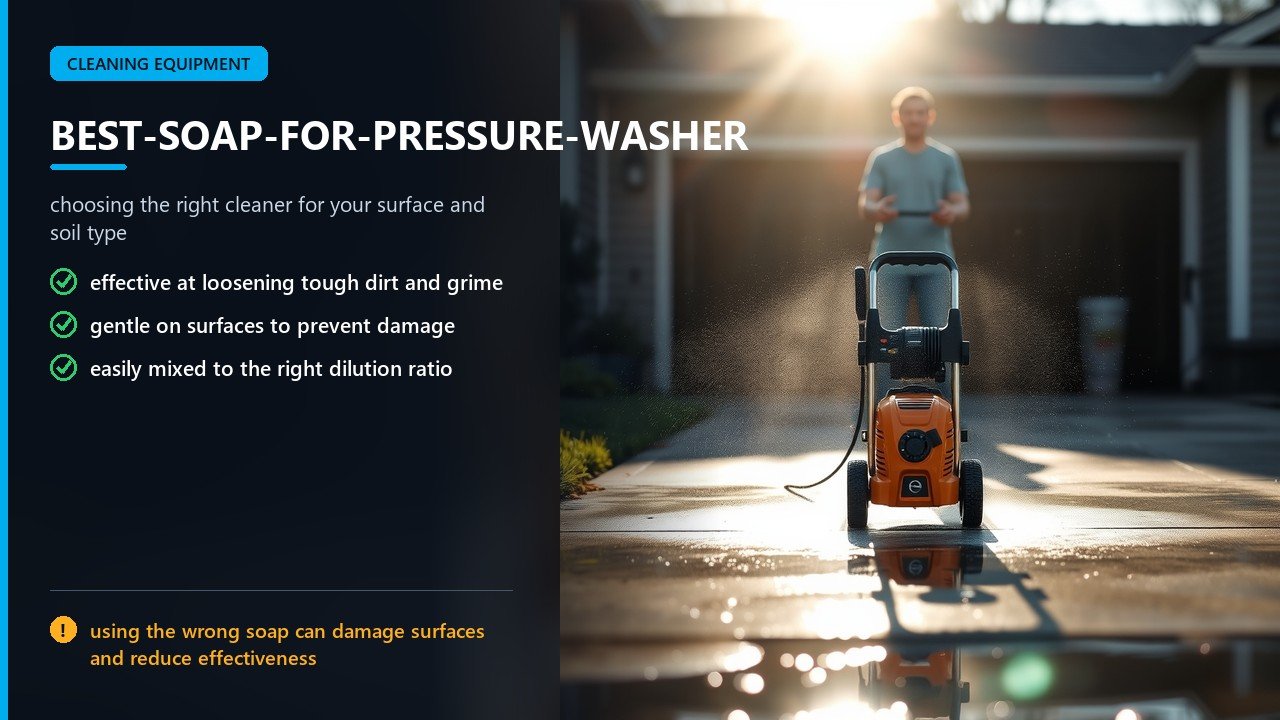
Why Soap Helps Pressure Washing
Water alone is powerful but limited, and soap fills the gap.
Loosening soil for the pressure. Many soils, especially organic films, oils, and baked-on grime, resist plain water because they cling to the surface. A soap breaks the bond between the soil and the surface, so the pressure can lift and rinse it away with less effort and less risk of over-blasting. The soap does the chemistry while the pressure does the mechanical work.
Reducing damage from excess pressure. When soap loosens the dirt, the operator can clean at lower pressure, which reduces the risk of etching, furring, and water intrusion on delicate surfaces. Soap is a damage-prevention tool as much as a cleaning one. Our guide to avoiding pressure damage covers the stakes.
Reaching areas the spray misses. On textured surfaces, cracks, and grout lines, the spray’s direct contact is limited, but a soap solution flows into the crevices and works where the water cannot reach. This is why soap is essential on brick, tile, and textured finishes. Our grout and tile guide covers the technique.
Handling oils and grease. Oil and grease need a degreaser, because plain water beads off them. A proper degreaser emulsifies the oil so the water can carry it away, which is why driveways, engine bays, and kitchen areas often demand a degreaser rather than a mild soap. Our degreasing guide covers the application.
Speeding the job. A good soap reduces the time spent on each surface, because less scrubbing and re-passing is needed to reach a clean result. For a professional, the time saved is direct profit, and for a homeowner it is a shorter job. Our cleaning guides cover the workflow.
The Main Soap Categories
Understanding the categories is the key to matching the cleaner to the job.
Vehicle shampoo. A pH-neutral or near-neutral shampoo designed for automotive finishes, gentle enough to protect wax, sealant, and paint while lifting road film and dirt. It foams well, rinses clean, and is safe on clear coats and trim. It is a poor choice for heavy grease or concrete. Our guide to washing vehicles covers the method.
Degreasers. Formulated to break down oils, grease, and petroleum-based soil, degreasers are for driveways, engine bays, barbecue areas, and commercial kitchens. They range from mild to aggressive, and the stronger ones must be used with care on painted or coated surfaces. Our degreasing guide covers the range.
House-wash and siding cleaners. Alkaline or bleach-based solutions, often with surfactants, designed for exterior siding, soffits, and fascia, and effective against mildew, algae, and atmospheric grime. Many are applied at low pressure in a soft-wash approach. Our guide to soft washing covers the method.
Concrete and masonry cleaners. Solutions formulated for concrete, brick, stone, and pavers, sometimes with rust removers or efflorescence treatments for specific stains. They lift the grime that plain water leaves in porous surfaces. Our concrete cleaning guide covers the use.
Specialty cleaners. Products for specific problems, such as rust removers, mold and mildew treatments, and deck and fence cleaners formulated for wood. Each targets a specific soil or surface, and they round out a complete cleaning kit. Our surface guides cover the specialties.
| Soap Type | Best For | Caution |
|---|---|---|
| Vehicle shampoo | Cars, waxed surfaces | Weak on grease |
| Degreaser | Driveways, engines | Aggressive on paint |
| House wash | Siding, soffits | Rinse plants well |
| Concrete cleaner | Concrete, brick, stone | Test porous stone |
How a Pressure Washer Applies Soap
The application method determines how the soap reaches the surface, and the machine’s soap system matters.
The built-in soap nozzle. Many pressure washers include a soap nozzle or a low-pressure nozzle that draws soap from a tank or bottle through the machine’s soap injector, applied at low pressure. It is simple and built into the machine, though the dilution is fixed by the injector. Our nozzle guide covers the tips, including the soap tip.
A foam cannon or foam gun. A foam cannon uses a venturi effect to mix soap with water and air into a thick foam that clings to a surface, which is excellent for vehicles and vertical surfaces because the foam dwells and works. Our guide to foam cannons covers the tool.
Downstream injection. A downstream injector draws soap into the water stream after the pump, so the machine’s flow applies the soap without the soap passing through the pump. This protects the pump from the soap and allows a wide spray, which suits house washing and large areas. Our soft washing guide covers the method.
A bucket and brush. For the most contact-based cleaning, applying soap by hand and agitating with a brush, then rinsing with the machine, gives the most control. This is common for vehicles and stubborn surfaces. Our brush guide covers the attachments.
Protecting the pump. Some soaps can harm a pump’s seals if drawn through it, which is why injectors that add soap after the pump, and dedicated soap nozzles, exist. Follow the machine’s guidance on how soap should be applied, and do not pour soap into the pump’s water supply. Our pump care guide covers the protection.
Dilution and Dwell Time
How strong the soap is and how long it sits determine the result and the safety.
Follow the dilution ratio. Soap concentrates are usually diluted to a specified ratio, and using too much is wasteful, difficult to rinse, and potentially damaging, while too little cleans poorly. Mix to the product’s instructions for the job. Our cleaning guides cover the dilution.
Let the soap dwell. Soap needs time to work, typically a few minutes, during which it breaks the soil’s bond. Applying soap and immediately rinsing wastes the chemistry, while letting it dwell lets it do its job. Watch that the soap does not dry on the surface, which can leave marks. Our soft washing guide covers the dwell.
Do not let soap dry. A soap that dries on a surface, especially in sun or wind, can leave streaks or stains and can be harder to rinse. Work in sections and keep surfaces shaded or wet where possible, rinsing before the soap dries. Our technique guide covers the workflow.
Rinse thoroughly. A complete rinse removes the loosened soil and the soap residue, which prevents streaks and protects surfaces and plants. Rinsing is not optional; leftover soap dries down to a film. Our guide covers the rinse technique.
Test on a hidden area. Before applying any soap to a whole surface, test it on an inconspicuous spot, especially on porous, painted, or delicate materials, to confirm it will not stain or damage. A minute of testing prevents a costly mistake. Our surface guides cover the caution.
Choosing for Common Surfaces
Matching the soap to the surface is the heart of the decision.
Vehicles and painted metal. Use a vehicle shampoo, applied by foam cannon or bucket and brush, at gentle pressure, to protect the finish while cleaning. Never use a harsh degreaser or concrete cleaner on automotive paint. Our car washing guide covers the method.
Concrete, driveways, and patios. Use a concrete cleaner, pre-treating oil stains with a degreaser and applying the cleaner before rinsing with a surface cleaner or turbo nozzle. The combination of chemistry and pressure handles concrete best. Our concrete guide covers the approach.
House siding and exteriors. Use a house-wash solution in a soft-wash approach, at low pressure, and rinse thoroughly, protecting landscaping from the runoff. The chemistry lifts the mildew and grime that pressure alone struggles with on siding. Our guide to siding covers the method.
Decks and fences. Use a wood-safe cleaner formulated for decks, avoiding harsh chlorine that can damage wood fibers, and rinse well before any sealing. The wrong cleaner can gray or damage wood. Our deck guide covers the choice.
Brick, stone, and pavers. Use a masonry cleaner matched to the material, testing on porous stone first, because some stones are sensitive to acids or strong alkalines. Natural stone especially demands a cautious approach. Our masonry guide covers the caution.
Greasy commercial surfaces. Use a degreaser matched to the soil, dwelled appropriately, and rinsed thoroughly, for dumpster pads, kitchen exhaust areas, and engine bays. These jobs need the stronger chemistry. Our degreasing guide covers the range.
Safety and Surface Precautions
Soaps are chemicals, and using them safely protects both the operator and the surface.
Wear protective gear. Many pressure washer soaps, especially bleach-based house washes and strong degreasers, irritate skin and eyes, so wear gloves and eye protection and avoid inhaling mist. Our guide to safety gear covers the basics.
Never mix chemicals. Combining cleaners, especially bleach and acid, can produce dangerous reactions and toxic gas, so never mix soaps and never assume two products are compatible. Use one product at a time. The CDC’s chemical safety guidance reinforces the precaution.
Protect plants and landscaping. Soap runoff, especially bleach-based solution, can harm grass, flowers, and shrubs, so pre-wet plants, keep runoff away, and rinse thoroughly after the job. A little planning protects the garden. Our soft washing guide covers the protection.
Avoid the wrong surface. Do not use aggressive degreasers on painted or waxed surfaces, or acid cleaners on stone that cannot tolerate them, because the damage is often permanent. Match the cleaner to the surface. Our surface guides cover the compatibility.
Store and dispose properly. Keep soaps in their labeled containers, out of reach of children and pets, and dispose of rinse water and leftover soap responsibly, following local rules. Our guides note the practice. The EPA offers household chemical disposal guidance.
Building a Practical Soap Kit
A few well-chosen products cover nearly every job without a shelf full of duplicates.
Start with a vehicle shampoo. A gentle shampoo covers cars, waxed surfaces, and light cleaning on many surfaces, making it the safest general-purpose starting point. It is the soap most owners reach for daily. Our car guide covers its use.
Add a degreaser. A degreaser handles driveways, engines, and grease, extending the kit to the heavy soil jobs. Choose one that suits your typical surfaces and dilution. Our degreasing guide covers the pick.
Add a house-wash or siding cleaner. If you clean exteriors, a siding cleaner handles mildew and grime on siding and soffits. It is the workhorse for house washing. Our soft washing guide covers the method.
Add a concrete cleaner if you have concrete. If driveways and patios are regular jobs, a concrete cleaner improves results and speeds the work with a surface cleaner. Our concrete guide covers the use.
Round out with specialty cleaners as needed. Add a wood cleaner for decks, a rust remover for stains, or a mildew treatment only if those jobs arise, rather than stockpiling products you rarely use. Our surface guides cover the specialties.
Match the applicator to the soap. A foam cannon for vehicles, a downstream injector for house washing, and the built-in soap nozzle for small jobs, each paired with the right soap, complete the setup. Our foam cannon guide covers the applicator.
Getting the Best Foam
Foam is mostly a delivery method, but getting it right improves how well soap works on vertical surfaces.
Why foam clings. A thick foam holds the soap against a surface instead of running off, which lengthens the contact time and lets the chemistry work on vertical panels like vehicle sides and siding. Longer contact means better cleaning with less soap. Our guide to foam cannons covers the tool.
The foam cannon’s role. A foam cannon mixes soap, water, and air through a venturi to produce foam, and its adjustable parts let the operator tune the thickness and wetness. A cannon delivers foam far better than the machine’s built-in soap nozzle, which is why detailers favor it. Our foam cannon guide covers the setup.
Dilution for foam. Foam cannons often use a stronger soap concentration than other methods because the foam is diluted by air and clings rather than flooding, so follow the product’s foam ratio. Adjust to the foam thickness you want rather than guessing. Our dilution notes pair with the cannon.
Water hardness and temperature. Hard water and cool water can reduce foam, so some operators use a water softener or warmer water for better lather, especially in vehicle detailing. Foam is sensitive to these variables, and adjusting them improves the result. Our car guide covers the detail.
The dwell and rinse with foam. After the foam dwells, it is rinsed away, often with a rinse pass before the contact wash, which lifts the loosened dirt so the contact step does not grind it into the finish. The sequence matters as much as the foam. Our vehicle guide covers the method.
Commercial Versus DIY Soaps
Owners sometimes consider homemade soap, and the trade-offs are worth understanding.
Commercial soaps are formulated. Purpose-made pressure washer soaps are engineered with surfactants, builders, and additives tuned to specific surfaces and soils, which is why they work predictably and safely when used as directed. Their formulation is the value they provide. Our cleaning guides cover the categories.
DIY mixes are risky. Homemade soaps, from dish detergent to laundry products, are not formulated for pressure washing, can foam excessively and clog lines or harm pumps, and may damage surfaces or leave residue. Saving a few dollars can cost a pump or a finish. Our pump care guide covers the risk to the machine.
Dish soap specifically. Dish soap is a common shortcut, but it is designed for hand-washing dishes, not pressure washing, and its heavy foaming and grease chemistry can be hard to rinse and harsh on some surfaces. It also risks pump seals if drawn through the machine. Avoid it. Our soap guide covers the alternatives.
Bleach and homemade house wash. Some operators mix a diluted bleach solution for house washing, which can work, but the mixture is easy to get dangerously wrong and harms plants and surfaces if misused. Purpose-made house-wash soaps offer more predictable results. Our soft washing guide covers the safer route.
Where DIY has a place. There are limited, safe uses for simple solutions, such as plain water for rinsing or a mild detergent for a specific job, but for routine pressure washer soap work, a purpose-made product is the reliable choice. The peace of mind is worth the price. Our cleaning guides cover the proper products.
Common Soap Mistakes
Using one soap for everything. A vehicle shampoo will not cut driveway grease, and a degreaser will harm paint. Match the soap to the surface.
Using too much soap. Over-concentration wastes product, streaks, and can damage surfaces. Dilute as directed.
Rinsing too soon. Soap needs dwell time to work. Apply, let it dwell, then rinse before it dries.
Letting soap dry on the surface. Dried soap streaks and stains. Work in sections and keep it wet.
Drawing strong soap through the pump. It can harm pump seals. Apply soap after the pump or via a soap nozzle.
Ignoring runoff damage. Soap, especially bleach-based, harms plants. Protect and rinse landscaping.
Mixing chemicals. Never combine cleaners, especially bleach and acid, which can create toxic gas.
Frequently Asked Questions
What is the best soap for a pressure washer? There is no single best soap; the right one matches the surface and soil, such as a vehicle shampoo for cars, a degreaser for grease, a house wash for siding, and a concrete cleaner for driveways.
Can I use dish soap in a pressure washer? Dish soap is not formulated for pressure washing and can be too sudsy, hard to rinse, and harsh on some surfaces. Use a purpose-made pressure washer soap instead.
How do I put soap through a pressure washer? Use the machine’s soap nozzle or injector, a downstream injector that adds soap after the pump, or a foam cannon, depending on the surface and the desired foam. Never pour soap into the pump’s supply.
How long should soap dwell before rinsing? Usually a few minutes, enough for the chemistry to break the soil’s bond, while avoiding letting the soap dry on the surface, which causes streaks.
What soap cleans concrete? A concrete cleaner, with a degreaser for oil stains, applied before rinsing with a surface cleaner or turbo nozzle. Plain shampoo is too mild for concrete grime.
Is pressure washer soap safe for plants? Many soaps, especially bleach-based house washes, can harm plants, so pre-wet and protect landscaping and rinse thoroughly. Some soaps are formulated to be more plant-friendly.
Final Thoughts on the Best Soap for a Pressure Washer
The best soap for a pressure washer is not a single product but the right match of cleaner to surface and soil, applied at the correct dilution through the proper method. Soap loosens what pressure alone would struggle to remove, letting the machine clean faster and at lower pressure, which protects delicate surfaces. The categories, vehicle shampoo, degreaser, house wash, concrete cleaner, and specialty products, each serve different jobs, and using one for another wastes effort or causes damage.
Apply soap with the machine’s soap system, a downstream injector, or a foam cannon, dilute to the product’s instructions, let it dwell without drying, and rinse thoroughly, testing on a hidden area when a surface is delicate or unfamiliar. Wear protective gear, never mix chemicals, protect landscaping from runoff, and store and dispose of soaps responsibly. Build a small kit around the surfaces you actually clean, a gentle shampoo, a degreaser, a house wash, and a concrete cleaner, rather than a shelf of duplicates. Choose deliberately, and soap becomes the quiet ally that turns a pressure washer from a water cannon into a genuinely capable cleaning system, matched to every job.