There is a stubborn film of dirt on wood siding and car paint that a spray nozzle simply will not lift, no matter how many passes you make. It is the kind of soil that bonds to the surface and laughs at water pressure, and every cleaner eventually runs into it. The first time I used a brush attachment on a power washer to clean a painted fence, the difference was immediate: instead of bouncing off the surface, the brush scrubbed it, and the water carried the loosened dirt away. That is the value of a brush attachment, and it is why serious cleaners keep brushes in their kit alongside their nozzles. This guide explains what brush attachments are, when they beat a plain nozzle, the types available, how to use them, and how to choose the right one.
What a Brush Attachment Is
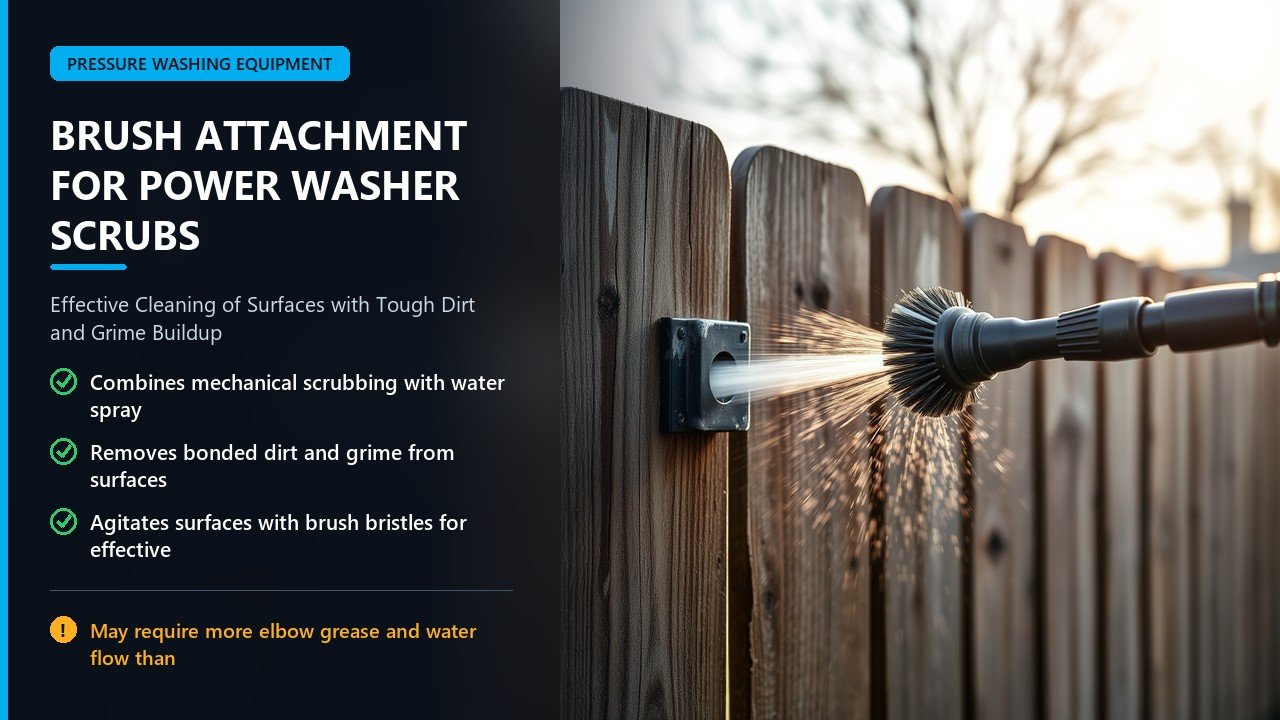
A brush attachment is an accessory that fits onto the end of a pressure washer wand and combines a brush with a water spray. The brush bristles scrub the surface while water flows through or around the brush, loosening and washing away soil in one motion. Instead of relying purely on the force of a water jet, the brush adds mechanical agitation, which is how dirt that is bonded to a surface gets removed.
Most brush attachments connect through the standard quick-connect fitting, the same one your nozzles use, so they plug onto the wand like any other accessory. Some are fixed brushes, some are rotating brushes powered by the water flow, and some are large wash brushes designed for broad surfaces like vehicles or siding. Common to all is the combination of scrubbing and spraying, which distinguishes them from a nozzle alone.
The reason brushes matter is simple physics. Water pressure lifts and carries loose soil, but soil that has bonded to a surface, whether it is road film on paint, algae on siding, or grime on a deck, resists pressure alone. A brush provides the mechanical action that breaks that bond, and the water then carries the soil away. That combination cleans surfaces that spraying alone cannot.
When Brushes Beat a Plain Nozzle
Not every job needs a brush, and knowing when to reach for one saves time and effort.
Bonded and film-like soil. Road film, pollen, algae, mildew, and embedded grime form layers that pressure alone does not fully remove. Brushes agitate these layers and lift them, producing a cleaner result.
Textured surfaces. Wood, stucco, brick, and other textured materials trap dirt in their crevices, where a spray cannot reach effectively. A brush reaches into the texture and scrubs the trapped soil free.
Large flat surfaces. Big wash brushes cover broad areas of vehicles, siding, or decks quickly, combining scrubbing and rinsing in fewer passes than a wand.
Gentle cleaning needs. Sometimes lower pressure with a brush is safer for a surface than high pressure without one. The brush does the work of loosening soil, allowing gentler pressure that avoids damage, which matters for painted, aged, or delicate surfaces.
Stubborn spots. A brush lets you focus scrubbing on a tough area without blasting it with high pressure, which can be both more effective and less damaging.
Where a nozzle is perfect for rinsing, blasting, and broad coverage, a brush is the tool for scrubbing soil that is bonded or embedded. The two work together: brushes loosen, nozzles rinse and cover. A complete cleaning setup includes both.
Types of Brush Attachments
Brush attachments come in several designs for different tasks.
Fixed brush wands. A brush head on a wand or a brush that attaches to the wand, with water spraying through or around the bristles. Simple, controlled, and good for focused scrubbing and detail work. The operator scrubs directly, which gives precise control.
Rotary or rotating brushes. A brush head whose bristles rotate, sometimes powered by the water flow or a small turbine. The rotation adds scrubbing action with less operator effort, and these cover ground faster. They are popular for vehicles, siding, and large surfaces.
Large wash brushes. Broad brushes, often with soft bristles, designed for washing vehicles, awnings, and siding. Their width covers ground quickly, and their soft bristles suit surfaces that should not be scratched.
Wheel and detail brushes. Smaller or angled brushes for wheels, tires, grills, and tight areas where a full-size brush will not fit.
Gutter and specialty brushes. Curved or specialized brushes for cleaning gutters and other specific applications, sometimes paired with a wand extension for reach.
| Type | Best For | Note |
|---|---|---|
| Fixed brush wand | Focused scrubbing, detail | Precise control |
| Rotary brush | Large surfaces, vehicles, siding | Faster, less effort |
| Large wash brush | Cars, awnings, siding | Soft bristles, broad coverage |
| Wheel/detail brush | Wheels, grills, tight spots | Small or angled |
Choose based on the surface and the job. A rotary brush for big vehicle or siding work, a fixed brush for focused detail, and a small brush for tight areas covers most needs. Many owners keep a set, using each where it works best.
Bristle Materials and Surface Safety
Bristle material determines how gentle or aggressive the brush is on a surface, and choosing wrong causes damage.
Soft nylon or synthetic bristles. The safe default for most surfaces, including vehicle paint, siding, and delicate finishes. Soft bristles clean without scratching, and they are the right choice for anything you care about.
Medium or stiff nylon. For tougher surfaces like concrete, heavy machinery, and rough exterior materials where more scrubbing is needed. Stiffer bristles clean more aggressively but can scratch softer finishes.
Brass bristles. Aggressive and abrasive, used for tough tasks like stripping rust or cleaning hard, durable surfaces. Brass brushes will scratch paint, plastic, and soft metals, so they must be reserved for surfaces that tolerate them. Never use a brass brush on a vehicle’s paint.
Horsehair or natural bristles. Gentle and traditional, used for delicate detailing where even soft nylon might be too much. Less common in pressure washer attachments but valued for fine work.
The rule is to match the bristle to the surface: soft for anything delicate or painted, stiffer for tough, hard surfaces, and abrasive only where the surface can take it. The wrong brush does more damage than a nozzle ever would, because the bristles bite directly into the finish. When in doubt, test a brush in an inconspicuous spot first, and always err toward softer bristles on surfaces you want to preserve. Our article on pressure washing wand extensions pairs well with brush attachments, since extensions let you reach surfaces that need scrubbing.
Compatibility and Setup
Most brush attachments use the standard quick-connect, so they fit the same guns and wands as your nozzles. Plug the brush onto the wand, confirm it is fully seated and locked, and you are ready. If your machine uses a different connector, such as M22, you will need an adapter, and you should keep adapters to a minimum to avoid leaks and flow restriction.
Some brush attachments have their own flow paths or nozzles, and some are designed for specific pressure and flow ranges. Match the attachment to your machine so the water flows through it properly and the bristles are suited to your work. A rotary brush may need adequate flow to spin correctly, so confirm it is sized for your machine’s output. Check that the attachment permits the pressure and flow your machine provides, and that the spray pattern reaches the surface where the bristles are working. Proper setup is simple but worth confirming, because a mismatched brush either will not clean well or will not spin, and the operator blames the tool instead of the match.
How to Use a Brush Attachment
Using a brush attachment well comes down to technique and surface awareness.
Start with the machine at an appropriate pressure for the surface, often lower than you would use for blasting, since the brush supplies the scrubbing action. Apply cleaning solution if needed, then work the brush over the surface in overlapping passes, letting the bristles agitate the soil while the water rinses. Use steady, controlled motion rather than forcing the brush, which can damage delicate surfaces and wear the bristles. For rotary brushes, let the rotation do the scrubbing and guide the brush rather than pressing hard. Work in sections so you can see your progress, and rinse as you go so loosened soil does not dry back onto the surface.
Pay close attention to the surface. Test a small, hidden area first for delicate finishes, and watch for any scratching or damage as you work. Keep the brush clean, since a brush loaded with grit can scratch a surface as it scrubs, and rinse it periodically. Avoid letting bristles bend permanently by not forcing them. With good technique, a brush attachment cleans surfaces thought impossible to clean with water alone, and it does so without the surface damage that excessive pressure can cause. The brush is a precision tool as much as a scrubbing tool, and treating it that way produces the best results.
Best Uses for Brush Attachments
Brushes shine in specific applications.
Vehicle cleaning. Large soft wash brushes and rotary brushes clean cars, trucks, and RVs, lifting road film and grime that a spray misses, while soft bristles protect the finish. Detail brushes handle wheels, tires, grills, and tight areas. The car wash application is one of the most common uses of brush attachments.
Siding and exterior walls. Rotary and large brushes scrub siding, stucco, and painted walls, removing algae, mildew, and embedded dirt from textured surfaces that a spray cannot fully clean. This is especially valuable on north-facing surfaces where mildew grows.
Decks and fences. Wood decks and fences trap dirt in the grain and between boards, and a brush scrubs it out, preparing the wood for staining or sealing. Cleaning a deck before refinishing is a classic brush job.
Awnings and fabric. Soft brushes clean canvas awnings and similar fabrics without tearing them, combining gentle bristles with water.
Machinery and equipment. Sturdier brushes clean heavy equipment and machinery where embedded grease and grime resist a spray, though bristle choice must match the surface.
Gutters. Specialty brushes, often paired with an extension wand, scrub gutters clean with the water flushing debris away.
In these applications, the brush delivers a level of cleanliness that spraying alone cannot, because it addresses bonded and embedded soil. For any surface where dirt clings and pressure is not enough or would be too aggressive, a brush attachment is the answer. For cleaning exterior surfaces that grow mildew, the CDC mold guidance offers useful context on why thorough cleaning matters.
Maintenance and Storage
Brush attachments need little maintenance, but a few habits keep them effective and prevent surface damage. Rinse the bristles after each use to remove trapped grit and cleaning chemicals, because grit in the bristles is what scratches surfaces the next time you use the brush. Allow the brush to dry before storage to prevent the bristles from matting or growing mildew, and store it so the bristles are not crushed or bent under other equipment. Inspect the bristles periodically and replace the brush when they become worn, splayed, or hardened, since worn bristles clean poorly and may scratch. Check the attachment’s fittings and spray path for clogs, and keep the connection clean so it seals properly. Detergent residue left in a brush can also degrade the bristles over time, so a thorough rinse after use is worth the few seconds it takes. Treated well, a good brush attachment lasts for years and stays ready for the next job.
Buying Guide
To choose a brush attachment, start with the surface you intend to clean and the soil you face. For vehicles and delicate finishes, choose soft bristles and a rotary or large wash brush design for coverage. For siding, decks, and exterior walls, a rotary or medium-stiff brush works well. For tight areas, a smaller detail brush is essential. Match the bristle material to the surface, firmly avoiding abrasive brushes like brass on anything that can scratch.
Confirm the attachment uses a connector compatible with your machine, ideally the standard quick-connect, to avoid adapters. Check that it is rated for your machine’s pressure and flow, especially rotary brushes that need flow to spin. Favor quality construction with durable bristles and secure fittings, because cheap brushes shed bristles, fail to spin, or leak, and they can damage surfaces. Consider buying a set covering the common tasks, a large soft brush, a rotary brush, and a detail brush, so you are equipped for any job. Finally, think about how the brush fits your workflow: a brush that is comfortable to use and easy to connect will actually get used, and that is what delivers the cleaning benefit.
Brush Attachments vs Foam Cannons vs Nozzles
Understanding how brush attachments compare to other accessories helps you choose the right tool for each stage of cleaning.
Nozzles are the workhorses for rinsing, blasting, and broad coverage. They apply water at pressure with various spray patterns, and they are unmatched for washing away loose dirt and debris. But they struggle with soil bonded to a surface, because water alone cannot break the bond that holds it. Nozzles clean by force; they do not scrub.
Foam cannons apply a thick layer of soapy foam to a surface, letting the detergent dwell and loosen soil before rinsing. They are excellent for pre-treatment, softening dirt so it lifts more easily, and they are popular for vehicle washing. They do not scrub, however, so they prepare a surface rather than finishing it.
Brush attachments add mechanical action. They scrub the surface, breaking the bond that holds soil, and rinse it away. They are the tool for soil that resists both pressure and detergent alone.
| Tool | Action | Best Stage |
|---|---|---|
| Nozzle | Spray and rinse | Loosening and rinsing general soil |
| Foam cannon | Apply and dwell | Pre-treatment to soften soil |
| Brush attachment | Scrub and rinse | Removing bonded and embedded soil |
The tools complement one another and are often used in sequence. A typical vehicle or siding wash might apply foam to pre-treat, use a brush to scrub the soil loose, and finish with a nozzle to rinse clean. Using them together produces a far better result than any one alone. The brush is the missing piece when water and detergent are not enough, and understanding its role in the sequence makes it easier to use it effectively.
Real-World Cleaning Scenarios
Seeing brushes in use clarifies their value.
Washing a car or truck. Pre-treat with foam, then use a soft large wash brush or rotary brush to scrub the body, lifting road film and grime that spraying misses, and finish with a rinse nozzle. Detail brushes clean wheels, tires, and grills. The result is a thorough wash that protects the finish, since the soft brush loosens soil that would otherwise be dragged across the paint by harsher methods.
Cleaning vinyl or wood siding. Apply cleaning solution, scrub with a rotary or medium brush to lift mildew and embedded dirt from the texture, and rinse. North-facing siding, where mildew grows, shows the greatest improvement, coming much cleaner than with spraying alone.
Preparing a deck for staining. Scrub the deck with a brush to remove dirt, old finish, and grime from the wood grain and between boards, then rinse and let it dry before staining. A clean, scrubbed surface takes stain far better, and the brush gets into the grain that a spray cannot reach.
Cleaning an awning or fabric cover. A soft brush gently scrubs the fabric, loosening dirt without tearing it, while the water rinses. Aggressive methods would damage the fabric, but a soft brush cleans it safely.
Cleaning machinery and equipment. A sturdier brush scrubs embedded grease and grime that a spray leaves behind, following with a rinse. The brush bites into the grime and lifts it, a job pressure alone cannot complete.
In each case, the brush solves the same problem: soil that clings, embeds, or bonds, which water pressure cannot remove on its own. That is the brush attachment’s reason for existing.
Common Mistakes With Brush Attachments
A few errors reduce results or cause damage.
Using the wrong bristle hardness. Stiff or brass bristles on a delicate or painted surface scratch it badly. Match soft bristles to anything you care about, and reserve abrasive brushes for surfaces that tolerate them.
Scrubbing with a dirty brush. A brush full of grit acts like sandpaper, scratching the surface. Rinse the bristles before and during use to keep them clean.
Pressing too hard. Forcing the brush damages surfaces, wears the bristles, and does not clean better. Let the bristles and water do the work with gentle, steady pressure.
Using high pressure with a brush. Excessive pressure can damage the surface and overwhelm the brush’s gentle action. Often lower pressure with the brush is both safer and more effective.
Ignoring the test spot. Failing to test a brush in a hidden area on an unfamiliar surface risks visible damage. Always test first.
Skipping the rinse. Scrubbing briefly and moving on can leave loosened soil to dry back onto the surface. Rinse thoroughly as you work.
Tip: Keep a separate brush for vehicles and delicate finishes, and never use it on rough concrete or machinery where grit embeds in the bristles. A dedicated soft brush stays clean and stays safe for the surfaces you most want to protect, which is worth the small cost of an extra attachment.
Brush Attachment for Power Washer: Frequently Asked Questions
What does a brush attachment do for a power washer? It combines mechanical scrubbing with water spray, letting you clean bonded and embedded soil that a nozzle alone cannot fully remove.
Do brush attachments fit any pressure washer? Most use the standard quick-connect fitting, so they fit the same guns and wands as nozzles. Machines with other connectors need an adapter.
Will a brush attachment scratch my car? Not if you use soft bristles and keep the brush clean of grit. Avoid stiff or brass bristles on vehicle paint, and test in a hidden area first.
Are rotary brush attachments better than fixed brushes? Rotary brushes cover ground faster with less effort and suit large surfaces, while fixed brushes give more precise control for detail work. Each has its place.
Can I use a brush attachment with detergent? Yes, brushes work well with cleaning solutions, since the bristles agitate while the solution loosens soil. Rinse the brush afterward to prevent chemical damage to the bristles.
What pressure should I use with a brush attachment? Often lower pressure than blasting, since the brush provides the scrubbing. Match the pressure to the surface, using gentler settings for delicate finishes.
Final Verdict on Brush Attachments for Power Washers
A brush attachment for a power washer is the tool that solves the cleaning jobs a nozzle cannot. By adding mechanical scrubbing to the water spray, it lifts the bonded and embedded soil that pressure alone leaves behind, cleaning textured surfaces, vehicles, decks, and siding to a standard that spraying cannot reach. For anyone who cleans surfaces beyond smooth concrete, a brush attachment quickly earns its place in the kit.
Choose the right bristle for the surface, soft for delicate and painted finishes, stiffer for tough hard surfaces, and select the type that fits the job, rotary for coverage, fixed for control, and small brushes for detail. Confirm compatibility with your machine, use gentle pressure and let the brush do the work, keep it clean to avoid scratching, and store it properly. Do that, and the brush attachment becomes one of the most versatile accessories you own. It is the difference between water bouncing off stubborn dirt and the surface finally coming clean, and once you have used one on the right job, you will wonder how you cleaned without it.