The message arrived at nine on a Saturday morning, urgent in the way text messages from relatives often are: “How much dish soap do I put in the pressure washer?” My brother-in-law was mid-car-wash, out of dedicated cleaner, and eyeing the bottle of grease-cutting dish soap under the kitchen sink. It is the same thought almost every pressure washer owner has at some point. The soap is right there, it cuts grease brilliantly, and surely soap is soap, right?
So let us answer the exact question people search for: can I use dish soap in pressure washer equipment? The honest answer is a qualified yes, but the qualification matters a lot. Dish soap can clean effectively in the right situation, and it can also create a mess, damage certain surfaces, and stress your machine if you use it carelessly. This guide explains when it works, when it backfires, and what to use instead when you want professional results.
The Short Answer
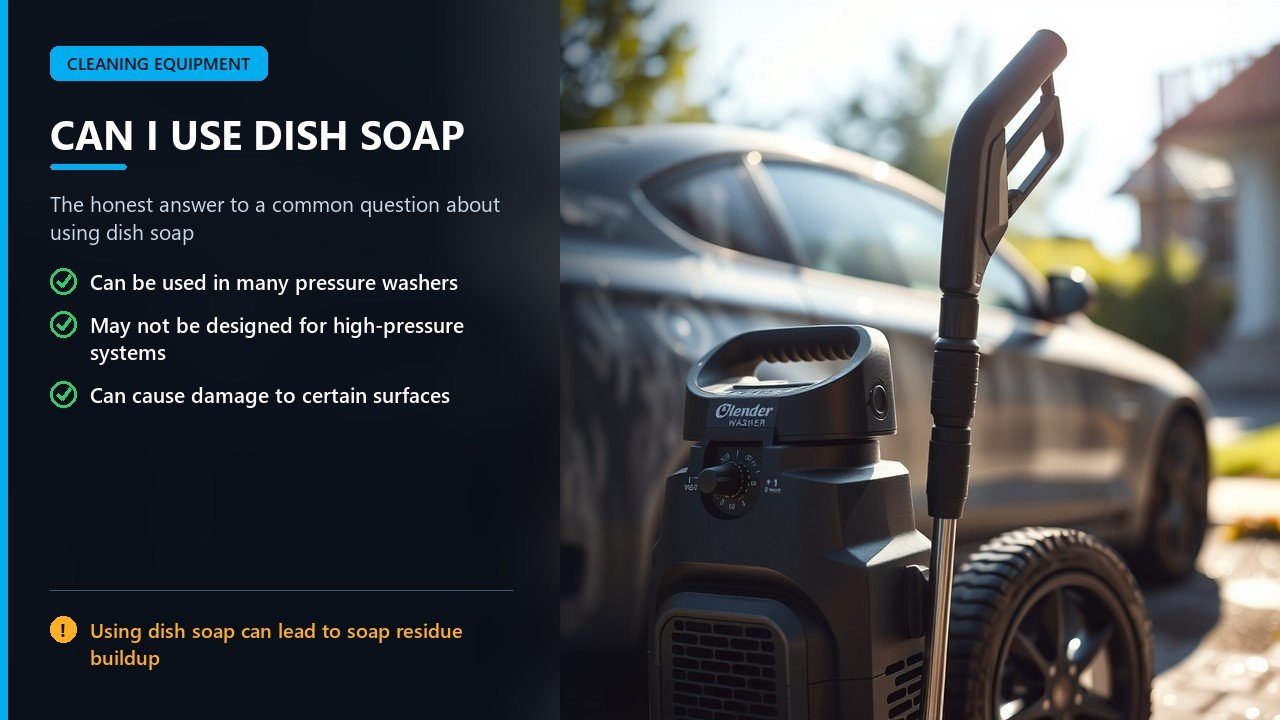
Yes, you can use dish soap in many pressure washers, and plenty of people do it without obvious harm. But dish soap was never designed for high-pressure systems or for the surfaces you clean with them. It is a compromise, not a solution. If your goal is simply to make a car or a patio a bit cleaner on short notice, a small amount of dish soap can get the job done. If your goal is professional, streak-free results without risking your paint, deck, or siding, a purpose-made cleaner is the better call.
The difference comes down to three things: how much foam dish soap creates, what additives it contains, and how it interacts with the specific surface under your nozzle.
Why People Reach for Dish Soap
It is easy to see the appeal. Dish soap is:
- Already in the house. No trip to the store, no waiting on shipping.
- Cheap. A few drops goes a long way.
- Genuinely good at cutting grease. It is formulated to strip oil from dishes, and that translates to some cleaning tasks.
- Gentle on many surfaces at low concentration.
Those advantages are real. But pressure washing is a different environment than a kitchen sink, and that is where the problems start.
What Dish Soap Does to a Pressure Washer
A pressure washer soap injector or foam cannon draws cleaning solution into the water stream. The chemistry of the solution affects how it flows and foams.
- Foam volume. Dish soap foams aggressively. Through a foam cannon, this can be a good thing, producing thick foam. Through a basic injector, excess foam can clog or gunk up the system and leave residue everywhere.
- Residue. Dish soap can leave a sticky film if not rinsed thoroughly, which attracts dust and can dull paint or streak glass.
- Seals and internal parts. Repeated use of harsh or high-foaming detergent can degrade rubber seals and O-rings over time, leading to leaks.
- Additives. Many dish soaps contain moisturizers, fragrances, and antibacterial agents that are not meant to be sprayed across a vehicle, siding, or garden.
None of this means one use will ruin your machine. It means that dish soap is not the clean, purpose-built choice, and repeated careless use adds up.
The Real Risks by Situation
Whether dish soap is a good idea depends heavily on what you are cleaning. Use this table as a quick guide.
| Cleaning Task | Dish Soap Verdict | Why |
|---|---|---|
| Car paint and body | Risky | Can strip wax and leave residue or streaks |
| Car wheels and tires | Acceptable in a pinch | Strong degreasing helps; still rinse well |
| Concrete and driveways | Low benefit | Pressure does the work; soap adds little and may leave film |
| Wood decks | Not recommended | Can dry wood and lift finish unevenly |
| Vinyl siding | Use with caution | Possible streaking; purpose cleaner is safer |
| Patio furniture and grills | Reasonable | Grease-cutting suits these surfaces |
| Windows and glass | Poor choice | Streaks and film |
The pattern is clear: dish soap is least risky on durable, grease-prone surfaces and most problematic on finished, delicate, or streak-sensitive ones.
When Dish Soap Is Actually Fine
There are situations where a small amount of dish soap does a respectable job:
- You are degreasing. Grills, engine bays, and greasy tools respond well to a mild dish soap solution.
- You are in a pinch. No dedicated cleaner on hand and a light cleaning task in front of you.
- You will rinse thoroughly. If you can flood the surface with clean water afterward, residue risk drops.
- The surface is forgiving. Concrete, plastic furniture, and similar rugged materials tolerate it far better than paint or wood.
If all four apply, a little dish soap is a reasonable shortcut. If any of them do not, reach for a purpose-made product.
Better Alternatives to Dish Soap
Dedicated pressure washer soaps are formulated for the job. They foam predictably, rinse clean, and respect the surfaces and the machine. Here is how the main options compare.
| Product Type | Best For | Key Advantage |
|---|---|---|
| Car wash soap | Vehicles | Wax-safe, rinses clean, lubricates surface |
| Pressure washer detergent | Siding, general surfaces | Formulated for injectors and foam |
| Concrete cleaner | Driveways, patios | Targets stains and organic growth |
| Deck and fence wash | Wood surfaces | Wood-safe, resists uneven drying |
| Degreaser | Engines, equipment | Strong oil and grease removal |
The right product makes the work easier and the results better. It also protects your investment in paint, wood, and the machine itself.
How to Use Soap Correctly in a Pressure Washer
If you are going to use any cleaning solution, including dish soap, do it right.
- Set up the injector or foam cannon. Most pressure washers draw soap through a dedicated inlet, often a small tube with a filter. Some machines use a soap nozzle instead.
- Dilute properly. Follow the product’s guidance, and start weaker than you think you need. You can always add more.
- Apply bottom to top. Work upward so the solution does not dry on the surface before you rinse.
- Let it dwell briefly. Give the cleaner a minute or two to lift grime, but do not let it dry.
- Rinse top to bottom. Flush thoroughly, and switch back to clean water before rinsing.
- Flush the system afterward. Draw clean water through the injector or cannon to clear leftover soap.
One common mistake is leaving soap in the machine or the injector tube. Residue hardens, clogs the filter, and attracts dirt. A quick flush after every soap application keeps everything flowing.
What You Should Never Put in a Pressure Washer
Some substances are genuinely harmful to the machine or the surfaces:
- Bleach without proper dilution and caution can damage seals and harm plants and skin.
- Abrasive powders can scratch surfaces and wreck the pump.
- Acid-based cleaners not rated for your machine can corrode metal parts.
- Solvents and fuels damage seals and create fire hazards.
- Bathroom or oven cleaners are far harsher than a car or patio needs.
Even when a chemical is surface-safe, it may not be safe for your machine’s seals. Always check compatibility for both the surface and the equipment.
Frequently Asked Questions
Will dish soap damage my pressure washer?
Occasional use at low concentration is unlikely to cause immediate damage. Repeated heavy use can degrade seals and leave residue, so a purpose-made cleaner is safer for regular work.
Can I use Dawn or similar dish soap to wash my car with a pressure washer?
You can in a pinch, but dish soap can strip wax and leave residue. A car wash soap is wax-safe and formulated to rinse clean, making it the better choice for paint.
How much dish soap should I add?
Very little. A few drops per gallon of water is generally enough. More soap does not clean better and increases residue and foaming problems.
Is homemade soap safe for a pressure washer?
Simple, mild solutions can work for light cleaning, but avoid anything with abrasives, harsh chemicals, or ingredients that could harm seals or finishes. When in doubt, use a product designed for pressure washers.
Why is my pressure washer not sucking up soap?
Common causes include being on a high-pressure setting, a clogged injector filter, undiluted soap, or a disconnected soap tube. Check each in order.
Final Thoughts
So, can I use dish soap in pressure washer cleaning? Yes, in moderation and in the right situations, especially for greasy, forgiving surfaces. But for cars, wood, siding, and glass, dish soap is a compromise that can cost you streaks, residue, and even finish damage. The smart approach is simple: keep a purpose-made cleaner on hand for the jobs that matter, reserve dish soap for emergencies and degreasing, and always rinse thoroughly and flush your machine afterward.
Your pressure washer will last longer, your surfaces will look better, and you will spend less time fixing the results of a shortcut. That is the honest answer to a question nearly every owner asks.