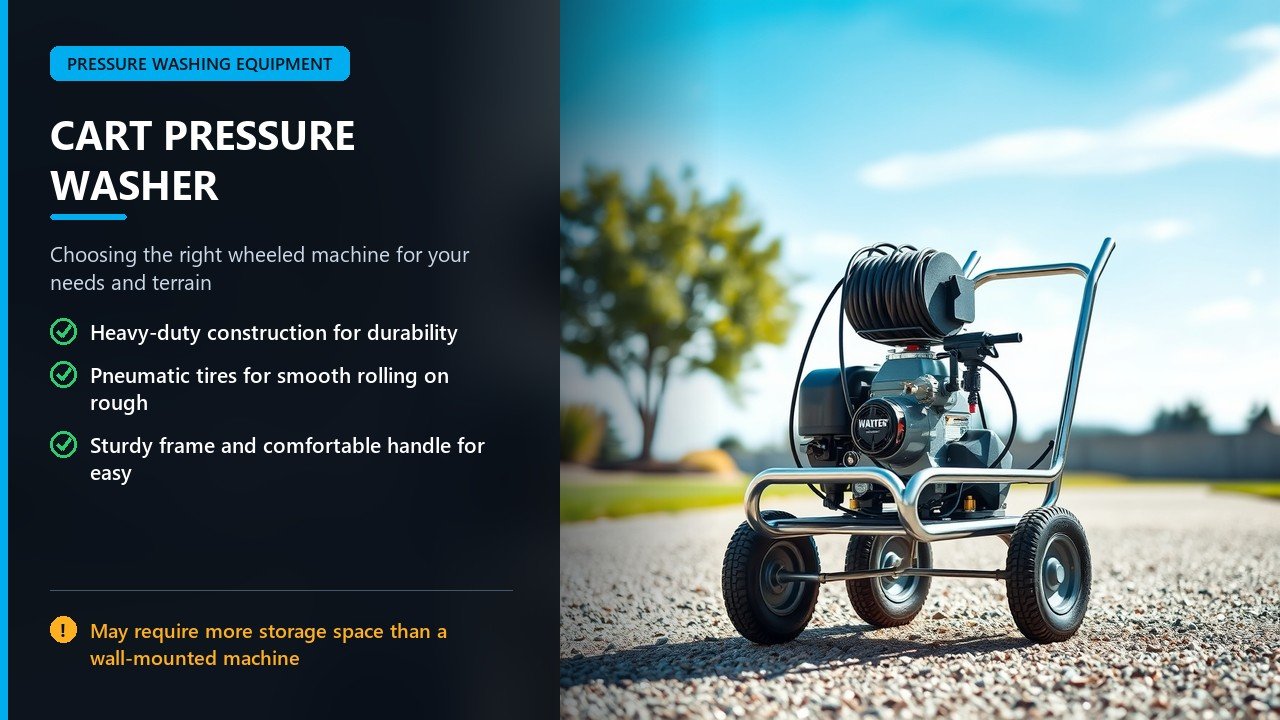
A cart pressure washer is a machine built onto a wheeled trolley so it can be moved easily around a property or to a job. It is the familiar shape of most home and professional pressure washers, with the machine on a frame, pneumatic or solid wheels, and a handle or grab bar to pull it along. The cart is what turns a heavy, awkward pump into something you can move without straining.
This guide explains what cart pressure washers are, what makes a good cart, and when a cart-mounted machine suits you better than a wall-mounted or portable one.
Why a Cart
A pressure washer is heavy. A gas engine or a powerful electric motor, a triplex pump, and a steel frame add up, and carrying such a machine between jobs would be exhausting. A cart gives it wheels and a handle, so you pull rather than lift, and move it easily across a yard, around a building, or from van to site.
The cart also keeps the machine together. Frame, engine, and pump travel as one unit, with the hose and often the wand stowed on board, so nothing is left behind and setup at the job is quick. For anyone using the washer in several places, a cart machine is the practical, portable package.
There is a stability benefit too. A well-designed cart keeps the machine low and balanced, which matters on slopes and uneven ground. Good wheels, a sturdy frame, and a comfortable handle make a heavy machine easier and safer to move, which is exactly what a cart is for.
What Makes a Good Cart
The wheels do much of the work. Pneumatic tyres roll smoothly over gravel, grass, and rough ground, while solid wheels suit smooth floors. Larger wheels clear obstacles more easily. On a gas cart machine, pneumatic or other large wheels are worth having, since the machine is likely to travel over real-world terrain.
The frame and handle matter too. A sturdy steel frame with welded joints holds the machine securely and survives years of use, and a solid handle or grab bar gives a good grip for pulling. A low centre of gravity keeps the machine steady, and a design that protects the engine, pump, and controls is a real advantage.
Finally, think about storage. A good cart stores the hose and often the wand on board, sometimes with a reel hook or basket, and keeps the machine well enough balanced that it does not tip. Details like these decide whether the cart works well daily or is just a frame with wheels.
Home and Commercial Carts
Cart machines divide broadly between home and commercial designs. A home cart is usually lighter, with solid or smaller wheels, and built for a modest electric or small gas machine. It is easy to store and simple, and it suits the occasional to regular home user who moves the washer around a yard.
A commercial cart is heavier and tougher. It typically runs a larger gas engine, has pneumatic wheels and a steel frame rated for hard daily use, and often carries extras such as a hose reel, detergent tank, and storage for tools. It is built to be rolled over sites and into vans, and to survive years of professional work.
For the buyer, this split matters for both capability and cost. A commercial cart costs more and is heavier to handle, but it is built for it. A home cart is cheaper and easier to store but will not stand up to constant heavy use. Match the cart’s duty to how hard the machine will work.
Cart vs Other Mounts
A cart machine suits work that moves. If you wash the driveway, the patio, the car, and the fence, a cart follows you around the property easily. For professional work, a cart travels from job to job in a van and is rolled out at each site. If your washing is spread out, the cart’s mobility is its great advantage.
A wall-mounted machine, by contrast, stays fixed in one spot, ideal for a dedicated wash point but immobile. A simple carry handle suits the lightest electric machines but not a heavy gas unit. The cart is the middle ground: full mobility with no carrying, which is why it is the standard shape for pressure washers.
Choose the cart if you move around or lack a fixed wash point. Choose wall mount for a permanent station, and a carry style only for a machine light enough to lift comfortably. Match the mount to how and where you work, and the machine feels right from the first use.
Choosing a Cart Machine
When buying a cart pressure washer, judge the machine as you would any pressure washer, then the cart as a separate matter. Check pressure and flow against your tasks, the pump type, and the power source. Then inspect the wheels, frame, and handle, since a good machine on a poor cart is still awkward to use.
Consider the cart’s details. Whether the handle folds or stows for storage, whether the hose has a reel or hook, and whether the machine sits level and stable on slopes all affect daily use. Small conveniences, like a spot to hang the gun and wand, keep the machine tidy and ready.
Also weigh the machine’s total weight and size. A heavy cart machine is powerful but harder to hoist into a vehicle; a lighter one is easier to handle but may be less powerful. Balance power against practicality for your situation, and if you travel with the machine, think about how it fits in transport and storage.
Inspect Before You Buy
When you look at a cart machine, test the cart itself as carefully as the pump. Roll it and feel how easily the wheels turn, lift a corner to judge its weight and balance, and check that the handle is comfortable and that nothing catches when you pull it. A machine that is awkward to move will annoy you every time you use it.
Check the fit of everything on board. The hose should sit securely, the gun and wand should have a proper resting place, and the machine should stay level and stable, with controls and vents accessible. If the cart blocks the air intake or makes the oil drain impossible to reach, servicing becomes a battle.
Look at the quality of the wheels themselves. Cheap plastic wheels crack, solid wheels go hard and lose grip, and pneumatic tyres need air, so check for a sensible tyre and a proper axle. These are the parts that take the daily wear, and a good set of wheels is the difference between a cart that rolls and one that drags.
Cart Maintenance
Look after the cart itself, not just the machine. Keep the tyres inflated on pneumatic wheels, check the wheel bearings or axles periodically, and keep the frame clean and free of rust. Wipe the handle and frame after use and store the machine under cover, and the cart stays easy to roll year after year.
Keep the wheels moving freely. Mud and grit build up on axles and can jam solid wheels, so hose the wheels down and check for debris. If a wheel sticks or a bearing grinds, address it early, since a cart that drags makes a heavy machine far worse to move than it needs to be.
The cart also carries the risk of scratches and knocks, which let rust start. A touch-up of paint on scuffed frames, keeping connectors tight, and storing the machine so the wheels are not standing in water all help. A well-kept cart keeps the whole machine easier to use.
Add-On Trolleys and Stands
Not every machine comes on a cart, but you can add one. Trolleys and wheeled stands are sold to carry a pressure washer that lacks a cart, mounting the machine on a rolling frame with wheels and a handle. This is a sensible upgrade for a good machine that is too heavy to carry or awkward to move.
When choosing an add-on trolley, match it to the machine’s weight and footprint, and check that the frame holds the machine securely without blocking vents, controls, or the water inlet. A trolley that fixes the machine solidly, with good wheels and a proper handle, turns a static machine into a mobile one.
A trolley also needs the same care as an integrated cart: keep the wheels rolling, the frame clean, and the fixings tight. With its own stand, a formerly awkward machine becomes as easy to move as a purpose-built cart unit, at a fraction of the cost.
The table below sums up the points about a cart pressure washer.
| Point | Detail |
|---|---|
| Main benefit | Moves a heavy machine without lifting |
| Wheels | Pneumatic suit rough ground; solid suit floors |
| Frame | Sturdy, low, well balanced |
| Storage | Onboard hose, handle that folds or stows |
| Care | Tyres, bearings, and frame all need attention |
Mind these and the cart stays easy to roll.
Frequently Asked Questions
What is a cart pressure washer? A pressure washer built onto a wheeled trolley with a handle, so the machine can be pulled easily around a property or between jobs instead of being carried.
Why choose a cart machine? For mobility. A pressure washer is heavy, and a cart lets you move it without lifting, keep it together with its hose, and set up quickly wherever you work.
What makes a good cart? Good wheels, a sturdy and stable frame, and a comfortable handle. Pneumatic wheels suit rough ground; a low, well-balanced design keeps it steady on slopes.
Cart or wall mounted? Cart if your work moves around or you have no fixed wash point. Wall mount for a permanent station that never needs to be rolled anywhere.
Can I add a cart to my existing machine? Yes. Trolleys and wheeled stands carry a machine that lacks a cart. Match the trolley to the machine’s weight and footprint and secure it properly.
Do wheels matter? Greatly. Pneumatic tyres roll easily over gravel and grass, while solid wheels suit smooth floors. Check for easy rolling and reliable wheels before choosing.
How do I maintain the cart? Keep tyres inflated, wheels free of mud and grit, fixings tight, and the frame clean and rust-free. A cart left in poor shape makes the whole machine harder to use.
Is a heavier cart machine better? Not necessarily. Heavier usually means more power, but also harder to move and transport. Balance the machine’s power with your ability to handle it.
Final Thoughts
A cart pressure washer is the standard shape for a reason: it turns a heavy, powerful machine into something you can move easily, keeping everything together and ready. For work that ranges around a property or a job site, the cart is what makes the machine practical to use at all.
Choose a cart machine for the quality of both its pump and its cart, weigh power against weight for your needs, and keep wheels, frame, and fixings in good order. If your machine lacks a cart, an add-on trolley brings the same benefit. For related reading, see our guides on a wall mounted electric pressure washer and a gas pressure washer at 4000 PSI.