Weed eaters, also called string trimmers, are the tools that finish the lawn work a mower cannot reach, cutting grass and weeds along fences, walls, trees, and flower beds, and the name Trimrite is one you may see on these tools. A Trimrite weed eater is a string trimmer, and understanding what these tools are, how they work, the types available, and how to use and maintain one helps you get good results and keep the tool running. This guide explains the Trimrite weed eater and string trimmers in general, their parts, use, and care, whether you own a Trimrite or are shopping for a trimmer.
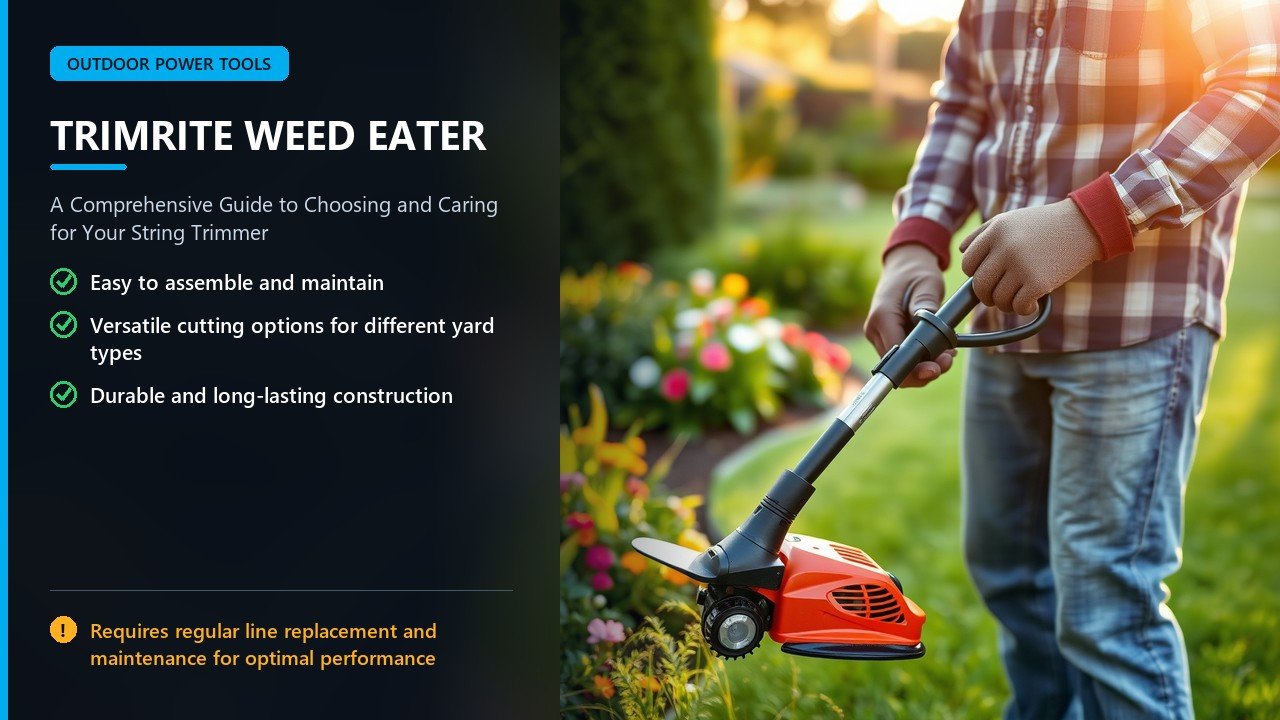
What a Weed Eater Is
A spinning line trims where mowers cannot.
A weed eater, also called a string trimmer, weed wacker, or line trimmer, is a handheld power tool that uses a rapidly spinning piece of nylon line to cut grass and weeds. The line extends from a rotating head at the end of a shaft, and as it spins, it slices through vegetation, allowing you to trim around obstacles, edges, and tight spaces that a lawn mower cannot reach. This makes the weed eater essential for finishing a lawn, defining edges, and clearing weeds.
Weed eaters are powered in several ways, including by a gas engine, a corded electric motor, or a rechargeable battery, and they come in various sizes for different tasks, from light trimming to heavy brush clearing. They share a basic design: a power source, a shaft with a handle, a rotating head that holds the line, and a guard to protect the user from debris. The spinning line is the cutting element, and it wears as it cuts, so it must be advanced or replaced, which is a routine part of using a weed eater.
Understanding what a weed eater is frames the Trimrite discussion. Because it is a string trimmer that cuts with spinning line and shares a common design across brands, knowing the tool’s nature helps you use and maintain any model, including a Trimrite. This makes the basics apply to all weed eaters. With this foundation, the types and details become clear. Our guide to pressure washer for windows is another outdoor cleaning tool for your property.
About the Trimrite Weed Eater
A name on string trimmers.
Trimrite is a name found on string trimmers and weed eaters, often on budget or older models, and like many such names, a Trimrite weed eater follows the standard string trimmer design and uses the same types of parts, line, and maintenance as other trimmers. Because the brand may be less common or discontinued, finding the exact model and parts can require checking the trimmer’s label and searching for the model number, and general string trimmer parts and knowledge often apply.
If you own a Trimrite weed eater, identifying its type, whether gas, corded electric, or battery, and its features, such as a curved or straight shaft and a bump or automatic line feed, helps you use and maintain it. Because the machine follows the standard design, the techniques and maintenance that apply to weed eaters in general apply to a Trimrite, from loading the line to cleaning the air filter or checking the motor. Knowing this makes caring for the tool manageable even if brand-specific documentation is scarce.
Understanding the Trimrite name in context helps. Because it is a string trimmer that follows the common design, treating it as such and using standard trimmer knowledge lets you operate and maintain it, even if the brand is lesser known. This makes the general string trimmer information valuable. With this approach, a Trimrite weed eater can be used and cared for effectively. Our guide to pressure washer components is another example of understanding a machine’s parts.
Types of Weed Eaters
Power source and design vary.
Weed eaters differ mainly by power source. Gas trimmers use a small two-stroke or four-stroke engine, offering high power and no cord or battery limit, making them suited to large yards and heavy weeds, but they need fuel, oil mixtures on two-stroke models, and more maintenance, and they produce exhaust and noise. Corded electric trimmers plug into an outlet, offering light weight and no fuel or emissions, but limited by the cord’s reach, suiting smaller yards near power.
Cordless battery trimmers run on a rechargeable battery, offering freedom from cords and fuel with quieter operation and easy starting, and they suit most home yards, with runtime depending on the battery. Within these types, trimmers vary in shaft design, with curved shafts typically for lighter home use and straight shafts for more power and reach, and in line feed systems, with bump feed, automatic feed, and manual options. The right type depends on your yard size, the vegetation, and your preference for power, convenience, and noise.
Type is the first choice in a weed eater. Because gas, corded electric, and cordless battery trimmers suit different yards and users, and because shaft design and feed systems vary, choosing the type that fits your needs ensures good results. This makes the power source and design key. With the right type, trimming is easier and more effective. Our guide to electric pressure washer covers the electric power theme for another tool.
| Type | Best For |
|---|---|
| Gas | Large yards, heavy weeds, no cord or battery limit |
| Corded electric | Smaller yards near power, light weight, no fuel |
| Cordless battery | Most home yards, quiet, no cord or fuel |
This table summarizes the three main types of weed eaters and what each suits, from gas trimmers for large yards and heavy cutting to corded electric for small yards near power and cordless battery for most home use. Matching the type to your yard and tasks guides the choice, and it applies to any brand, including a Trimrite. With the right type, the trimmer handles your trimming needs, and the other decisions, like shaft and line feed, refine the fit.
Parts of a Weed Eater
Knowing the parts aids use and repair.
A weed eater has several main parts. The power source, whether an engine or motor, drives the tool, and on gas models includes a fuel tank, air filter, spark plug, and, on two-stroke models, a fuel-oil mixture. The shaft connects the power source to the cutting head and includes the handle and controls, with a trigger and often a throttle lock. The trimmer head holds the line and spins, and the line is the cutting element, with the guard shielding the user from thrown debris.
Other parts include the clutch or drive on gas models, the spool and bump knob for the line, the gearbox at the head on straight-shaft trimmers, and the shield and handle adjustments. Knowing these parts helps you use the trimmer, replace worn items like line, spool, and filters, and troubleshoot problems. Because the parts are similar across brands, a Trimrite weed eater’s parts correspond to the standard design, so general parts knowledge and, where necessary, matched replacements keep it working.
Knowing the parts helps with any trimmer. Because the engine or motor, shaft, head, line, and guard make up a weed eater, and because these parts wear and need attention, understanding them lets you maintain and repair the tool. This makes the parts overview practical. With this knowledge, a Trimrite or any trimmer is easier to care for. Our guide to pressure washer repair kit covers another tool’s parts and repair.
Trimmer Line and Heads
Line and heads are routine.
The trimmer line is the cutting element, and it comes in various diameters, such as 0.065, 0.080, 0.095, and larger, with thicker line for heavier cutting on more powerful trimmers and thinner line for light trimming. The line’s material and shape, whether round, twisted, or square, affect cutting and durability, and matching the line diameter to the trimmer’s recommendations ensures good performance. The line wears and must be advanced as you trim and replaced when used up.
The trimmer head holds the line, and feed systems include bump feed, where you tap the head to advance line, automatic feed, and manual feed, where you stop and adjust the line. Replacing the head or spool and loading line are routine tasks, and different heads suit different needs, such as fixed-line heads for simplicity or heads that accept various line sizes. Because line and heads are consumables, keeping spares and knowing how to load and replace them keeps the trimmer cutting, whether it is a Trimrite or another brand.
Line and heads are routine maintenance. Because the line wears and the head holds it, and because matching the line to the trimmer and knowing how to load and replace it keeps the tool cutting, understanding line and heads is essential. This makes them a frequent point of attention. With the right line and a maintained head, trimming goes smoothly. Our guide to nozzle washer covers another tool’s replaceable parts.
Using a Weed Eater Safely
Technique and safety matter.
Using a weed eater safely begins with protection: wear eye protection, long pants, sturdy shoes, and hearing protection for gas models, since the line throws debris and the engine is loud. Hold the trimmer so the head is parallel to the ground for trimming, angle it for edging along driveways and beds, and keep the line away from your feet and body. Let the line do the cutting at the tip, avoiding forcing the head into thick vegetation, which strains the engine or motor.
Before trimming, clear the area of rocks, wire, and debris that the line could throw, and be careful around fences, walls, and tree trunks, where the line can wear quickly, and around objects that can damage the head. Keep the trimmer’s guard in place, and follow the manual’s safety instructions. With proper technique and protection, a weed eater trims effectively and safely, cutting grass and weeds cleanly while avoiding injury and damage to the tool or your property.
Safe use protects you and the tool. Because eye and body protection, correct technique, and clearing debris prevent injury and damage, using a weed eater safely is essential, whether it is a Trimrite or any brand. This makes safety part of the routine. With care, trimming is effective and safe. Our guide to is pressure washing a car safe covers safety for another outdoor tool.
Maintaining a Weed Eater
Care keeps it cutting.
Maintenance keeps a weed eater running. On gas models, check and change the engine oil on four-stroke units or mix fuel and oil correctly on two-stroke units, clean or replace the air filter, and check the spark plug, along with keeping the fuel fresh. On all trimmers, keep the cooling vents and head clean, replace worn line and spools, and check the guard, handle, and shaft for damage. Keeping the head and line in good condition ensures efficient cutting.
For electric and battery trimmers, keep the motor vents clean, check the cord on corded models for damage, and care for the battery on cordless models by following the charging guidance. Inspect the trimmer regularly for loose parts and wear, and store it clean and dry, protecting it from the elements. Following the manufacturer’s maintenance schedule and keeping records, and addressing problems promptly, extend the trimmer’s life and keep it cutting well, whether it is a Trimrite or another model.
Maintenance extends the trimmer’s life. Because gas and electric trimmers each need specific care, and because clean, well-maintained parts cut better, following a maintenance routine keeps the tool working. This makes maintenance part of owning a weed eater. With proper care, a Trimrite weed eater or any trimmer serves you for years. Our guide to changing oil in pressure washer pump covers a similar maintenance task for another machine.
Troubleshooting a Weed Eater
Common issues have causes.
Weed eaters develop common problems. If a gas trimmer will not start, check the fuel, spark plug, air filter, and primer, and ensure the fuel is fresh and correctly mixed on two-stroke models. If it stalls or lacks power, the air filter, spark plug, or carburetor may need attention, and old fuel is a frequent culprit. If the line does not advance, the spool may be wound incorrectly, the line may be tangled or the wrong size, or the bump mechanism may be worn, so check and reload the line and inspect the head.
If the line breaks constantly, it may be the wrong diameter or type for the trimmer, or it may be hitting hard objects, so match the line to the recommendations and avoid forcing it. For electric and battery trimmers, a lack of power may be a cord issue, a battery charge or connection problem, or a motor issue. Addressing these common problems by checking the likely causes resolves most issues, and the standard design means the fixes apply to a Trimrite or any trimmer.
Troubleshooting is usually straightforward. Because starting, power, and line problems trace to common causes like fuel, filters, plugs, spools, and line, checking these resolves most issues, whether on a Trimrite or another trimmer. This makes basic troubleshooting within reach. With a little inspection, most weed eater problems are fixed. Our guide to pump for power washer covers diagnosing another machine’s issues.
Buying a Weed Eater
Match it to your yard.
When buying a weed eater, match the type to your yard and needs. For a small yard near power, a corded electric trimmer is light and inexpensive, while a cordless battery trimmer suits most home yards with freedom from cords, and a gas trimmer fits large yards and heavy weeds with power and no cord limit. Consider the shaft type, the cutting width, the line feed system, the weight, and the features you want, and think about whether the trimmer should accept attachments for edging or other tasks.
Consider the brand’s support and parts availability, especially for a lesser-known name like Trimrite, since parts and service matter for long-term use. Read reviews, compare specifications, and choose a trimmer that fits your yard size, vegetation, and budget, and that you can handle comfortably, since a lighter or better-balanced trimmer is easier to use. Matching the trimmer to your needs and ensuring parts availability gives you a tool that cuts well and lasts, whether you choose a Trimrite or another brand.
Buying well means matching the tool to your needs. Because the type, features, weight, and parts support matter, and because a trimmer that fits your yard and budget serves you best, choosing carefully yields a good tool. This makes the buying decision important, especially for lesser-known brands where support may be limited. With the right trimmer, lawn care is easier. Our guide to pressure washer components helps you think about a machine’s parts and support.
Edging and Finishing the Lawn
The weed eater finishes what the mower starts.
Beyond trimming, a weed eater edges and finishes the lawn. Edging uses the trimmer to cut a clean line along driveways, sidewalks, and beds, defining the lawn’s shape and giving a manicured look, and it is done by turning the head vertical and running it along the edge. Trimming around trees, fences, posts, and walls keeps the lawn neat and prevents grass and weeds from overtaking these features, which the mower cannot reach.
Finishing also includes clearing weeds from cracks and crevices and around foundations, and cutting tall grass and overgrowth that the mower leaves. Because the weed eater reaches where the mower cannot, using it for edging and finishing completes the lawn work and gives a tidy result. Technique, such as a steady motion and letting the line cut, improves the finish, and a maintained trimmer with sharp line cuts cleanly, whether the tool is a Trimrite or another brand.
Edging and finishing are where the weed eater shines. Because the trimmer defines edges and reaches around obstacles, using it well completes the lawn and improves its appearance. This makes the trimmer more than a weed cutter. With the right technique, a weed eater gives clean edges and a finished look. Our guide to pressure washer honda gx390 covers another outdoor machine for a finished property.
Frequently Asked Questions About the Trimrite Weed Eater
What is a Trimrite weed eater? Trimrite is a name found on string trimmers (weed eaters), often on budget or older models. A Trimrite weed eater is a string trimmer that cuts grass and weeds with a spinning line and follows the standard trimmer design.
What kind of trimmer line does a Trimrite weed eater use? Match the line diameter to the trimmer’s recommendation, such as 0.065 to 0.095 inch depending on the model. Check the manual or the trimmer’s label, and use the correct size for good cutting.
Where can I find parts for a Trimrite weed eater? Identify the model from the trimmer’s label, then search for the model number. Because the design is standard, general trimmer parts like line, spools, filters, and spark plugs often work, and you can look online or at outdoor power equipment retailers.
How do I maintain a weed eater? For gas trimmers, change the oil or mix fuel correctly, clean the air filter, and check the spark plug; for all trimmers, keep the head and vents clean, replace worn line, inspect for damage, and store it dry, following the manual.
Why won’t my weed eater start? Common causes are old or incorrectly mixed fuel, a fouled spark plug, a dirty air filter, or a primer issue on gas models. For electric or battery models, check the cord, battery charge, and connections.
Is a gas or electric weed eater better? It depends on your yard: gas suits large yards and heavy weeds, corded electric suits small yards near power, and cordless battery suits most home yards with quiet, easy operation. Choose based on your needs.
Final Verdict on the Trimrite Weed Eater
A Trimrite weed eater is a string trimmer that follows the standard design, using a spinning line to cut grass and weeds, and it works like other weed eaters whether it is gas, corded electric, or cordless battery. Knowing the type and parts, using the right line, and following safe technique and maintenance keeps it cutting well.
If the brand is lesser known, the general string trimmer knowledge still applies, so you can use, maintain, and troubleshoot a Trimrite using standard parts and practices, matching line and spares to the model. For any weed eater, choosing the type that fits your yard and keeping it maintained ensures efficient trimming. Whether you own a Trimrite or are shopping for a trimmer, this guide helps you get clean edges and a tidy lawn.