Cold water pressure washers make up the great majority of machines sold, from inexpensive home units to powerful professional models, and the phrase covers a wide range of tools that share one thing: they clean with unheated water. Because they are so common, choosing between them is less about the label and more about the power source, the size, and the features that suit your work.
This guide looks at cold water pressure washers as a buying decision, comparing electric and petrol machines and explaining how to pick one that fits.
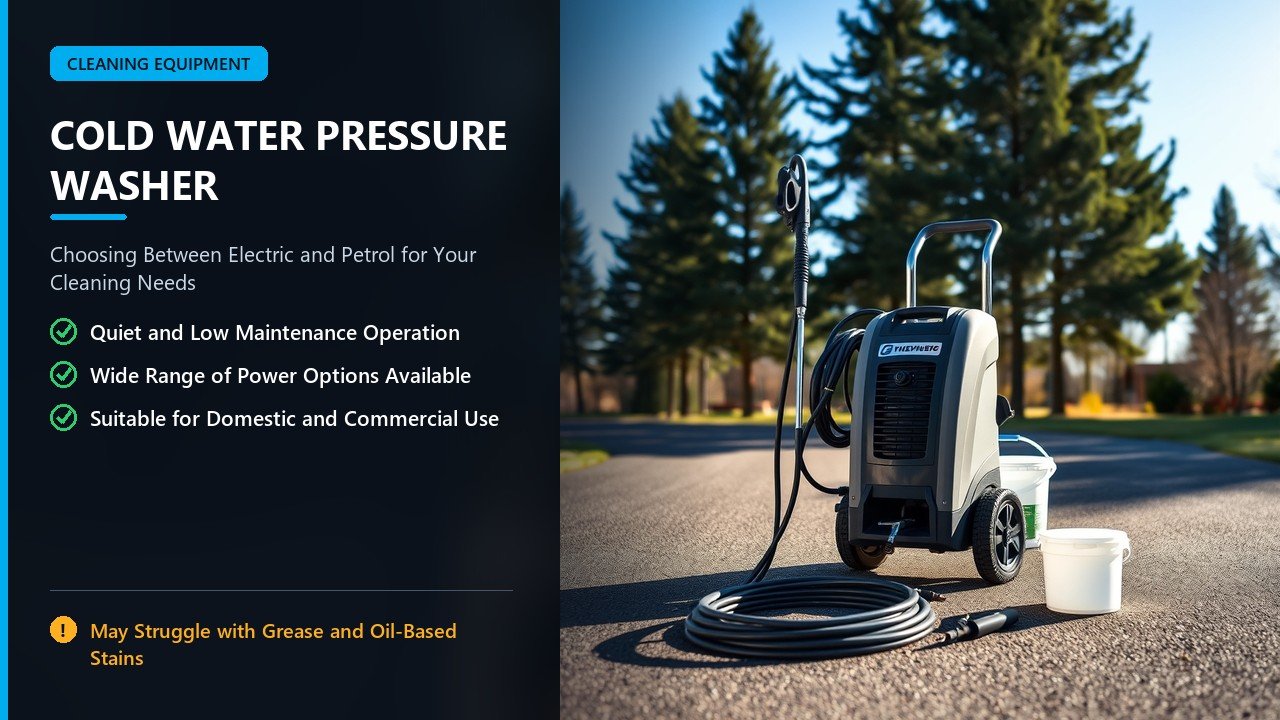
Why Cold Water Dominates
Cold water pressure washers are popular because they are simple and effective. Without a heater or burner, they have fewer parts, cost less to buy and run, and need less maintenance. They deliver pressure and flow, which handle the bulk of cleaning, and they can apply detergent through a soap system to deal with the rest.
Their one real limit is grease and oil, which respond best to heat. But most domestic and outdoor cleaning involves dirt, mud, mildew, algae, and grime rather than grease, so a cold water machine meets the need. That is why they are the default for homes, gardens, and many light commercial tasks.
The variety within cold water machines is still large. They range from small electric units for occasional use to powerful petrol machines for daily professional work, and the differences in power, portability, and build are what should guide your choice.
Electric and Petrol Families
The first fork in the road is the power source. Electric cold water pressure washers are quiet, light, clean to run, and simple, and they suit home use where a power point is available. They range from compact models to large three-phase professional machines, but most home users choose the smaller, single-phase types.
Petrol cold water pressure washers are more powerful and fully portable, free from cables and sockets. They suit remote locations, larger jobs, and professional use, and they are the only practical way to get the highest pressure and flow in a portable package. In return, they are noisier, need fuel and engine care, and must run outdoors.
Between the two, the deciding questions are power and mobility. If you work near a socket and your jobs are modest, an electric machine is simpler and cheaper. If you need maximum power, work away from power, or clean professionally, a petrol machine earns its place.
Where Cold Water Works Best
Cold water pressure washers shine on the everyday cleaning that fills most jobs. They strip mud and soil from paths and driveways, wash cars and bicycles, clean garden furniture and bins, and remove mildew and algae from walls, fences, and decking. For all of these, the combination of pressure, flow, and detergent does the work.
They also suit surfaces that heat would harm. Cold water will not soften or damage heat-sensitive materials, and there is no risk of scalding or of hot water harming plants. For general residential and outdoor cleaning, that makes cold water the safe, simple default.
Where they fall short is on grease and oil, which a hot water machine handles better. If your work is mostly dirt and grime, a cold water machine is ideal; if you regularly face heavy grease, a hot water or combined machine may serve you better.
Choosing by Power Source
Electric machines come in two main motor types. Induction motors are quiet and long-lasting but heavier and pricier, while brushed motors are lighter and cheaper but their brushes wear. For a machine used regularly, an induction motor is worth the extra; for occasional light use, a brushed motor is fine and keeps the cost down.
Petrol machines are built around an engine and a pump. Look for a reliable engine brand, such as Honda or a known small-engine maker, and a triplex pump with a brass or aluminium head. A belt-drive arrangement runs cooler and is easier to service than direct drive, and is common on the more powerful petrol models.
Beyond the power source, consider how the machine is built. Pneumatic wheels and a strong frame help move a heavy petrol unit, while a lightweight electric machine is easy to carry and store. Match the build to how and where you will use the machine, since a heavy unit that is hard to move becomes a burden.
Pressure and Flow
The two figures that matter most are pressure, in PSI or bar, and flow, in gallons or litres per minute. Flow does much of the cleaning, since more water carries dirt away faster, so a machine with a good flow cleans more quickly than one with a high pressure figure and a trickle of water. Balance the two rather than chasing maximum pressure.
Match the numbers to your tasks. Cleaning a car or garden furniture needs modest pressure and a good flow; cleaning concrete, patios, and stone benefits from more pressure; and stripping paint or cleaning machinery calls for the highest pressure and flow, which usually means petrol. Buying far more machine than your tasks require wastes money and risks surface damage.
Remember that high pressure is not always desirable. Too much pressure can etch concrete, strip paint, and gouge wood, so the ability to work at lower pressures, with the right nozzle, is as useful as the top-end power. A machine in the right range, used with care, cleans better than an overpowered one used badly.
Portability and Setup
Think about how the machine will move and be stored. A light electric unit is easy to carry and tuck away, needing only a socket and a water supply. A heavy petrol machine needs wheels, a strong frame, and space, and it must run outdoors away from windows and vents. Match the machine’s size to your storage and transport.
Consider the setup each use requires. An electric machine with a hose reel and quick-connects is quick to deploy; a petrol machine adds fuel, oil checks, and starting. If you use the machine often, convenience features that cut setup time are worth more than they seem, and they encourage you to clean more regularly.
Finally, plan the water and power. The machine needs enough flow from the supply and, for electric models, a suitable socket without long extension leads. Getting these right before you buy avoids the two most common disappointments: a machine starved of water or one that trips the supply.
Features Worth Having
Some features make a cold water machine more useful. A soap system, whether an onboard tank or a downstream injector, lets you apply detergent for greasy or clinging dirt, which improves results a great deal. Quick-connect fittings speed up nozzle and accessory changes, and a decent hose length lets you reach further from the machine.
A pressure regulator or the ability to fit different nozzles matters too, since it lets you dial the cleaning force to the surface. A total-stop system on electric machines starts and stops the machine with the trigger, saving power and reducing wear. An inlet filter protects the pump, and a built-in hose reel or the option to add one keeps the workshop tidy.
Build quality is itself a feature. A triplex pump, serviceable seals, and standard, replaceable parts mean the machine can be maintained rather than discarded, and it will outlast a cheaper, sealed unit. For a machine you intend to keep, this matters more than a low headline price.
Care and Common Mistakes
Maintenance on a cold water machine is straightforward but not optional. Check and change the pump oil where applicable, keep the inlet filtered, clean or replace the nozzle, and protect the machine from frost. Flush the soap system after use, and keep the cooling vents and engine (on petrol models) serviced.
A common mistake is starving the machine of water. If the supply cannot keep up with the machine’s flow, the pump cavitates, loses pressure, and can be damaged. Check your supply delivers at least the required flow before buying, and never run a machine without a proper water feed.
The table below sums up the main choices between cold water pressure washers.
| Consider | Detail |
|---|---|
| Power source | Electric for homes, petrol for power and mobility |
| Motor | Induction is quiet and durable; brushed is cheaper |
| Pressure and flow | Balance the two; flow cleans fast |
| Pump | Triplex with a brass or aluminium head |
| Water supply | Must meet the machine’s flow, or the pump suffers |
Weigh these and the machine fits your work.
One final point: buy from a range with available spares and accessories, since a cold water machine is a long-term tool and you will want nozzles, hoses, seals, and detergent to fit it. A common, well-supported machine stays useful far longer than an orphan with no parts support.
Frequently Asked Questions
What is a cold water pressure washer? A pressure washer that cleans with water at ambient temperature, using pressure, flow, and detergent rather than heat. It is the most common type of pressure washer.
Electric or petrol? Electric is quiet, light, and simple, ideal for home use near a socket. Petrol is more powerful and portable, suited to professional and remote work. Choose by power and mobility needs.
Is cold water enough for most jobs? Yes. It handles dirt, mud, mildew, and general grime well. Only grease and oil really benefit from hot water, so cold water is fine unless you face those often.
How much pressure do I need? Match it to your surfaces. Cars and furniture need less; concrete and stone need more; stripping and machinery need the most. Flow matters as much as pressure.
Which pump is best? A triplex pump with a brass or aluminium head lasts longer than a cheap axial-cam pump. For regular use, it is worth choosing a triplex machine.
Do I need a large water supply? Yes, the supply must deliver at least the machine’s flow. If it cannot keep up, the pump cavitates and can be damaged, so check before buying.
What features help most? A soap system, quick-connect fittings, adjustable pressure or nozzles, a total-stop system, an inlet filter, and a durable, serviceable pump.
How do I maintain one? Check and change pump oil where applicable, keep the inlet filtered, clean the nozzle, service the engine on petrol models, flush the soap system, and protect against frost.
Final Thoughts
Cold water pressure washers cover everything from a simple home machine to a powerful professional unit, and the right one depends on your power source, your tasks, and your water supply. Because they clean without heat, they are simple and economical, and they handle most work well.
Choose electric for quiet, low-cost home use and petrol for power and mobility, balance pressure with flow, insist on a durable triplex pump, and confirm your supply can feed the machine. With those settled, a cold water pressure washer serves reliably for years. For related reading, see our guides on a cold water pressure washer and on petrol pressure washers.