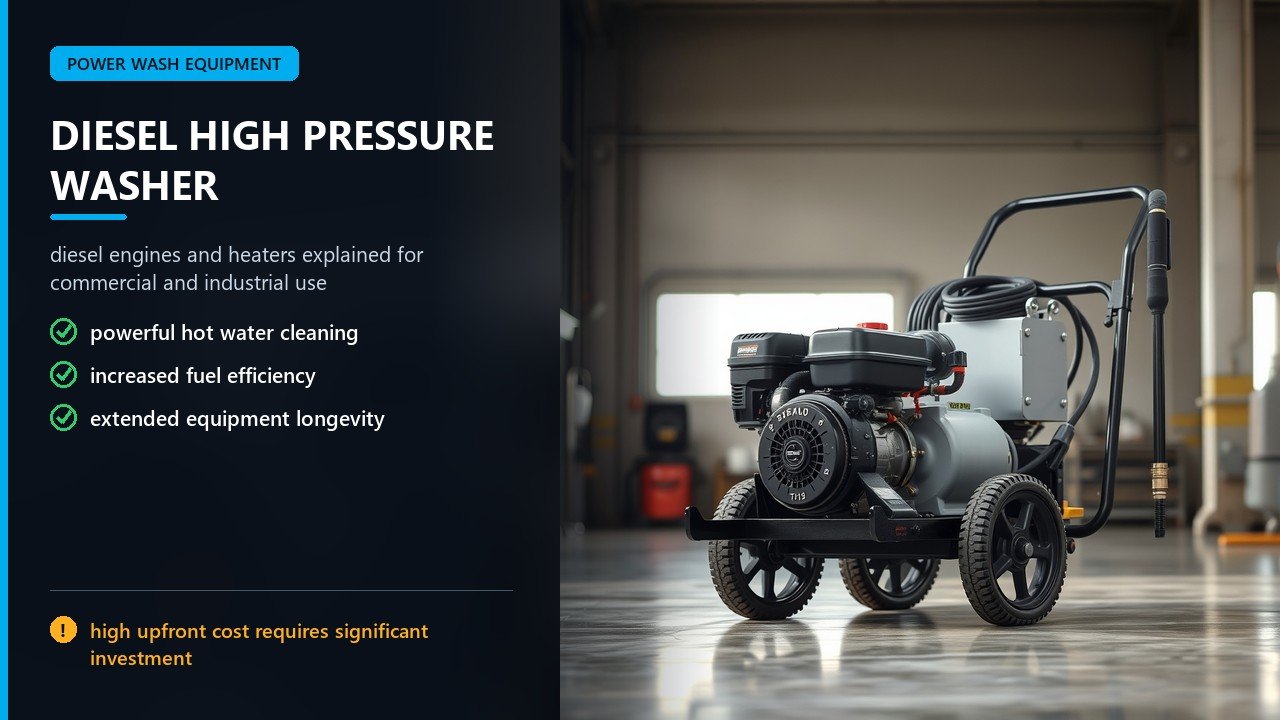
Diesel and pressure washing come together in a few ways, and the term diesel high pressure washer can refer to more than one kind of machine. It may mean a pressure washer powered by a diesel engine instead of gasoline, or, more commonly, a hot water pressure washer that uses a diesel-fired burner to heat the water, or a machine that combines both. Understanding these types clarifies what a diesel pressure washer is and whether it suits your needs. This guide explains the diesel high pressure washer, its types, benefits, applications, and what to consider.
What a Diesel Pressure Washer Is
Two meanings, often combined.
A diesel high pressure washer most often refers to a machine whose water is heated by a diesel-fired burner, producing hot water for cleaning. These are hot water pressure washers, and the diesel burner heats the water to high temperatures, which cleans grease, oil, and grime more effectively than cold water. Alternatively, diesel pressure washer can refer to a pressure washer powered by a diesel engine rather than a gasoline engine, and some machines use both a diesel engine and a diesel burner, delivering power and hot water.
In commercial and industrial settings, the diesel-heated hot water machine is common, since hot water is valuable for cleaning tasks like degreasing and sanitizing, and diesel fuel is an efficient way to heat it. Diesel engine powered machines are also used, especially in heavy-duty or remote applications where diesel’s fuel efficiency and durability are advantages. So the term can mean diesel-heated, diesel-powered, or both, and knowing which type you are considering helps you evaluate it.
Understanding the types is the starting point. Because diesel can power the engine, heat the water, or both, and because the diesel-heated hot water type is most common, knowing the distinction lets you choose the right machine for your needs. This makes the term’s meanings worth clarifying. With this understanding, the benefits and applications of each type become clear. Our guide to pressure washer components explains the parts of these machines.
Diesel Engine Versus Gas Engine
Diesel offers torque and efficiency.
A pressure washer with a diesel engine offers advantages over a gasoline engine. Diesel engines produce high torque at low speed, which suits driving a pump steadily, and they are generally more fuel-efficient than gasoline engines, meaning less fuel for the same work. Diesel engines are also known for longevity and durability, often lasting longer than comparable gasoline engines, which is valuable in commercial and industrial use where machines run hard. These traits make diesel a good choice for heavy-duty pressure washers.
Diesel engines are heavier and often more expensive than gasoline engines, and they can be louder and produce more exhaust emissions, but their efficiency and durability can offset these drawbacks in demanding applications. For a machine that runs regularly and long hours, a diesel engine may cost less to operate over time. So diesel-powered pressure washers suit commercial, industrial, and remote applications where fuel efficiency, torque, and durability matter more than the lower initial cost of a gasoline engine.
Diesel engines bring specific strengths. Because they deliver torque, fuel efficiency, and durability, diesel-powered pressure washers suit heavy and frequent use, and they can be more economical over time despite a higher cost. This makes them a strong option for commercial and industrial cleaning. With a diesel engine, the machine handles demanding work reliably. Our guide to pressure washer kohler covers another engine option for comparison.
Diesel-Heated Hot Water
Hot water cleans far better.
The most common sense of a diesel pressure washer is a machine that heats its water with a diesel-fired burner, producing hot water at high pressure. Hot water is significantly more effective than cold water for cleaning, since heat helps dissolve grease, oil, and grime and makes soaps work better, so hot water machines clean faster and more thoroughly. This is why diesel-heated hot water pressure washers are valued for tasks like degreasing engines, cleaning commercial kitchens, and sanitizing surfaces.
The diesel burner heats the water as it flows through a coil, and diesel fuel is an efficient and cost-effective way to generate that heat, especially compared with electric heating for large volumes of water. These machines combine a high-pressure pump, often driven by a gasoline, diesel, or electric power source, with a diesel burner, and they require a diesel fuel supply, ventilation for exhaust, and more maintenance than cold water machines. The result is powerful hot water cleaning suited to demanding applications.
Diesel-heated hot water is a major advantage. Because hot water cleans grease and grime far better than cold water, and because diesel is an efficient way to heat it, diesel-heated pressure washers excel at degreasing and sanitizing. This makes them valuable for commercial and industrial work. With hot water, cleaning is faster and more effective, and fewer chemicals may be needed. Our guide to pressure washing detergent covers the soaps that work with hot water.
Benefits of a Diesel Pressure Washer
The type of machine shapes the benefits.
The benefits of a diesel pressure washer depend on the type. For a diesel engine machine, the benefits include torque, fuel efficiency, durability, and lower operating cost over time, making it ideal for heavy, frequent use. For a diesel-heated hot water machine, the benefits include superior cleaning from hot water, efficient heating with diesel fuel, and effectiveness on grease, oil, and grime, making it ideal for degreasing and sanitizing tasks that cold water struggles with.
If a machine combines a diesel engine and a diesel burner, it offers both sets of benefits: reliable, efficient power and hot water cleaning, a powerful combination for commercial and industrial applications. These machines are more expensive and complex than basic cold water machines, with higher maintenance and fuel considerations, but their performance justifies the cost in demanding settings. So the benefits, whether efficiency, durability, or hot water cleaning, make diesel machines worthwhile where the work demands more than a basic washer can provide.
The benefits justify the choice for demanding work. Because diesel engines provide efficiency and durability, and because diesel-heated hot water cleans grease and grime far better than cold water, a diesel pressure washer suits commercial and industrial cleaning. This makes them powerful tools for the right applications. With these benefits, diesel machines handle work that basic washers cannot. Our guide to 5 gpm pressure washer covers high-flow machines that often pair with such power.
| Type | Main Benefit | Typical Use |
|---|---|---|
| Diesel engine | Torque, fuel efficiency, durability | Heavy-duty, remote, frequent use |
| Diesel-heated hot water | Hot water cleans grease and grime | Degreasing, sanitizing, commercial kitchens |
| Combined diesel engine and burner | Efficient power plus hot water | Industrial and commercial cleaning |
This table distinguishes the types of diesel pressure washers and their main benefits and uses, from diesel engine machines to diesel-heated hot water units and combined machines. Recognizing which type suits your needs, based on whether you need efficiency and durability, hot water cleaning, or both, guides your choice. Each type serves different applications, and understanding them ensures the machine matches the work. With the right type, a diesel pressure washer delivers its benefits where they matter most.
Applications
Where these machines are used.
Diesel-heated hot water pressure washers are used in commercial kitchens, where hot water cuts through grease on hoods, floors, and equipment, and in food processing and manufacturing for sanitation. Auto shops and fleet facilities use them to degrease engines and equipment, and industrial settings use hot water for heavy cleaning. Anywhere grease, oil, or stubborn grime is present, hot water has an advantage, making diesel-heated machines valuable.
Diesel engine powered pressure washers suit heavy-duty, frequent, or remote applications, such as construction sites, agriculture, and industrial cleaning, where fuel efficiency and durability matter and gasoline may be less practical. Combined diesel machines serve the most demanding industrial and commercial cleaning. These applications share a need for more power, efficiency, or hot water than a basic cold water machine provides, which is exactly what diesel machines deliver.
Applications show where diesel machines excel. Because hot water is valuable for grease and sanitation, and because diesel engines suit heavy and remote use, diesel pressure washers serve commercial kitchens, food plants, auto shops, and industrial settings. This makes them specialized tools for demanding work. With the right application, a diesel machine proves its worth. Our guide to commercial electric pressure washer wall mount covers another commercial option.
Considerations and Maintenance
These machines need more care.
Diesel pressure washers are more complex than basic cold water machines, so they need more attention. A diesel burner requires a fuel supply, a filter, and periodic cleaning and adjustment, and the exhaust must be vented safely, especially indoors. A diesel engine needs fuel, oil, air filter, and other service, similar to a gas engine but with diesel specifics. Hot water machines also have a heating coil that can accumulate soot or scale and needs maintenance, along with the usual pump service, seals, and filters.
The higher cost of these machines, along with fuel, maintenance, and ventilation needs, should be weighed against the performance benefits, since they make sense where the cleaning demands hot water, heavy-duty power, or efficiency. Protecting the machine from freezing, using the correct fuel and oil, and following the maintenance schedule keep it running. For commercial and industrial use, the maintenance pays off in reliability and cleaning results, while for lighter needs, a simpler machine is likely sufficient.
Considerations and maintenance shape ownership. Because diesel machines need fuel, ventilation, and more service, and because the benefits justify this care in demanding settings, understanding the requirements helps you decide if a diesel machine is right. This makes maintenance and operating considerations part of the choice. With proper care, a diesel pressure washer runs reliably and delivers its advantages. Our guide to pressure washer o ring kit covers parts that keep these machines sealed.
Diesel Versus Other Options
How diesel compares to alternatives.
When considering a diesel pressure washer, it helps to compare it with alternatives. For the power source, an electric motor is simpler and quieter with no exhaust, which suits indoor and light use, a gasoline engine is lighter and cheaper to buy, and a diesel engine offers more torque, efficiency, and durability for heavy work. For heating, a diesel burner is efficient and cost-effective for hot water, while electric heating is simpler but costly for large volumes and often limited, and propane is another option with its own trade-offs.
The right choice depends on the application. For occasional home cleaning, an electric or gasoline cold water machine is sufficient and economical. For commercial cleaning that needs hot water, a diesel or propane heated machine makes sense, with diesel offering efficiency for high-volume heating. For heavy-duty or remote work, a gasoline or diesel engine fits, with diesel favored where efficiency and durability matter most. Weighing the fuel, heating method, application, and cost guides the decision.
Comparing options clarifies the fit. Because electric, gasoline, and diesel power and various heating methods suit different needs, and because diesel excels at efficient heavy-work power and hot water heating, knowing the alternatives helps you choose. This makes the comparison part of the decision. With this perspective, you can judge whether a diesel machine or another option is best. Our guide to pressure washer honda gx390 covers a popular gasoline engine for comparison.
Choosing a Diesel Pressure Washer
Match the machine to the work.
If you decide on a diesel pressure washer, choose the type that matches your needs. If you need hot water for degreasing and sanitizing, a diesel-heated hot water machine is the choice, while if you need heavy-duty power for frequent or remote work, a diesel engine machine fits, and if you need both, a combined machine delivers. Consider the pressure and flow your tasks require, since these, along with hot water, determine cleaning performance, and match them to the machine.
Evaluate the machine’s quality, including the pump type, the burner and engine quality, and the build, and consider the fuel supply, ventilation, maintenance, and operating costs, since diesel machines have ongoing requirements. Check the availability of parts, service, and support for the brand, and the machine’s durability for your usage. Comparing models on these factors, and matching the type, pressure, flow, and features to your tasks, ensures you get a machine that performs and lasts in your application.
Choosing well means matching the machine to your work. Because the type, pressure, flow, quality, and operating requirements must fit your tasks and setting, a careful choice yields a diesel machine that delivers its benefits. This makes the selection the key to satisfaction. With the right machine, diesel pressure washing is powerful and efficient. Our guide to pressure washer components helps you evaluate the machine’s parts.
Safety and Operation
Diesel machines need safe handling.
Operating a diesel pressure washer safely involves attention to several hazards. Hot water can scald, so keep the spray away from people and handle the hot water and hot machine parts with care. Diesel fuel is flammable and must be stored and handled safely, away from ignition sources, and the burner and engine produce exhaust that must be vented, especially indoors, to avoid carbon monoxide buildup. Following the manufacturer’s safety instructions and using protective gear is essential, as it is with any pressure washer.
Beyond fuel and heat, these machines combine high pressure, electricity or engine power, and hot water, each with its own risks, so training and care matter, especially in commercial settings where the machines are used regularly. Proper ventilation, safe fuel handling, protective gear, and attention to the high-pressure spray and hot surfaces prevent accidents. Operating within the machine’s limits, maintaining it properly, and following safety practices keep diesel pressure washing safe and effective.
Safety and operation are part of ownership. Because hot water, diesel fuel, exhaust, and high pressure each pose hazards, and because safe handling and ventilation prevent accidents, operating a diesel machine requires care. This makes safety an essential consideration, particularly indoors. With proper operation, a diesel pressure washer delivers its benefits safely. Our guide to pressure washer color code helps you use the right nozzle for each task.
Frequently Asked Questions About Diesel High Pressure Washers
What is a diesel pressure washer? It can mean a pressure washer with a diesel engine, or a hot water washer with a diesel-fired burner that heats the water, or a machine with both. The diesel-heated hot water type is most common.
What are the benefits of a diesel engine pressure washer? Diesel engines offer high torque, fuel efficiency, and durability, which suit heavy-duty, frequent, and remote use, often costing less to operate over time than gasoline engines.
Why use a diesel-heated hot water pressure washer? Hot water cleans grease, oil, and grime far better than cold water and helps soaps work, making these machines effective for degreasing and sanitizing in commercial and industrial settings.
Where are diesel pressure washers used? In commercial kitchens, food processing, auto shops, fleet facilities, and industrial settings for degreasing and sanitation, and in heavy-duty or remote work where a diesel engine’s efficiency and durability matter.
What maintenance does a diesel pressure washer need? Diesel burner and fuel filter service, exhaust ventilation, engine service, heating coil cleaning, and the usual pump, seal, and filter maintenance, along with freeze protection.
Is a diesel pressure washer worth it? For commercial and industrial cleaning that needs hot water or heavy-duty power, yes. For lighter residential cleaning, a simpler cold water machine is usually sufficient and more economical.
Final Verdict on Diesel High Pressure Washers
A diesel high pressure washer can be a machine with a diesel engine, a hot water washer with a diesel-fired burner, or both. Diesel engines offer torque, fuel efficiency, and durability for heavy-duty work, while diesel-heated hot water cleans grease and grime far better than cold water, and combined machines deliver both.
These machines suit commercial and industrial cleaning like kitchens, food plants, auto shops, and heavy or remote work, where the performance justifies their higher cost and maintenance. Choose the type that matches your needs, whether efficiency, hot water cleaning, or both, and maintain it carefully with proper fuel, ventilation, and service. With the right type and care, a diesel pressure washer is a powerful tool for demanding cleaning tasks.