When it comes to removing grease, oil, and stubborn grime, cold water alone doesn’t always cut it. An electric hot water pressure washer combines the cleaning power of heated water with the convenience of electric operation. The heat breaks down tough residues faster, reduces the need for harsh chemicals, and leaves surfaces cleaner in less time.
An electric hot water pressure washer heats water before it reaches the pump and nozzle, typically using a diesel, kerosene, or electric heating element depending on the model. These units are ideal for garages, workshops, food service, farms, and other settings where grease, oil, or sticky buildup is common. This guide explains how they work, benefits, key features, and what to consider before buying.
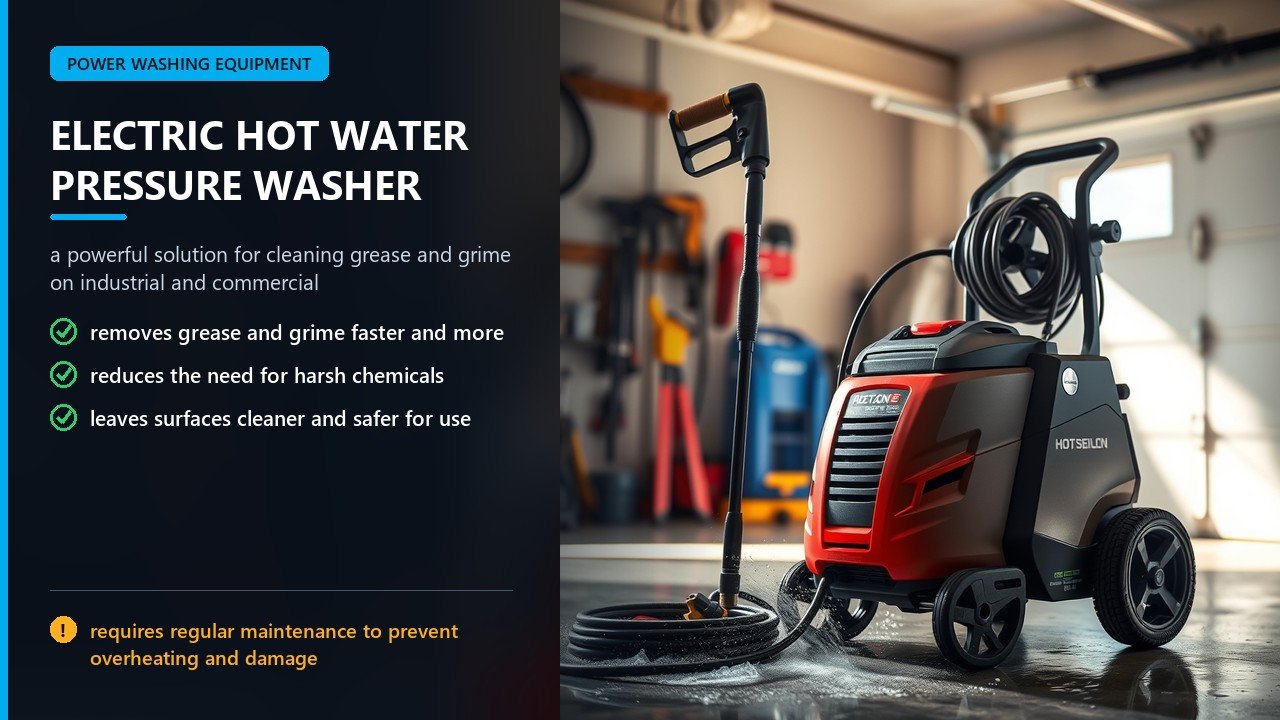
How Electric Hot Water Pressure Washers Work
Water enters the unit and is heated in a coil or heating chamber to temperatures up to 180°F (82°C) before pressurization. The electric motor drives the pump, sending hot, high-pressure water through the hose and nozzle. Some models have adjustable temperature controls, while others maintain a fixed output temperature. The combination of heat, pressure, and flow is what makes them so effective on oily surfaces.
Unlike gas hot water units, electric models run quieter, produce no engine exhaust, and are better suited for indoor or enclosed spaces with proper ventilation.
Benefits of Hot Water Cleaning
Heat dramatically improves cleaning efficiency. It emulsifies grease and oil, dissolves waxes, and kills many bacteria — tasks that cold water struggles with. Hot water also reduces detergent usage by up to 50% in many applications. You’ll spend less time scrubbing, use fewer chemicals, and get faster rinse times. For commercial kitchens, auto shops, or equipment cleaning, hot water is often a necessity.
Ideal Applications
Electric hot water pressure washers excel in environments with oily or sticky messes. Common uses include cleaning engine parts, greasy floors, food processing equipment, dairy barns, trash bins, and restaurant exhaust hoods. They’re also great for removing road grime, hydraulic fluid, and mildew from hard surfaces. For residential use, they’re usually overkill unless you have specific heavy-duty needs.
Electric vs Gas Hot Water Units
Electric units are quieter, cleaner, and require less maintenance than gas counterparts. They’re ideal for indoor wash bays or areas with strict emissions rules. Gas hot water washers offer more mobility and higher output for large outdoor jobs. If you need to move around job sites without power, gas is better. If you have a fixed location with electricity, electric is often more convenient and cost-effective long-term.
| Feature | Electric Hot Water | Gas Hot Water |
|---|---|---|
| Emissions | Zero at point of use | Exhaust fumes |
| Noise | Quieter | Louder |
| Mobility | Limited by cord/power | Highly mobile |
| Maintenance | Lower | Higher (engine upkeep) |
| Indoor Use | Yes (with ventilation) | No (due to exhaust) |
Key Features to Look For
Look for a rugged heating coil made from stainless or schedule 80 steel for durability. Adjustable thermostat (up to ~180°F) gives flexibility for different surfaces. A triplex plunger pump is preferred for commercial use. Thermal relief valve prevents overheating when in bypass. Look for safety features like high-limit shutoff and pressure relief. Also consider recovery time — how quickly it reheats between uses.
For indoor use, ensure adequate ventilation and follow electrical code requirements. Many units need 240V or three-phase power.
Maintenance Considerations
Hot water units require more care than cold water models. Descale the heating coil periodically, especially in hard water areas. Flush the system regularly to prevent mineral buildup. Check pump oil, hoses, and fittings for heat damage. Drain completely before freezing temperatures. Use manufacturer-recommended detergents designed for hot water systems.
Safety Tips
Hot water under pressure can cause serious burns. Wear insulated gloves, eye protection, and closed-toe boots. Never aim at people or animals. Allow the unit to cool before servicing. Be cautious of hot surfaces on the coil housing and exhaust vents.
Final Thoughts
An electric hot water pressure washer is a powerful tool for tackling grease and oil where cold water fails. If you work in a fixed location with access to electricity and deal with tough residues, it’s a smart investment. Choose based on your power supply, temperature needs, and duty cycle, and prioritize safety and maintenance for years of reliable service.
When choosing an electric hot water pressure washer, consider your power supply first. Many commercial models require 240V or three-phase electricity, so check your available circuit capacity before purchasing. Water quality also plays a big role — hard water leads to scale buildup in heating coils, so a water softener or inline filter can extend the life of your unit. Look for models with easy-access coil compartments for descaling and routine maintenance. The pump type matters too: triplex plunger pumps are rebuildable and built for heavy use, while axial cam pumps are better suited for lighter duty cycles. Don’t overlook safety features like high-limit thermostats, pressure relief valves, and thermal shutoffs, as these protect both the operator and the machine. Finally, factor in total cost of ownership, including electricity, fuel for heating (if applicable), detergents, and replacement parts. For the right application, the time and chemical savings from hot water cleaning more than justify the higher upfront cost.
Proper use and care will maximize the lifespan of your electric hot water pressure washer. Always start with a clean water supply and inspect hoses for cracks or bulges before each use. Allow the unit to reach operating temperature before tackling heavy grease, but don’t leave it idling for excessive periods. After use, flush with clean water to remove detergent residue and prevent scale formation. In cold climates, fully drain the heating coil, pump, and hoses to avoid freeze damage. Keep ventilation in mind when running indoors — even electric units produce heat and moisture, so adequate airflow is essential. By following these practices, you’ll enjoy faster, more effective cleaning and reliable performance for many years to come.
While cold water pressure washers work well for general cleaning, nothing beats the speed and effectiveness of hot water on greasy, oily messes. An electric hot water pressure washer gives you that advantage without the noise and exhaust of a gas engine, making it perfect for indoor or fixed locations. If your work regularly involves automotive, food service, or heavy equipment cleaning, the time saved on every job makes this upgrade well worth the investment.
To get the most from your unit, pair it with the right nozzles, detergents, and accessories. Use wider spray angles for delicate surfaces and more focused tips only on hard, durable areas. Choose detergents specifically formulated for hot water pressure washers to avoid damaging seals or coils. Consider adding hose reels, wall mounts, or surface cleaners to create a complete wash station tailored to your needs. With the right setup, an electric hot water pressure washer becomes a powerhouse that keeps your workspace cleaner, safer, and more efficient day after day.