There’s nothing more frustrating than finishing a pressure washing job only to spend five minutes untangling a knotted hose. If you’ve ever wrapped a stiff pressure washer hose around a cart by hand, you know the struggle. That’s exactly why more people are choosing an electric pressure washer with hose reel. It keeps your hose neat, protected, and ready to go for the next job with minimal effort.
An electric pressure washer with hose reel combines the quiet, low-maintenance convenience of electric power with onboard hose storage. Instead of dragging a loose hose across your lawn or driveway and coiling it by hand, the reel lets you wind it up in seconds. This guide explains the benefits, types of hose reels, what to look for when buying, how to use and maintain one, and whether it’s worth the extra cost for your needs.
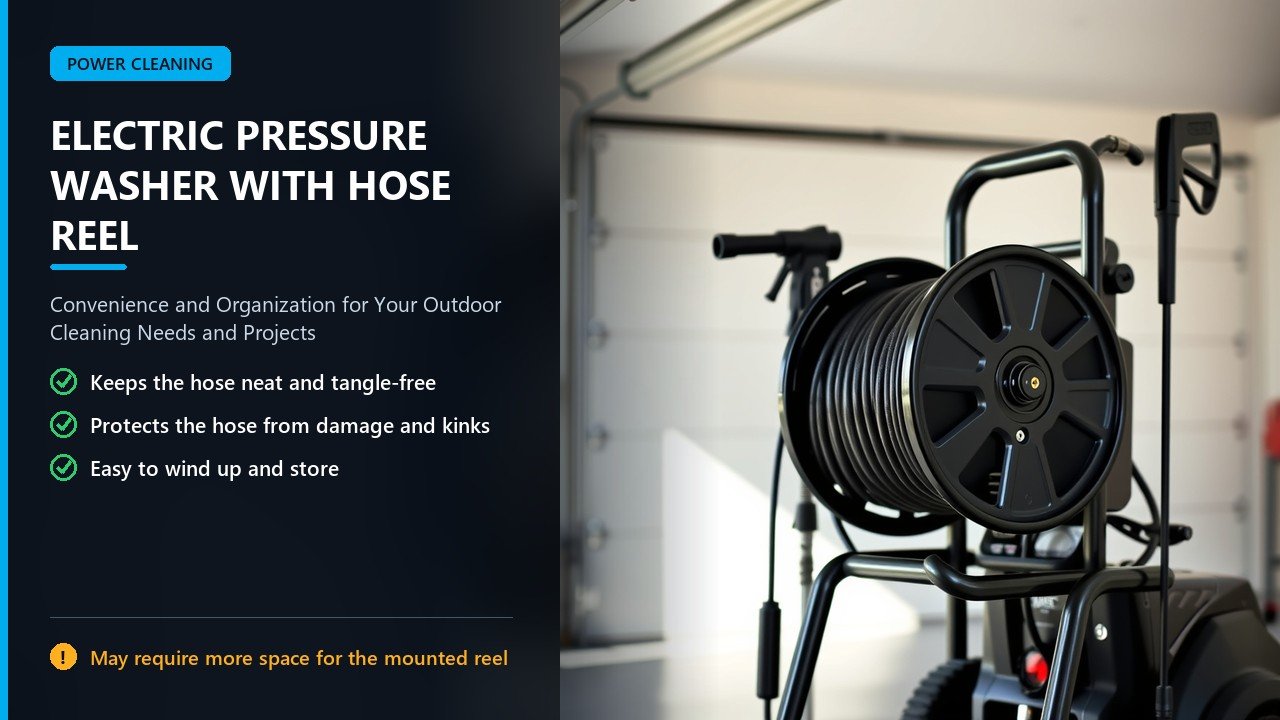
What Is an Electric Pressure Washer With Hose Reel?
An electric pressure washer with hose reel is a corded or sometimes cordless electric pressure washer that includes a built-in reel to store the high-pressure hose. The reel can be manual (hand-crank), spring-assisted, or automatic retractable. Most are mounted on the washer’s frame or cart, keeping the hose off the ground and tangle-free between uses.
Electric models are popular for this setup because they’re compact, quiet, and easy to maneuver around the home. Pairing them with a reel adds a level of convenience usually found on higher-end gas units without the noise, fumes, or maintenance of a gas engine.
Benefits of a Built-In Hose Reel
The biggest benefit is organization. A reel prevents kinks, tangles, and trips, while also protecting your hose from abrasions and UV damage. Coiling by hand often creates tight bends that shorten hose life — a reel winds it more evenly. It also saves time: pull out what you need, clean, then crank it back in and you’re done.
Other benefits include cleaner storage in your garage or shed, easier transport (no loose hose flopping around), and a more professional feel. For people who use their washer regularly, the convenience alone is worth it. For occasional users, it still saves hassle and extends hose life.
Manual vs Automatic Hose Reels
Most electric pressure washer with hose reel models use a manual crank reel. You pull the hose out, use it, then turn the handle to wind it back. These are simple, reliable, and affordable. Spring-assisted reels take some of the effort out by helping rewind. Fully automatic retractable reels (like a vacuum cord) are less common on entry-level electric models but exist on some premium units.
Manual reels work fine for 15–30 foot hoses. If you have a longer hose (35–50 feet), a spring-assisted reel is much more pleasant to use. Consider how often you’ll use it and how long your hose is when choosing.
| Reel Type | Ease of Use | Cost | Reliability | Best For |
|---|---|---|---|---|
| Manual Crank | Moderate | Low | Very High | Most home users, 15–25 ft hoses |
| Spring-Assisted | Easy | Medium | High | Longer hoses, frequent use |
| Automatic Retract | Very Easy | High | Good | Premium units, convenience-focused users |
Hose Length Considerations
Most electric pressure washer with hose reel models come with 15 to 25 feet of high-pressure hose. That’s plenty for cleaning cars, patios, decks, and siding on most homes. If you have a larger property or need to reach around obstacles, 30–35 feet is more convenient. Going much longer on a compact electric reel can make winding bulkier, and longer hoses also create more pressure drop at the nozzle.
Consider your typical cleaning radius. For driveways and decks right next to a water outlet, 20 feet is often fine. If you park farther away or have a wraparound porch, 25–30 feet gives you more freedom without constantly moving the washer.
Key Features to Look For
Look for a sturdy reel housing — plastic is fine for light use, but metal frames hold up better over years. A smooth crank mechanism with no grinding is a must. Check that the hose guides keep it winding evenly (avoiding “bird’s nest” coils). Swivel fittings at the reel inlet help prevent twisting. Also look for a locking mechanism to keep the reel from unwinding during transport.
Beyond the reel, focus on the washer itself: PSI and GPM that match your needs (for most homes, 1500–2200 PSI and 1.2–1.8 GPM is plenty), a decent spray gun, quick-connect nozzles, and enough power cord length or GFCI protection. Some units include onboard storage for nozzles and the power cord, which keeps everything tidy.
Electric vs Gas With Hose Reel
Electric pressure washers with hose reels are quieter, lighter, and require almost no engine maintenance. They’re perfect for suburban homes where noise matters. Gas units typically offer higher PSI/GPM and longer hoses, but they’re heavier, louder, and need oil changes, spark plugs, and winterization. For most homeowners, electric is more than enough for cars, decks, siding, and patios.
If you only need to clean once a month or do light-to-medium jobs, an electric model with a reel is the sweet spot. If you’re doing daily commercial work or stripping paint, gas is probably a better fit despite the extra upkeep.
How to Use a Hose Reel Properly
Pull the hose out smoothly as you work — don’t yank or jerk it. Only pull out as much as you need to reach your target. When you’re done, disconnect the spray gun/wand from the end if your setup requires, then wind slowly and evenly with the crank. Guide the hose with your free hand to avoid overlaps or kinks. Lock the reel if your model has a transport lock before moving the unit.
Never wind the hose while under pressure. Always release the trigger, turn off the washer, and disconnect from power/water as directed. This prevents stress on the reel, fittings, and hose.
Maintenance Tips for Hose Reels
Rinse the hose before rewinding, especially if it’s been used with detergent or on muddy surfaces. This keeps grit out of the reel mechanism. Inspect the hose for cuts, bulges, or worn fittings every few uses. Lubricate the crank pivot lightly if it starts to feel stiff (use a light machine oil or manufacturer-recommended lube). Keep the reel clean and dry to prevent rust on metal parts.
In freezing weather, drain all water from the hose and reel before storing. Trapped water can freeze and crack fittings or the hose. Store your washer in a covered, frost-free space when not in use for the season.
Common Issues and Fixes
If the hose won’t wind evenly, slow down and guide it layer by layer. If the crank binds, check for dirt/debris in the gears or shaft. If you notice leaks at the reel swivel, replace the O-rings — they’re inexpensive and easy to swap. If the reel unwinds on its own during transport, engage the lock or add a small bungee as a temporary fix until you can repair the latch.
Most issues are minor and preventable with basic care. Avoid forcing the reel — that usually causes more damage than it solves.
Is an Electric Pressure Washer With Hose Reel Worth It?
For most homeowners, yes. The small price premium over a similar model without a reel is usually justified by the time saved, better hose protection, and cleaner storage. If you use your pressure washer even a few times a year, you’ll appreciate not wrestling with a loose hose. If you use it monthly or more, it’s practically a must-have for convenience.
Consider your space, too. If you have limited storage, keeping the hose onboard prevents it from taking up floor space or getting tangled with other gear.
Final Thoughts
An electric pressure washer with hose reel takes one of the most annoying parts of pressure washing — hose storage — and makes it effortless. Look for a sturdy manual or spring-assisted reel, the right hose length for your property, and a washer with enough PSI/GPM for your typical jobs. With minimal maintenance, you’ll spend less time coiling and more time cleaning. For home use, it’s one of the smartest upgrades you can choose.