A clean garage is a rare and satisfying thing. It is also one of the hardest spaces to keep clean, because it collects everything the rest of the house sheds, road salt, oil drips, mud, sawdust, and general grime. Most people attack it with a broom and a bucket, and most people give up halfway. A pressure washer changes that equation, but only if the setup is right. A garage pressure washer setup is not just a machine plunked on the floor. It is a considered arrangement of water, power, drainage, storage, and protection that makes cleaning the garage quick and safe, and keeps your equipment ready for every other job around the property. Get the setup right, and the garage becomes a pleasure instead of a chore.
This guide covers planning and building a garage pressure washer setup. We will look at the space and its needs, water and power access, drainage and containment, machine placement, storage and organization, choosing the right machine for the space, setup options, safety, and maintenance. By the end, you will know how to turn your garage into a clean, efficient pressure washing station.
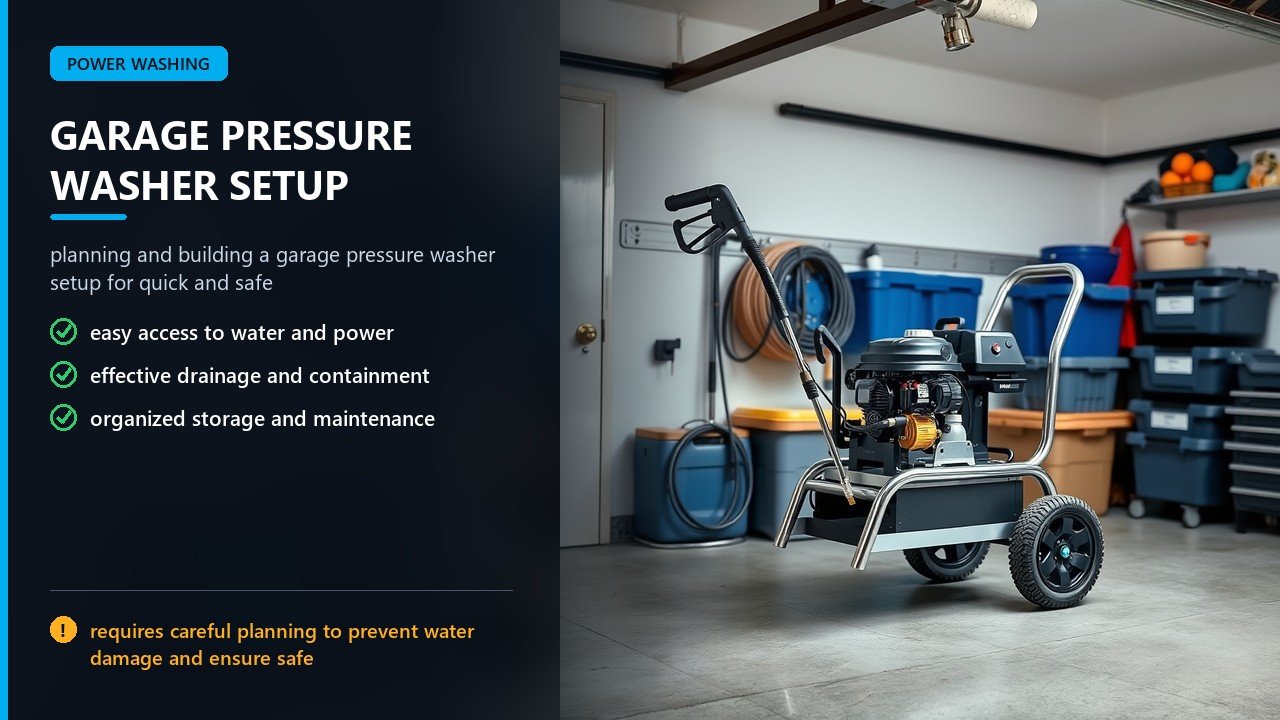
Understanding the Space
Garages present specific conditions that shape the setup.
- Enclosed space: Limits ventilation, which matters for gas machines.
- Concrete floor: Durable, but can be slippery when wet.
- Water and dirt: Two things you are adding to a space that stores vehicles and tools.
- Storage pressure: The washer needs a home that does not clutter the floor.
- Weather extremes: Unheated garages freeze in winter.
Water Access
- Spigot: A garage or exterior spigot with adequate flow.
- Tank: A water tank on a cart or shelf for locations with limited supply.
- Transfer pump: For pulling from a tank or boosting low flow.
- Filter and fittings: To protect the machine and connect cleanly.
Plan water access before you buy the machine, since flow limits what it can do.
Power Access
- Outlets: Conveniently placed, GFCI protected.
- Cord length and reach: Enough to avoid extension cords where possible.
- Dedicated circuit: For higher-draw electric machines.
- Gas engines: Run outdoors, so plan fuel storage accordingly.
Drainage and Containment
- Floor slope: Direct water toward a drain or the door.
- Drain or squeegee: For removing standing water.
- Containment: Consider where runoff goes, especially with chemicals.
- Environmental care: Keep chemical runoff out of storm drains where required.
Machine Placement
| Option | Description | Best For |
|---|---|---|
| Floor cart | Machine on a wheeled cart | Flexibility and easy storage |
| Wall-mounted station | Machine and reel on the wall | Fixed, tidy setups |
| Corner station | Dedicated corner with tank | Small garages |
| Skid setup | Machine and tank on a skid | Larger operations |
Choose placement based on how much floor space you have and whether the machine needs to move.
Storage and Organization
- Hose reel: Wall-mounted to keep hose off the floor.
- Nozzle and gun storage: Rack or hooks for quick access.
- Chemical storage: Shelf or cabinet for soaps and solutions.
- Water tank: Where used, positioned for balance.
- Keep the work area clear for movement.
Choosing the Right Machine
- Consider indoor use: Electric is safer for an enclosed space.
- Match power to jobs: Cars, tools, and floor cleaning.
- Check water needs: GPM and PSI for your tasks.
- Plan storage: Size and weight for your space.
- Think about noise: Electric is quieter indoors.
- Consider a cart for mobility.
Setup Options
| Setup | Components | Best For |
|---|---|---|
| Basic | Electric machine, hose reel, spigot | Most garages |
| Tank-based | Machine, tank, transfer pump | Garages with low water flow |
| Full station | Machine, tank, reel, wall storage | Serious home detailers |
| Mobile cart | Machine and tank on a cart | Multi-purpose use |
Safety
- Never run gas engines indoors. Carbon monoxide kills.
- Use GFCI outlets for electric machines.
- Watch for wet floors and electrical hazards.
- Ventilate when using chemicals.
- Store fuel properly away from ignition sources.
- Protect eyes and skin from high pressure and chemicals.
Maintenance and Winter Care
- Drain water from the machine, hose, and tank.
- Winterize to prevent freeze damage.
- Keep the station clean and dry.
- Inspect hose, fittings, and O-rings.
- Service the machine on schedule.
- Store chemicals safely.
Frequently Asked Questions
Can I use a pressure washer in my garage?
Yes, but use an electric machine indoors. Never run a gas pressure washer inside an enclosed space because of carbon monoxide. Gas machines should be run outdoors.
What do I need for a garage pressure washer setup?
Water access (a spigot or tank), power, drainage for runoff, a machine suited to your jobs, and wall storage for the hose, gun, and nozzles to keep the floor clear.
How do I keep the garage from flooding?
Direct water toward a drain or the door, use a squeegee, and plan where runoff goes. Containment and proper drainage keep the space manageable and protect the environment.
What machine is best for a garage?
An electric machine is usually best for indoor use because it is safer, quieter, and powerful enough for cars, tools, and floors. A water tank helps if flow is limited.
How do I prepare the garage setup for winter?
Drain the machine, hose, and tank, winterize the pump with antifreeze, store chemicals safely, and keep the station clean and dry to avoid freeze damage.
Final Thoughts
A good garage pressure washer setup turns one of the messiest spaces in the house into one of the easiest to clean. It starts with safe machine choice, water and power access, drainage, and smart wall storage.
Use an electric machine indoors, plan water and runoff, organize with reels and hooks, and winterize carefully. Set up the station the right way, and your garage stays cleaner, your equipment stays ready, and every job around the property gets easier.