The unmistakable roar of a small engine, a plume of exhaust, and a stream of water powerful enough to strip a decade of grime off a driveway — that is the signature of a gas engine pressure washer. For jobs that require power, portability, and independence from an electrical outlet, gas-powered machines remain the standard that professionals and serious homeowners reach for first.
But gas engines bring their own responsibilities: fuel, oil, maintenance, and a safety hazard most people underestimate — carbon monoxide. This guide explains how gas engine pressure washers work, what engines and pumps to look for, how they compare to electric models, how to maintain them, and how to use them safely. By the end, you will know whether a gas pressure washer is the right tool for you.
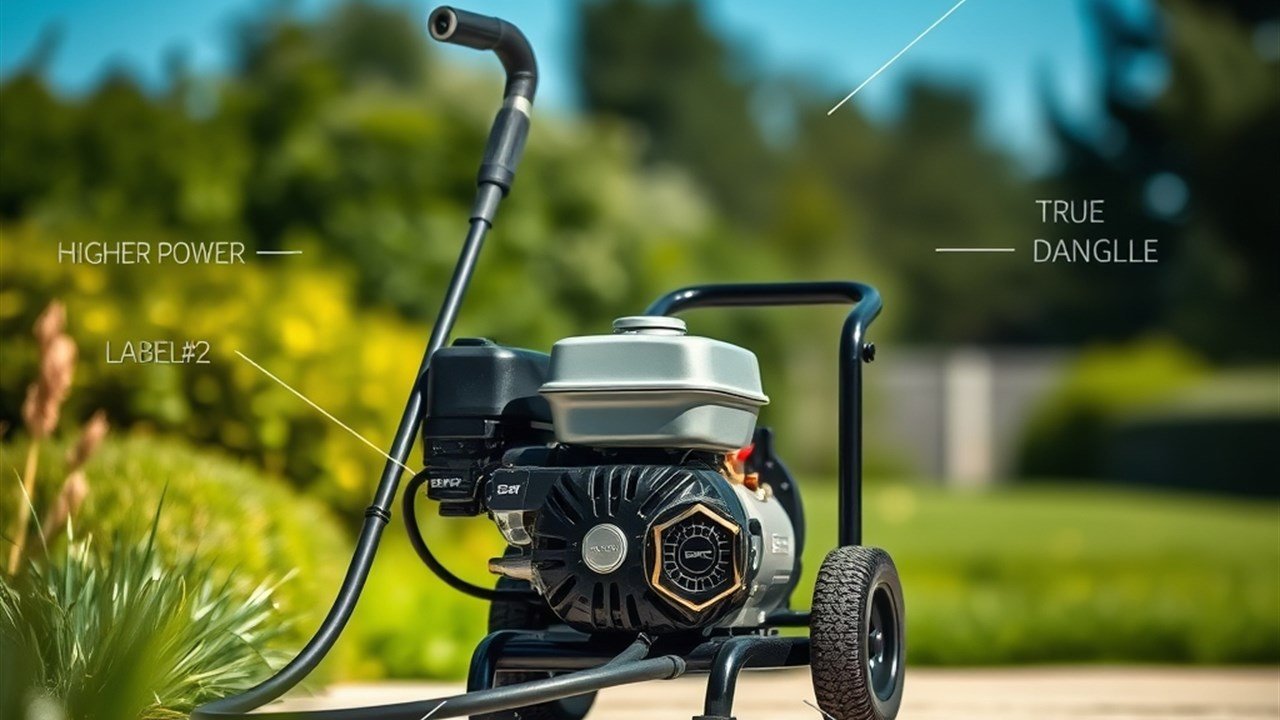
What Is a Gas Engine Pressure Washer?
A gas engine pressure washer uses a small internal-combustion engine — usually gasoline-powered — to drive a high-pressure water pump. The engine spins the pump, the pump pressurizes water from your supply, and the wand delivers it through a nozzle at high pressure and flow.
Because the engine is independent of household electricity, these machines deliver two advantages no electric unit can easily match:
- Higher power. Gas engines sustain higher pressure and flow than most residential electric motors.
- True portability. You can run them anywhere — a field, a farm, a job site — with no outlet or cord.
Typical gas pressure washers range from around 2,500 PSI / 2.3 GPM on the entry end up to 4,000 PSI / 4.0 GPM professional units. That range covers most outdoor cleaning tasks.
Quick Note: Cleaning power is the combination of pressure and flow. Multiply PSI by GPM to get an approximate “cleaning unit” score. A 3,000 PSI / 2.5 GPM machine (7,500 CU) cleans more effectively than a 3,000 PSI / 2.0 GPM machine (6,000 CU).
How a Gas Pressure Washer Works
The system is straightforward but worth understanding:
- Engine. A gasoline engine provides rotational power.
- Pump. Driven by the engine, the pump pressurizes water. The pump type determines lifespan.
- Water supply. A garden hose feeds water to the pump inlet.
- High-pressure hose and wand. Carry pressurized water to the nozzle.
- Nozzles. Interchangeable tips control the spray pattern and pressure.
Two mechanical details matter most for reliability: the engine brand and the pump design.
| Component | What to Look For | Why It Matters |
|---|---|---|
| Engine | Reputable brand, easy-start features | Reliability and parts availability |
| Pump | Triplex ceramic-plunger pump | Long life, rebuildable, consistent pressure |
| Frame | Welded steel with pneumatic tires | Stability and mobility on rough ground |
| Hose | 3/8-inch, 25–50 ft | Flow, reach, and durability |
Short Note: A triplex pump with ceramic plungers is the single best longevity signal on a gas pressure washer. Axial pumps are cheaper and fine for occasional use, but they wear faster and are usually not rebuildable.
Gas vs Electric Pressure Washers
| Factor | Gas Engine | Electric |
|---|---|---|
| Power (PSI / GPM) | Higher — up to 4,000+ PSI | Lower for household current |
| Portability | Fully portable — no outlet | Tethered to a power source |
| Noise | Loud | Quiet |
| Exhaust / fumes | Carbon monoxide — outdoors only | None — safe indoors |
| Maintenance | Oil, plugs, fuel, winterizing | Minimal |
| Best for | Large outdoor jobs, remote sites | Home, car, indoor, light tasks |
In short: choose gas for maximum power and portability outdoors, and electric for convenience, quiet operation, and indoor use. Many professionals own both.
What a Gas Pressure Washer Can Clean
- Concrete driveways, sidewalks, and patios. Its most popular job — removing dirt, stains, and mildew from hard flatwork.
- Brick and stone. Deep cleaning of masonry, especially with a surface cleaner.
- Siding and fences. Washing exterior walls and fencing, with care on softer materials.
- Vehicles and equipment. Farm machinery, trucks, and trailers that are heavily soiled.
- Job sites and remote properties. Anywhere without access to electricity.
- Commercial flatwork. Parking lots, dumpster pads, and walkways where speed matters.
Gas pressure washers handle the toughest outdoor tasks, but they can also damage delicate surfaces if you use too much pressure. Matching nozzle and distance to the surface is essential.
Choosing the Right Gas Engine Pressure Washer
- Start with your tasks. Occasional home cleaning needs less power than commercial flatwork.
- Compare cleaning units. Multiply PSI by GPM; the higher score cleans faster.
- Favor a good engine. A reliable engine brand means easier starts, parts, and service.
- Insist on a triplex pump if you want long life and rebuildability; accept an axial pump only for light, occasional use.
- Check the frame and wheels. A sturdy frame and pneumatic tires make moving on rough ground far easier.
- Consider start options. Some engines offer electric start with a recoil backup.
- Look at the accessory set. Nozzles, surface cleaner, and hose length add real value.
Short Note: Buying based on the highest PSI number alone is a common mistake. A machine with slightly lower pressure but higher flow, a better pump, and reliable engine will outperform a higher-PSI machine with a cheap pump.
Fuel, Oil, and Startup
Gas engines need a few simple habits to run well:
- Use fresh fuel. Stale gasoline is the leading cause of hard starting and carburetor problems. Add a fuel stabilizer if storing fuel.
- Check oil before each use. Most engines have no oil filter; running low on oil causes permanent damage.
- Connect water first. Always attach and turn on the water supply, purge air from the line, then start the engine. Never run the pump dry.
- Warm up briefly. Let the engine idle briefly to warm up before full throttle.
- Follow the starting sequence in your manual (choke, throttle, pull or push start).
Maintenance Schedule
| Task | Interval | Why |
|---|---|---|
| Check engine oil | Every use | Prevents engine seizure |
| Change engine oil | After break-in, then per manual | Keeps engine reliable |
| Check / change pump oil | Per manual (triplex) | Protects the pump |
| Clean air filter | Frequently in dusty conditions | Engine performance |
| Inspect spark plug | Seasonally | Reliable starts |
| Clean inlet water filter | Weekly when in use | Protects pump valves and seals |
| Winterize | Before freezing weather | Prevents freeze damage |
A little routine maintenance is the difference between a machine that lasts one season and one that lasts ten.
Nozzle Guide for Gas Pressure Washers
Nozzle choice controls how the pressure meets the surface. Most gas pressure washers come with a colour-coded set:
| Nozzle | Angle | Best Use |
|---|---|---|
| Red | 0° | Concentrated cutting only — avoid on most surfaces |
| Yellow | 15° | Tough stains on concrete |
| Green | 25° | General cleaning — siding, driveways |
| White | 40° | Cars, windows, gentle rinse |
| Soap | Low pressure | Applying detergent |
Start with the widest tip and tighten only if a stain resists. The zero-degree tip is powerful and dangerous — it strips paint and etches concrete, so reserve it for the toughest flatwork and keep it moving.
Accessories Worth Adding
- Surface cleaner. A spinning bar under a dome cleans flat concrete faster and without streaks — an essential for driveway work.
- Turbo nozzle.
A rotating zero-degree tip that cleans faster than a fan tip while being slightly less concentrated.
- Foam cannon. Applies thick detergent foam for vehicle washing and pre-soak.
- Extension wands. Reach second-story siding and high gutters.
- Longer high-pressure hose. Extends working range without moving the machine.
- Water filter and inlet screen. Protects the pump from debris.
Short Note: A surface cleaner is the single accessory that most improves results on concrete. It eliminates the zebra-striping that comes from cleaning flatwork with a wand.
Storage and Winterization
Gas machines are more vulnerable to poor storage than electric ones because they combine water and fuel systems. Protect both:
- Drain all water. Run the pump briefly after disconnecting water, or use pump-saver antifreeze in cold climates.
- Prep the fuel system. Add fuel stabilizer, or run the engine until it runs dry for long storage.
- Change oil before storage so clean oil protects internals over the off-season.
- Store indoors, dry, and above freezing. Protect from rust and freeze damage.
- Cover the unit. Keep dust and debris out of the engine and pump.
Short Note: Freezing water is the number-one killer of pressure washers in cold climates. If you do nothing else before winter, drain the pump and lines completely.
Quick Comparison: Gas vs Diesel Pressure Washers
Gasoline. The common choice — affordable, easy to refuel, and powerful enough for most outdoor tasks. Best for homeowners and most contractors.
Diesel. Diesel engines and diesel-fired burners (for hot water) offer greater durability and fuel efficiency for heavy commercial use, especially where hot water is needed. Higher cost and complexity suit professional operations.
For most buyers, a gasoline engine pressure washer is the practical, well-supported choice. Diesel belongs in heavy commercial settings where its durability and hot-water capability justify the expense.
Safety: Carbon Monoxide Is the Real Danger
Gas engines produce carbon monoxide, an invisible, odorless gas that kills without warning. This single fact drives the most important rule of gas pressure-washer safety:
Never run a gas pressure washer indoors, in a garage, or in any enclosed or partially enclosed space. Place it outdoors, away from windows, doors, and vents, so exhaust cannot enter a building.
Other essential safety habits:
- Never point the wand at people or pets. High-pressure water can cause serious, even fatal, injuries.
- Wear eye protection and sturdy footwear. Debris and spray ricochet.
- Use both hands and stable footing. High-pressure recoil can be strong.
- Let the engine cool before refueling. Never refuel a hot or running engine.
- Store fuel safely. Use approved containers, away from ignition sources.
- Keep the tip guard in place and never modify safety features.
Industrial safety authorities such as the Occupational Safety and Health Administration (OSHA) publish guidance on powered equipment and carbon-monoxide hazards that applies directly to gas pressure washers. Consulting those resources before large jobs is a smart habit.
Common Mistakes to Avoid
- Running the pump without water. Even seconds of dry running can destroy a pump.
- Using old fuel. Stale gas clogs carburetors and prevents starts.
- Operating indoors. A lethal carbon-monoxide mistake.
- Ignoring oil levels. Low oil ruins engines quickly.
- Leaving water in the machine over winter. Frozen water cracks pumps and lines.
- Using the 0-degree nozzle carelessly. It etches concrete and destroys softer surfaces.
- Under-supplying water. Starving the pump causes cavitation and damage.
Cost and Value
| Class | Typical Price | Who It Suits |
|---|---|---|
| Entry gas | $300–$600 | Occasional homeowner use |
| Mid-range gas | $600–$1,200 | Regular home and property cleaning |
| Commercial gas | $1,200–$2,500+ | Professional daily use |
For a contractor, a gas pressure washer earns its price through speed and reliability. For a homeowner, a well-chosen mid-range unit handles nearly every outdoor job for years at reasonable cost.
Real-World Scenarios
Scenario 1: The rural homeowner. With no convenient outdoor outlet, a gas pressure washer cleans barns, fences, and equipment wherever they sit — no cords, no limits.
Scenario 2: The driveway-cleaning pro. A 4,000 PSI / 4.0 GPM gas unit with a surface cleaner turns a long driveway job into a fast, profitable one.
Scenario 3: The property manager. A mid-range gas machine handles sidewalks, dumpster pads, and building exteriors across multiple sites without needing power at each location.
Frequently Asked Questions
Are gas pressure washers better than electric? They are more powerful and portable, but noisier, heavier, and higher-maintenance. The best choice depends on your tasks and access to power.
Can I use a gas pressure washer indoors? No. Carbon monoxide makes indoor use deadly. Gas machines are strictly for outdoor use.
How often should I change the oil? Follow the engine manual — typically after a break-in period and then at regular hour intervals.
What size do I need? For general home use, 2,700–3,200 PSI is plenty. For professional flatwork, look at 3,500–4,000 PSI with higher flow.
Can I leave gas in the tank? Only with a fuel stabilizer, and preferably not for long periods. Stale fuel is a leading cause of starting problems.
Final Thoughts
A gas engine pressure washer is the go-to tool for serious outdoor cleaning. Its power and portability make it unbeatable for driveways, equipment, and remote job sites, and its higher flow cleans faster than most electric machines. The price is a little maintenance and the constant responsibility of carbon-monoxide safety.
Choose a reputable engine, insist on a quality pump, keep up with oil and fuel, and always run it outdoors. Do that, and a gas pressure washer will deliver years of dependable, powerful cleaning. For related help, see our guides on the 4.0 GPM pressure washer and 4000 PSI power washer. For safety and carbon-monoxide information, resources from OSHA and the U.S. Centers for Disease Control and Prevention are excellent references.