Guns for pressure washers, also called pressure washer guns or spray guns, are the handheld control devices that let you start, stop, and direct the high-pressure water spray. They connect the high-pressure hose to the wand and nozzle, giving you precise control over cleaning while keeping you safe. Choosing the right pressure washer gun is essential for compatibility, safety, and comfort, as it must match your machine’s pressure rating, flow rate, and fittings.
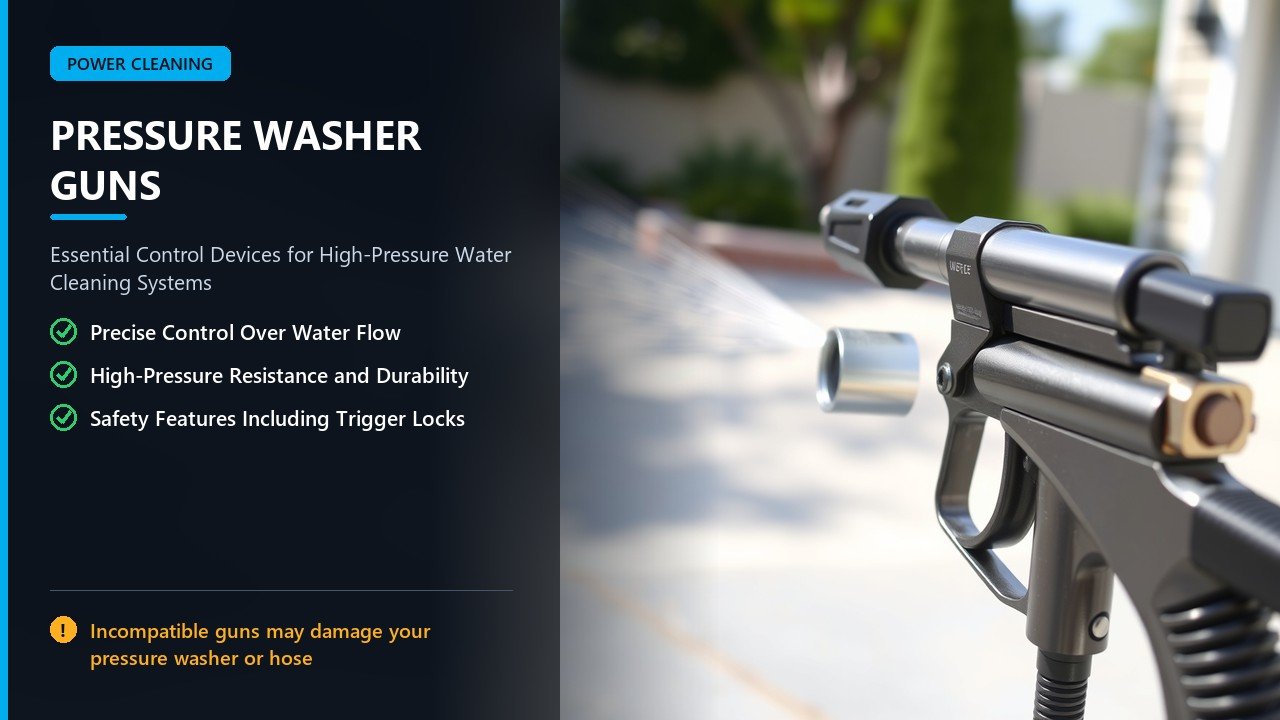
What Are Pressure Washer Guns
The control point of your pressure washer.
Guns for pressure washers are trigger-operated devices that control water flow from the pump to the nozzle. When you pull the trigger, a valve opens and pressurized water flows through the gun, down the wand, and out the nozzle. Releasing the trigger closes the valve, stopping the flow and reducing pump strain. This on-demand control is essential for safety and efficiency during cleaning.
Pressure washer guns are built to withstand high pressures, with internal seals, o-rings, and reinforced bodies made from metal or heavy-duty plastic. They include a trigger lock for safety to prevent accidental spraying. The gun connects to the high-pressure hose at the inlet and to the wand or lance at the outlet. Because you’re holding it during operation, comfort, grip, and balance also matter, especially for longer cleaning jobs.
The gun is a critical safety component. Because it handles full system pressure, choosing a gun with the correct rating and features is vital. This makes it more than just a handle. With the right gun, you get better control and safer operation. Our guide to pressure washer components explains how guns fit into the overall system.
Types of Guns for Pressure Washers
Different designs for different needs.
There are several types of guns for pressure washers, each suited to specific tasks and machines. Standard trigger guns are the most common for residential pressure washers, offering simple on/off control with a trigger lock. Short-body guns are more compact and maneuverable, while long-body guns provide better reach and leverage. Some guns feature insulated or rubber grips for added comfort during extended use.
Foam cannon-compatible guns are designed to work with foam attachments, making them popular for washing vehicles. Swivel guns include a rotating inlet to reduce hose twisting and tangling, which is especially helpful for larger jobs. Industrial or commercial guns are built for higher PSI (often 4000+ PSI) and heavy-duty use, with more robust construction. Choosing the right type depends on your pressure washer’s rating and the type of cleaning you do.
Type affects comfort and functionality. Because different guns suit different applications, selecting the right one improves your experience. This ensures the gun matches your workflow. With the right type, cleaning is easier and more efficient. Our guide to wash gun covers specific wash gun features in detail.
| Gun Type | Best For | Key Features |
|---|---|---|
| Standard trigger gun | Most home pressure washers | Simple, affordable, trigger lock |
| Foam cannon compatible | Vehicle washing, detailing | Works with foam cannons, good control |
| Swivel gun | Long jobs, reduces hose twist | Rotating inlet, less fatigue |
| Short-body gun | Compact spaces, tight areas | Lightweight, maneuverable |
| Industrial/commercial gun | High PSI machines, heavy use | Heavy-duty, rated 4000+ PSI |
This table shows the main types of guns for pressure washers, their best uses, and key features. From standard residential guns to swivel and commercial models, choosing the right type ensures comfort, compatibility, and safety for your specific cleaning needs.
Key Features to Consider When Buying
Match PSI, GPM, and fittings.
The most critical factor when buying pressure washer guns is the pressure rating. The gun must be rated for at least your pressure washer’s maximum PSI. Using an underrated gun can cause leaks, failure, or injury. Also consider the GPM rating to ensure adequate flow capacity. Next, check the fittings: the inlet fitting must match your high-pressure hose (commonly M22), and the outlet must match your wand or lance (commonly 1/4-inch quick-connect). Mismatched fittings cause leaks and unsafe connections.
Other important features include the trigger lock for safety, grip comfort, and build materials. Metal guns (brass/aluminum) are generally more durable than all-plastic guns for frequent use. A swivel inlet reduces hose twisting, which prevents kinks and makes handling easier. Some guns also have insulated grips for comfort in cold weather. Considering these factors ensures you get a gun that’s safe, compatible, and comfortable to use for your cleaning tasks.
Compatibility is everything. Because pressure and fittings must match exactly, verifying your pressure washer’s specs is the first step. This prevents safety issues and frustration. With the right features, the gun enhances your pressure washing experience. Our guide to m22 pressure washer hose fittings helps identify the correct connections.
Maintaining Pressure Washer Guns
Prevent leaks and extend lifespan.
Regular maintenance keeps your pressure washer gun working safely and reliably. After each use, release pressure, disconnect the gun, and rinse it with clean water to remove detergent or debris. Inspect the gun for cracks, leaks, or a sticky trigger. Check the o-rings and seals at the inlet and outlet fittings, as these are common wear points and often cause leaks when worn.
If you notice leaking from the trigger or connections, replace the worn o-rings or seals with a compatible repair kit. Lubricate o-rings lightly with silicone grease to help them seal and last longer, but avoid petroleum-based lubricants that can damage rubber. Store the gun in a dry, protected place, and winterize it along with your pressure washer in freezing climates to prevent cracked internal components. With basic care, a quality gun can last for many years.
Simple maintenance prevents problems. Because seals wear with use, replacing them early avoids leaks and potential safety issues. This saves money on replacement guns. With regular inspection, your gun stays reliable. Our guide to pressure washer o ring kit covers replacement seals.
Troubleshooting Common Gun Issues
Fix leaks and trigger problems.
Common issues with guns for pressure washers include leaks from connections, water leaking from the trigger when closed, a stiff or stuck trigger, and low pressure. If the gun leaks at the inlet or outlet fittings, check that they’re tight and inspect the o-rings for wear or damage. Replacing worn o-rings usually fixes connection leaks.
If water leaks from the trigger while the gun is closed, the internal valve seat or seals are worn and need replacement with a repair kit. A stiff trigger may be caused by debris or dried detergent in the valve, which can often be cleaned and lightly lubricated with silicone grease. If pressure is low, check the nozzle, hose, and that the gun’s rating matches your machine. Always relieve pressure before disassembling the gun for repairs.
Most issues are repairable. Because worn seals cause most leaks, a small repair kit is often all you need. This avoids replacing the entire gun. With basic troubleshooting, you can fix common problems quickly. Our guide to pressure washer repair kit has more repair tips.
Safety Tips for Using Pressure Washer Guns
Treat high pressure with respect.
Safety is critical when using guns for pressure washers, as the high-pressure spray can cause serious injury. Always wear eye protection, closed-toe shoes, and long pants. Never point the gun at people, pets, or yourself. Use the trigger lock whenever you’re not actively spraying, and never leave the pressure washer running unattended with the gun in hand.
Maintain a firm grip due to potential kickback, especially with higher PSI machines. Keep a safe distance from surfaces to avoid damage, and never modify the gun or remove safety features. Ensure the gun is rated for your pressure washer’s PSI before use. Following these safety practices prevents accidents and ensures safe operation.
Safety should always come first. Because high-pressure water is dangerous, proper precautions are essential. This protects you and those around you. With safe habits, pressure washing is effective and low-risk. Our guide to is pressure washing a car safe covers surface-specific safety tips.
Frequently Asked Questions About Guns for Pressure Washers
What PSI rating do I need for a pressure washer gun? Your gun must be rated for at least the maximum PSI of your pressure washer. Using a lower-rated gun is dangerous and can fail under pressure.
Are pressure washer guns universal? No, guns are not fully universal. They vary in PSI rating, GPM capacity, and fittings (like M22 vs other connections). Always match the gun to your specific pressure washer.
Why is my pressure washer gun leaking? Leaks usually come from worn o-rings or seals at the fittings or inside the trigger valve. Replacing these with a compatible repair kit typically fixes the issue.
Can I replace just the gun on my pressure washer? Yes, as long as the replacement gun matches your pressure washer’s PSI rating, GPM, and fittings. This is a common and affordable repair.
What’s the difference between a short and long pressure washer gun? Short guns are more compact and maneuverable in tight spaces, while long guns provide better reach, leverage, and can reduce fatigue for larger jobs.
Do I need a swivel gun for my pressure washer? A swivel gun isn’t necessary, but it reduces hose twisting and tangling, making it more comfortable for longer cleaning sessions, especially with longer hoses.
Final Verdict on Guns for Pressure Washers
Guns for pressure washers are the essential control devices that let you safely direct high-pressure water for cleaning. Choosing the right gun means matching its PSI rating, GPM capacity, and fittings to your pressure washer, while also considering comfort features like a swivel inlet, grip, and trigger lock.
With regular maintenance, including inspecting seals and replacing worn o-rings, your pressure washer gun will last for years. Whether you’re replacing a worn gun or upgrading for comfort, selecting the right model ensures safer, more efficient pressure washing for all your cleaning tasks.