The high pressure hose on a pressure washer looks like a simple tube, but it is a critical part that affects how well the machine cleans. A hose that is too long or too narrow quietly steals pressure and flow before the water ever reaches the nozzle. Choosing the right high pressure hose for a pressure washer is about matching its rating, diameter, and length to the machine.
This guide looks at what the high pressure hose does, how length and diameter change performance, and how to pick the right one.
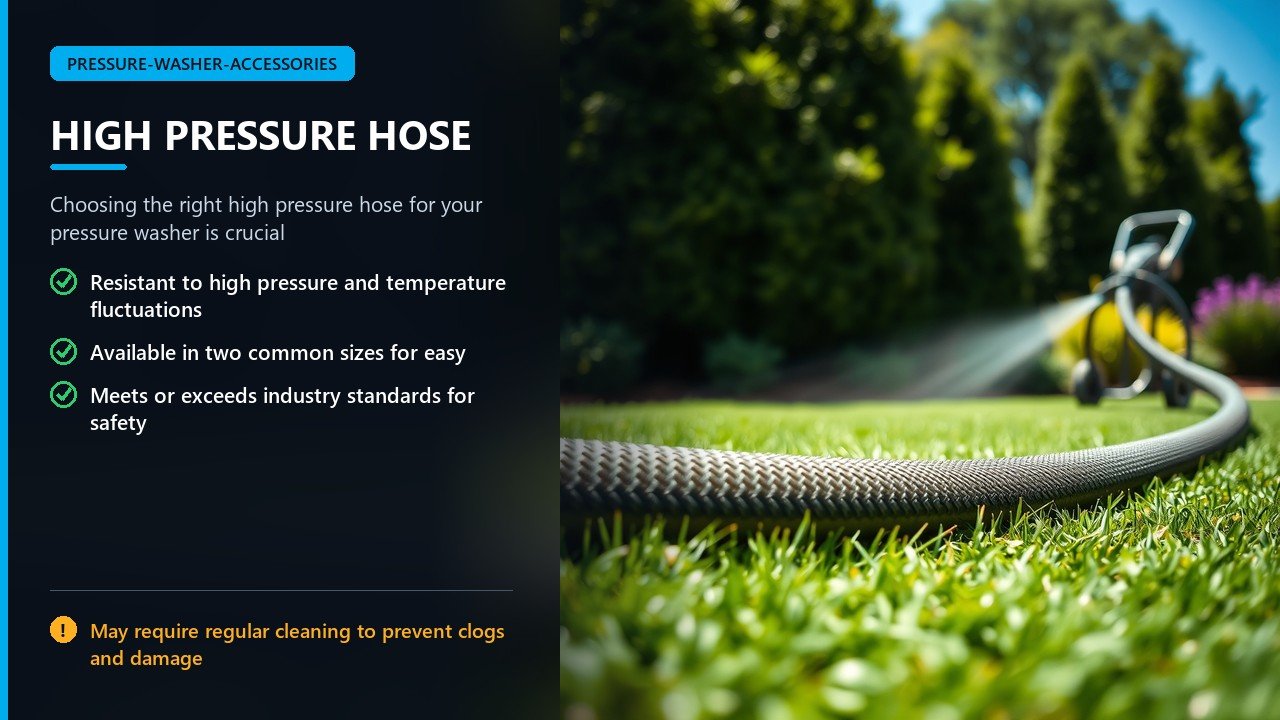
More Than a Tube
The high pressure hose carries pressurised water from the pump to the gun. Because it holds the full pressure of the machine, it is built very differently from an ordinary garden hose: a reinforced inner tube, layers of wire braiding for strength, and a tough outer cover to resist abrasion, oil, and weather. This construction is what lets it carry thousands of PSI safely.
The hose also has to be rated for the machine. Its pressure rating must meet or exceed the washer’s output, with margin for spikes, and its temperature rating must suit the water — especially on a hot-water machine, where a cold-rated hose will fail. Fittings on each end must match the pump and gun connections.
What many people miss is that the hose is part of the water path, and the water path affects performance. A long or narrow hose adds resistance, and that resistance shows up as lower pressure at the nozzle. So the hose is not just a connector; it is a component with a measurable effect on cleaning.
How Length and Diameter Matter
Two numbers drive the hose’s effect: its internal diameter and its length. A wider hose, such as three-eighths of an inch, flows more water with less resistance, which suits higher-flow machines. A narrower hose, such as one-quarter inch, restricts flow and suits lighter machines. Using too narrow a hose on a high-flow washer chokes the flow and wastes the machine’s capability.
Length matters for the same reason. Every additional foot of hose adds friction, and the pressure at the nozzle drops as the hose gets longer. A modest length is fine, but a very long hose noticeably reduces pressure, even if the machine is powerful. This is why a hose that is longer than needed can make a good machine feel weak.
The trade-off is reach versus performance. A longer hose lets you clean farther from the machine, but costs some pressure and flow. The best approach is to use the shortest hose that comfortably reaches your work, and to choose a diameter that suits the machine’s flow rather than a thin hose that only adds resistance.
The Two Common Sizes
Most pressure washer hoses come in two internal diameters. One-quarter inch hose suits electric and lighter gas washers with modest flow, and it is lighter and more flexible. Three-eighths inch hose is standard for higher-flow gas machines, carrying more water with less resistance. Some smaller electric machines use even thinner, proprietary hoses.
Matching the diameter to the machine is important. A high-flow machine fed through a narrow hose will not reach its rated performance, because the hose becomes the bottleneck. Conversely, a wide hose on a low-flow machine does no harm, but it is bulkier and unnecessary. Use a hose that matches the machine’s flow, and size up rather than down.
The table below sums up the practical choices.
| Hose | Suits |
|---|---|
| 1/4 in diameter | Light electric and low-flow machines; light and flexible |
| 3/8 in diameter | Higher-flow gas machines; carries more water with less loss |
| Short length | Best pressure; use the shortest hose that reaches the work |
| Long length | More reach, but adds resistance and reduces nozzle pressure |
Reading it this way turns hose selection into a simple match of diameter and length to the machine and the job.
Ratings and Materials
Beyond size, check the ratings. The pressure rating must cover the machine’s output with margin, and the temperature rating must suit the water. On a hot-water machine, only a hot-rated hose will do; a cold hose will soften and burst under heat. Confirm both ratings before buying.
Hose cover material affects durability. Rubber covers resist abrasion, weather, and oil well and stay flexible in cold, though they are heavier. Thermoplastic covers are lighter and cheaper but less tough in some conditions. For a machine that is used hard or stored outdoors, a rubber-covered hose lasts longer.
The fittings on each end must match the machine and gun, and their pressure rating must be at least as high as the hose. Fittings are often crimped and permanent, so a failed fitting usually means replacing the hose. For hot water, also check the seal material in the connectors, using a heat-rated seal.
How Friction Steals Pressure
Water moving through a hose rubs against the inside wall, and that friction resists the flow. The longer the hose, the more friction; the narrower the hose, the greater the resistance per foot. The machine’s pump pushes against this resistance, and the result is a real pressure loss between the pump outlet and the nozzle, where it counts.
The effect grows with flow. A high-flow machine pushes more water through the same hose, so friction and pressure loss rise faster than on a low-flow machine. This is why a high-flow washer is more sensitive to hose size, and why a narrow hose hurts a powerful machine more than a weak one.
This is also why matching hose to machine is more than a detail. A well-intentioned but oversized-length or under-sized hose turns a strong machine into an ordinary one. It can even mimic a fault, making an owner think the pump or nozzle is failing when the hose is the real culprit. When performance drops after a hose change, look at the new hose first.
Extending Reach Without Losing Pressure
If you need more reach, the instinct is to add a longer hose, but that costs pressure and flow. A better option is often to move the machine closer and use a shorter hose, or to position the machine where its hose comfortably covers the work. Planning the layout of a job around the hose length protects performance.
Where reach is unavoidable, use a wider hose rather than a longer narrow one. A three-eighths inch hose over a moderate extra length loses less than a long one-quarter inch hose, so diameter is the lever to use. Keep the run as straight as possible too, since kinks and tight coils add resistance and stress the hose.
Never join two hoses end to end to gain length. Each added connection is a potential leak and a source of pressure loss, and the extra length compounds the friction. Choose one hose of the right diameter and length instead. This keeps the pressure at the nozzle where you want it.
Picking the Right Hose
To choose a hose, start with the machine: note its pressure rating, flow, water temperature, and the connection types on the pump and gun. Choose a hose whose pressure and temperature ratings exceed the machine’s, whose diameter suits the flow, and whose fittings match both ends. If in doubt, size up on diameter and rating rather than down.
Then set the length. Measure the distance you need to reach your typical work, then pick the shortest standard length that covers it. Buying a very long hose “just in case” costs you pressure and makes the hose heavier and harder to manage. If you need more reach, consider moving the machine instead of adding hose.
Consider how the hose will be used. For frequent use, a rubber-covered hose lasts longer and stays flexible. If you coil and store the hose on a reel, make sure it suits the reel. A good hose that matches the machine will deliver full performance for years, while a poorly matched one quietly undercuts the washer.
Troubleshooting and Care
If a machine seems weaker than it should be, the hose is worth checking. A partially blocked or kinked hose restricts flow, and an undersized or overly long hose reduces pressure. Confirm the hose is the right diameter and not damaged, and that its fittings are properly sealed and not leaking.
Leaks at the hose ends usually come from worn or missing seals or loose connections, not from the hose itself. Check the seals in the connectors and tighten connections properly; on threaded fittings that use tape, add a fresh wrap, and on quick-connect or M22 fittings, never use tape and instead renew the O-ring.
To keep a hose healthy, avoid dragging it over sharp edges or running over it, don’t let vehicles or heavy gear crush it, and keep it away from hot engine parts. Store it coiled without tight kinks, and protect it from frost. Inspect it for bulges, cracks, or worn spots, and replace it at once if you find any, because a hose that fails under pressure can be dangerous.
Frequently Asked Questions
Why does the high pressure hose matter so much? Because it is part of the water path. A hose that is too long or too narrow adds resistance and lowers the pressure and flow reaching the nozzle, so the machine underperforms.
What diameter hose do I need? One-quarter inch suits light electric and low-flow machines, while three-eighths inch suits higher-flow gas machines. Match the diameter to the machine’s flow, and size up rather than down.
Does a longer hose reduce pressure? Yes. Every extra foot adds friction, so nozzle pressure drops as the hose gets longer. Use the shortest hose that comfortably reaches your work.
Can I use any hose on a pressure washer? No. It must be a genuine high pressure hose rated for the machine’s pressure and temperature, with fittings that match the pump and gun. A garden hose or cold-rated hose is unsafe.
What about hot water? A hot-water machine needs a hot-rated hose and heat-rated seals. A cold hose will soften and burst under hot water.
Can I repair a hose? Crimped fittings are permanent, so a failed end usually means replacing the hose. Some hoses use repairable screw-on fittings, but most high pressure hoses are replaced as a unit.
How do I stop leaks at the hose ends? Check and renew the seals. Use tape on threaded fittings that need it, and replace the O-ring on quick-connect and M22 fittings. Never use tape on those.
How do I make a hose last? Avoid sharp edges, crushing, and hot surfaces, store it coiled without kinks, protect it from frost, and replace it if you see bulges, cracks, or worn spots.
Final Thoughts
The high pressure hose is a performance part, not just a connector. Its construction, rating, diameter, and length all shape how much pressure and flow reach the nozzle, so matching it to the machine protects the cleaning power you paid for.
Choose a hose rated above the machine’s pressure and temperature, size the diameter to the flow, keep the length as short as the job allows, and match the fittings. Care for it well and inspect it often, since a failed high pressure hose is a real hazard. Get these details right and the machine delivers its full strength at the nozzle. For related reading, see our guide on pressure washer high pressure hose and pressure washer hose connectors.