A power washing brush is an attachment that adds physical scrubbing to the cleaning power of a pressure washer. Where a nozzle only sprays water at a surface, a brush combines the jet with bristles that work loosened dirt free, so grime that would otherwise cling can be shifted with far less effort. Brushes are used on vehicles, decking, paths, walls, and a long list of other surfaces, and they turn an ordinary pressure washer into a more versatile cleaning tool. This guide explains what power washing brushes are, the different types available, how to choose one that suits your machine and your work, how to use it safely, and how to keep it in good condition for years of reliable scrubbing.
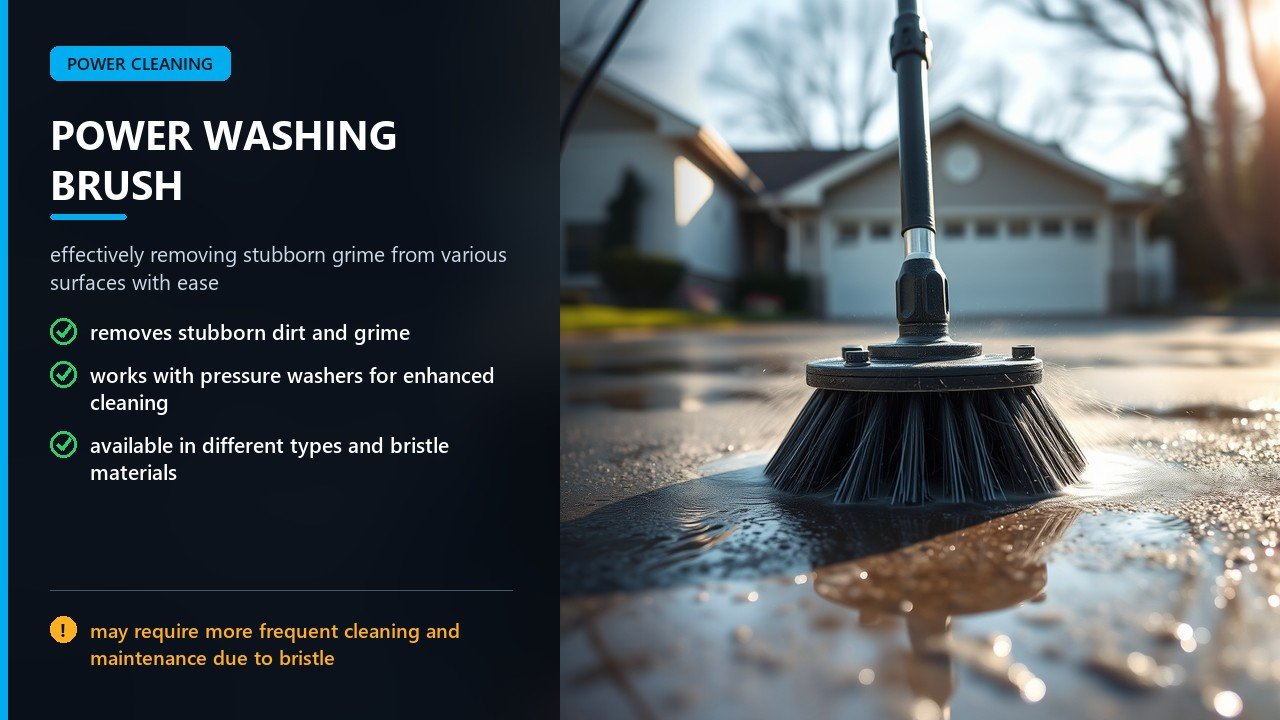
What a Power Washing Brush Is
Before choosing one, it helps to understand exactly what a power washing brush is and where it fits in a pressure washing setup.
An attachment that scrubs and rinses. A power washing brush is an accessory that fits onto the end of a pressure washer wand and combines a bristled head with the water jet. As the operator moves the brush across a surface, the bristles agitate the dirt and the water, supplied either through the brush or from the wand, washes it away. This dual action is what makes brushes so effective on soil that a jet alone would leave behind, such as sticky grime, algae, and traffic film. There are fixed brushes that mount on the wand, rotary brushes that spin as they scrub, and water fed brushes that channel the spray through the bristles. Whatever the design, the principle is the same: mechanical scrubbing paired with pressure and flow to lift soil cleanly from the surface, doing a job that no amount of water pressure could manage alone. It is a small addition that changes the character of the whole job.
Where brushes are used. A power washing brush earns its place on a wide range of jobs. Vehicle cleaning is the most common use, where a soft brush removes road film and dirt from paint, wheels, and trim without the risk of a harsh jet. Decking, fences, and cladding benefit from a stiff or medium brush that digs into textured timber and grooves. Paths, patios, and stone benefit from rotary brushes that scrub paving quickly over large areas. Commercial jobs such as cleaning transport, machinery, and buildings also use brushes to speed up work and improve results. In every case, the brush does what the water cannot, by physically working the surface to free stubborn soil, and that is why it is one of the most popular and useful attachments a pressure washer owner can add to their kit, because it turns an ordinary machine into a far more capable cleaning tool.
How it differs from a nozzle alone. The difference between cleaning with a nozzle and cleaning with a brush comes down to agitation. Water under pressure is very good at knocking loose dirt off a surface, but it struggles when soil is bonded, greasy, or tucked into texture. Bristles reach into those places and work the soil free, so the water can carry it away. This means a brush can achieve a noticeably cleaner result on many surfaces, often using less pressure than would otherwise be needed, which is gentler on the material and safer in the operator’s hands. For anyone who cleans regularly, especially vehicles and outdoor surfaces, a good brush is not a gimmick but a practical tool that saves time, improves results, and reduces strain on the machine, so both the tool and the operator last longer on demanding work and keeps the whole process comfortable from the first pass to the last.
Why Brushes Beat Water Alone
Understanding why brushes work so well helps in choosing and using them to best effect.
Mechanical agitation and chemistry. Cleaning works best when three things combine: pressure, chemicals, and agitation. A pressure washer supplies pressure, detergent supplies chemistry, and a brush supplies agitation. When all three work together, dirt is softened, lifted, and rinsed away in one smooth process. Brushes matter especially because agitation is the part a jet cannot provide. By scrubbing the surface, the bristles break the bond between soil and material, whether it is dried mud, algae, grease, or traffic film, so the water can do its job far more easily. This is why a brush often cleans better than a nozzle at the same pressure, and why professionals reach for one when a surface is genuinely dirty rather than merely dusty, which is why experienced cleaners keep a brush close at hand. It turns a surface that is merely damp into one that is genuinely clean, and it does so without the aggressive pressure that risks damage.
Gentler cleaning at lower pressure. Another advantage of a brush is that it lets the operator use less pressure for the same result, which protects the surface. Blasting delicate materials at high pressure can strip paint, raise timber grain, and force water into joints, but a brush achieves a thorough clean with gentler force because the bristles do the hard work. On cars, boats, and painted surfaces, this is a real benefit, allowing a deep clean without the risk that a close range jet creates. So a brush is not simply about more cleaning power; it is also about controlled, safe cleaning that respects the material. That combination of thoroughness and gentleness is exactly what careful operators are looking for, and it is the reason brushes remain so popular across the trade. A small brush often outperforms a big jet on the right surface, cleaning more thoroughly while being gentler at the same time.
The humble scrub brush is the tool that gives a power washer its real edge on stubborn soil. It loosens dirt that water alone would push around, it protects delicate surfaces from harsh pressure, and it leaves a more even finish. For anyone who cleans regularly, that combination is difficult to ignore.
Types of Power Washing Brushes
They come in several types, and understanding them helps match the attachment to the job and the machine.
| Brush Type | How It Works | Best For |
|---|---|---|
| Fixed wand brush | Bristle head on the wand | Spot scrubbing and vehicles |
| Rotary brush | Spinning head driven by water | Large flat areas and paving |
| Water fed brush | Sprays water through bristles | Rinsing and vehicle work |
| Gutter and tube brush | Long flexible bristle body | Pipes, gutters, and drains |
Fixed and rotary designs. The two broad families are fixed brushes and rotary brushes. A fixed brush is a bristle head that mounts on the wand and stays still as the operator scrubs, which gives precise control and is ideal for vehicles, smaller areas, and detail work. A rotary brush has a head that spins as the water drives it, covering a wider path and cleaning flat surfaces far faster, though it offers less fine control. Fixed brushes suit careful work and delicate surfaces, while rotary brushes suit large, tough areas such as concrete and paving. Many owners keep both, using the rotary brush for big jobs and the fixed brush for vehicles and finishing, because each shines in the situations the other does not, so many owners simply keep both in the kit. Learn what each type does best, and you will always have the right tool for the job in front of you.
Water fed and bristle variants. Within those families, several variations matter. A water fed brush channels the spray through or around the bristles, so the surface is scrubbed and rinsed at the same time, which is very efficient and reduces the need to switch between brushing and rinsing. A telescopic or long handled brush reaches high walls and roofs without a ladder. Bristle material also varies, from soft synthetic bristles for paint to stiff bristles for paving and masonry. Choosing among these comes down to the surfaces the operator faces, the reach they need, and whether they prefer the speed of a rotary head or the control of a fixed one, and the choice often comes down to the surfaces you meet most and how much control you need. For delicate work, control matters more than speed, and for big flat areas the reverse is true. A little thought here saves a lot of wasted effort later.
Rotary and Fixed Brush Attachments
Choosing between a fixed and a rotary brush is one of the first decisions a buyer faces, and each has clear strengths.
Rotary brush attachments. Rotary brushes are driven by the water flowing through the attachment, so they spin and scrub automatically as the operator moves them across a surface. This makes them fast and less tiring on large areas such as patios, driveways, and long paths, where the spinning action covers ground quickly and lifts soil evenly. They are popular for both domestic and commercial work because they turn a slow scrubbing job into a quick pass. The trade off is control, since a spinning head is less precise than a fixed brush and can be too aggressive for delicate surfaces. Rotary brushes also need enough flow to spin properly, so they should be matched to the machine to work at their best, so check the specification before deciding. A brush that spins freely and cleans evenly is worth more than a larger one that never works properly. Buy for fit and function, not for size alone.
Fixed brushes and detail work. A fixed brush gives the operator direct control over pressure and angle, which is valuable for vehicles, boats, fascia, and any surface that needs a careful touch. Because it does not spin, it can be worked into corners, along trim, and over contours without the risk of the head catching or marking. Fixed brushes are also better for applying and working in detergent, since the operator can scrub evenly and deliberately where it is needed. For detail work and delicate materials, a fixed brush is usually the better choice, and many owners keep one alongside a rotary brush so they can switch depending on the task in front of them, which is why a small collection is so useful. A detail brush and a broad one, kept clean, will handle almost every surface a home or business presents, and that small kit is often all anyone needs.
In practice, most operators do not choose between the two at all. They keep a rotary head for broad, flat surfaces and a fixed brush for edges, corners, and delicate work. Used side by side, the pair handles far more than either could alone, and the work moves along without delay.
Soft, Medium, and Stiff Bristles
Bristle stiffness is one of the most important choices, because it decides how aggressive the brush is on a given surface.
Soft bristles. These are designed for delicate surfaces where scratching, dulling, or damage is a risk. Vehicle paint, boat gel coat, glass, and polished or painted surfaces all call for soft bristles, which lift dirt without marring the finish. Soft brushes are also suitable for lightly soiled indoor or delicate outdoor surfaces. Because they are gentle, soft brushes may need a little more time or a gentle detergent to clean thoroughly, but the protection they offer to valuable surfaces is well worth it. For anyone cleaning cars or other finished surfaces, a soft brush is the safe and sensible default, and it should be kept clean and free of grit so it does not drag particles across the surface and leave fine scratches behind. Keeping the bristles clean and the pressure light is how a soft brush stays safe, even on the most valuable finishes, where a moment of care prevents lasting damage.
Medium and stiff bristles. Medium bristles handle general outdoor cleaning, including moderately soiled paths, decking, walls, and furniture, balancing scrubbing power with a reasonable margin of safety. Stiff bristles are for the toughest jobs, such as paving, concrete, and heavy growth on robust surfaces, where aggressive scrubbing is needed. Stiff brushes should be used with care, because they can scratch soft or painted materials, and they are generally kept away from vehicles and finishes. The guiding rule is to choose the softest bristle that will do the job, because a gentler brush used well is far safer than a stiff one used carelessly, and matching stiffness to the surface is the key to cleaning without causing harm, and it rewards a patient operator. A stiffer brush is a specialist tool rather than a default, and using it sparingly keeps surfaces safe and results reliable, which is exactly what a specialist tool should do.
Sorting bristles by firmness is really about matching the tool to the surface. Soft bristles protect, medium bristles clean, and stiff bristles cut through heavy grime. Having a brush of each grade to hand means the right level of aggression is always available without risking damage.
Brushes for Cars and Vehicles
Vehicle cleaning is the most popular use for power washing brushes, and it rewards choosing the right one and using it carefully.
Choosing a car brush. For cars, a soft bristled brush designed for automotive use is the right choice, and it should be kept exclusively for painted surfaces so it does not pick up grit from elsewhere. Many car brushes are water fed, allowing the operator to rinse and scrub at the same time, which reduces the chance of dragging dirt across the paint. A brush with a long handle helps reach roofs and lower panels without bending, and a separate, slightly firmer brush can be kept for wheels and tyres. Using a dedicated car brush with plenty of soapy water and light pressure cleans a vehicle thoroughly while protecting the finish, and it is far kinder to paint than a high pressure jet aimed carelessly at close range, and the brush avoids that risk entirely. A dedicated car brush costs little and protects an expensive finish, making it a sound investment for any owner.
Technique for vehicles. Good technique makes a real difference when brushing a vehicle. The operator should rinse the car first to remove loose dirt, then apply a gentle wash solution, and brush from the top down so that dirty water runs off rather than being scrubbed back over cleaned panels. Light pressure is enough; the bristles and soap do the work, so there is no need to press hard. The brush should be rinsed frequently to keep grit out of the bristles, and wheels, which are usually the dirtiest, should be cleaned last with a separate brush. Drying the car afterwards with a clean cloth or towel prevents water spots. Handled with a little care, a power washing brush is a fast and safe way to keep a vehicle looking its best, and it is far kinder to paint than a bare jet, and it keeps a valuable surface protected wash after wash.
A car rewards a gentle, thorough approach, and a dedicated soft brush is the tool that delivers it. Paint, trim, glass, and wheels all respond well to soapy water and light scrubbing, and the finish comes up far brighter than a jet alone could manage.
Brushes for Flat Surfaces and Decking
Large flat surfaces and textured timber are where rotary and stiff brushes come into their own.
Cleaning paving and paths. For patios, driveways, and paths, a rotary brush attached to a pressure washer scrubs a wide swathe of surface quickly and evenly, lifting dirt, algae, and moss that a jet alone would leave behind. The spinning head follows the operator across the ground, so large areas are cleaned in a fraction of the time a nozzle would take. Detergent applied beforehand or through the brush helps the bristles lift the soil, and a rinse afterwards washes it away. On paving and concrete, the combination of scrubbing and water pressure produces a finish that is noticeably cleaner and more even than pressure alone, and the operator does far less stooping and straining, which makes longer jobs more comfortable and keeps the work steady and consistent. That consistency is what turns a good cleaning setup into one that customers come back for again and again, season after season.
Decking, fences, and cladding. Textured timber such as decking, fencing, and cladding collects dirt in its grain and grooves, where a jet can pass over without removing it. A medium bristle brush works into that texture and lifts the soil free, restoring the surface far better than spraying alone. The operator should choose a brush that is firm enough to clean but not so stiff that it gouges or splinters soft timber, and should work along the grain where possible. Detergent suited to timber helps, and a thorough rinse removes the loosened dirt. After cleaning, timber may benefit from a suitable treatment or finish. Cleaned this way, decking and fencing come back to life and last longer, because dirt and growth are removed rather than left to hold moisture and encourage rot or algae to return. With the right brush and detergent, timber comes back to life and lasts much longer.
Broad surfaces are where a rotary brush earns its keep. Patios, driveways, decking, and paving all respond to an even, circular scrubbing action that a bare jet can never match, and the finish looks uniform from edge to edge.
Flow Through and Water Fed Brushes
These brushes combine scrubbing and rinsing in a single tool, which makes them efficient and convenient in everyday use.
How water fed brushes work. A water fed brush channels water from the pressure washer or tap through the brush head and out among the bristles, so that the surface is scrubbed and rinsed at the same time. This constant flow carries loosened dirt away as the operator works, which means fewer passes and a cleaner result. Some water fed brushes connect to the pressure washer wand, while others connect to a pole for high reach work, sometimes with a tap fed supply for gentle cleaning. Because the water is delivered right at the bristles, dirt does not have to be flushed off afterwards, which saves time. For vehicle cleaning, solar panel work, and high reach exterior cleaning, a water fed brush is a highly practical tool that keeps the operator moving and the surface clean without constant stopping and starting, which is exactly why water fed brushes are so efficient in practice.
Flow through fittings and poles. Water fed brushes often form part of a system with poles and hoses designed for reaching and rinsing. A telescopic pole lets the operator clean high windows, cladding, and fascia from the ground, with water fed through the pole to the brush. The flow rate and pressure must suit the brush and the job, with gentler flows for delicate surfaces and stronger flow for heavier rinsing. Connections should be leak free, and the pole should be light enough to control comfortably at height. These systems are popular with professional window and exterior cleaners because they clean quickly and safely from the ground, avoiding ladders for most work. For the household user, a simple water fed brush on a wand delivers much of the same convenience on cars and lower surfaces, where gentle, thorough cleaning is the goal and the operator wants to avoid straining to reach high surfaces.
Water fed brushes keep a steady stream flowing through the head, so the surface is rinsed as it is scrubbed. That constant flow reduces the number of passes needed and leaves far less streaking on glass and paint.
Choosing the Right Fitting
A brush is only useful if it fits your machine, so choosing the right connection is essential before buying.
Matching the fitting. Power washing brushes attach in different ways, and the fitting must match the machine. Many brushes use quick connect fittings that push and click onto the wand, while others use threads of a particular size or connect at the gun. Different regions and brands use different quick connect sizes, so it is important to check the fitting on your equipment before buying a brush. Adaptors are available to convert between common fittings, which can rescue a brush that almost fits, but it is simpler and more secure to buy a brush that matches the machine directly. Checking the connection takes only a moment and prevents the disappointment of an attachment that cannot be used, so a moment of checking saves real frustration and guarantees the brush will fit the machine you already own, which is the whole point of checking first before any money changes hands. That single habit saves real trouble.
Matching flow and pressure. Beyond the fitting, a brush should be suited to the machine’s flow and pressure. Rotary brushes in particular need a certain flow to spin correctly, and a brush designed for a large machine may not work well on a small one, or vice versa. The bristle stiffness and brush size should also suit the work, with a large rotary head good for flat expanses and a smaller fixed brush better for detail. Reading the manufacturer’s guidance and choosing a brush made for a machine of similar capability ensures the attachment performs as intended. A brush matched properly to the machine and the job cleans well and lasts, while a mismatched one wastes money and gives poor results, while a matched brush pays for itself quickly. A brush that suits the machine spins properly and cleans as designed, every time, with no surprises in the middle of a job.
Buying the wrong fitting is the most common mistake owners make. A quick check of the connector type, the thread, and the supplied adapters prevents a wasted purchase and a frustrating afternoon.
Using a Power Washing Brush Safely
Brushes are generally safer than bare jets, but they still call for care to protect both surfaces and people.
Protecting the surface. The main risk with a power washing brush is scratching or abrading a surface, which usually comes down to bristle choice and cleanliness. Grit trapped in a brush used on paint will drag across the finish, so brushes should be rinsed often and kept separate by use. Choosing the softest bristle that does the job, and applying light pressure rather than bearing down, protects surfaces. On timber and softer materials, working with the grain and avoiding harsh bristles prevents gouging and splintering. Testing a brush on a hidden area when the surface is unfamiliar is a wise habit. Used thoughtfully, a brush cleans deeply without the damage that a careless high pressure jet can cause, so the brush is often the safer choice. Choosing a soft bristle and keeping it clean is most of the battle won on almost any surface you will ever meet, indoors or out.
Personal safety and technique. As with any pressure washer attachment, personal safety matters. The operator should keep the jet and bristles away from hands, feet, and faces, and should never let the brush run over feet or loose clothing. Eye protection is sensible, since water and debris can spray, and footwear should grip on wet surfaces. The operator should work in manageable sections, keeping a comfortable stance and avoiding overreaching with a long pole or brush, which can lead to strains or falls. Water and electricity should be kept apart, particularly when brushes are used near sockets or fittings. Good habits, sensible bristles, and steady technique make brush cleaning safe, effective, and far less tiring than scrubbing by hand and gives a far better finish in less time. Safety with a brush is mostly common sense, repeated until it becomes habit and the work feels effortless from start to finish.
Good technique does more for results than any single feature. Keep the brush flat, let the water and bristles share the work, and move at a steady pace so no spot is over-scrubbed or missed.
Cleaning and Maintaining Brushes
A little care keeps a brush working well and protects the surfaces it cleans.
Routine cleaning. After use, a brush should be rinsed thoroughly to remove dirt, grit, and detergent from the bristles and the head. Dirt left in a brush hardens and can scratch the next surface it touches, so cleaning it as soon as the job ends is worthwhile. The water passages in a water fed or rotary brush should be flushed to clear any grit that could block the flow or stop the head spinning. Brushes should be allowed to dry before storage so that bristles do not stay damp and grow mould or rot. A quick routine of rinsing and drying after every use keeps the brush ready for the next job and prevents the small problems that lead to scratching and poor performance, so clean the head properly after every use. A clean brush left to dry properly will serve for a very long time indeed, so a little care goes a long way.
Storage and replacement. Brushes should be stored somewhere clean and dry, with the bristles protected from being crushed or bent, which keeps them working evenly. Hanging a brush or standing it on its head, depending on its design, avoids deforming the bristles. Over time, bristles wear down, splay, or fall out, and a worn brush cleans less effectively and can become uneven. When a brush loses its shape or its bristles, it should be replaced, since a fresh brush restores performance and protects the surface. Water fed and rotary brushes may also need their bearings or seals checked and replaced if the head stops spinning freely. Keeping spares of the brush heads you use most ensures no job is held up and the work carries on without interruption. Storing a brush well costs nothing and protects it for the next job and the next, with nothing more than a tidy shelf.
A few simple habits keep brushes ready for years of use. Rinse them after every job, remove trapped grit, and let them dry fully before storage. Check the head now and then, replace worn parts early, and the results will always stay consistent.
Getting the Best Results
Combining the right brush with good technique and suitable chemistry is what produces the best cleaning results.
Pairing brush with detergent. A power washing brush works at its best alongside a suitable detergent, because the chemical softens soil while the bristles lift it away. Car shampoo for vehicles, deck cleaners for timber, and patio or algae treatments for paving all help the brush do its job. The method is simple: apply the product, let it dwell as the label recommends, scrub with the brush, and rinse thoroughly. Letting the detergent work reduces the scrubbing needed, which is gentler on both the surface and the operator. Choosing a product suited to the material and using it at the right strength is the difference between a surface that looks clean and one that looks renewed, and that difference is what customers notice. The right detergent, given time to work, makes the brush far more effective on every surface it touches, and it clears grime with far less effort than water alone.
Technique and pace. Even the best brush rewards good technique. The operator should work in sections, keeping the brush moving rather than dwelling in one spot, and overlap passes so no area is missed. Light, even pressure is more effective than pressing hard, because the bristles need to move freely to agitate the dirt. On vertical surfaces, working from the top down lets dirty water run away rather than over clean areas. Rinsing frequently keeps grit out of the brush and the surface cleaner. Matching the brush to the surface, using detergent wisely, and working steadily with a comfortable posture all add up to a cleaner result, less fatigue, and a brush and surface that last longer, with less effort spent on the job. Good technique is free, and it is the habit that separates a careful operator from a careless one over a whole season of steady, dependable work.
The best results come from patience, the right brush, and sensible pressure, applied in that order. Clean carefully, rinse thoroughly, and finish the way you started. Do that on every job, and the tools, the surfaces, and the operator all last longer.
Frequently Asked Questions
These are the questions people ask most often about power washing brushes, and the answers help buyers choose and use them well.
Can I use a brush on car paint? Yes, provided you use a soft bristled brush made for automotive work, keep it clean of grit, and use plenty of soapy water with light pressure. A dedicated car brush protects the finish, and a water fed type helps rinse as you scrub. Avoid stiff or dirty brushes on paint, and keep a separate brush for wheels. Used carefully, a brush is a safe and effective way to clean a car without the risk that a close range pressure jet can cause. Keep a soft brush only for paint, rinse it often, and use plenty of soapy water for the safest result. Many owners keep a separate brush for wheels alone, so no grit ever reaches the paint and the finish stays spotless. A soft brush, kept clean and used with plenty of soapy water, is the safest way to wash a car at home.
Do brushes replace the pressure washer? No, a brush works with the pressure washer rather than replacing it. The water supplies pressure and rinsing, and the brush supplies the scrubbing that lifts bonded dirt. Together they clean better than either alone. Some water fed brushes can be used with a plain tap supply for gentle work, but when cleaning power is needed, the brush is an attachment to a pressure washer rather than a standalone tool. The washer supplies the pressure and the rinse, while the brush supplies the scrubbing that gets stubborn soil moving. Used together they clean faster and better than either could alone, which is the whole point of the attachment. For very light jobs, some water fed brushes can even run from a plain tap, although heavy cleaning still belongs to the pressure washer. Think of the brush as the machine’s scrubbing hand, and it becomes clear why the two work so well as a pair.
What bristle should I choose? Choose the softest bristle that will do the job. Soft bristles suit paint, glass, and delicate finishes; medium bristles suit general outdoor cleaning; and stiff bristles are for paving and concrete. Using a brush that is too stiff can scratch or gouge, so when in doubt, choose softer and use a suitable detergent to help the cleaning along. Matching stiffness to the surface protects the material and gives a better finish. When unsure, softer is safer, and a suitable detergent helps the brush do more. Soft for paint and glass, medium for general outdoor work, and stiff only for paving and concrete is a reliable rule to follow. When in doubt, choose the softer option and let a good detergent share the load, because it is always easier to add scrubbing power than to undo damage. A gentle brush used with patience will clean most surfaces beautifully, and it keeps them in good condition for longer, which is exactly what careful owners want.
How do I stop a brush scratching? The two main causes of scratching are the wrong bristles and grit trapped in the brush. Choose a soft or medium brush suited to the surface, and rinse the brush often while working so no dirt is dragged across the finish. Keep separate brushes for dirty jobs such as wheels, and clean and dry brushes after every use. Used with light pressure and clean bristles, a brush cleans without marking the surface. Light pressure is enough, because the bristles, not the force, do the work. Keep the brush clean and separate by use, rinse it often while working, and use only light pressure. Those habits prevent almost all scratching. A brush that is rinsed and free of grit will not drag particles across the finish, and that is the usual cause of marks. So clean it often, keep it soft, and guide it gently across the surface, letting the bristles and the water share the work rather than pressing down hard.
Are rotary brushes worth it? For large flat areas, a rotary brush is well worth it, because the spinning head scrubs paving, paths, and driveways far faster than a fixed brush or a nozzle alone. It is less suited to delicate or detailed work, where a fixed brush gives better control. Many owners keep both, using the rotary brush for big flat surfaces and the fixed brush for vehicles and detail, which gives the best of both worlds for a modest outlay. A fixed brush for detail and a rotary head for flat areas covers almost every job. A rotary brush scrubs paving and driveways far faster than a fixed head, while a soft fixed brush protects paint and handles detail. Keeping both means you never have to force the wrong tool to do a job it was never meant for. For a modest outlay, that pairing gives a home or a small business a complete scrubbing capability, ready for vehicles, decking, paving, and walls alike, and it lasts for years with simple care.
Final Thoughts on the Power Washing Brush
A power washing brush is one of the simplest, most affordable, and most useful attachments a pressure washer owner can add. By combining the scrubbing action of bristles with the pressure and rinsing of water, it lifts soil that a jet alone would leave behind, cleaning vehicles, decking, paving, walls, and more to a standard that water pressure by itself simply cannot reach. Its value lies in the way it turns an ordinary pressure washer into a more complete cleaning tool.
Choosing well means matching the brush to the machine and the work. Bristle stiffness, brush type, and fitting all matter, and the guiding rule is always to choose the gentlest brush that will do the job. Paired with a suitable detergent and used with good technique, a brush cleans deeply and safely, protecting both the surface and the operator. Whether the task is a car, a patio, or a fence, there is a brush to make the work faster and the result better.
Looked after with a little care, a power washing brush lasts well and keeps performing. Rinsing it after every use, storing it so the bristles are protected, and replacing it when worn all help, and keeping the right brushes on hand means the tool is always ready. Inexpensive, effective, and versatile, the power washing brush earns its place in any cleaning kit, and it is one of the easiest ways to improve the results of every job.
To explore pressure washer trailers and equipment that pair well with brushes and other attachments, see pressure washer trailers and equipment.
A power washing brush is one of the simplest and most useful additions any pressure washer owner can make. It scrubs where a jet only rinses, protects delicate surfaces from harsh pressure, and turns routine cleaning into something faster and far more thorough. Whether the task is a car, a patio, a deck, or a wall, the right brush makes light work of it. Choose a soft, medium, and stiff option, match the fitting to your machine, and look after each brush with a quick rinse. Looked after that way, these tools will serve for years and make every cleaning job faster, safer, and far more satisfying.