How a Pressure Washer Steamer Blasts Through Grease and Grime
When people search for a pressure washer steamer, they are usually chasing one thing: heat. A cold pressure washer can push dirt and mud off a surface, but the moment the mess is greasy, oily, sticky, or baked on, cold water starts to lose the fight. Add heat, and the whole equation changes. Grease softens, oil lifts, and stubborn grime releases far more easily. That is why hot-water and steam pressure washers are the tools of choice in busy commercial kitchens, auto shops, food plants, and industrial facilities. This guide explains what a pressure washer steamer is, how it makes steam, where it pays off, how it compares with a plain pressure washer, and how to choose and maintain one.
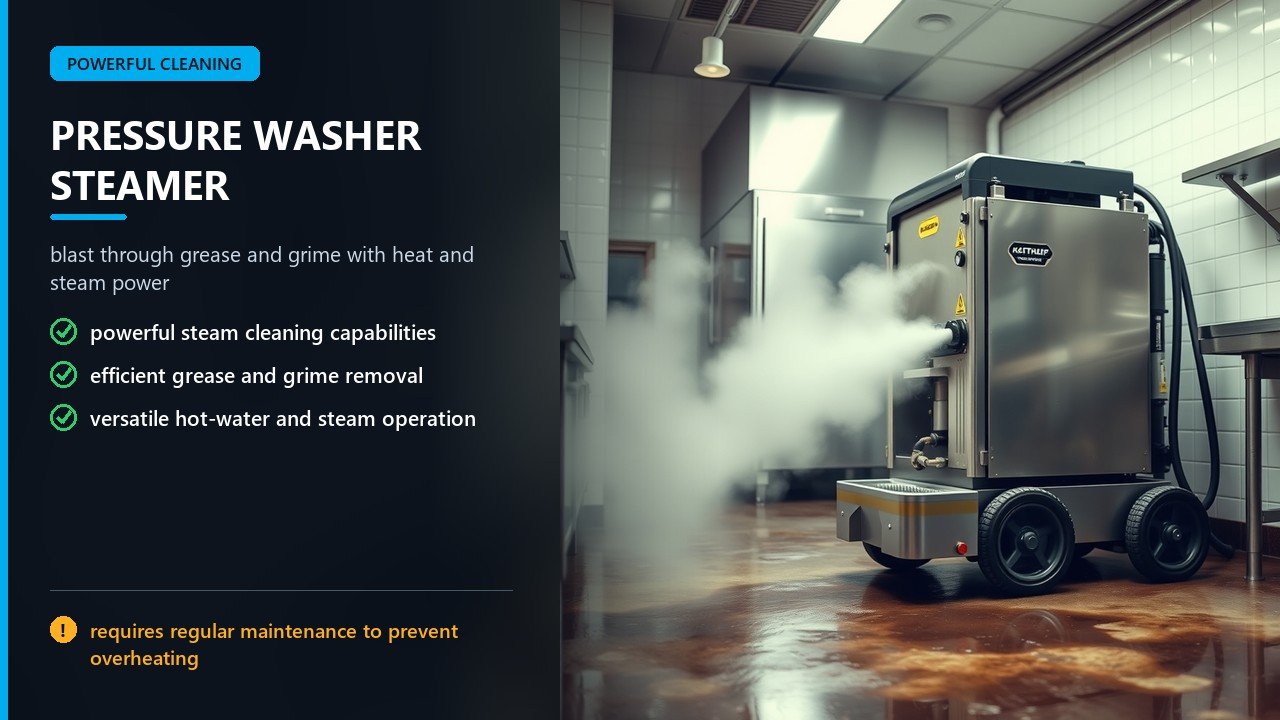
What a Pressure Washer Steamer Actually Is
The term covers a few related machines, so it helps to sort them out.
Hot-water pressure washer. A unit that heats water, usually with a diesel or gas burner, before spraying it.
Steam pressure washer. A hot-water machine pushed to produce steam or a high-temperature mist at the nozzle.
Dry steam cleaner. A low-moisture machine that uses steam with very little water, popular for detail work.
Heated surface cleaner. A rotary attachment fed by a hot-water machine for flatwork like driveways.
Combination machines. Units that switch between cold water, hot water, and steam.
Whatever the label, the idea is the same: add heat to pressure and the cleaning power jumps.
How Heat and Steam Clean So Well
Heat does far more than make water feel nice.
It breaks the bond. Grease clings through surface tension, and heat weakens that bond so water can lift the mess.
It thins grease. Warm grease flows away instead of clinging to the surface.
It boosts detergent. Cleaning chemicals work far better in warm water, so you use less and get more.
It sanitizes. High temperature kills many bacteria, which is why food facilities rely on hot water.
It dries fast. Hot surfaces dry quickly, reducing flash rust and speeding up the job.
That is the core promise of a pressure washer steamer: the heat attacks the dirt itself, not just its surface.
How a Hot-Water or Steam Machine Makes Heat
Understanding the heating side helps you compare machines at a glance.
The coil. Water passes through a heated coil, absorbing heat before reaching the pump outlet or nozzle.
The burner. A diesel or gas burner fires the coil, and a thermostat holds the target temperature.
The fuel. Diesel or kerosene is common, while some units use propane or natural gas.
The exhaust. A flue carries exhaust away, so correct venting is essential.
The temperature rise. A machine heats water by a set number of degrees, which limits how hot it gets at a given flow.
The steam threshold. Above roughly 212 degrees Fahrenheit, water flashes to steam, creating the hot mist people recognize.
The heating side is the complex, expensive part of these machines, which is why they cost more than cold units.
Where Heat and Steam Pay Off Most
Heat wins in settings where grease and hygiene are on the line.
Commercial kitchens. Hoods, filters, and greasy floors clean far faster when the water is hot.
Auto and truck shops. Engine grease and road film lift quickly with hot water.
Food plants. Hot water satisfies sanitation demands while pressure removes residue.
Industrial sites. Oil, coolant, and heavy grime come off machinery and floors with heat.
Fleet and trailer washing. Hot water strips winter salt and oil from large vehicles fast.
Heated flatwork. A surface cleaner fed with hot water makes short work of stained concrete.
Whenever grease, oil, or sanitation matter, heat is the deciding factor.
| Setting | Why Heat Helps |
|---|---|
| Kitchens | Melts baked-on grease |
| Auto shops | Lifts oil and road film |
| Food plants | Sanitizes surfaces |
| Industry | Removes oil and coolant |
| Fleet washing | Strips salt and grime |
Steam Versus Cold Water: The Real Difference
Comparing the two shows why heated machines command a premium.
Speed. Heat softens grease so you spend less time scrubbing and more time rinsing.
Water use. Hot water and steam clean with less water because heat does part of the work.
Chemicals. Warm water lets detergents work harder, so you use less.
Sanitation. Only heat kills bacteria reliably, which cold water cannot do.
Cost and complexity. Heated machines cost more up front, burn fuel, and need more care.
Best fit. Cold is fine for light work; heat earns its place when grease and hygiene matter.
| Factor | Cold Water | Heat or Steam |
|---|---|---|
| Grease removal | Slow | Fast |
| Water used | More | Less |
| Chemical use | More | Less |
| Sanitizing | No | Yes |
| Upfront cost | Lower | Higher |
Choosing the Right Temperature and Pressure
Balancing heat and force protects the surface and gets better results.
Light grease. Warm water and moderate pressure handle most household grease.
Heavy grease. Near-boiling water and strong pressure cut kitchen and engine grime.
Delicate surfaces. Lower pressure and careful heat protect paint, wood, and soft materials.
Food surfaces. High temperature for sanitation, with pressure kept within safe limits.
Adjustability. Machines with adjustable settings let you dial in the right combination.
Most jobs come down to hot enough to soften, strong enough to remove, and gentle enough to protect.
Fuel, Power, and Running Costs
Heated machines cost more to run, so plan the budget up front.
Fuel consumption. A burner consumes diesel, kerosene, or gas, and the cost adds up on big jobs.
Electricity. The pump still needs power, adding to operating cost.
Maintenance. Burners, coils, and fuel systems need more service than a cold machine.
Descaling. Hard water builds scale in the coil, so descale on a schedule.
Fuel storage. Safe storage and handling of fuel are part of the ownership picture.
Payback. In commercial work, time and chemical savings often justify the running cost.
Run the numbers against your workload, and heat usually earns its keep.
Using a Steam Pressure Washer Safely
Hot water and steam bring real risks, so safety habits matter.
Beware of scalding. Near-boiling water and steam cause serious burns, so never reach into the spray.
Vent the exhaust. A burner produces carbon monoxide, so run the machine outdoors or vent it properly.
Handle fuel with care. Respect fire safety and local rules when storing and refueling.
Match the pressure. Heat plus force equals real power, so adjust to the surface.
Protect skin and eyes. Wear gloves and eye protection and keep a safe distance.
Let it cool. Give the machine time to cool before servicing or storage.
Respecting a steamer keeps a powerful tool from becoming a hazard.
Maintaining a Hot-Water or Steam Unit
These machines reward regular care with years of service.
Descale the coil. Scale from hard water reduces heat transfer, so descale regularly.
Check the burner. Clean the burner and fuel filter so it fires reliably and burns cleanly.
Inspect the coil. Remove soot buildup to keep efficiency high.
Service the pump. The pump still needs oil and seal checks.
Flush after chemicals. Rinse the system so residue does not corrode the coil or lines.
Winterize. Drain the machine to prevent freeze damage in cold weather.
Neglect a heated machine and it loses its edge fast; care for it and it delivers hot, powerful cleaning for years.
Steam Versus Hot Water Versus Cold: Which to Pick
Choosing among the three comes down to the job, not prestige.
Cold water. Cheapest, simplest, and enough for mud, dirt, and light grime on tough outdoor surfaces.
Hot water. The practical sweet spot for grease and oil, since it cleans fast without the fuss of full steam.
Steam. Best where moisture must stay low or maximum heat is needed for sanitation and heavy grease.
Combination machines. Offer the flexibility to switch modes as the job changes.
Budget reality. The more heat you add, the more the machine costs to buy, run, and maintain.
If grease is rare in your work, a cold machine is smart. If grease is your daily reality, heat is not optional.
Essential Accessories for Hot-Water and Steam Work
The right accessories multiply the value of a heated machine.
A turbo nozzle. Boosts effective cleaning power without raising pressure.
A surface cleaner. With hot water, it makes flatwork fast and even.
Heat-rated hoses. Standard hoses can soften and fail, so use hoses rated for the temperature.
Chemical injector. Lets you apply detergent at low pressure before the hot rinse.
Extension and angled wands. Reach hoods, ceilings, and tight corners safely.
Safety gear. Gloves, eye protection, and a face shield are wise around hot spray.
Matched accessories turn a good hot-water machine into a complete cleaning system.
| Accessory | Benefit |
|---|---|
| Turbo nozzle | Extra cleaning power |
| Surface cleaner | Fast, even flatwork |
| Heat-rated hose | Safe at high temperature |
| Chemical injector | Easy detergent application |
Troubleshooting Heated-Machine Problems
Most issues trace back to heat, fuel, or water quality.
Water not getting hot. Often a fuel problem, a dirty burner, or a scale-covered coil.
Weak heat at high flow. The machine may be rated to raise temperature only so far at your flow rate.
Burner will not fire. Check the fuel supply, filter, and ignition system.
Smoky exhaust. Usually a sign of poor combustion, so clean the burner and check the air setting.
Scale and low efficiency. Hard water coats the coil, so descale to restore heat transfer.
Pressure loss. A clogged nozzle, worn pump, or kinked hose can rob pressure.
Working through these in order usually reveals the cause and restores full performance.
Surface Cleaners and Hot Water
Pairing a surface cleaner with heat is a proven flatwork combination.
Even results. The deck keeps nozzles at a fixed height for consistent cleaning.
Heat plus coverage. Hot water lifts grease while the plate covers ground fast.
Correct sizing. Match the plate to the machine’s flow so the bar spins properly.
Heat-rated fittings. Make sure the plate and connectors handle the temperature.
Care after use. Rinse and inspect the plate to prevent corrosion and warping.
For large greasy slabs, this combination is hard to beat.
Getting the Best Results With Heat
A little technique goes a long way with a heated machine.
Pre-soak the grease. Apply detergent and let the heat and chemistry work before the rinse.
Give it dwell time. Letting the chemical and warmth sit loosens grime so the rinse does less work.
Work top to bottom. Clean from high surfaces down so dirty water does not re-soil what you just cleaned.
Use the right nozzle. A fan tip suits rinsing, a turbo tip adds power, and a soap tip applies detergent.
Rinse thoroughly. A clean hot rinse carries the loosened mess away instead of leaving a film.
Do not overheat delicate surfaces. Match temperature to the material to avoid warping or stripping finish.
Small habits like these separate a fast, clean result from a slow, smeary one.
Indoor and Outdoor Use
Where you run a steamer affects how you run it.
Outdoors. The natural choice for engine bays, driveways, and fleets, where exhaust and spray are no problem.
Indoors with ventilation. Kitchens and plants can use hot water indoors when the burner exhaust is vented properly.
Closed spaces. Never run a fuel-burning machine in an enclosed area without ventilation, because of carbon monoxide.
Water containment. Indoors, plan for runoff so hot water and chemicals do not create a mess or a slip hazard.
Airflow. Good airflow also helps surfaces dry fast, which is one advantage of heat.
Planning for exhaust and drainage keeps indoor jobs safe and tidy.
Cold Weather and Winterizing
Heated machines need extra care when temperatures drop.
Drain after use. Standing water can freeze and crack the pump, coil, or lines.
Use antifreeze for storage. A pump saver or antifreeze protects internal parts over winter.
Warm the machine safely. Bring it above freezing before starting to avoid damage.
Watch hose flexibility. Cold hoses stiffen, so handle them carefully.
Store indoors when possible. A dry, above-freezing space prevents the worst winter damage.
A few minutes of winterizing protects an expensive machine from a costly freeze.
Frequently Asked Questions
What is a pressure washer steamer? It is a pressure washer that heats water, sometimes to the point of steam, so heat and pressure work together to remove grease and grime.
Do I need steam or just hot water? For heavy grease and sanitation, steam or very hot water helps most. Light household jobs are usually fine with warm water.
Can a steam pressure washer damage surfaces? Yes, if pressure and temperature are too high. Match the settings to the surface and test in a hidden spot first.
Is steam better than hot water? Steam adds a bit more heat and less moisture, but a strong hot-water unit often cleans grease just as well for less complexity.
How hot does the water get? Hot-water units commonly reach around 200 degrees Fahrenheit or more, and steam units exceed boiling at the nozzle.
What fuel do these machines use? Most burn diesel or kerosene, and some use propane or natural gas, while the pump runs on electricity or its own engine.
How often should I descale the coil? It depends on water hardness and use, but many operators descale monthly or seasonally.
Can I use a steam pressure washer indoors? Only with proper ventilation, since the burner produces carbon monoxide. Many jobs are best done outdoors.
Is a hot-water pressure washer worth it? For grease, oil, and sanitation work, the time and chemical savings usually justify the cost. For light cleaning, a cold machine is enough.
What temperature kills bacteria? Most bacteria are killed well above 160 degrees Fahrenheit, which is why hot-water cleaning supports sanitation in food and medical settings.
Can I add heat to my existing pressure washer? Not easily. Heating requires a dedicated burner and coil, so hot-water capability is usually built into the machine rather than added later.
Does steam use less water than hot water? Yes. Because heat does part of the work, steam and very hot water clean with less water than a cold wash.
Practical Examples
Concrete scenarios show the value of heat in the field.
A restaurant kitchen. A steam unit melts baked-on grease off hoods and filters in a fraction of the time a cold machine needs.
An auto detail shop. Hot water lifts road film and engine grease so the rinse carries it away instead of smearing it.
A food plant. High-temperature water sanitizes equipment while pressure removes residue, meeting hygiene demands.
A fleet yard. A hot-water unit strips winter road salt and oil from trucks fast, keeping the schedule on track.
In each case, heat does the hard work and the operator finishes the job faster.
Is a Steamer Worth It for Home Use
Homeowners often wonder whether the extra heat is worth the cost.
When it pays. If you clean grills, engines, greasy driveways, or shop floors, heat saves real time.
When it does not. For siding, fences, and mud, a cold machine does the job for far less.
Middle path. A hot-water machine or a rented steam unit for occasional big jobs can be the smart compromise.
Maintenance reality. Home owners must still handle fuel, descaling, and winterizing.
Resale and rentals. For one-off jobs, renting a heated unit often beats buying one.
The honest answer is that heat earns its keep when grease and oil are regular guests, and not before.
Final Thoughts
A pressure washer steamer is not just a pressure washer with extra steam. It is a cleaning system built around heat, and heat changes everything when grease, oil, and sanitation are on the line. Hot-water and steam units cost more, burn fuel, and demand careful maintenance and safety habits, but they cut through messes that cold machines only push around. If your work involves grease, road film, or hygiene, a hot-water or steam pressure washer will pay for itself in time saved and results you can see.