A telescoping extension wand for pressure washer work is the sensible answer to a problem every operator meets sooner or later: some things are simply out of reach. Gutters, rooflines, high cladding, soffits, and the upper walls of buildings are awkward and often unsafe to clean from a ladder, yet they collect dirt and green growth just like everything else. A telescoping wand extends the reach of your pressure washer so you can clean these surfaces from the safety of the ground, which is quicker, easier, and far less risky than balancing on a ladder with a lance in one hand. This guide explains how these wands work, how to choose one that suits your machine and your work, how to use it safely, and how to look after it so that a single accessory opens up a whole range of cleaning you might otherwise avoid.
What a Telescoping Extension Wand Is
Understanding what the tool actually is helps you buy the right one and use it well.
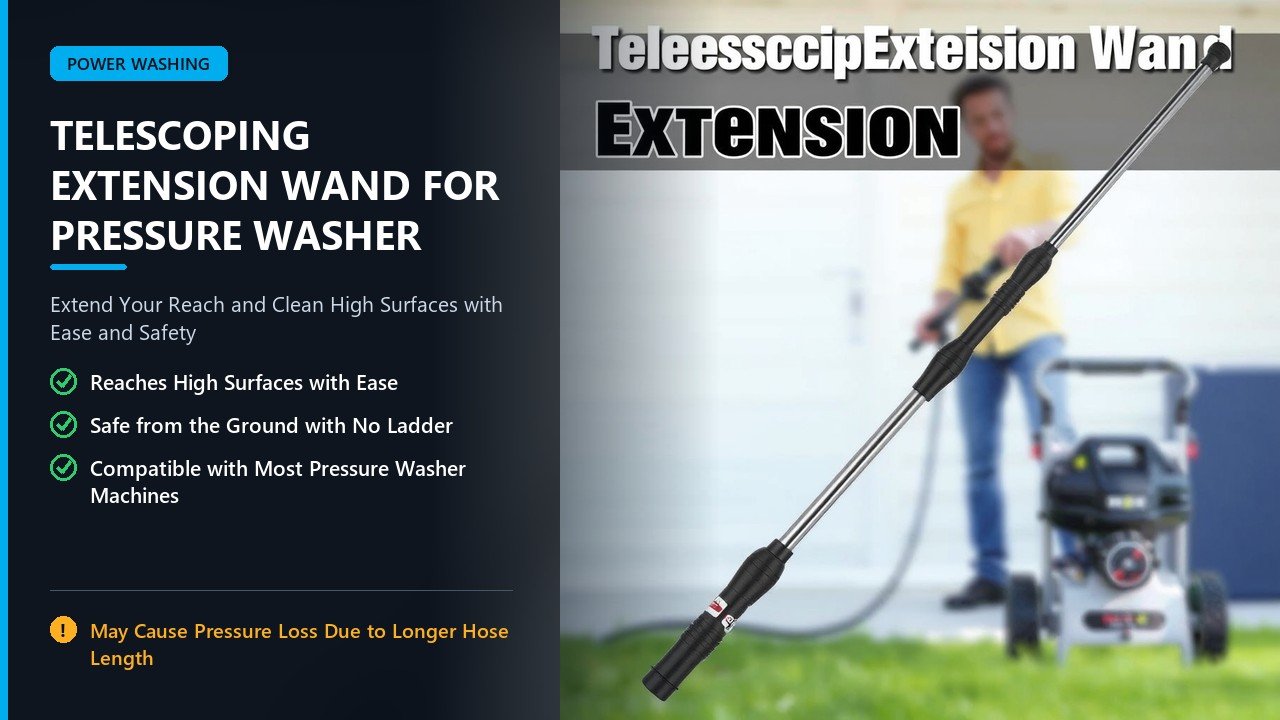
The basic idea and design. A telescoping extension wand is a lance made from several sections that slide within one another, letting you shorten it for storage and detail work and extend it to reach high or distant surfaces. At its base is a quick connect fitting that attaches to your pressure washer gun, and at its tip is another connection for a nozzle. Between the two, a series of tubes and locking collars allow the wand to grow from a compact length to a much longer one, often reaching several metres when fully extended. A rigid internal or external guide keeps the sections aligned, and a trigger or control remains at the gun so the operator keeps full control of the spray. The whole idea is to bring the nozzle to the work rather than bringing the work to the nozzle, and to do so without ladders or scaffolding.
Why it beats ordinary wands and ladders. A standard wand keeps you close to the surface, which is fine at ground level but forces you onto a ladder for anything overhead. Ladders are slow to position, awkward to move, and genuinely dangerous when combined with water, hoses, and a trigger. A telescoping wand removes that risk by letting you stand safely on the ground and aim upward, and it removes the time and effort of repeatedly climbing and descending. It also reaches places a ladder cannot easily be placed, such as above flower beds, over parked cars, or against uneven ground. For anyone who cleans buildings, gutters, or tall vehicles, the telescoping wand is not a gimmick but a practical tool that changes what jobs can be done safely and in a reasonable time, and it often pays for itself in avoided ladder work alone. Few tools change a job’s safety so completely for so little money. On a busy site, the time saved over a single season quickly adds up to more than the cost of the wand.
Why Reach Matters on Pressure Washing
Reach is one of the most overlooked factors in pressure washing, yet it decides how much of a building you can actually clean.
The surfaces that escape normal wands. Ground level cleaning covers the pavements, driveways, and lower walls, but a large part of any building sits above that. Gutters fill with debris and stain the fascia, rendering collects green algae on its upper faces, cladding weathers at height, and soffits and eaves gather grime that is hard to see and harder to remove. Commercial properties, farm buildings, and even ordinary houses all present these high surfaces, and they are exactly the areas that look worst when they are neglected. Without a way to reach them, an operator either ignores them or turns to ladders and access equipment, both of which add cost and risk. The value of a telescoping extension wand for pressure washer work is that it brings these neglected surfaces within easy, safe reach, so the whole building can be cleaned in one consistent pass. That consistency is what clients notice.
The cost of ignoring high surfaces. When high surfaces are left uncleaned, the consequences go beyond appearance. Organic growth such as algae and moss spreads downward over time, and what begins at the roofline can creep down the walls and into gutters, eventually causing damp and staining below. Blocked gutters overflow and damage fascias, and dirty cladding can reduce the life of the material beneath. For commercial properties, a grimy exterior gives a poor impression to customers and can even breach the terms of a lease or a maintenance agreement. Reaching these areas regularly, and cleaning them without the drama of ladder work, keeps a building looking well kept and prevents small problems from growing. That is the practical case for owning a telescoping wand, and it is a strong one for anyone who takes pride in the result of their work. Reach is not a luxury; on buildings it is a necessity.
How a Telescoping Wand Works
The mechanism is straightforward once you see it, and knowing the parts helps you judge quality.
Locking sections and alignment. Most telescoping wands are built from a set of nested tubes, each slightly smaller than the last, that slide out to extend the wand. At each joint is a locking collar or clamp that grips the inner tube and holds it in position, and these locks are the heart of the design. A good wand locks firmly at each section so the tube cannot slide or rotate while under pressure, since a wand that collapses or twists mid job is both frustrating and potentially dangerous. Some designs use a twisting collar, others a lever or cam lock, and some use a screw clamp. Whichever type is used, the locks should feel positive and secure, and they should hold their grip through many cycles of extending and retracting. Checking the quality of these locks before buying tells you more about a wand than any other feature. A firm lock is the mark of a tool worth owning.
Water path and flow through the sections. Inside the telescoping tubes runs the water, passing through seals at each joint so that pressure is maintained along the full length. Each moving joint is a potential leak point, which is why quality seals and accurate machining matter so much in a good wand. As water travels through a long, narrow wand, some pressure and flow are inevitably lost, so the machine needs adequate output to deliver a useful jet at the far end. Many telescoping wands are designed with this in mind and use a reasonably wide internal path to minimise losses. Understanding that the wand is a system of tubes, seals, and locks helps you appreciate why a cheap one leaks and jams while a good one works smoothly for years, and it guides you toward the features worth paying for. Reliable seals and accurate locks are what separate a good wand from a frustrating one, so it is worth checking the locks by hand before you buy.
Choosing the Right Length
The length of a telescoping wand is a balance between reach and control, and the right choice depends on the work.
Matching length to height and reach. Telescoping wands range from modest extensions of a metre or so to long poles of several metres, and each length suits different tasks. A shorter extension helps with single storey buildings, fences, and vehicles, while a long wand is needed for two storey houses, gutters, and taller commercial walls. The useful rule is to choose a wand that reaches your typical highest point from the ground with a little to spare, without being so long that it becomes unwieldy. Remember that you will be aiming upward, so the effective reach is somewhat less than the full extended length, and allow for the length of your arm and the angle of the spray. Measuring the height you need to reach before buying prevents the disappointment of a wand that falls just short of the job. A little extra reach is worth paying for. It turns an impossible job into a routine one.
Weight and control at full extension. As a wand extends, its weight acts further from your body, and the leverage makes it feel heavier and harder to control. This is why longer is not always better, and why the weight of the wand material matters so much. A very long wand in a heavy material can be exhausting to hold steady and difficult to aim, especially when water is flowing through it and adding its own weight. The trick is to choose the shortest wand that does the job, and to prefer lightweight materials for longer lengths. Some operators use a shoulder strap or support to help carry the weight of a long wand, which makes a real difference on big jobs. Balancing reach against control is the key to a telescoping wand you will actually enjoy using. Comfort is what keeps a tool in regular use. A wand that feels awkward will soon be left on the shelf. A comfortable wand is one you will actually reach for.
Materials, Weight, and Balance
The materials a telescoping wand is made from determine how easy it is to use and how long it lasts.
Aluminium, stainless, and composite. The most common materials for telescoping wands are aluminium, stainless steel, and various composites. Aluminium is light and reasonably strong, which makes it a popular choice for long wands where weight matters most. Stainless steel is stronger and highly corrosion resistant, but heavier, so it suits shorter wands or situations where durability is the priority. Composite materials can be very light, and some quality wands use them to good effect for long reaches, though they vary in strength and stiffness. The right material depends on the length: a short wand can afford the strength of stainless, while a very long wand benefits from the lightness of aluminium or a good composite. Matching material to length keeps the wand both manageable and durable. Matching the material to the length is the key to a wand that lasts through many seasons of hard, regular use, for many years to come.
Balance, fittings, and build quality. Beyond the tube material, the fittings and build quality shape how the wand behaves. Brass or stainless quick connect fittings resist wear and seal reliably, while quality seals and accurate locks keep the wand rigid and leak free. The balance of the wand, how it feels when extended and how easily it can be aimed, matters as much as its weight, and a well designed grip helps enormously. Check that the locking collars are easy to operate even with wet hands, and that the wand does not flex excessively when extended. Look for protective covers on the sections, which prevent grit from entering the joints and grinding the seals. A wand that is light, rigid, well sealed, and comfortable to hold is worth more than one that merely reaches furthest. Balance and build quality matter as much as raw length, so inspect both before you buy.
Nozzles for Extension Wands
The nozzle at the end of a telescoping wand decides how the jet behaves at the surface, so it deserves thought.
Matching the nozzle to the job and the reach. When cleaning from a distance, the jet has time to spread and lose energy, so the choice of nozzle matters even more than at close range. A focused tip delivers a stronger stream that reaches high surfaces with more force, while a wider fan covers more area but with less intensity. For gutters and stubborn growth on high walls, a narrow tip is usually more effective, whereas rinsing a large high wall is faster with a broader spray. Because you are further from the surface, small changes in nozzle angle have a larger effect on where the water lands, so keeping the lance steady and using a tip that suits the work gives the best results. Carrying a small set of nozzles and choosing the right one for each surface is the simplest way to get the most from an extension wand.
Pressure, flow, and tip size. A telescoping wand loses some pressure and flow through its length, so avoid making things worse with an oversized or worn nozzle. Using a tip that is too large wastes the flow your machine produces and leaves the jet weak at the far end, while a tip that is too small raises pressure and strains the pump. The aim is to match the nozzle to the wand and the machine so the jet arrives at the surface with useful force without overloading the pump. If the jet feels weak at full extension, check the nozzle size, the seals, and the inlet supply before blaming the wand. Choosing nozzles that suit the reduced output at the tip, and keeping them clean, is what makes a telescoping wand actually clean rather than merely spray. Keeping the nozzle matched and clear does the rest and keeps the job moving quickly, and a matched tip is the simplest way to get a strong, even jet out of any wand on every job.
Cleaning Gutters and Roofs
Gutters and rooflines are the classic reasons people buy a telescoping wand, and doing them well takes a little technique.
Clearing gutters from the ground. Blocked gutters are a common and troublesome problem, and a telescoping wand lets you deal with them while standing safely on the ground. Using a suitable nozzle, you can direct the jet into the gutter to flush out leaves, moss, and debris, and to clear downpipes so water flows away freely. Work methodically along the gutter, starting away from the downpipe and flushing debris toward it, and be prepared for the muck that comes out. The pressure needed depends on the build up, and a moderate jet is usually enough to shift most debris without driving it further in. Always be aware of where the water and debris are going, since flushing a gutter sends a considerable load of dirt and water to the ground, and protect plants and passers by accordingly. For anyone who offers gutter cleaning as a service, the wand turns a risky ladder job into a straightforward task.
Rooflines and high surfaces. Beyond the gutter itself, a telescoping wand helps clean the fascia, soffit, and the lower edge of the roof, where green growth and dirt accumulate. These surfaces are difficult to reach with a normal wand and awkward from a ladder, so the extension wand earns its keep here. Use a nozzle and pressure that suits the material, since fascias and soffits may be painted or made of softer material that a harsh jet could damage. Work along the roofline in even passes, rinsing as you go, and take care not to drive water up under the roof edge or into vented areas, where it could cause damp problems inside. Done carefully, cleaning the roofline transforms the look of a building and protects the fabric of the roof from the damage that trapped moisture and growth can cause over time. A clean roofline protects the building as well as improving its appearance, in a fraction of the time a ladder would demand, and at far less risk to the operator.
Cleaning High Walls and Cladding
High walls, cladding, and render are among the most satisfying surfaces to clean with an extension wand.
Working high walls evenly. Cleaning a tall wall evenly is harder than it looks, because the distance to the surface changes as you move and the jet spreads differently at height. The trick is to work in horizontal bands from the top down, keeping the nozzle at a consistent distance and overlapping each pass so that no stripes are left behind. Pre wetting the wall and applying detergent at low pressure improves results and lets the jet rinse rather than scrub, which is kinder to the surface. On very high walls, break the work into manageable sections so you never over reach or lose control of the wand, and rinse each section fully before moving on. A steady, methodical approach with the right nozzle gives a uniform, professional finish that a scrambling, random method never will. Method is what separates a professional finish from an amateur one, and the right nozzle is a big part of that difference.
Cladding, render, and delicate surfaces. Different wall materials need different treatment, and an extension wand makes it easier to clean them without ladders but not necessarily safer for the surface itself. Render, painted cladding, and some composite panels can be damaged by too much pressure or by holding the jet too close, so start gently and increase only if needed. Timber cladding and older painted surfaces need particular care, and a detergent led approach with a gentle rinse is usually best. Timber and composite cladding should not be soaked excessively, especially at the joints, where water can penetrate and cause rot or swelling. Matching pressure, nozzle, and detergent to each material, and testing on a hidden area first, is what allows a telescoping wand to clean high walls thoroughly without causing the very damage you are trying to prevent. Gentleness toward the surface is the mark of an experienced hand, and it is what keeps a high wall looking clean for longer, which is the whole aim of the work and a sign of a job done properly.
Using a Telescoping Wand Safely
A long wand brings extra reach but also new safety considerations that should never be ignored.
Stability, footing, and control. The single greatest risk with a telescoping wand is losing control while aiming upward. The extended length magnifies every movement, so a light push or a gust of water reaction can swing the nozzle unexpectedly. To stay safe, plant your feet firmly, keep a wide and stable stance, use both hands on the wand, and avoid over reaching at full extension. On ladders or steps, do not use a long telescoping wand, because the leverage makes falls far more likely, defeating the whole purpose of the tool. Keep the working area clear of trip hazards such as hoses and buckets, and pause if the wand starts to feel unmanageable. A steady, unhurried approach is far safer and, in the end, faster than wrestling with an over extended wand. Control is worth more than reach once the wand is fully extended, so keep the sections as short as the job allows.
Electrical, chemical, and overhead hazards. Reaching high brings additional hazards that deserve attention. Never point a pressure washer jet at overhead electrical lines, fittings, or connections, and keep well clear of trees and branches near power cables. Be mindful of what is above and behind you, since water and debris will fall and can splash back. If using detergent at height, protect yourself from drips and overspray, and avoid chemical contact with eyes and skin. Watch for loose materials such as tiles or render that might be dislodged, and never work directly above people or animals. Keeping these hazards in mind, and stopping when conditions are unsafe, is what allows you to enjoy the benefits of a telescoping wand without turning a useful tool into a source of avoidable injury or damage. Awareness of what is above and behind you prevents most accidents, so take a moment to look up and around before you start, and keep your footing solid, with both hands on the wand and the nozzle under control throughout the job.
Water Feed and Pressure Loss
Because telescoping wands add length and joints to the water path, understanding pressure and flow loss helps you get good results.
Why pressure drops through a long wand. Water flowing through any pipe loses some pressure to friction, and the longer and narrower the pipe, the greater the loss. A telescoping wand adds both length and a series of joints, each of which can cost a little pressure and flow, especially if the internal path is narrow or the seals are not tight. This is why a machine that feels powerful at a short lance may seem weaker at the tip of a long extension, and why adequate machine output matters for serious extension work. Choosing a wand with a generous internal diameter and good seals keeps the loss to a minimum, and using the correct nozzle size ensures the flow that arrives is used efficiently. Understanding this helps you set realistic expectations and choose equipment that works as a system rather than as isolated parts. A little knowledge of pressure and flow goes a long way.
Keeping the supply and seals in good order. Since a telescoping wand is more sensitive to any weakness in the system, keeping the whole setup in good order pays off. Make sure the inlet supply always exceeds the machine’s rated flow, so the pump never has to work with less water than it needs, and keep the inlet filter clean. Check the wand’s seals and locks regularly, and replace worn rings promptly, since a small leak at one joint wastes pressure along the whole length. Keep the nozzle clear and correctly sized, and consider whether your machine has enough output for the length of wand you use. Attending to the supply, the seals, and the nozzle keeps a telescoping wand delivering a strong, usable jet at the far end, which is the whole point of buying one. Keep the supply, seals, and nozzle right and the jet stays strong and the wand earns its keep without asking anything more of you, season after season and job after job.
Maintenance and Storage
A telescoping wand has moving parts, so a little routine care keeps it sliding freely and sealing tightly.
Cleaning the sections and joints. After use, extend the wand fully and rinse it, paying attention to the joints and locking collars where grit accumulates. Allow it to dry before retracting it, since trapping moisture and dirt inside the sections encourages corrosion and wear. Wipe the sections, check the seals for damage, and operate the locks to make sure they still move freely and hold firmly. If a section becomes stiff, identify the cause rather than forcing it, since grit or a distorted seal is usually to blame, and forcing the wand can bend a tube or break a lock. A clean, dry wand that is checked after each job stays smooth and reliable, and it avoids the gradual stiffening that makes cheap wands so frustrating to use over time. A quick clean after every job keeps the sections sliding freely and the seals intact, so a few minutes of care saves hours of trouble.
Lubrication and safe storage. A little care with lubrication keeps the moving sections working smoothly. Apply a suitable lubricant sparingly to the seals and sliding surfaces, using a product compatible with the materials, and avoid lubricants that attract grit or degrade rubber. Store the wand clean, dry, and preferably retracted or supported so it does not sit under load or in a position that bends a section. Keep it somewhere dry to prevent corrosion, and protect the fittings and nozzle tip from knocks. A storage bag or a wall rack keeps the wand tidy and ready to use. Looked after this way, a telescoping extension wand holds its length, seals, and locks for many seasons, and it remains a genuinely useful tool rather than a stiff, leaking nuisance that gets left in the corner. Stored well, the wand is ready the moment you need it, with no fuss at all.
| Care Task | How Often | Why It Helps |
|---|---|---|
| Rinse and dry sections | After every use | Prevents corrosion and grit |
| Check seals and locks | Weekly or before big jobs | Keeps the wand rigid and leak free |
| Lubricate sliding parts | Occasionally | Keeps sections moving smoothly |
| Clean the nozzle | Regularly | Maintains a strong, even jet |
| Store dry and retracted | Between jobs | Protects sections and fittings |
Buying Guide and Value
Choosing a telescoping extension wand is straightforward once you know what to look for and what you need it to do.
What to check before you buy. Start with the reach you need, based on the height of the surfaces you clean, and choose a length that covers it with a little to spare. Consider the material and weight, preferring light but rigid construction for long wands, and check the quality of the locks and seals, since these decide how well the wand performs and how long it lasts. Confirm that the connections match your machine’s quick connect standard, or plan for a suitable adapter. Look at the internal diameter of the water path, and think about whether your pressure washer has enough output to drive a long wand effectively. Finally, read reviews with an eye for comments on stiffness, leaks, and lock reliability, which are the issues that matter most in daily use. Checking the locks and seals before you buy saves a lot of regret once the wand is in daily use.
Judging value and when it is worth it. A telescoping wand is worth buying when the surfaces you clean would otherwise require a ladder or be left undone, which is true for most building, gutter, and roofline work. In that case, even a moderately priced quality wand pays for itself quickly by removing the time and risk of ladder use and by reaching places you could not otherwise clean. As with most tools, the cheapest option is often a false economy, since a wand that flexes, leaks, or jams will be replaced and will make every job harder in the meantime. Choose a well made wand in the right length and material, match it to your machine, and look after it, and it becomes a long term asset that expands the range of work you can take on safely and profitably. For a modest outlay, it quietly widens what your business can do, often with no other change to your kit, which is a rare thing for an accessory to deliver.
Frequently Asked Questions
What is a telescoping extension wand for a pressure washer? It is a pressure washer lance made of sliding sections that extend to give extra reach, allowing you to clean high or distant surfaces from the ground. It connects to your gun with a quick connect fitting and takes a nozzle at the tip. By removing the need for a ladder on many jobs, it makes cleaning gutters, rooflines, and high walls safer, quicker, and easier for almost any operator. If you regularly clean buildings, vehicles, or gutters, a telescoping wand is one of the most practical accessories you can add. It costs far less than the ladder work it replaces, and it lets a single operator reach surfaces that would otherwise need two people and a lot of caution. It is the kind of tool that quietly becomes essential once you own one, and very few operators who buy it ever go back to working from a ladder.
How long should a telescoping pressure washer wand be? That depends on the height you need to reach. A shorter extension suits single storey buildings and vehicles, while a long wand is needed for two storey houses and taller walls. Choose the shortest wand that comfortably reaches your typical highest point, since longer wands are heavier and harder to control. Measuring the height before buying prevents buying a wand that falls just short. Think about the highest points you clean, such as gutters and rooflines, and add a little margin. A wand that just reaches is usually a disappointment in practice, while one with a little extra length gives you room to work at a comfortable angle. Balance that against weight, since a very long wand can be tiring to hold steady. A wand that stays comfortable at full length is worth paying a little more for, since you will hold it for hours at a time.
Will a telescoping wand reduce my pressure washer’s power? It will reduce the pressure and flow at the nozzle somewhat, because water loses energy as it travels through a long, jointed wand. A wand with a generous internal diameter and good seals keeps this loss small. To compensate, use a machine with adequate output, keep the nozzle correctly sized, and maintain the seals so the jet arrives with useful force at the surface. If the jet feels weak at full extension, check the nozzle size first, then the seals, and finally the inlet supply. A cheap, narrow wand loses more than a good one, so quality matters here. With the right wand and a clean nozzle, the loss is small enough to ignore on most jobs. If the loss still seems high, look for a wand with a wider internal path and better seals, which is exactly where the extra money goes.
Can I clean gutters with a telescoping pressure washer wand? Yes, and it is one of the most common uses. With a suitable nozzle you can flush leaves and debris from the gutter and clear downpipes while standing safely on the ground. Work methodically, flushing debris toward the downpipe, and be aware of where the water and muck will fall. A moderate jet is usually enough and avoids driving debris further into the gutter. Watch for the weight of the water coming out, keep clear of the fall zone, and protect plants and paving beneath. Flushing from the downpipe end backward also helps clear stubborn blockages. Done regularly, gutter cleaning with a telescoping wand keeps water flowing freely and protects the building from damp. Cleaning the gutter is worth the effort whether you are paid for it or simply maintaining your own property, and the reward is a building that stays dry and sound.
Are telescoping wands safe to use? They are safe when used sensibly. The main risk is losing control of an over extended wand, so keep a stable stance, use both hands, and avoid over reaching. Never use one from a ladder, keep clear of overhead electrical lines, and protect yourself from falling water and debris. With those precautions, a telescoping wand is far safer than the ladder work it replaces. The key is to stay grounded, keep a stable stance, and never over reach. Be aware of overhead electrical lines and falling debris, and stop if the wand becomes hard to control. Used this way, the wand removes most of the danger that makes high cleaning such a worry for many operators. Stay grounded, stay steady, and the telescoping wand becomes one of the safest tools in your kit. Once you trust it, you will reach for it before the ladder every single time.
Final Thoughts
A telescoping extension wand for pressure washer work solves one of the most awkward problems in cleaning, which is reaching the surfaces that sit above comfortable working height. It lets you clean gutters, rooflines, high cladding, and tall walls from the safety of the ground, saving the time and risk of ladder work and opening up jobs you might otherwise avoid. Chosen in the right length and material, matched to your machine, and used with a sensible nozzle and a little care, it turns an ordinary pressure washer into a much more capable tool.
Buy the right length and look after it. Measure the heights you need to reach, choose a light but rigid wand in good materials, and confirm the connection matches your machine. Keep the sections clean and dry, check the seals and locks, and store the wand safely. Looked after this way, a telescoping wand stays smooth, rigid, and leak free for years, and it remains one of the most useful accessories you can own, quietly extending the reach and the value of everything else in your cleaning kit. Measure your heights, choose a light and rigid wand in good materials, and look after the seals and sections. It is a small investment that pays back in safety, time, and the jobs you can take on. For most operators it proves its worth within the first few high jobs it makes possible, which is more than enough reason to own one.
To explore machines and accessories that pair well with quality connections, see our guide to pressure washer trailers and equipment.
Measure the heights you clean, buy a little more reach than you think you need, and choose a light and rigid wand in good materials. Look after the seals, keep the joints free of grit, and store it dry. Do that and a telescoping extension wand for pressure washer work will reward you for years, quietly turning ladders into a thing of the past and opening up the high surfaces that once seemed out of bounds, and bringing a professional finish to surfaces that were once a struggle to reach at all.