Power wash trailers for sale give a cleaning business something a handheld or wheeled machine can never match, a complete cleaning setup that travels to the work with its own water, power, and equipment already on board. Instead of loading and unloading tools for every job, an operator simply hooks up the trailer, drives to the site, and starts cleaning within minutes. That convenience is why trailers have become the backbone of professional pressure washing, from mobile car washing to fleet cleaning and driveway restoration. This guide explains what power wash trailers for sale typically include, how to choose the right one for your work, what to check before buying, and how to care for a trailer so it delivers many years of profitable service.
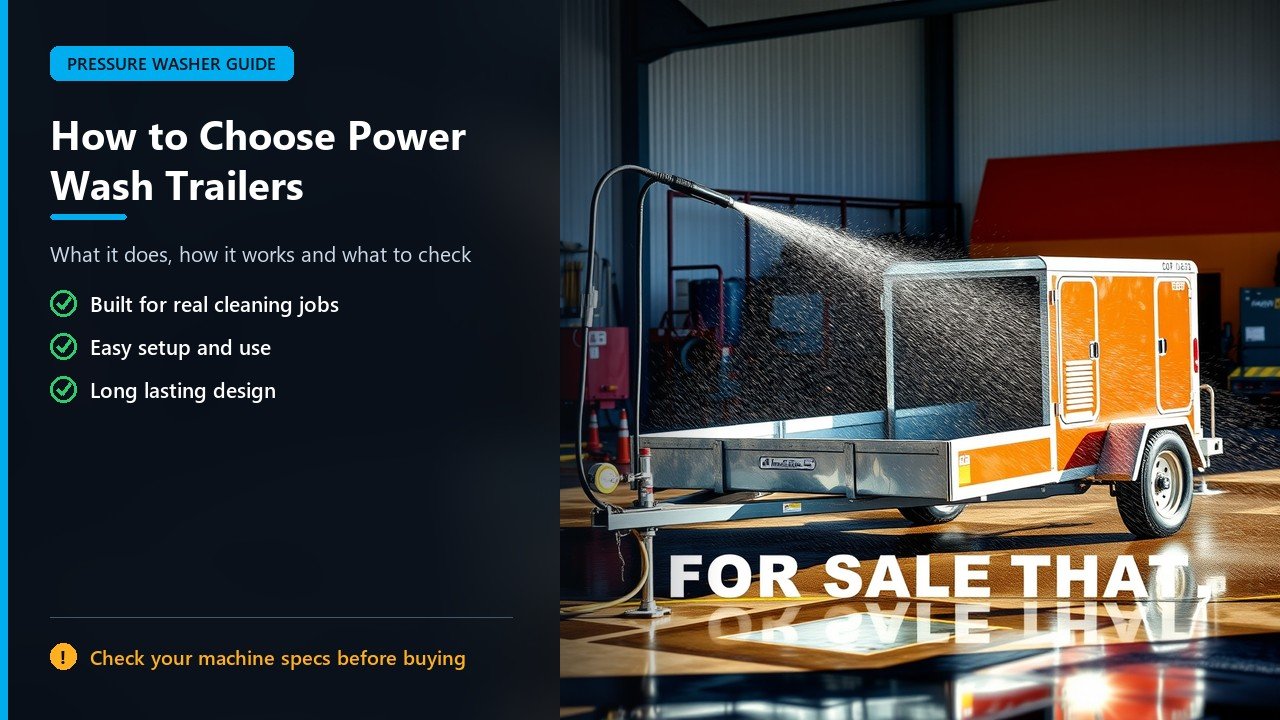
What Power Wash Trailers for Sale Include
A trailer package can look complicated at first, so it helps to understand the main parts that come together to make a complete mobile cleaning rig.
The pressure washer itself. At the heart of every rig is the pressure washer, chosen for the pressure, flow, and heat the owner’s work demands. Cold water machines suit general cleaning, while hot water models with a burner handle grease, oil, and heavy soil far better. The washer may be powered by a petrol or diesel engine, or by an electric motor running from a generator. Industrial buyers usually prefer engine driven machines because they run independently of mains power, which is essential when working on remote sites. The pressure washer sits on the trailer deck, often on a vibration absorbing mount, and is plumbed to the tank and the hose reel. Its capacity sets the whole system’s limits, so it is the first thing to choose and the yardstick against which the rest of the trailer is built. Choose it well and the rest of the rig can be arranged around its needs, but skimp on the washer and no amount of clever trailer design will make up for the shortfall.
The water tank and plumbing. Most power wash trailers for sale carry their own water tank, which is what makes them truly independent. Tank sizes range from around a hundred litres for light mobile work up to several hundred litres for long shifts on remote sites. The tank feeds the pressure washer through a pump and filter, and often includes a float valve or a connection for topping up from a mains supply when one is available. Plumbing includes an inlet for filling, an outlet to the washer, and often a bypass or return line to protect the pump if the trigger is released. A well built trailer arranges the tank low and central for stability, and uses quality hose and fittings so the plumbing does not leak or fail. The tank and its plumbing turn a simple pressure washer into a self sufficient cleaning station that can operate anywhere.
Hose reels, storage, and finishing touches. A good trailer package also includes the equipment that turns a machine and a tank into a working rig. A hose reel keeps the high pressure hose tidy, protected, and quick to deploy, often with a swivel fitting that lets the reel follow the operator without kinking. Storage boxes hold nozzles, chemicals, safety gear, and spare parts, keeping everything secure and organized during travel. Many trailers add work lights, a toolbox, a chemical injector, and holders for lances and surface cleaners. Some include a battery and charger for engine starting, and larger rigs may carry a generator to run lights or an electric machine. Together these details turn a collection of parts into a professional, efficient setup that is quick to work from and simple to maintain, which is exactly what buyers of power wash trailers for sale are looking for. The details of storage and finish often decide which trailer feels like a professional tool and which feels like a compromise.
Why a Trailer Beats a Portable Machine
Many businesses start with a portable pressure washer, and many soon upgrade to a trailer once they understand the difference it makes.
Speed and convenience. The biggest advantage of a trailer is the time it saves on every job. With a portable machine, an operator must load the washer, hoses, water supply, fuel, and chemicals into a vehicle, unload them at the site, find a water source, set everything up, then reverse the whole process at the end. A trailer removes almost all of that effort, because everything is already organized and connected on the rig. The operator hooks up, tows to the site, and begins work in minutes, with water, fuel, and tools all in place. At the end of the job, packing away is just as quick. Over a day of multiple jobs, or a season of steady work, those saved minutes become hours, and hours become extra jobs completed and extra income earned. That is the real reason trailers dominate professional pressure washing. A trailer lets a small crew behave like a much larger operation, arriving prepared and leaving nothing to chance.
Independence and capacity. A trailer also gives a cleaning business far greater independence and capacity than a portable machine. Because the rig carries its own water tank, fuel, and engine driven power, it can work almost anywhere, from a rural driveway to a construction site or a fleet yard with no water or electricity in sight. There is no need to ask a customer for access to a tap or an outdoor socket, which removes awkward delays and opens up jobs that portable setups must decline. The tank also supplies water at a steady rate and pressure, so the machine performs consistently rather than fading when a household supply cannot keep up. With room for larger pressure washers and bigger tanks, a trailer can handle heavy, long duration work that a portable machine simply cannot sustain. For a growing business, that combination of independence and capacity is often what allows it to take on the work that pays best.
Types of Power Wash Trailers
These rigs come in several broad types, and understanding them helps a buyer match the trailer to the work.
| Trailer Type | What It Carries | Best For |
|---|---|---|
| Single axle compact | Small washer and modest tank | Mobile car washing and light work |
| Tandem axle heavy | Large washer and big tank | Fleet and industrial cleaning |
| Hot water rig | Washer with burner and fuel tank | Grease, oil, and heavy soil |
| Soft wash setup | Pump, tank, and chemical line | Roofs, siding, and exteriors |
Cold water and hot water rigs. The first big choice is whether the trailer carries a cold water or a hot water machine. Cold water rigs are simpler, lighter, and cheaper, and they suit general cleaning such as driveways, patios, vehicles, and building exteriors where the soil is mostly dirt and grime. Hot water rigs add a burner and an extra fuel supply, which raises the cost and the weight but transforms performance on grease and oil. For cleaning commercial kitchens, machinery, transport fleets, and industrial floors, hot water is usually essential, because heat dissolves the soils that cold water merely pushes around. Buyers should think honestly about the work they will do most often, because a hot water trailer costs more to buy and run but pays for itself quickly when grease is routine, while a cold water trailer is the more economical choice for lighter, general cleaning work.
Specialist setups. Beyond the general purpose rig, there are trailers built for particular kinds of work. Soft wash trailers carry a low pressure pump, a tank, and a chemical line for applying cleaning solutions to roofs, siding, and render, where high pressure would cause damage. Fleet washing trailers are configured for vehicle cleaning, with long hoses, booms, and often multiple guns so a crew can work around a truck quickly. Some trailers are set up for drain and pipe cleaning with jetters, while others are built as compact units for mobile car washing at homes and offices. Each type is optimized around a task and its accessories, so buyers should consider what their customers actually need. Choosing a specialist trailer that matches the dominant work is usually more efficient than buying a general rig and adapting it later, because the storage, plumbing, and equipment are all arranged to suit the job from the start.
Water Tanks and Supply
The tank is the part of the trailer that gives it independence, and its size and design deserve careful thought.
Choosing a tank size. Tank size decides how long the trailer can work before it needs refilling, so it should be matched to the length and water consumption of typical jobs. A small tank, perhaps around a hundred to a hundred and fifty litres, is enough for mobile car washing and short jobs where a refill is easy. Larger jobs, such as cleaning a fleet or a commercial floor, consume far more water and benefit from a tank of several hundred litres, which allows continuous work without interruption. It is worth estimating how many litres per minute the machine uses and multiplying by the time a typical job takes before choosing a tank, because a tank that runs dry halfway through a job is both frustrating and damaging to the pump. A slightly larger tank than strictly necessary is usually a wise choice, giving a margin for longer jobs and avoiding the need to stop and refill at an inconvenient moment.
Plumbing and inlet options. How the tank is plumbed affects both convenience and reliability. A feed line from the tank to the washer should be wide enough to supply the machine’s flow without starving it, and should include a filter to keep grit and debris out of the pump. Many trailers are fitted with a float valve or a tank inlet that allows the tank to be topped up from a garden tap while the machine is running, which effectively turns a modest tank into an unlimited supply when a water source is available. Others include a transfer pump to move water from a separate source into the tank. A low level or float switch can warn the operator before the tank runs dry. Good plumbing is simple, robust, and easy to drain for winter, and it protects the most expensive part of the system, the pump, from the damage that running dry causes. Good plumbing also makes winter draining straightforward, which protects the pump when the trailer is stored through the cold months.
The Pressure Washer on the Trailer
The machine on the trailer sets the performance ceiling of the whole rig, so it should be chosen with the same care as a stand alone purchase.
Pressure, flow, and engine. When comparing power wash trailers for sale, it is tempting to focus on the trailer itself, but the pressure washer is what actually does the cleaning, so its specification matters most. Look at pressure and flow together, because both decide how the machine performs. High pressure cuts into dirt, while good flow carries it away and covers ground quickly. Choose an engine that can drive the pump at its rated output while still having capacity to spare, especially on hot water models where the burner adds to the load. Diesel engines are popular for heavy professional use because they deliver strong torque and long life, while petrol engines suit lighter rigs. The machine should also be robust enough to run for hours at a time, because on a trailer it will often work continuously through a full working day rather than in short bursts around the home.
Hot water and heating. For many professional applications, the choice of a hot water machine is what makes a trailer genuinely capable. A hot water pressure washer uses a burner to heat the water as it passes through a coil, and hot water dissolves grease, oil, and fats that cold water cannot shift efficiently. On a trailer, a hot water machine needs an additional fuel tank for the burner, ventilation for exhaust gases, and plumbing that can handle the higher temperatures. The result is a rig that can clean commercial kitchens, machinery, and vehicle fleets to a far higher standard than cold water alone. Buyers should check the temperature rise the burner achieves at the machine’s working flow, not just the maximum figure on the label, and confirm the trailer is designed to carry the extra weight and heat safely before choosing a hot water setup. If the trailer was not designed for a burner, the extra heat and weight can create real problems, so confirm the specification before you commit.
Fuel, Power, and Heating Options
A trailer must carry whatever it needs to run, so fuel and power arrangements are a central part of the design.
Fuel storage and safety. Engine driven trailers need fuel on board, usually in a dedicated tank or jerry cans secured to the deck. The size of the fuel supply determines how long the machine can run before refuelling, so it should match the length of typical jobs, with a margin for longer days. On hot water rigs, a separate supply for the burner is often fitted, and both tanks should be vented, well secured, and positioned so they do not affect the trailer’s balance. Fuel should be stored away from hot surfaces and exhausts, and the trailer should be designed so that spills are contained rather than running onto the deck or the road. Safe, sensible fuel storage is not a detail to overlook, because a trailer that carries fuel and heat must be built and maintained to keep the operator and the journey safe at all times. Fuel and heat demand respect, and a well built trailer earns that respect through careful design and regular checks.
Electric start and batteries. Many engine driven washers use electric start, which requires a battery on the trailer and a way to keep it charged. A healthy battery makes starting easy and reliable, especially in cold weather, while a flat battery can stop a job before it starts. Some trailers include a small charging system or a solar maintainer, and it is worth checking how the battery is looked after when the machine is not running. Trailers that carry lighting for the road, interior lights, or a generator also need a properly sized electrical system with fuses and sound wiring. If the rig includes an electric pressure washer rather than an engine driven one, it will need a generator or mains supply, which adds weight and cost. Whatever the arrangement, the electrical system should be simple, well protected, and easy to maintain between jobs. A tidy electrical system is one of those quiet details that separates a reliable rig from a troublesome one.
Hose, Reels, and Accessory Storage
The way a trailer organizes hoses and tools has a big effect on how quickly and comfortably the operator can work.
Hose reels and hose length. A hose reel is one of the most useful parts of any trailer, because it keeps the high pressure hose tidy, protected, and quick to deploy. A quality reel with a swivel joint lets the hose pay out and wind in smoothly without kinking, which increases the hose’s life and prevents the delays that tangled hose causes. Hose length matters too, since it decides how far the operator can reach from the trailer. A long hose allows the trailer to stay parked in one place while the operator works around a large vehicle or building, but a hose that is too long becomes heavy and awkward, and the pressure drop along its length reduces performance at the nozzle. Buyers should choose a hose and reel suited to the reach their jobs require, and keep a spare hose and fittings on board so a failure on site does not end the working day.
Storage for tools and chemicals. Good storage is what separates a professional rig from a collection of parts. Lockable boxes or lockers protect nozzles, wands, surface cleaners, and spare parts from weather and theft, and keep them organized so everything is easy to find. A dedicated space for cleaning chemicals, ideally with containment for spills, keeps them safe and ready to use. Some trailers include a small workbench, a mount for a waste oil or water container, or hooks for PPE such as gloves and eye protection. Provision for waste water collection is especially important for businesses that must meet environmental rules about where run off can go. Well planned storage speeds up every job, protects valuable equipment, and helps the operator work tidily and safely, which reflects well on the business in front of every customer. When tools are where they should be and the rig looks orderly, the operator works faster and the customer notices the professionalism. A well stored rig is quick to set up and pack away, which adds up to more jobs finished each working day.
Towing, Weight, and Road Legality
A trailer must be safe and legal on the road, so weight and towing rules are part of choosing the right rig.
Weight and towing capacity. Every trailer has a laden weight that must not exceed the limits of the towing vehicle and, in many places, the driver’s licence. A fully loaded cleaning trailer can be surprisingly heavy once the machine, tank, water, and fuel are aboard, so it is important to calculate the all up weight rather than the empty weight. Water is particularly heavy, since each litre adds roughly a kilogram, so a large tank can add hundreds of kilograms on its own. The trailer’s axle and coupling ratings, and the towing vehicle’s capabilities, must all be respected. Choosing a trailer that is comfortably within the vehicle’s limits keeps the combination stable and safe to drive, and it avoids the legal problems that come with overloading. It is far better to match the trailer to the vehicle than to discover a weight problem once the rig is loaded. Careful planning of tank size and equipment keeps the combination within safe limits and legal for the road.
Brakes, lights, and maintenance. Road safety depends on the trailer’s brakes, lights, tyres, and coupling being in good order. Larger trailers are fitted with brakes, either overrun or electric, and these must be working correctly and adjusted properly. Lights must be road legal and reliable, because a trailer that is hard to see at night is a hazard. Tyres should be the right type and pressure, and the coupling and safety chain must be sound and correctly engaged every time the trailer is hitched. Regular checks before each journey, covering the coupling, lights, tyres, and load security, take only minutes and prevent the kind of accident or breakdown that turns a simple job into a serious problem. A trailer that is looked after properly is not only safer but also cheaper to run, because neglect of these parts leads to costly repairs and lost working time, so a short pre-journey check is time well spent on every trip.
Buying New or Used
Both new and used trailers can be sound purchases, but each has its own advantages and points to watch.
The case for buying new. A new trailer comes with a warranty on the trailer and usually on the pressure washer and other components, along with the reassurance that nothing has been worn out or abused. The buyer can specify exactly the tank size, machine, and storage they need, and can be confident that the plumbing and electrics are sound from the start. New trailers also tend to hold their value well, and a business can often claim tax relief on the purchase as a capital asset. The main drawback is the higher price, which is a significant outlay for a small business. For buyers who can afford it and who want peace of mind, reliability, and support, a new rig is often the least stressful route, because any early faults are covered and the equipment should perform exactly as specified without hidden problems, which is worth a great deal to a business that cannot afford downtime.
Finding a good used trailer. Buying used can save a great deal of money, but it rewards careful inspection. The buyer should check the trailer frame and chassis for rust, cracks, and poor repairs, and examine the axle, suspension, coupling, and brakes for wear. The pressure washer should be run and tested, checking its pressure and flow, listening for unusual noises, and inspecting the pump for leaks. The tank and plumbing should be checked for cracks, contamination, and sound fittings, and the electrics and lights tested. It helps to ask how often the rig was serviced and to see any records, because a well maintained trailer can serve for years while a neglected one may need expensive work. Where possible, take someone knowledgeable along to inspect the machine and trailer, and be prepared to walk away from a rig that shows signs of heavy wear or poor maintenance. Patience during the search usually saves far more than it costs in repairs avoided later. A patient buyer who checks the trailer and the machine thoroughly is far less likely to inherit someone else’s problems.
What to Check Before You Buy
Before committing to any purchase, a short checklist of checks protects the buyer from an expensive mistake.
Match the rig to the work. The most important check is whether the trailer actually suits the jobs the buyer will do. This means thinking about the type of cleaning, the surfaces involved, the length of jobs, and the sites visited. A mobile car washing business needs a compact rig with a modest tank and a reliable cold water machine, while a fleet or industrial cleaner needs a heavy trailer with a powerful hot water washer and a large tank. The hose reach, storage, and accessories should all fit the work as well. It is easy to be impressed by a big, complex trailer, but a rig that is larger or more specialised than the work requires simply costs more to buy, tow, and maintain. Writing down the requirements before shopping, and measuring every trailer against that list, is the surest way to choose a rig that earns its keep rather than sitting idle.
Mechanical and paperwork checks. Once the right type of trailer is identified, the individual unit must be checked mechanically and legally. Inspect the machine by running it under load, and verify the pressure and flow are as claimed. Check the trailer’s structure, tyres, brakes, lights, and coupling, and confirm the load ratings are suitable for the towing vehicle. Ask for service records and any warranty documents, and check that ownership is clear and that the trailer is road legal where required. Confirm the weight of the rig when loaded, and make sure the buyer’s vehicle and licence can handle it. Finally, consider the reputation of the maker or seller for support and parts. A machine or trailer from a maker who stands behind their products is worth far more than a cheaper rig with no backup, because problems will arise and support is what solves them, so the backup behind the machine is part of its true value. Taking time over these checks protects both the buyer’s money and the reputation of everyone who depends on the machine.
Setting Up and Using the Trailer
Once a trailer is bought, using it well and safely on each job is what turns it into a productive tool.
Arriving and setting up. Setting up a cleaning trailer efficiently comes down to a simple routine that is followed every time. On arrival, the operator parks the trailer on level ground, applies the handbrake or chocks the wheels, and disconnects the towing vehicle if the site allows. The water and fuel levels are checked, the machine is started, and the pressure is tested before work begins. The hose is run out, taking care to keep it clear of traffic and trip hazards, and the appropriate nozzle, wand, or surface cleaner is fitted for the task in hand. Chemicals are prepared and placed safely. Following the same sequence on every job keeps the work smooth and prevents the small oversights, such as a loose coupling or a low tank, that can interrupt a job or cause an accident. With practice, this setup takes only a few minutes and sets the tone for a productive day.
Working safely on site. Safety on site protects both the operator and the customer’s property, and it should never be rushed. The operator should wear appropriate protection for eyes, ears, hands, and feet, since pressure washing is noisy, wet work with a powerful jet. The hose and cables should be kept out of the way of vehicles and pedestrians, and the work area should be cordoned where the public might pass. Hot water and steam require particular care, and exhaust gases must always be vented away from enclosed spaces. Run off from cleaning should be directed to a suitable drain or collected, especially where chemicals or oily residue are involved, to comply with environmental rules. Finally, the operator should work methodically, controlling the jet carefully around glass, seals, and soft materials, and inspecting each area before moving on, so that the finish is thorough and no surface is damaged. Steady, careful working protects both the customer’s property and the operator’s reputation, and careful technique marks out a professional operation that wins repeat business.
Maintenance and Winter Care
A trailer rig is a substantial investment, and looking after it protects both its performance and its value.
Routine maintenance. A cleaning trailer needs the same regular attention as any working machine, plus care of the trailer itself. The pressure washer should be serviced as its maker recommends, with regular oil changes, filter checks, and inspection of the pump, seals, and fittings. The engine needs clean oil, a clean air filter, and fresh fuel, and the burner on a hot water machine should be serviced and its coil descaled. The trailer should be inspected for rust, loose bolts, worn tyres, and failing lights, and the coupling and brakes checked regularly. Plumbing should be examined for leaks, and the tank cleaned to keep dirt and biological growth out of the water. Keeping a simple log of everything done makes the schedule easy to follow and shows the machine has been looked after, which also helps when it is eventually sold. Routine care costs little and prevents the failures that disrupt work.
Winter protection. Cold weather is especially hard on cleaning trailers, and a little preparation saves expensive damage. Water trapped in the pump, coil, hose, gun, and plumbing will expand as it freezes and can crack these parts, so the whole water system should be properly drained before freezing conditions. Some operators blow the system through with compressed air to remove the last of the water, and some add a suitable antifreeze to protect the pump. Fuel systems should be kept topped up and treated for cold weather, and the battery should be checked and charged, since cold drains batteries quickly. The trailer should be stored under cover where possible, and moving parts protected from corrosion. Attention to these details through the winter ensures the trailer is ready to work when the season starts, rather than needing major repairs after a hard freeze. A little time spent winterising the rig pays for itself the first time the temperature drops below freezing. Storing the trailer under cover and checking it again before spring keeps it ready for the first busy jobs of the season.
Frequently Asked Questions
These are the questions buyers ask most often about power wash trailers for sale, and the answers help them shop with confidence.
How much should I expect to pay? The price of power wash trailers for sale varies widely with size, the pressure washer fitted, and whether the machine provides hot water. A simple cold water trailer with a small tank costs far less than a large tandem axle rig with an industrial hot water washer and generous storage. Buyers should set a budget but treat the machine and tank size as the priority, because these decide what work the trailer can do. It is usually better to spend more on a capable, well built rig than to save money on one that cannot handle the jobs the business needs to win and complete. A trailer that is well matched to the work quickly earns back its cost, while one that is not simply becomes an expensive ornament. Set a sensible budget, but let capability and condition guide the final choice. A little patience here saves a great deal later.
Can I run it without a water supply? Yes, that is one of the main advantages of a trailer. Because the rig carries its own water tank, it can work without any external supply, which means it can clean on remote sites, at customers who cannot provide a tap, and in locations where no water is available. The tank simply has to be filled before the job, and refilled if the work takes more water than it holds. Some trailers also allow topping up from a tap while working, which gives the best of both worlds, independence when needed and an unlimited supply when a convenient source exists. This flexibility is why trailers suit such a wide range of cleaning businesses, from mobile car washers to industrial contractors. The tank can be refilled in minutes, so the trailer is always ready for the next job, wherever that job happens to be.
Do I need a special licence to tow one? In many places, towing rules depend on the weight of the trailer and the towing vehicle, and a licence may be needed for heavier combinations. A compact trailer on a suitable vehicle is often within an ordinary licence, while a large tandem axle rig may require an additional category. Because the rules differ between countries and regions, buyers should check the requirements where they live before choosing a trailer, and make sure the towing vehicle is rated for the loaded trailer. Getting this right avoids legal problems and keeps the combination safe on the road. Checking the rules before you buy, and matching the trailer to the vehicle, saves both trouble and money. It is also worth remembering that rules vary by place, so local advice is valuable before any purchase, which keeps the combination legal and safe on every trip you make.
New or used, which is best? Both can be good choices. A new trailer offers a warranty, exact specification, and peace of mind, while a used trailer can save money if it is carefully inspected and well maintained. The deciding factors are budget, the buyer’s willingness to inspect and possibly repair, and how much reliability matters to the business. A well cared for used rig can perform beautifully, but a neglected one can become a money pit. Buyers should inspect either type thoroughly, check the machine and trailer condition, and choose a seller or maker with a good reputation for support. When something eventually needs attention, good backup turns a potential crisis into a quick fix. For a business that depends on its trailer every day, that reassurance is worth paying for, especially for a business that depends on the rig every single day. A good used trailer can be a bargain, and a poor one can be a burden.
What maintenance does a trailer need? A trailer needs the same servicing as a pressure washer, covering the engine, pump, and burner, plus regular checks of the trailer itself, including the frame, tyres, brakes, lights, and coupling. Water and fuel systems should be kept clean, and the whole rig should be drained and protected for winter. Keeping a log of servicing makes the routine easy to follow and shows the equipment has been cared for. A little regular maintenance keeps the trailer safe, reliable, and valuable, and it prevents the breakdowns that cost time and money during a busy season. Steady care is far cheaper than emergency repairs, and it keeps the trailer earning rather than standing still. Regular maintenance is one of the simplest ways to protect the value of a working asset, and it keeps the operator working instead of waiting for repairs during the busiest weeks of the year.
Final Thoughts on Power Wash Trailers for Sale
A power wash trailer is more than a pressure washer on wheels. It is a complete mobile cleaning business, carrying its own water, fuel, power, and equipment so that the operator can work almost anywhere, quickly and profitably. For anyone moving from occasional cleaning to steady professional work, a trailer is often the single change that unlocks the next level of income, because it removes the delays and limitations that hold a portable setup back.
Choosing well means matching the rig to the work. The pressure washer, the tank, the heating, the storage, and the trailer chassis should all suit the jobs the business will do most often, and the whole package must be safe and legal to tow. Buyers should inspect new and used trailers carefully, ask about service and support, and consider the loaded weight against their vehicle. Taking the time to choose the right trailer turns a big purchase into the foundation of a profitable cleaning operation.
Looked after properly, a cleaning trailer delivers years of dependable service. Regular servicing, clean water and fuel, winter protection, and careful towing all protect the investment and keep the rig ready to work. For a cleaning business, the trailer is more than a piece of equipment; it is the platform on which the whole operation is built, and a well chosen one pays back its cost many times over in efficient, profitable days of work, and it earns a place as the dependable centre of the whole operation. Choose it carefully, use it well, and it will help turn a cleaning business into a thriving one. The trailer carries the tools, the water, and the power, and the operator simply brings the skill. That is the promise of a properly equipped trailer, and it is a promise that pays off on every job. Buy it with care, maintain it well, and it will serve as the reliable foundation of a growing cleaning business for years to come.
To explore pressure washer trailers and equipment like the rigs described here, see pressure washer trailers and equipment.