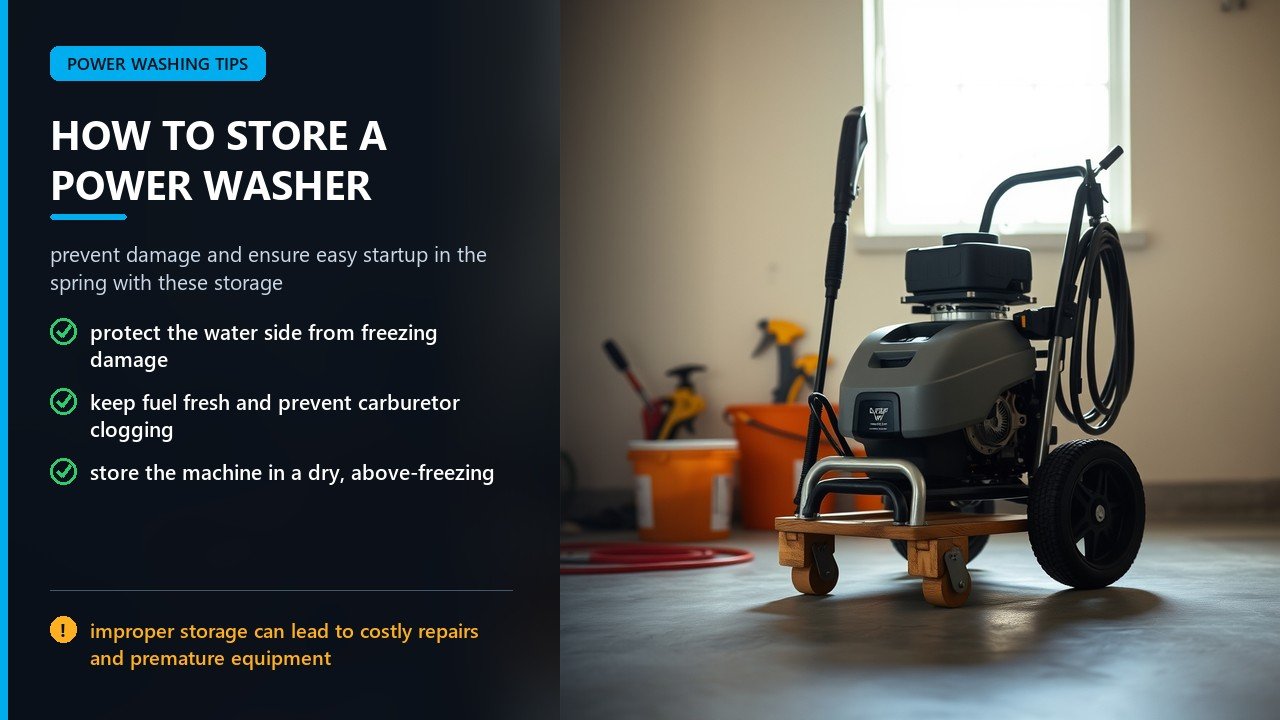
How to Store a Power Washer for Winter So It Starts Easily in Spring
Every March, the same scene plays out in garages across the country. Someone pulls the cover off their power washer, adds gas, pulls the cord, and gets nothing. Or worse, the machine starts, runs rough, and dribbles water instead of blasting it. The machine did not fail over winter by accident. It failed because of how it was stored. Cold, moisture, stale fuel, and trapped water do quiet damage for months, and by the time you need the washer again, the harm is already done.
If you want to know how to store a power washer for winter the right way, the good news is that it is mostly about preparation and placement. Storage is not the same thing as winterizing, though the two overlap. Winterizing protects the internal parts from freezing; storage protects the whole machine from cold, damp, fuel breakdown, pests, and the slow corrosion that ruins equipment sitting idle. Get both right and your washer will fire up on the first pull in spring. Get storage wrong and you may be buying a pump you did not need to replace.
Why Storage Matters as Much as Winterizing
A pressure washer left to sit through winter faces a gauntlet. Water freezes and expands. Fuel degrades and gums up carburetors. Damp air rusts metal and corrodes electrical contacts. Rodents chew wires and nest in engine shrouds. Sunlight and temperature swings dry out rubber seals and hoses. None of these problems announce themselves in December. They wait until spring, when you need the machine most.
The storage environment is your first line of defense, and the fuel and water preparation is your second. Together they decide whether spring means a five-minute checklist or a repair bill. Manufacturers like Briggs & Stratton treat storage and winterization as one maintenance routine for exactly this reason.
Before You Store: Prepare the Machine
Storage starts with preparation. A machine put away wet, full of stale fuel, or dirty will not store well no matter where you park it.
Protect the Water Side
Drain every drop of water from the pump, hoses, gun, wand, and nozzles, then add a pump protector or proper antifreeze to the pump. This is the step that prevents freeze cracks and keeps seals lubricated through the off-season. If you want the full water-side procedure, our guide on how to winterize a pressure washer walks through it step by step.
Protect the Fuel Side (Gas Models)
Ethanol-blended gasoline can begin to break down in about a month. Left in a carburetor all winter, it turns to varnish and clogs tiny passages. You have two solid choices:
- Stabilize and run. Add a quality fuel stabilizer to fresh fuel and run the engine a couple of minutes so treated fuel fills the carburetor. Store with the tank full to reduce condensation.
- Drain and run dry. Drain the tank and run the engine until it stalls from fuel starvation, leaving the carburetor empty.
Change the Oil Before Storage
Used engine oil contains combustion byproducts and moisture that can corrode an engine from the inside during months of sitting. If your oil is near the end of its interval, change it before storage, not in spring. The same logic applies to pump oil, which you can learn about in our guide on changing pump oil.
Clean It Thoroughly
Dirt holds moisture against metal and can hide small leaks or cracks. Wipe down the machine, clean the nozzles, and remove grime from the pump and engine area. A clean machine stores better and tells you more when you inspect it in spring.
Choosing the Right Storage Location
Where the machine sleeps is the single biggest storage decision. Here is how the common options compare.
| Location | Freeze Risk | Damp/Rust Risk | Best For |
|---|---|---|---|
| Heated garage or basement | Very low | Low | Electric machines and fully winterized gas units |
| Unheated attached garage | Moderate | Moderate | Fully winterized machines; risk rises in deep cold |
| Unheated shed or barn | High | High | Only with complete protection and covering |
| Outdoors under a tarp | Very high | Very high | Last resort; expect problems |
| Climate-controlled storage unit | Very low | Low | Premium or commercial equipment |
A heated or climate-controlled space is ideal, but a well-prepared machine in an unheated garage usually survives if you complete every protection step. An unheated shed or outdoor spot is where heaters, coils, and pumps crack, even after winterizing, because deep, prolonged cold can overwhelm thin protection.
Indoor vs Outdoor Storage Rules
- Electric machines can be stored indoors, including basements, because they have no fuel or exhaust.
- Gas machines should be stored in a dry, ventilated space away from any flame source such as a furnace or water heater. Never store gas equipment in a living space because of fuel vapors.
Step-by-Step: Putting the Machine Into Storage
Once the machine is prepared and you have chosen a spot, follow this sequence to close out the season.
- Complete all water-side and fuel-side winterization. Nothing wet, nothing untreated.
- Disconnect and store hoses separately. Coil them loosely on a hose reel or hang them in a protected area, off concrete and out of sunlight.
- Store the gun and wand indoors or in a closed bin. They are small, valuable, and easy to lose track of.
- Remove and bag the nozzles. Keep them dry and together so they are ready in spring.
- Loosen or remove the spark plug boot on gas units if the manual suggests it, to prevent accidental starts and reduce condensation on the electrode.
- Cover the machine. A breathable cover keeps dust and pests out while allowing moisture to escape. A sealed plastic tarp can trap damp air and promote rust, so avoid fully airtight wrapping unless you have added desiccant.
- Block or elevate. Keep wheels and the base off damp concrete if possible; a pallet or shelf helps.
- Label it. A quick note taped to the machine, “winterized, fuel stabilized, oil changed,” saves future confusion and tells you instantly what state it is in.
Storage Checklist by Component
| Component | Storage Action | Common Mistake |
|---|---|---|
| Pump | Drain fully and add pump saver/antifreeze | Leaving water to freeze and crack it |
| Engine (gas) | Stabilize or drain fuel; change oil if due | Storing stale ethanol gas all winter |
| High-pressure hose | Drain, coil loosely, store off concrete | Coiling wet and letting it freeze/delaminate |
| Garden hose | Drain completely and coil | Leaving water inside to split it |
| Spray gun and wand | Drain, dry, store indoors | Leaving pressure and water trapped in the gun |
| Nozzles | Clean, dry, bag together | Corroded or lost tips |
| Hot water coil | Drain and protect with antifreeze | Water freezing and splitting the coil |
| Battery (if equipped) | Charge and store in a cool, dry place | Letting it discharge and freeze |
Storage for Different Machine Types
Not every pressure washer stores the same way. Here is how the major types differ, and what each one needs.
Gas Pressure Washers
Gas machines have the most storage considerations because they combine water, fuel, oil, and a small engine. Water-side protection, fuel stabilization or draining, engine oil care, and ventilated storage all apply. They are also the most sensitive to being stored outdoors because ethanol fuel and damp air attack the carburetor and fuel lines. The safest bet is a dry, ventilated, above-freezing space with the fuel treated and the pump protected.
Electric Pressure Washers
Electric units skip fuel entirely, which removes a whole category of failure. Their storage risks are water freezing in the pump and hoses, and moisture reaching electrical components. Store them clean and dry, indoors where possible, with cords coiled and protected from rodents and foot traffic. A basement or heated garage is ideal.
Hot Water Pressure Washers
Hot water machines add a heating coil and burner, and the coil is a narrow passage that traps water and cracks easily when frozen. Storage means draining and protecting the coil in addition to the pump, and attending to the burner fuel system if the unit runs on diesel, oil, or kerosene. Our guide to power washer winter storage covers heated systems in detail.
Commercial Rigs and Trailer Mounts
A rig on a trailer has tanks, reels, injectors, and long plumbing runs that hold water in low spots. Storing a rig well means opening every drain point, flushing protection all the way through, and protecting the soft wash or chemical systems separately. Because a commercial rig represents a large investment and produces income, thorough storage is not optional. Consider indoor storage or a heated space for anything with a burner or a large tank.
Battery and Cordless Units
Battery pressure washers and cordless units have their own rule: charge the battery to roughly half or full per the manual, then store it in a cool, dry place, not in the machine if that is what the maker recommends. Do not leave a fully depleted battery to sit through freezing temperatures, as it can be damaged. Bring batteries inside for winter.
Protecting Against Pests, Rust, and Moisture
Cold is only part of the threat. Rodents, humidity, and condensation do their own quiet damage.
- Pests: Mice and other rodents chew wiring, fuel lines, and rubber hoses, and often nest in engine shrouds and air filters. A breathable cover, a clean machine, and storage off the floor reduce the invitation. Some owners place dryer sheets or repellent sachets nearby.
- Rust: Moisture plus bare metal equals rust. Wiping the machine down, storing it dry, and keeping it off concrete slows corrosion. A light coat of oil on exposed metal where appropriate helps.
- Condensation: Temperature swings cause condensation inside tanks, engines, and covers. A full, treated fuel tank and a breathable cover minimize it. Fully sealed plastic traps it.
Two Neighbors, Two Outcomes
Picture two neighbors who each bought the same gas pressure washer on the same spring sale. Neighbor A cleans it, drains the water, adds pump protector, treats the fuel, changes the oil, and stores it on a shelf in a dry garage under a breathable cover. Neighbor B hoses the mud off, parks it in a leaky shed with a nearly empty tank of untreated gas, and forgets about it until spring.
In April, Neighbor A pulls the cord twice and is washing the driveway. Neighbor B pulls for ten minutes, gets a cough and a stall, then finds a cracked pump weeping water and a carburetor full of varnish. Same machine, same winter, two very different spring mornings. The difference was about ninety minutes of preparation on a single fall afternoon, and a few dollars of fuel stabilizer and pump saver. That is the entire lesson of storage: small effort now, large savings later, with no luck involved.
Climate and Humidity: Adjusting to Where You Live
Storage advice should bend to your climate, not ignore it.
- Cold, snowy climates: freeze protection is paramount, and heated or insulated storage is worth seeking out. Deep, prolonged cold can crack parts even a properly winterized machine might otherwise survive a mild winter.
- Humid, rainy climates: rust and mold dominate. Prioritize dry storage, breathable covers, and desiccant, even if hard freezes are rare.
- Coastal, salt-air climates: corrosion accelerates. Rinse the machine, dry it thoroughly, and consider protective coatings on exposed metal. Stainless parts last longer here.
- Dry, dusty climates: dust and grit get into seals and pumps. Cover the machine to keep out blowing dust and clean it before storage.
The common thread is that the environment you store in should dictate your extra steps, and the one step you should never skip is removing all water from the pump and hoses.
Long-Term Storage: A Season or More
Sometimes a machine sits for more than one winter. If you plan to store a pressure washer for a year or longer, go a step further.
- Drain and stabilize fuel completely, or run it dry and fog the cylinder with a storage oil if the manual recommends it.
- Add extra pump protection and turn the pump over a few times.
- Store on a shelf, not the floor, and cover with a breathable material.
- Check on it once or twice during storage; look for leaks, pests, and corrosion.
- Keep the manual and any removed parts in one labeled box with the machine.
Long-term storage is where disorganized owners lose track of small parts and where organized owners avoid needless replacement costs. A single labeled bin for nozzles, bolts, and the manual pays for itself.
Common Storage Mistakes
Avoid these and you avoid most spring surprises.
- Storing wet. Damp hoses, gun, and pump invite freeze damage, rust, and mold.
- Skipping fuel treatment. The number one cause of “it will not start in spring.”
- Using a sealed tarp outdoors. It traps moisture, which corrodes the machine even without freezing.
- Leaving it outside in the cold. Deep, sustained cold can defeat even good protection.
- Forgetting the hoses and gun. People protect the pump and split the hose.
- Storing gas indoors near a flame. A genuine fire hazard.
- Losing the nozzles and hardware. Bag and label everything.
Bringing It Back Out in Spring
Good storage makes spring easy. When you pull the machine out, do a short recommissioning routine before real work.
- Inspect for cracks, corrosion, and pest damage, especially around the pump, hoses, and wiring.
- Reconnect everything and check for leaks before applying full pressure.
- Flush the pump with fresh water to clear out the pump saver or antifreeze.
- Add fresh, stabilized fuel if you drained or treated the tank, and check oil levels.
- Test the spray pattern and confirm steady pressure.
- Replace any worn O-rings or quick connects you noted in fall.
If the machine ran rough or weak on startup, do not push it. Diagnose the cause. Our guide on storage that survives the freeze and our pump troubleshooting articles help you separate a minor issue from real damage.
The Five Spring Failures Storage Prevents
It helps to know exactly what you are defending against. Nearly every “it died over winter” story traces back to one of these five failures, and all five are preventable.
1. The Cracked Pump
Water left in the pump freezes, expands, and splits the manifold or a valve seat. The machine may still start, but it will not build proper pressure. This is the classic and most expensive spring failure, and draining plus pump protection prevents it.
2. The Gunked Carburetor
Untreated ethanol fuel turns to varnish inside the carburetor’s tiny passages. The engine either will not start or runs only on choke. Fuel stabilizer or a full drain prevents it.
3. The Split Hose
A high-pressure hose stored wet freezes internally and delaminates, creating a weak spot that bursts under load. Draining and storing hoses warm and dry prevents it.
4. The Rusty Cylinder
Condensation inside an engine cylinder rusts the bore over months of sitting. Fresh oil and stable storage conditions reduce the risk, and a fogging procedure helps on long-term storage.
5. The Chewed Wiring
Rodents treat stored equipment as shelter and chew wires, hoses, and fuel lines. A clean machine, off the floor, under a breathable cover, with the area kept tidy, discourages them.
Notice that none of these failures requires a freak event. Each is the ordinary result of water, fuel, or pests left unmanaged for a season. That is why storage preparation is not busywork; it is a direct response to five predictable threats.
A Shopping List for Winter Storage
Everything you need to store a pressure washer well fits in one small bag and costs little. Buying it in fall, before the rush, means you are never caught scrambling when the forecast turns.
| Supply | Purpose | Priority |
|---|---|---|
| Pump saver / pump protector | Lubricates seals, displaces water, lowers freeze point | Essential |
| RV/marine propylene glycol antifreeze | Extra protection for pumps, coils, and long plumbing | Recommended |
| Fuel stabilizer | Keeps gas from breaking down and clogging the carburetor | Essential (gas models) |
| Fresh engine oil / pump oil | Replace contaminated oil before storage | As needed |
| Breathable cover | Blocks dust and pests without trapping moisture | Recommended |
| Spare O-rings | Replace worn seals found during inspection | Recommended |
| Storage bin and labels | Keep nozzles, hardware, and the manual together | Helpful |
A Fall-to-Spring Storage Timeline
Storage is easiest when it follows a simple rhythm instead of a last-minute panic.
- Early fall: Stock your supplies. Note the machine’s condition while it is still in use.
- Before the first freeze: Complete water-side winterization and fuel treatment. This is the non-negotiable deadline.
- Late fall: Do a final clean, change oil if due, and move the machine to its storage location under a cover.
- Midwinter: Glance at the machine once or twice, especially after a deep cold snap. Check for leaks, pests, and moisture.
- Early spring: Recommission with a leak check, flush, fresh fuel, and a test spray before real work.
Following that rhythm turns a dreaded chore into a couple of short sessions and eliminates the spring scramble. It also gives you a natural point to inspect the machine thoroughly while it is clean and stationary, catching small issues before they become mid-season failures.
Frequently Asked Questions
Can I store a pressure washer outside in winter?
You can, but it is the riskiest option. Even with protection, prolonged cold and moisture can cause damage. If you must store outdoors, complete every winterization step and cover the machine with something breathable.
Should I store a gas pressure washer with a full or empty tank?
Either works if done right. A full tank with fuel stabilizer reduces condensation and keeps seals conditioned; a fully drained tank with an empty carburetor avoids stale gas entirely. Never leave untreated fuel sitting all winter.
Is it okay to store an electric pressure washer in a cold garage?
Only if you have fully drained and protected the pump, hoses, and gun. Electric machines have no fuel concern, but their water-side components freeze exactly like gas machines.
How long can a pressure washer sit in storage?
With proper water-side and fuel-side protection, a machine can sit all winter, and even longer with a few extra steps. The key is thorough preparation before it goes away.
Do I need to cover my pressure washer in storage?
A breathable cover helps keep out dust and pests. Avoid airtight plastic, which traps moisture and encourages rust. Indoors, a simple cover or shelf is usually enough.
What is the biggest storage mistake?
Waiting and storing the machine full of water and stale fuel. Those two factors cause the majority of spring failures and expensive repairs.
The Bottom Line
Learning how to store a power washer for winter is really about thinking one season ahead. Prepare the water side and the fuel side, choose a dry, above-freezing location, protect the machine from damp and pests, and bag the small parts so nothing goes missing. Do that, and your reward is a machine that starts on the first or second pull in spring, holds pressure, and runs clean. Skip it, and you join the annual crowd buying new pumps and replacing clogged carburetors. Storage is not glamorous, but it is the difference between a tool that lasts a decade and one that dies quietly in a cold garage.