A jet wash with water tank is a pressure washing setup that includes an onboard water tank, allowing you to jet wash surfaces even when no water supply or spigot is available on site. This makes it invaluable for mobile cleaning, remote locations, and any job where access to a tap is limited. Understanding how a jet wash with water tank works, its benefits, how to choose the right tank size, and how to use it helps you clean more efficiently and independently.
What Is a Jet Wash with Water Tank
Pressure washing with its own water supply.
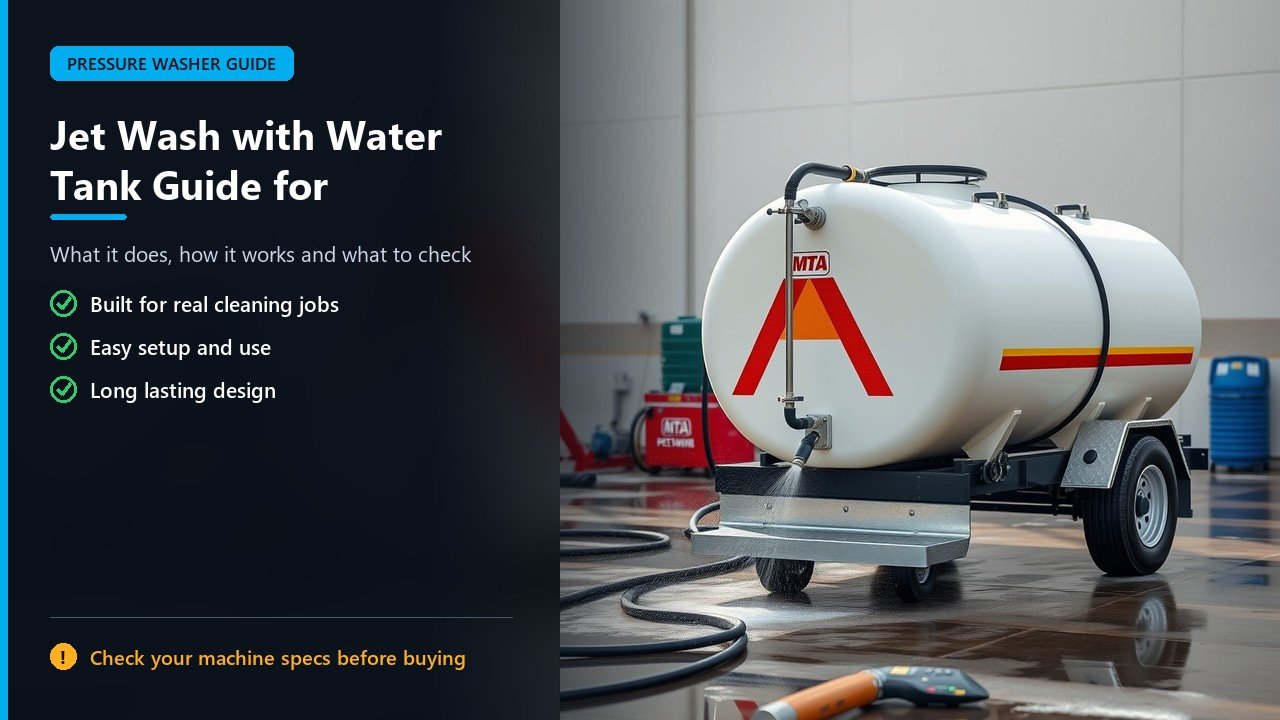
A jet wash with water tank combines a pressure washer, often called a jet washer, with an onboard water tank that holds the water supply for cleaning. Instead of connecting to a garden hose or tap, the washer draws water from the tank, letting you clean in places where no water source exists. This setup is common in mobile car washing, fleet cleaning, and outdoor property maintenance.
The tank may be mounted on a cart, trailer, van, or skid, depending on the size and use. Water flows from the tank to the pressure washer’s inlet, either by gravity (if the tank is elevated) or through a transfer pump that maintains adequate supply pressure. The result is a self-contained jet washing system that can operate anywhere you can tow or carry it.
Self-contained cleaning. Because the tank supplies water, a jet wash with water tank frees you from fixed supply points. This makes it ideal for mobile and remote work. With its own water, you clean where you want. Our guide to water tank and pressure washer covers related setups.
Benefits of a Jet Wash with Water Tank
Independence and mobility.
The primary benefit of a jet wash with water tank is independence from a fixed water source. You can wash vehicles, driveways, sidewalks, and equipment at any location, including rural properties, parking lots, and job sites without plumbing. This flexibility is essential for mobile cleaning businesses that serve customers on-site.
A water tank also avoids the hassle of running and managing long hoses to a distant tap, reduces the risk of water supply interruptions, and lets you work without permission to use a customer’s water. For environments where water is scarce or access is restricted, the onboard tank is a practical solution. Additionally, having your own water means consistent supply pressure (with a proper pump) and no dependence on the site’s water quality or availability.
Freedom to work anywhere. Because you carry your own water, there’s no waiting for a spigot or worrying about supply. This makes mobile cleaning practical and professional. With a tank, jobs aren’t limited by location. Our guide to pressure washer for mobile detailing covers mobile setups in detail.
How the Water Tank Feeds the Jet Washer
Gravity or pump supply.
For a jet wash with water tank to work well, the washer needs a steady supply of water at adequate pressure. There are two main methods. Gravity feed relies on the tank being positioned higher than the washer’s inlet, so water flows down by gravity. This works for smaller tanks and lower-flow washers but can be unreliable for high-GPM machines because gravity alone may not supply enough volume.
Pump feed uses a transfer pump to push water from the tank to the pressure washer inlet at a consistent flow and pressure, which is the preferred method for larger pressure washers and higher GPM requirements. The transfer pump should be capable of delivering more water than the pressure washer consumes (measured in GPM) to prevent cavitation and pump damage. Some integrated systems manage this automatically, while others require careful sizing.
Feeding matters for performance. Because the washer must receive adequate water volume, the supply method (gravity or pump) affects operation and pump longevity. This makes proper sizing essential. With the right feed, the washer runs smoothly. Our guide to pressure washer inlet water filter covers protecting the pump from debris.
| Supply Method | Best For | Notes |
|---|---|---|
| Gravity feed | Small tanks, low-GPM washers | Tank must sit above the washer inlet |
| Transfer pump | Larger tanks, high-GPM washers | Pump must exceed washer GPM demand |
This table compares the two main ways a water tank feeds a jet washer: gravity feed for small, low-flow setups, and transfer pump feed for larger, high-flow machines. Choosing the right method ensures the pressure washer receives steady water and avoids pump damage.
Choosing the Right Tank Size
Balance run time and weight.
Choosing the right size water tank for your jet wash depends on your cleaning jobs and how long you need to run without refilling. Run time is calculated by dividing the tank capacity by the pressure washer’s GPM. For example, a 100-gallon tank running a 2 GPM washer provides about 50 minutes of continuous cleaning; a 4 GPM washer would last only 25 minutes on the same tank.
Consider the weight of water, which is about 8.34 pounds per gallon. A 100-gallon tank holds over 800 pounds of water, so trailer and vehicle capacity matter, especially for mobile setups. Small jobs may need only a 20-50 gallon tank, while commercial operations may use 200-500+ gallons on a trailer. Balance run time against weight and towing capacity to choose a practical size.
Tank size affects run time and weight. Because more gallons mean longer cleaning but heavier loads, matching the tank to your GPM and vehicle is key. This ensures workable, efficient setups. With the right size, you clean without frequent refills. Our guide to 5gpm pressure washer shows how flow rate affects water consumption.
Setting Up and Using a Jet Wash with Water Tank
Proper setup prevents problems.
To set up a jet wash with water tank, place the tank securely on a level surface or properly mount it on a cart or trailer. Connect the tank outlet to the pressure washer inlet using appropriate hoses and fittings, and install a filter to protect the pump from debris. If using a transfer pump, wire it correctly and ensure it starts before the washer. If using gravity feed, elevate the tank above the washer inlet.
Before starting, fill the tank with clean water (filtered if possible), check all connections for leaks, and prime the system to remove air. Run the washer and check for consistent water flow; air in the line causes pulsation and can damage the pump. Refill the tank as needed, and never let it run dry while the washer is operating. Proper setup and operation keep the system efficient and protect the equipment.
Setup and priming are essential. Because air and debris can damage the pump, correct connections and priming matter. This ensures reliable operation. With proper setup, the system performs well. Our guide to pressure washer components helps you understand the parts involved.
Maintaining a Jet Wash with Water Tank
Clean water and care extend life.
Maintaining a jet wash with water tank involves caring for both the tank and the washer. Keep the tank clean by flushing it periodically and avoiding dirt or debris that can clog filters and damage the pump. Use or install an inlet filter and clean it regularly. Inspect hoses, fittings, and the transfer pump for leaks or wear.
Maintain the pressure washer as usual: check the pump oil, clean or replace filters, inspect seals, and winterize in freezing climates by draining the tank, hoses, and pump to prevent freeze damage. Store the tank and equipment in a dry, protected area. Regular maintenance ensures clean water supply, protects the pump, and keeps your mobile cleaning system dependable.
Clean water protects the pump. Because debris and standing water cause problems, tank and filter care is important. This extends the life of your equipment. With good maintenance, the system stays reliable. Our guide to winterizing a pressure washer covers freeze protection for tanks and pumps.
Frequently Asked Questions About a Jet Wash with Water Tank
What is a jet wash with water tank? It’s a pressure washing system that includes an onboard water tank, letting you jet wash surfaces without connecting to a tap or spigot, ideal for mobile and remote cleaning.
Do I need a pump for the water tank? For small tanks and low-GPM washers, gravity feed may work. For larger tanks and higher-GPM machines, a transfer pump is recommended to supply enough water and prevent pump damage.
How big a water tank do I need? It depends on your washer’s GPM and desired run time. Divide tank capacity by GPM for run time (e.g., 100 gallons at 2 GPM is about 50 minutes). Balance size against weight and vehicle capacity.
Can I use a jet wash with water tank for car washing? Yes, it’s excellent for mobile car washing, letting you work at the customer’s location without needing their water supply.
How do I prevent air in the water line? Prime the system before use, ensure all connections are tight, keep the tank filled, and use a transfer pump that exceeds the washer’s GPM to maintain steady flow.
How do I maintain the water tank? Flush it periodically, use and clean an inlet filter, avoid debris, inspect hoses and pumps for leaks, and drain the system in freezing weather to prevent damage.
Final Verdict on a Jet Wash with Water Tank
A jet wash with water tank is a practical solution for cleaning anywhere, without relying on a fixed water supply. By pairing a pressure washer with an onboard tank, you gain mobility, independence, and the ability to serve remote locations, making it ideal for mobile cleaning businesses and convenient for property owners with limited water access.
Choose the right tank size based on your GPM and run time, use an appropriate feed method (gravity or pump), and maintain both the tank and washer carefully. With proper setup and care, a jet wash with water tank delivers reliable, self-contained cleaning performance wherever you need it.