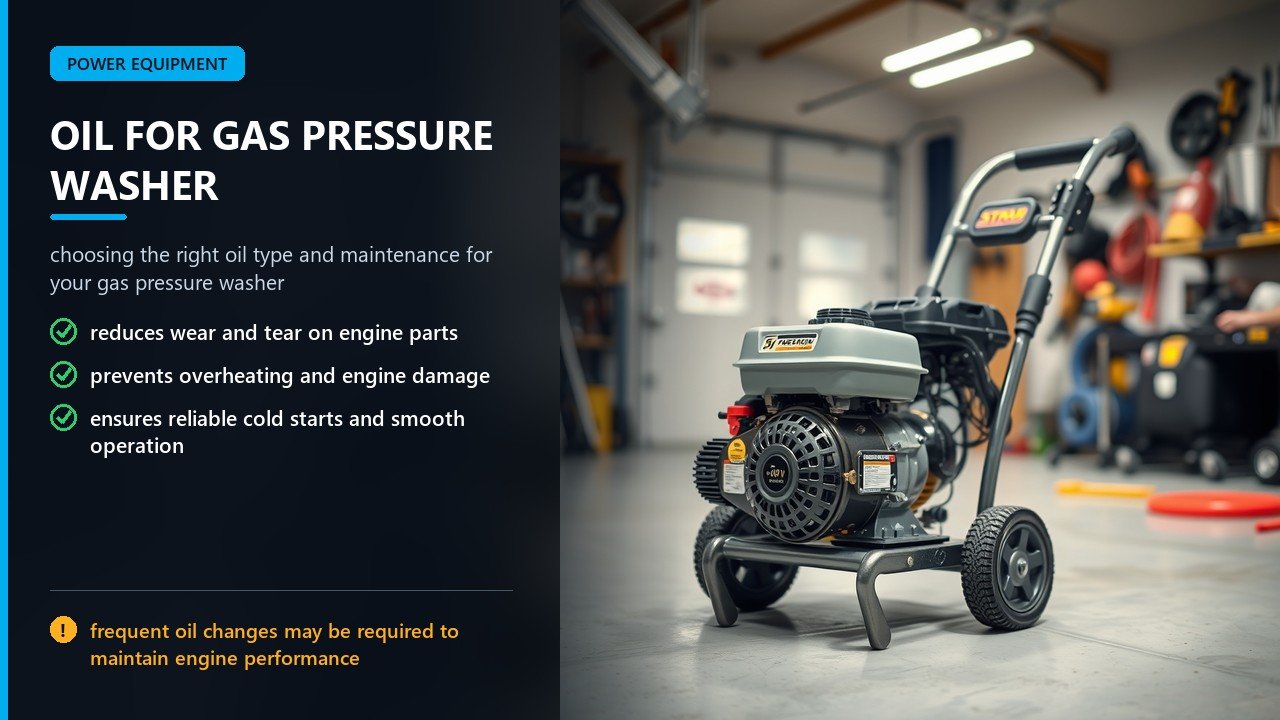
Choosing the right oil for a gas pressure washer is essential for keeping the engine running smoothly and extending its lifespan. Gas pressure washers have small engines that need proper lubrication to reduce wear, prevent overheating, and ensure reliable starts. Understanding the correct oil type, viscosity, capacity, and change intervals helps you maintain your pressure washer and avoid costly engine damage.
Why Oil Matters for a Gas Pressure Washer
Proper lubrication protects the engine.
The engine in a gas pressure washer has moving parts like pistons, crankshafts, and bearings that create friction and heat during operation. Engine oil lubricates these parts, reduces friction, helps dissipate heat, and prevents metal-to-metal contact that can cause wear and damage. Without the right oil, the engine can overheat, seize, or wear out prematurely.
Using the correct oil type and maintaining proper oil levels also helps with cold starts and ensures smooth operation. Clean oil traps contaminants and carries them to the oil filter (if equipped), protecting internal components. Regular oil changes remove dirty oil and debris, keeping the engine running efficiently. For gas pressure washers, proper oil maintenance is one of the most important things you can do to extend engine life.
Oil is the engine’s lifeblood. Because small engines in pressure washers work hard under load, they need proper lubrication. This prevents premature wear and costly repairs. With the right oil and maintenance schedule, your engine will last for years. Our guide to changing oil in pressure washer pump covers pump oil maintenance as well.
What Type of Oil Does a Gas Pressure Washer Use
Check the manual for specifics.
Most gas pressure washers use conventional motor oil with the correct viscosity for the operating temperature. For general use in moderate climates, SAE 30 is common for temperatures above 40°F (4°C). For colder climates or all-season use, 10W-30 is often recommended because it flows better at low temperatures while still providing protection when hot. Some manufacturers also recommend 10W-40 for higher temperature operation.
Always refer to your pressure washer’s owner’s manual for the exact oil specification, as different engines (Honda, Briggs & Stratton, Kohler, etc.) may have slightly different recommendations. Avoid using heavy-duty diesel oil or specialty oils unless specified. For most homeowner pressure washers, a standard SAE 30 or 10W-30 detergent motor oil (API SJ, SL, or higher) is appropriate.
Viscosity matters by temperature. Because oil thickens in cold weather and thins in hot weather, choosing the right viscosity ensures proper lubrication year-round. This helps with starting and protection. Always follow the manufacturer’s recommendation for your specific engine. Our guide to pressure washer kohler covers Kohler engine considerations.
Choosing the Right Oil by Climate
Match viscosity to temperature.
Climate plays a big role in choosing oil for your gas pressure washer. In warm weather (above 40°F/4°C), SAE 30 is a common choice and provides good protection. In colder weather (below 40°F/4°C), 10W-30 is better because it’s thinner at low temperatures, making cold starts easier and ensuring oil reaches critical parts faster. For areas with wide temperature swings, 10W-30 offers year-round versatility.
Some synthetic 5W-30 or 10W-30 oils can also work well for cold starts, but check your manual first. Avoid using non-detergent oil unless the manufacturer specifically requires it, as most modern small engines use detergent oils to keep contaminants suspended. Matching the oil to your climate ensures optimal engine protection and easier starting in all conditions.
Temperature affects flow. Because cold oil is thicker and harder to pump, using the right multi-grade oil in winter prevents wear during startup. This is especially important for seasonal equipment. With the right viscosity, your engine starts easier and stays protected. Our guide to non detergent oil for pressure washer explains when non-detergent oil is appropriate.
| Temperature Range | Recommended Oil | Notes |
|---|---|---|
| Above 40°F (4°C) | SAE 30 | Common for warm weather operation |
| Below 40°F (4°C) | 10W-30 | Better cold-start flow |
| All-season (wide range) | 10W-30 | Most versatile for varied climates |
| Very cold (below 0°F/-18°C) | 5W-30 (synthetic or conventional if approved) | Check manual for approval |
This table shows recommended oil viscosities by temperature range, helping you choose the right oil for your gas pressure washer based on your climate. Always verify with your owner’s manual for specific recommendations.
How Much Oil Does a Gas Pressure Washer Need
Small engines need small amounts.
Gas pressure washer engines typically hold between 12 and 20 fluid ounces (0.35 to 0.6 liters) of oil, depending on the engine size and model. Most residential units take about 15-18 ounces. It’s important not to overfill, as too much oil can cause pressure buildup, foaming, and engine damage. Too little oil can lead to inadequate lubrication and premature wear.
To check the oil level, place the pressure washer on a level surface, remove the dipstick, wipe it clean, reinsert it fully, then remove it again to read the level. The oil should be between the “full” and “add” marks. Add oil slowly in small amounts, checking frequently to avoid overfilling. Always use a clean funnel to prevent contamination.
Small capacity, big importance. Because these engines hold so little oil, even small overfills or underfills can cause problems. Checking the level carefully is crucial. With proper oil level, the engine stays protected. Our guide to oil type for pressure washer covers capacity specifics for common models.
When and How to Change Oil
Regular changes keep the engine clean.
For a new gas pressure washer, it’s often recommended to change the oil after the first 5-10 hours of use to remove break-in metal particles. After that, change the oil every 25-50 hours of operation, or at least once per season if used less frequently. If the oil looks dirty, dark, or has a milky appearance, change it immediately.
To change the oil: run the engine for a few minutes to warm the oil (warm oil drains easier), then shut it off and disconnect the spark plug wire for safety. Place a drain pan under the engine, remove the oil drain plug or tilt the unit to drain from the fill tube (depending on the model), and let all oil drain. Replace the drain plug, refill with fresh oil to the correct level, and reconnect the spark plug wire. Dispose of used oil properly at a recycling center.
Regular changes prevent engine wear. Because oil breaks down over time and collects contaminants, changing it on schedule keeps the engine protected. This extends its lifespan significantly. With proper oil changes, your gas pressure washer stays reliable for years. Our guide to changing oil in pressure washer pump provides step-by-step instructions.
Tips for Maintaining Oil in Your Gas Pressure Washer
Simple steps for engine longevity.
Always check the oil level before each use, as small engines can consume oil over time. Use a clean, high-quality motor oil that meets your engine’s specifications. Keep the oil fill cap and dipstick clean to prevent dirt from entering the engine. Store your pressure washer in a level position to avoid false oil level readings or leaks.
If you won’t use the pressure washer for an extended period, consider changing the oil before storage, as old oil can contain acids and contaminants. Also, use fresh fuel and follow proper winterization procedures if storing in freezing temperatures. These simple practices help ensure your engine starts easily and runs smoothly season after season.
Preventive care is key. Because checking oil before each use only takes a minute, it’s the easiest way to avoid engine damage. This catches low oil levels early. With consistent care, your engine stays healthy. Our guide to winterizing a pressure washer covers seasonal storage tips.
Frequently Asked Questions About Oil for Gas Pressure Washers
What kind of oil does a gas pressure washer take? Most gas pressure washers take SAE 30 oil for warm temperatures or 10W-30 for all-season use. Always check your owner’s manual for the specific recommendation for your engine.
Can I use 10W-30 instead of SAE 30? Yes, in most cases 10W-30 can be used as a substitute, especially in colder climates. It provides better cold-start flow while still offering adequate protection when hot. Check your manual to be sure.
How often should I change the oil in my gas pressure washer? Change the oil after the first 5-10 hours of use, then every 25-50 hours of operation or at least once per season if used less frequently.
How much oil does a gas pressure washer hold? Most gas pressure washers hold 12-20 fluid ounces (0.35-0.6 liters) of oil. Check your manual for the exact capacity of your specific engine.
Can I use synthetic oil in my gas pressure washer? Synthetic oil can be used if it meets the same viscosity and API specifications recommended by the manufacturer. Check your owner’s manual before using synthetic oil.
Do I need to change oil if I only used it once? If you’ve only used it for a few hours in one season, you should still change the oil at least once per season before storage to remove contaminants, even if the hours are low.
Final Verdict on Oil for Gas Pressure Washers
Using the right oil for your gas pressure washer is crucial for engine protection and long-term reliability. Most units use SAE 30 for warm weather or 10W-30 for all-season use, but always check your owner’s manual for the exact recommendation. Maintaining proper oil levels and changing the oil regularly every 25-50 hours keeps the engine running smoothly.
By following the correct oil type, capacity, and change intervals, you’ll prevent costly engine damage and ensure your gas pressure washer is ready to perform when you need it. A few minutes of oil maintenance goes a long way toward extending the life of your equipment.