Every pressure washer, from a small electric unit to a heavy gas machine, is a system of parts working together. Understanding the parts of a pressure washer helps you know how the machine works, spot a problem before it grows, and recognise which component to check when something goes wrong. It also makes shopping and maintenance far less of a mystery.
This guide breaks the machine down into its main parts — the power source, the pump, the water path, and the delivery end — and explains what each one does.
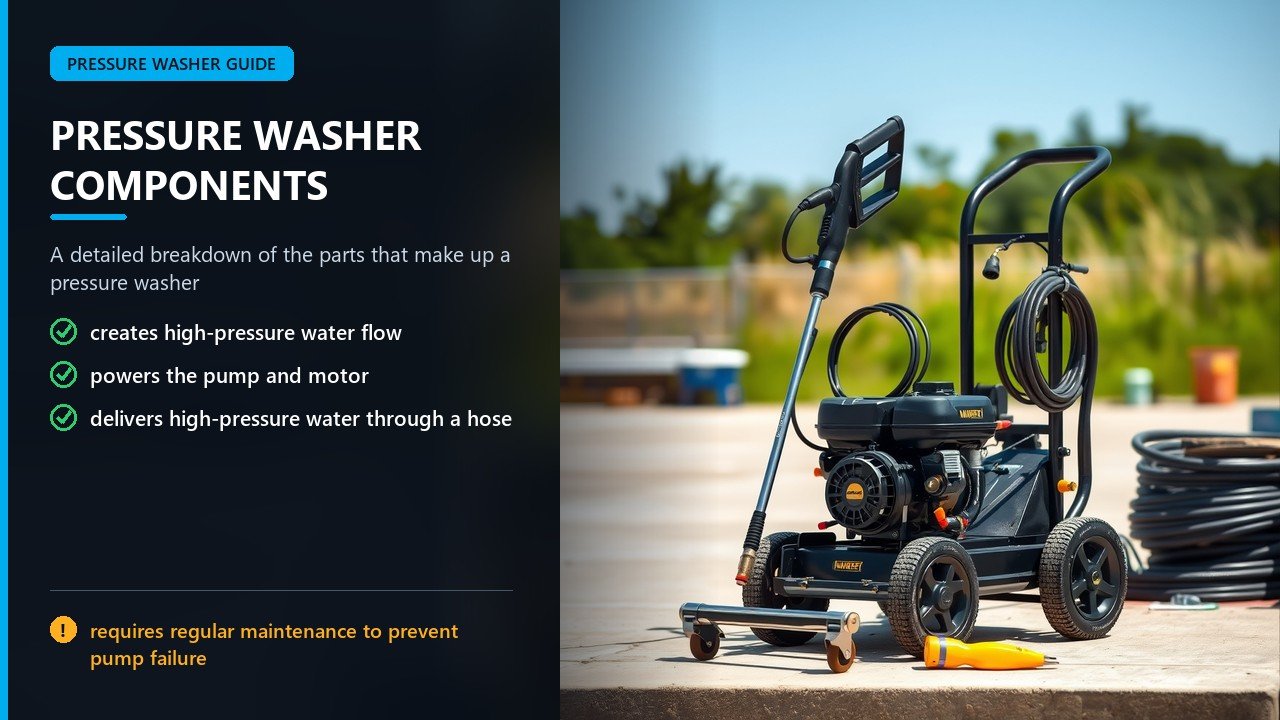
Seeing the Whole System
A pressure washer does one job: turn a low-pressure water supply into a high-pressure, controlled stream. It takes water in, pressurises it with a pump, and delivers it through a hose and gun to a nozzle that shapes the spray. Every part of the machine belongs to one of those stages.
It helps to think of the parts in two groups: those that create pressure and those that deliver it. The power source and pump create pressure. The hose, gun, wand, and nozzle deliver it. Around these sit supporting parts — the unloader, the inlet filter, seals, and the frame and accessories — that keep the system safe, clean, and usable.
Knowing which group a part belongs to tells you where to look when something fails. Low pressure and leaks usually trace to the water path or pump; power problems trace to the motor or engine; spray problems trace to the nozzle. The system view makes diagnosis far quicker.
The Power Source
All pressure washers are driven by electricity or an engine. Electric washers use an electric motor, connected to the pump either directly or through a belt. Electric motors are quiet and clean and generally need little attention beyond keeping them dry and cool. They are usually found on smaller and mid-size machines.
Gas washers use a small internal-combustion engine, chosen for higher power and portability away from mains electricity. The engine needs the usual care — fuel, oil, air filter, and starting system. The power source determines pressure and flow, so it is central to what the machine can do.
The link between the power source and the pump is called the drive. Direct drive connects the pump straight to the motor or engine, which is simple and compact. Belt drive uses a belt and pulley, which runs cooler, reduces vibration, absorbs shock loads, and often lasts longer. On many machines this drive arrangement is one of the parts that most affects durability.
The Pump
The pump is the heart of the pressure washer. It takes water from the supply and pushes it out at high pressure. Most pumps are either axial cam pumps, common on lightweight machines, or triplex pumps, common on heavier and more capable machines. Triplex pumps use three pistons, run smoother, and generally last longer, while axial cam pumps are simpler and cheaper.
The pump includes valves, seals, and pistons or plungers, all of which wear over time and are often serviceable. Pump oil, where the pump has a crankcase, must be checked and changed. Because the pump works hardest when starved of water, protecting it with a clean supply and never running the machine dry are the most important parts of pump care.
Water enters the pump through an inlet that usually has a filter, which traps grit before it can damage the pump’s internals. This small part protects the most expensive component in the machine, making it worth checking and cleaning regularly.
The Unloader Valve
The unloader is a safety and control part, and one of the most important to understand. Its job is to protect the pump when the trigger is released. When water stops flowing, pressure would otherwise spike inside the closed system; the unloader diverts the flow back to the pump’s inlet, letting the machine idle without building dangerous pressure.
When an unloader fails, symptoms include the machine cutting out, running hot, pulsing, or failing to build pressure properly. Many also have an adjustable pressure regulator that sets the working pressure. Because the unloader sits between the pump and the gun, it is a common source of pressure and flow complaints, and it is often serviceable or replaceable.
Alongside the unloader, some machines have a thermal relief valve that opens if the water inside gets too hot when the machine runs with the trigger released for too long. This small part prevents heat damage to the pump and underlines why you should not leave a pressure washer idling for extended periods.
The Delivery Parts
Once the pump has pressurised the water, the delivery parts carry it to the surface. The high-pressure hose takes the water from the pump to the gun and must be rated for the machine’s pressure and temperature. It is reinforced, usually with braided wire, and connects with fittings matched to the machine.
The spray gun is the trigger-controlled valve you hold. It controls the flow, seals with internal parts that wear, and connects to the hose on one side and the wand on the other. The wand or lance extends the reach, and the nozzle sits at its tip, shaping the spray. Together these parts determine how controlled and effective the cleaning is.
The nozzle is a surprisingly important part: its size and angle decide how the pressure is applied, from a focused stream to a wide fan or a soft soap spray. Nozzles wear with use, and a worn or wrong nozzle is a common cause of poor cleaning or excessive pressure. A detergent injector or tank, where fitted, adds soap to the flow as a low-pressure part of the delivery system.
The Frame and Supporting Parts
Around the working parts sits the frame, which holds everything together and supports the machine. Wheels and handles make it portable, and storage points keep the gun, wand, and nozzles tidy. These parts do not affect pressure, but they affect how easy and safe the machine is to use and move.
Supporting parts also include all the seals and O-rings at the connections, which keep the system leak-free, and the fittings that link each component. On accessories such as surface cleaners or foam cannons, the same principle applies: each is a set of parts that must be matched to the machine.
The table below summarises the main parts and what each does.
| Part | Function |
|---|---|
| Power source | Drives the pump — electric motor or gas engine |
| Pump | Pressurises the water (axial cam or triplex) |
| Unloader | Protects the pump and regulates pressure |
| Inlet filter | Traps grit before it reaches the pump |
| High-pressure hose | Carries pressurised water to the gun |
| Gun and wand | Trigger-controlled delivery and reach |
| Nozzle | Shapes the spray and sets the pressure pattern |
How the Parts Work Together
Follow the water and you can see how the parts connect. Water enters through the inlet and filter, passes into the pump, and is pressurised. It leaves the pump through the unloader and into the high-pressure hose, travels to the gun, passes through the wand, and exits the nozzle as a controlled jet or fan. Power from the motor or engine drives the pump throughout.
Each part depends on the others. A perfect pump cannot compensate for a blocked inlet filter, and a high-quality nozzle cannot fix low pressure caused by a failing unloader. This interdependence is why diagnosis works best as a process of elimination along the water path and the power path, rather than guessing at a single part.
It also explains why matching matters. The hose, gun, wand, and nozzle must all be rated for the machine’s pressure and flow, and the water supply must keep up with the pump. When every part is matched, the machine runs smoothly; when one is wrong, the whole system suffers.
Which Parts Wear and Which Last
Some parts are consumable, and knowing which ones helps you maintain the machine and keep spares. Nozzles wear as water erodes the orifice over time. Seals and O-rings harden and split. Inlet filter washers clog. These are small, inexpensive parts that are worth replacing rather than tolerating when they fail.
Other parts are serviceable but longer-lived. Pump valves and seals, gun internal parts, and unloader components can often be rebuilt, extending the life of the machine. The high-pressure hose falls in between: it lasts a long time if cared for and protected, but once it is damaged or its fittings fail, it is usually replaced.
Finally, the core parts — the motor or engine, the pump body, and the frame — are the most durable, provided they are maintained. Their lifespan depends on care: clean oil, a clean water supply, no freezing, no running dry, and no overheating. Protect the core parts and the smaller wear parts become a simple, routine cost.
Maintenance by Part
Good maintenance follows the parts. Keep the inlet filter clean. Check the pump oil and change it per the schedule. Inspect seals and O-rings and replace them at the first sign of wear. Flush detergent from the pump, gun, and nozzles after use. Check the hose for bulges or damage and the connectors for leaks. Replace worn nozzles, and never force a damaged pressure part.
For the power source, follow the maker’s routine: for engines, oil, fuel, and air filter; for motors, keep them dry and let them cool within their duty cycle. Protect the whole machine from freezing, since trapped water is one of the few things that can destroy a pump quickly and invisibly.
Understand the parts, care for them in order of importance, and keep a small spares kit on hand. A pressure washer is only as strong as its weakest part, so looking after the whole system keeps the machine reliable and ready whenever you need it.
Frequently Asked Questions
What are the main parts of a pressure washer? The power source (electric motor or gas engine), the pump, the unloader, the inlet filter, the high-pressure hose, the gun and wand, and the nozzle, all held in a frame with wheels and storage.
Which part is most important? The pump is the heart of the machine, but every part matters. A blocked filter or faulty unloader will cripple even a perfect pump.
What does the unloader do? It protects the pump by diverting flow when the trigger is released, preventing a dangerous pressure spike, and often regulates the working pressure.
What is the difference between an axial cam and a triplex pump? Axial cam pumps are simpler and cheaper and suit light use. Triplex pumps use three pistons, run smoother, and last longer, so they suit heavier machines.
Which parts wear out? Nozzles, seals, O-rings, and filter washers are consumable. Pump valves, gun parts, and unloader components can be rebuilt. The motor, pump body, and frame last longest with care.
What is the inlet filter for? It traps grit before it reaches the pump, protecting the most expensive part of the machine. Clean it regularly and replace the washer when worn.
Why does a pressure washer need a high-pressure hose? Ordinary hose cannot withstand the pressure. The reinforced high-pressure hose safely carries pressurised water from the pump to the gun.
How do I keep the parts working? Keep the filter clean, maintain pump oil, replace seals and nozzles when worn, flush detergent, protect the machine from freezing, and never run it dry.
Final Thoughts
Seeing a pressure washer as a system of parts makes it far easier to understand, maintain, and repair. The power source drives the pump; the pump pressurises the water; the unloader protects the pump; and the hose, gun, wand, and nozzle deliver the spray. Supporting parts keep the whole machine clean, safe, and usable.
Know which parts create pressure and which deliver it, care for the consumable parts and the core, and match every component to the machine. Do that, and the parts of a pressure washer stop being a mystery and become a simple, well-understood system you can keep running for years. For related reading, see our guides on pressure washer motors and the pressure washer high pressure hose.